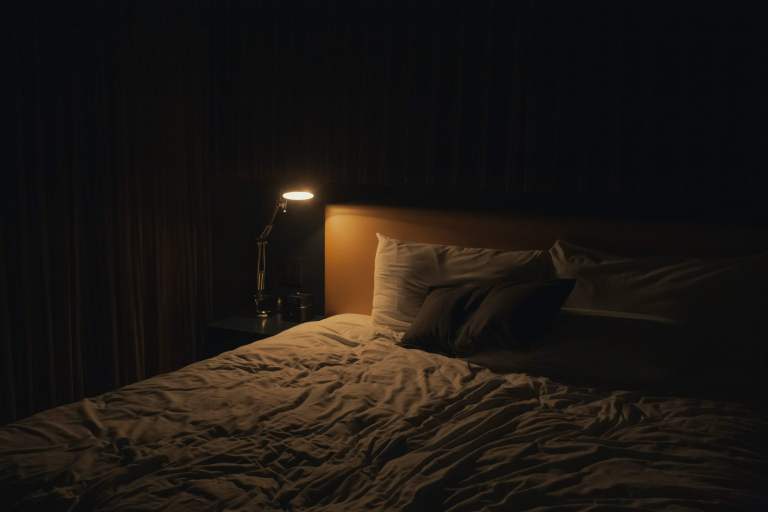
Small changes, big difference.
This was supposed to be a simple blogpost about a few changes I made to improve my health. Nothing deep, nothing structured. But once I started writing, one thing became obvious. Sleep wasn’t just one habit among others, it was the foundation behind them all. So instead of burying it in a longer piece, I pulled it out entirely. This is a focused breakdown of how I reshaped my sleep and nervous system.
Sleep isn’t just rest. It’s not just recovery. It’s something far more subtle, almost something we’ve forgotten how to experience properly. The french refer to sleep as “la petite mort”, or “the little death”. Nas, the legendary rapper also referred to it as “the cousin of death.” We all know something deep takes over when we’re asleep, we just don’t know how deep.
Whether you see that as spiritual, neurological, or both, one thing is certain. Sleep isn’t passive. It’s something you prepare for, something you enter, something you either respect or disrupt.
- Heart rate is the real gatekeeper
Most people focus on how tired they feel, but that’s not what determines sleep quality. Heart rate does. If it’s elevated when you’re about to fall asleep, the night is compromised before it even starts. You might still pass out, but the depth, recovery and continuity won’t be the same. What’s interesting is how many things influence heart rate. Late meals, drinking too close to bed, blue light, mental stimulation, these are all factors. Sleep doesn’t start when you lie down, it starts hours before.
- The four-hour rule
One of the most effective ways I found. Simple in theory but harder in practice: Stop eating and drinking about 4 hours before sleep.
When I stick to it, the difference is immediate. My heart rate drops more easily, I don’t wake up in the middle of the night to use the bathroom, and my sleep stays uninterrupted. It also extends my fasting window naturally, which supports recovery and deeper cellular processes during the night. I now aim to stop all intake at least 2 to 3 hours before bed, 4 feels long at times..
- Warm extremities, faster sleep
Another overlooked factor is temperature distribution. If your hands and feet are cold, falling asleep becomes harder because the body struggles to shift into a resting state. I don’t like sleeping in socks, so I found a simple workaround. Sometimes I take my pants off once I’m in bed and leave them around my feet so they warm up faster. It sounds almost too basic, but the effect is real. I fall asleep faster and more consistently. I also hate sleeping clothed, unless it’s cold of course.
- Deep pressure and a sense of safety
Sleep is also psychological. The nervous system needs to feel safe enough to let go. One thing that helped more than I expected is using heavier covers or even placing a pillow on top of my torso. That pressure creates a grounding effect. It reduces restlessness and makes it easier to drop into deeper sleep. It’s the same principle behind weighted blankets.
- Spinal alignment in side positions
Posture doesn’t stop mattering once you’re asleep. I often fall asleep in a fetal position, and adding a pillow between my legs made a clear difference. It keeps my hips aligned, reduces strain on my lower back, and prevents tension from building overnight.
- No pressure around the waist
I also became sensitive to anything compressing my stomach. Elastic bands started to feel intrusive once I paid attention. So now I have this black pair of very loose shorts with worn-out drawstrings that barely apply any tension. It’s the only piece I can tolerate consistently. Everything else feels restrictive. When I can’t use those, I sleep completely naked. Wasn’t always comfortable with the idea but since it improves my poor sleep, why not.
- Sleeping without layers
I didn’t always mind sleeping fully clothed. However, at some point I started waking up overheated and restless. So I adjusted gradually. First to go was the top, then the pants. Eventually I noticed I’d sometimes wake up without even remembering removing my underwear. That told me enough. My body regulates itself better without unnecessary layers. I now sleep with as little clothing as possible to allow full temperature regulation.
- Never sleep in plastic
For some mysterious reason, I used to think fleece was an ideal material. Light, warm, comfortable. But a friend pointed out that it’s just polyester. Plastic. That changed how I looked at it completely. Since then, I’ve moved away from synthetic fabrics in bed. I still own a few fleece items, but only as outer layers. Never directly on the skin and never in bed. So now I mostly sleep in cotton or nothing at all.
- No charging by the bed
I always knew having devices charging right next to the bed wasn’t ideal, but convenience has a way of creeping back in. Thankfully, my wife reminded to reset that boundary, and I have. Since then, phones charge outside the bedroom. Simple.
- Sleep as a system
Once all these pieces come together, you stop seeing sleep as a single action. It becomes a system. Timing, temperature, posture, materials, stimulation, all interacting at once. Change one variable and you might feel a difference. Change several, and the entire experience shifts. I don’t see sleep as something I “get” anymore. I see it as something I build, night after night.
Thanks for reading.
Teekay
Discover more from Teekay Rezeau-Merah
Subscribe to get the latest posts sent to your email.
 Teekay Rezeau-Merah