When life becomes content.
I thought about this while walking around Penang.
Earlier one afternoon, I saw a couple doing something so common that most people probably don’t notice it anymore. The man was standing in the heat, waiting for his girlfriend to cross a street so he could film her.
There was nothing happening on the street. No traffic to avoid. No particular reason for them to stop.
He was simply waiting for the shot.
She crossed.
He filmed.
Then they moved on.
They weren’t visiting Penang.
They were documenting themselves visiting Penang.
Several hours later, I saw something considerably darker.
A family. A father, a mother and their young daughter.
It was nighttime and they were walking along a quiet street. Nearby was a building with attractive illuminated signs, the kind of aesthetic social media loves.
The mother wanted a picture.
She gave her phone to her husband and crossed the road by herself.
Their six-year-old daughter had been playing a video game on her own phone. When she saw her mother getting ready for the photograph, she naturally wanted to join her.
She wanted a picture with her mother.
Her mother didn’t want her there.
She told the daughter to stay away so her husband could photograph her alone in front of the building.
The father then grabbed his little girl’s arm and moved her behind him, keeping her out of the frame while he photographed his wife.
The girl looked crushed.
And almost immediately, she went back to staring at her screen.
There is something profoundly unsettling about that.
A little girl of about six saw her mother posing for a photo and wanted to be part of it. She wasn’t demanding anything unreasonable. She wasn’t ruining an important moment.
She simply wanted to be beside her mom. Her mother rejected her because she wanted the photograph to be about herself.
The photograph mattered more than the child.
When a child learns that their presence is inconvenient whenever it interferes with a parent’s image, the trauma can stay with them far longer than the parent realizes.
And for what?
A photograph in front of a building.
A photograph that will probably be forgotten within days.
A photograph that exists primarily to tell other people, “Look where I am”.
This is where our obsession with photography becomes darker than simply taking too many pictures.
We’ve started treating other human beings as props.
And this isn’t limited to excluding children from the frame. Sometimes parents do the opposite and deliberately make their children part of the image they’re constructing.
There are mothers who use their own children to photograph them in deliberately provocative poses, sometimes barely dressed.
Imagine being a child and being repeatedly asked to photograph your half-naked mother so she can post a thirst trap.
Or being asked to photograph your father posing with two or three women, seemingly drunk?
The child isn’t simply witnessing the parent’s self-presentation, they’re being recruited into it.
They become the camera operator for an adult’s performance.
And smartphones have made this kind of behaviour incredibly easy.
The camera isn’t merely documenting our lives anymore.
It’s becoming a tool for constructing an image of ourselves, and for making the people around us participate in that construction.
Our partners become supporting actors.
Our children become props.
Strangers become scenery.
And sometimes they become targets.
I was once standing in a queue at a 7-Eleven when a woman took out her phone and secretly photographed an obese person standing in front of her.
She didn’t ask.
She took the photograph, sent it to someone and recorded a voice message.
I have no idea what she said. I don’t need to.
The act itself was enough.
A complete stranger had been reduced to an image that could be passed around for someone else’s amusement.
My wife and I regularly catch people secretly photographing us too.
Not occasionally.
Almost daily.
They point their phones at us, sometimes discreetly and sometimes not very discreetly, trying to take photographs without our consent.
We’re something interesting to capture.
An unusual haircut.
A foreign couple.
A curiosity.
The smartphone has made almost anyone photographable without their knowledge.
You don’t need permission.
You just need a camera.
And because everyone has one, we’ve become increasingly comfortable photographing things we have no right to photograph.
People’s bodies.
People’s children.
People’s private moments.
Strangers who happen to look different.
The camera turns the person into an object.
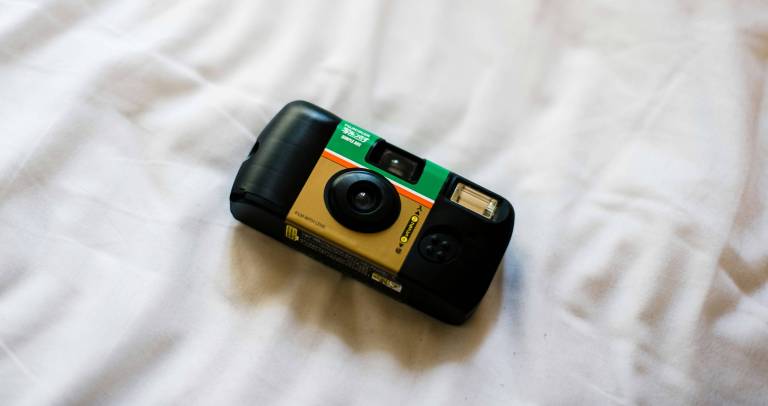
There was a time when taking a photograph required a decision.
You had a camera.
You had a limited number of exposures.
You saw something.
You decided it was worth capturing.
You took the photograph.
Then you put the camera away and returned to the experience.
The photograph was secondary.
Life came first.
Today, the order has been reversed.
We arrange the experience around the photograph.
We pose.
We retake.
We edit.
We publish.
We wait for reactions.
The photograph is no longer necessarily a record of what happened.
The photograph becomes what happened.
And social media makes the transformation even more obvious.
Look where I am.
Look what I’m doing.
Look how beautiful my life is.
Look how adventurous I am.
Look how happy I am.
Look at the places I’ve been.
Look at the people I’m with.
Look at me.
The landscape becomes a backdrop.
The experience becomes content.
The self becomes the protagonist.
A beautiful building is no longer simply a beautiful building, it’s somewhere to stand in front of.
A beach isn’t simply somewhere to swim, it’s somewhere to photograph yourself.
A foreign city isn’t simply somewhere to wander around, it’s an opportunity to manufacture evidence of an interesting life.
Sometimes people spend more time arranging the photograph than experiencing the thing they supposedly came to experience.
Perhaps this is why modern photography can feel so empty despite the sheer number of photographs we produce.
We’ve never taken so many pictures, yet individual photographs have arguably never meant less.
Our phones contain thousands of them.
Most will never be looked at again.
They’re produced, posted and forgotten.
The photograph that was supposed to preserve the memory has itself become disposable.
And there is something deeply paradoxical about that.
We photograph our lives constantly because we don’t want to forget them.
But by constantly interrupting our lives to photograph them, we’re less present for the very experiences we’re trying to preserve.
We stop looking at the sunset because we’re looking at the screen.
We stop experiencing the walk naturally because someone needs to film it.
We turn an experience into evidence that the experience happened.
And then we call it living.
I don’t think photography itself is the problem.
A photograph can preserve a face after the person is gone. It can preserve a place that no longer exists. It can remind you of a life you once lived.
Photography can be an act of attention.
But there is a fundamental difference between photographing something because you are experiencing it and manufacturing an experience because you want to photograph it.
One begins with life.
The other begins with the image.
Perhaps we need to recover that distinction.
Not everything needs to be photographed.
Not everything needs to be shared.
Not every beautiful moment needs an audience.
And not every moment needs to survive as an image.
Some moments can simply disappear.
The conversation that lasted all night.
The walk where you got completely lost.
The ridiculous thing someone said that made everyone laugh.
The strange little street you stumbled upon.
These moments don’t need proof.
They happened.
It’s enough.
We used to take photographs to remember our lives.
Perhaps we should be careful that we don’t end up living our lives just to have something to photograph.
Thanks for reading.
Teekay
Discover more from Teekay Rezeau-Merah
Subscribe to get the latest posts sent to your email.

