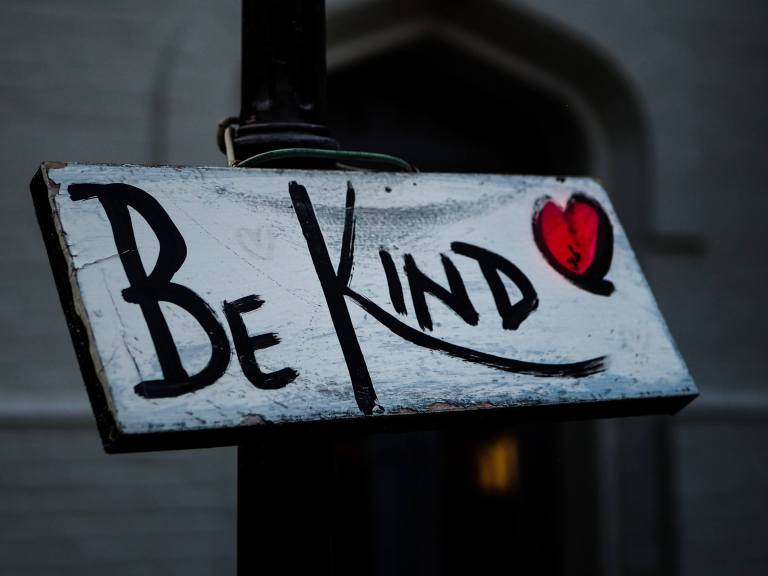
Respect others

What Happened to Good Manners?

On consideration, public space and the small things we do to make life easier for one another

I’ve always been annoyed by bad manners because I was raised to understand that other people exist.

You wait your turn. You let people off the train before getting on. You say please and thank you. You cover your mouth when you cough. You don’t make an entire bus listen to your phone conversation.

None of this is complicated.

And yet, every time I use public transportation, walk through a crowded city or deal with a stranger, I find myself wondering what happened to basic manners.

I’m not talking about old-fashioned etiquette. I couldn’t care less which fork you use at dinner or whether you know which glass is supposed to hold which wine.

I’m talking about something much simpler.

Consideration.

You don’t have to like people. You simply have to remember that they exist.

Public space isn’t your living room

Few things irritate me more than people standing directly in front of the doors of a subway, tram or train while everyone inside is trying to get off.

The doors open. People are trying to leave. And there they are, standing directly in the way, already preparing to get on.

Why?

Just wait, let people get off, then get on.

The same applies to queues.

There’s a reason we queue. Everyone waits their turn and eventually gets served. Cutting the line is essentially saying that your time matters more than everyone who arrived before you. It’s disrespectful!

Then there are the people who seem to believe public transportation is an extension of their living room.

Videos playing loudly. Music without headphones. Loud phone conversations. Shouting across the carriage. Bags occupying seats while people are standing.

A crowded bus or train is a shared space. Nobody else should be forced to participate in your private life simply because you happen to be sitting next to them.

The same goes for assigned seats. If your ticket says 14A, that’s your seat. It shouldn’t be controversial.

These things sound trivial, but that’s precisely the point. Living among other people requires thousands of tiny acts of awareness that take almost no effort.

Some things should stay private

Then there’s basic hygiene.

Cover your mouth when you cough or sneeze. Cover it when you yawn.

If you’re sick, blow your nose rather than sitting beside strangers on a crowded bus and sniffing continuously for an hour. Also, wear a mask, it costs nothing and protects those around you.

And please, for the love of everything, don’t spend your commute picking your nose, scratching yourself or inspecting parts of your body that don’t need to become public entertainment.

There are things may be normal for some to do in private, but they don’t need to be performed in front of strangers.

Good manners are about understanding where you are and how your behavior affects the people around you.

Food is another example.

You might love the smell of whatever you’re eating. The person sitting beside you might want to vomit.

Not everyone likes the smell of fish, heavily spiced food or whatever else you’ve brought into a sealed bus or train. In an open-air setting, eat whatever you want. In a packed carriage, perhaps consider that everyone else has to smell it too.

And then there are smokers.

Someone goes outside, smokes a cigarette and gets back onto a crowded bus as though the smell disappeared when the cigarette did.

It didn’t.

It’s still in their clothes, their hair, their hands and their breath. Sit beside someone who has just smoked in a confined space and you know exactly what I’m talking about. They stink.

People often don’t realize how much they smell because they’re accustomed to their own smell.

The rest of us aren’t.

Please and thank you

Perhaps what bothers me most is how little effort some people seem willing to put into ordinary human interactions.

Someone holds a door open for you.

Say thank you.

Someone gives you directions.

Say thank you.

Someone does something for you that they didn’t have to do.

Say thank you.

And hold the door for the person behind you while you’re at it. You don’t need to make a performance of it. Just don’t let it slam into their face when they’re two steps behind you.

These words and gestures cost almost nothing.

The same applies to asking for help.

I’ve lost count of the number of times I’ve asked a public employee a perfectly reasonable question and received an immediate “no”, without any attempt to find an answer or suggest an alternative.

Sometimes the answer isn’t actually no. They simply can’t be bothered.

I’ve experienced the same thing when asking whether something is vegan in restaurants and dessert shops. Someone will immediately tell me there is nothing vegan, only for me to look at the menu and discover several things that happen to be vegan.

That’s not necessarily hostility. Sometimes it’s just laziness.

If you don’t know, say you don’t know.

If you can find out, find out.

If something genuinely isn’t possible, explain it.

You don’t need to solve everyone’s problems. But if your job is to help people, making the smallest reasonable effort shouldn’t be considered extraordinary.

We have to teach this

This is where I think parents have an enormous responsibility.

Children aren’t born knowing how to queue. They’re not born knowing that they should wait for people to get off a train before boarding. They don’t automatically understand that screaming in a restaurant for an hour affects everyone around them.

They learn these things.

And they learn them from the adults.

Children will be children. They’ll cry, shout, get excited and misbehave. That’s normal.

But there’s a difference between having a child who occasionally makes noise and deciding that everyone else in a restaurant, train or airplane simply has to endure it indefinitely.

The same is true of boundaries.

Children need to learn that other people’s belongings are not theirs. Other people’s bodies are not theirs. Other people’s conversations are not theirs.

And adults need to remember the same things.

Not everything is your business

Some people seem physically incapable of encountering another person’s life without offering an opinion.

What you’re eating.

What you’re wearing.

WHat you’re doing.

Not every thought needs to become a comment.

Not every disagreement requires intervention.

Not every personal decision needs your approval.

Sometimes minding your own business is simply good manners.

The same principle applies to public displays of affection.

Holding hands doesn’t bother me. Neither does a hug or a quick kiss.

But there is a point where affection becomes something more intimate and everyone around you is turned into an unwilling audience.

I don’t care that you’re in love. Good for you.

I just didn’t buy a ticket to your private life.

The disappearing social contract

What bothers me about all of this is not that people are imperfect.

Of course they’re imperfect.

It’s that so many of these behaviors seem to come from the same assumption: I do whatever I want, and everyone else can deal with it.

But shared spaces don’t work that way.

Your freedom doesn’t give you the right to make everyone around you uncomfortable.

You can listen to music. Use headphones.

You can talk to your friend. Keep your voice down.

You can eat. Think about where you’re eating.

You can raise your children however you choose, long as you teach them that other people exist.

You can have an opinion. You don’t have to share it.

You can disagree with someone. You don’t have to disrespect them.

You can refuse to help. You can still do it politely.

Don’t make other people’s lives unnecessarily worse.

That should be an incredibly low bar.

And yet apparently it’s becoming one.

Maybe what we’ve lost isn’t etiquette.

Maybe we’ve become so absorbed in ourselves that we’ve forgotten to notice the people around us.

Good manners aren’t about being proper.

They’re about being considerate.

And perhaps the simplest definition is still the best one: Good manners are what happen when you remember that other people exist.

Food for thought.

Thanks for reading.

Teekay

monkey see, monkey do by Teekay Rezeau-Merah

How Marketing Manipulates Your Brain Through Mirror Neurons

An article is about a NeuroScientific and neuromarketing concept you never knew existed!

Our brains have this exceptional ability to act as a mirror. This ability is made possible thanks to what we call “mirror neurons”.

Mirror neurons are a type of brain cell responsible for mirroring or simulating the actions of others.

The knowledge of these neurons is relatively recent. In fact, it wasn’t until the 90s that researchers first identified mirror neurons in macaque monkeys.

And what they found was fascinating !

Mirror neurons were found to activate when a monkey performed a specific action, such as grasping a piece of food.

However, the same neurons also activated when the monkey watched another monkey (or a human) perform the same action.

It was unexpected.

  • The Point

These incredibly cool neurons are said to play an important role in our ability to imitate and learn from others, as well as in our ability to empathize with and understand the intentions of others.

And to be honest, it makes perfect sense.

For instance, I realized very early on that my proficiency in learning new languages was attributed (in part) to my habit of mimicking the language patterns and communication styles of native speakers.

In fact, even when my knowledge of a language is limited, I make a conscious effort to replicate the way words and phrases are pronounced, rather than how they are written and spelled.

By “mirroring” others, I learned 10X faster than before, and I hardly forget anything. I can also sound “native” if I want to, in any language that I speak.

This strategy has been instrumental for me. Becoming fluent in six different languages and comfortable in a couple more didn’t happen overnight, but with the right tactic, language-learning can be a piece of cake.

Check out this little 3-minute clip if you wish to understand how it works.

With that being said, the effect of mirror neurons isn’t just limited to what we see or what we hear, our brain can even experience vicarious touch through others.

Perhaps this explains the boom of ASMR and the porn industry?

New technologies like Virtual Reality are already using the power of our mirror neurons to their advantage, and perhaps ours, as well.

For instance, VR is now used to help us fight certain mental illnesses and cure certain phobias.

VR can obviously never substitute real life, but it could potentially help many of us heal from certain things.

  • The Dark Side

As an ethical marketer, I must mention this.

In the world of marketing, understanding vicarious touch and mirror neurons has been a game changer.

Instead of designing ads and products blindly, we now purposely target your subconscious mind.

Doing so allows us to create more engaging and memorable experiences for our audience, thus driving up sales and clicks.

Marketers increasingly design experiences that engage our senses and make products feel more tangible, even through a screen.

So instead of making commercials that focus on the product alone, big corporations and marketers now hire actors and tap into all your senses to deliberately activate mirror neurons in you, the viewer.

There are numerous other tactics to trigger buying, here are a couple I’ve used in the past:

  • Product packaging: Mirror neurons can even be triggered through packaging. In fact, the texture and feel of product packaging evoke more tactile sensations in consumers than they know. For example, a package with a soft, velvety texture creates the impression of luxury and comfort, while a clear, matte packaging evokes warmth and superior quality.
  • Audio-visual experiences: Videos, music, podcasts and other types of media can evoke sensations of touch through sound and image. These techniques have long been used in the entertainment industry and in adverts to shape culture as a whole.
  • Scented products: Products that smell cut grass or mint create the sensation of coolness, while the the smell of lavender provides us with a sense of warmth and reminds us of our childhood (and possibly grandparents). Yes, smell is also used to drive up sales, but can only be used in physical businesses (for now).

Understanding human behavior allows us to look at ourselves with more depth.

Understanding ourselves doesn’t just make us wiser, it actually improves our decision making, hence this piece.

By reading this, I hope you’ve gained a bit more self-awareness and understanding of human behavior.

Thanks for reading.

Teekay

Behaviors and traits that make healthy personalities

A list of healthy behaviors, traits and habits I’ve noticed in some of my favorite people in the world.

Those are traits I personally try to gravitate towards in order to build healthy relationships.

  • They avoid criticism at all costs 

Criticism shows a lack of understanding and empathy towards others. The less critical you are towards others, the better.

Slander is also a major sin in my religion.

Slander and backbiting are considered “destructive” major sins.

These two sins are forbidden by God because they sow enmity, evil and discord among people and lead to destruction.

Slander, like overt criticism, are a sign that you want to show superiority, which in turn shows a lack of confidence and is ultimately a sign of weakness.

People ain’t all that different, we just choose our differences, so please refrain from being cheaply critical and just accept others as they are.

  • OCEAN is the acronym

OCEAN are the “Big Five” personality traits developed in psychological trait theory. They’re a great way to assess oneself.

O for Openness. Being open to new things, new ideas, change and being curious are all great signs of a great personality.

For instance, if someone tells you about a positive thing in their life, try to dig deeper, be happy for them.

Showing real, genuine interest in what others tell you is a sign of goodness, and happiness.

C for Conscientiousness: be conscientious is one of the noblest traits.

Knowing how to act and react accordingly in difficult situations, being aware of your surroundings, treating others with respect are all signs of a conscientious person.

Don’t be so quick to judge and just let others the benefit of the doubt, learn how to trust.

E for Extroversion: try being extroverted, not in a “party-going” way, but rather in a “be curious about others, ask how they are” way.

Don’t interrupt when others talk to you, show genuine interest in their feelings and wellbeing and treat them with love.

A for Agreeableness: being agreeable should be the easiest thing when you’re surrounded by the right people. Your friends need to challenge you on certain things, but not on everything.

“A person with a high level of agreeableness in a personality test is usually warm, friendly, and tactful.” So be warm, make people feel at ease, heard.

N for Neuroticism (it’s not what you think): this trait is about people who are emotionally stable, who deal well with stress pretty well, who don’t worry much (know how to let go of grudges) and are generally very chill and laid-back.

The kind of person who avoids conflict and troubles at all costs, my type of people.

Let’s move on to some other traits healthy people have in common:

  • They don’t think about their needs only (considerate?)

One of my favorite thing about some people is their ability to put others before themselves.

I’ve had friends who were exactly that. They always serve others before they serve themselves, they’re the carers of the group, which usually brings the group together.

Carers are my personal favorite people !

Showing that you care about people other than yourself is such an attractive trait. It shows empathy and an acute sense of humanity. 

  • They avoid hijacking conversations

Everything isn’t always about you, let others be, express themselves.

Make them feel comfortable enough to open up to you. Avoid hijacking conversations with sentences like “this reminds me of something I went through”. NO. It’s not about u, it’s about them ! 

  • They own up to your failures and mistakes

Take responsibility.

It takes courage to take responsibility, to show that you understand your mistakes and that you’re willing to do better

Say that you blew it when you feel like you did. I know it shows vulnerability but that’s what healthy people say and do

  • They allow nuance in life

Things shouldn’t always be how YOU want them to be, focus on yourself and hope others do their best as well

  • They never shame, never blame, and don’t have an agenda

If you disagree with someone, do it in a civil and respectful manner. Things can’t always go your way and that’s ok, let it go, just make sure you do your best in every situation, and don’t beat yourself up when you can’t 

  • They have an acute sense of teamwork

Teamwork makes the dream work.

Always try to work things out with the person in front of you, personally and professionally.

  • They don’t mind sharing the negatives of their personal and professional endeavors

Talking about the negatives of your life allows a sense of intimacy to others, which is the opposite of control.

This intimacy exposes you and will eventually make you feel vulnerable, which is bound to get you out of your comfort zone and help you grow. Let yourself get into that new, unexplored zone

  • They’re patient

Impatience is a big red flag when it comes to narcissism.

Impatience show that you can’t slow down to care about someone other than yourself, and that you’re too spoiled to realize you can’t always have it your way.

Impatience manifests itself in different forms, some people throw tantrums while others will just shut themselves out. Learn how to deal with your emotions and be an open book.

Learning how to be patient is an important aspect of a good life

  • They listen

Take time to reflect and learn how listen. It’s no wonder God gave us 2 ears and only 1 mouth.

We learn more by listening and observing others, so try to be more present and listen. Active and intentional listening is the cornerstone of good communicators and healthy relationships.

Careful listeners are usually more open and compassionate.

  • They know other people aren’t just as good as their last good deed 

Avoid being harsh and too quick to judge.

Avoid holding grudges and let others prove you wrong.

If you’re interested in health in general, read this article about small changes that could completely change your life.

Thanks for reading.

Teekay