Hi!
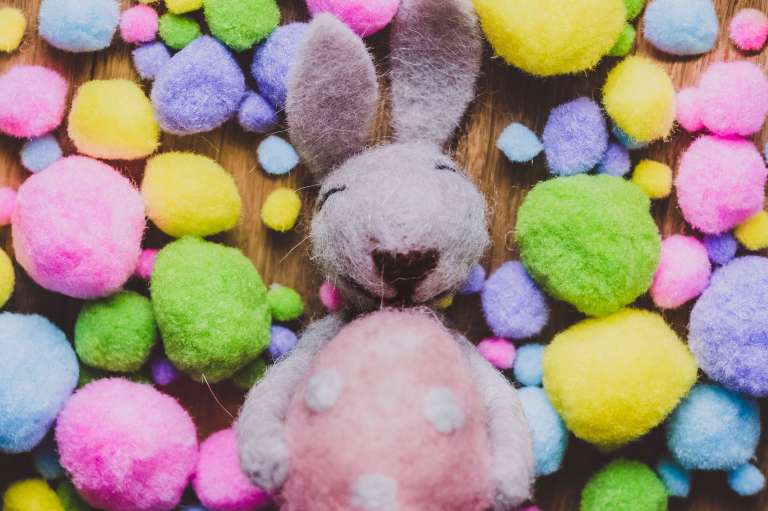
My name is Teekay and I’m obsessed with vibrant colors.
From bright sneakers to colorful hoodies, I’ve never been the type to dress in plain black or gray. Bright colors make me feel alive. They lift my mood, give me energy and help me express who I am.
When I put on my yellow T-shirt or my orange fleece, I feel optimistic, confident and ready for the day.
But my attachment to colorful clothing goes beyond aesthetics.
Across much of Africa, Asia and South America, vibrant clothing has always carried meaning. Colors celebrate identity, culture and tradition. From African wax prints to Andean ponchos, clothing tells stories without saying a word.
I grew up appreciating that.
For me, wearing colorful clothes has always been a way of expressing myself while staying connected to a part of my cultural heritage.
So naturally, I never questioned it.
Like most people, I admired the finished product without giving much thought to how it was made.
In fact, for the longest time, I genuinely believed sewing threads came pre-colored.
Ignorance is bliss.
As I grew older and became increasingly interested in environmental issues, I began questioning almost everything I owned. Where did it come from? Who made it? What resources were needed to produce it? What happened after I threw it away?
Eventually, those questions reached my wardrobe.
The answers weren’t what I expected.
The more I learned about the textile industry, the harder it became to look at colorful clothing the same way.
What once represented creativity and self-expression suddenly revealed another side entirely, one hidden behind factory walls, polluted rivers and supply chains most of us never think about.
That realization forced me to confront something I didn’t want to admit.
I could no longer claim to care deeply about the environment while ignoring the environmental cost of one of my favorite things.
I don’t make exceptions when my values are involved.
Changing my mind isn’t a weakness. Refusing to change despite new information is.
That’s one of the reasons I left social media and mass media years ago.
Conformism is intellectual death.
I don’t scroll. I don’t watch television. I only read the news when I’m researching something. I even stopped listening to music.
Stepping away from constant stimulation gives me the space to think for myself, to challenge my own habits instead of simply following everyone else’s.
Before learning about textile dyes, I would’ve defended my colorful wardrobe without hesitation. I would’ve convinced myself that my choices made no difference and that everyone else was doing the same thing anyway.
My thinking was flawed.
Individual actions don’t solve every global problem.
But they do shape the world we choose to support.
Once I understood what was hiding behind the colors I loved so much, I couldn’t pretend I didn’t know anymore.
So I started asking a different question.
What does it actually take to make our clothes so colorful?
What it really takes to make clothes colorful
Like most people, I never thought much about textile dyes.
I assumed fabrics simply came in different colors. I never wondered where those colors came from, how they were made or what happened once the dyeing process was over.
As it turns out, that’s where one of the fashion industry’s biggest environmental problems begins.
Every vibrant shirt, hoodie or pair of sneakers has to be dyed. While that may sound harmless, textile dyeing is one of the most polluting stages of clothing production.
According to the World Bank, textile dyeing is responsible for roughly 20% of global industrial water pollution.
Twenty percent.
I had to read that number twice.
The water used to dye our clothes is often mixed with synthetic chemicals, salts and heavy metals. In many parts of the world, especially where environmental regulations are weak or poorly enforced, that wastewater finds its way back into rivers and streams with little or no treatment.
The colors we enjoy don’t simply disappear.
They go somewhere.
Many synthetic dyes contain substances such as lead, cadmium and mercury, all of which can damage ecosystems and pose health risks to both wildlife and humans.
The pollution doesn’t stop once a garment leaves the factory either.
Every time we wash synthetic clothing, tiny plastic microfibers are released into our waterways. Most are too small to be filtered out by wastewater treatment plants, meaning they eventually end up in rivers, lakes and oceans.
The more I learned, the more difficult it became to separate my wardrobe from its environmental footprint.
Then I discovered something else.
Color wasn’t the only problem.
The dyes were only the beginning.
The entire fashion industry relies on enormous amounts of water, energy and raw materials.
Take a simple cotton T-shirt.
Producing just one can require around 2,700 liters of water. That’s often described as enough drinking water for one person for roughly two and a half years.
It’s difficult to comprehend numbers that large.
Yet most of us own dozens of shirts.
Then came another statistic that genuinely shocked me.
The fashion industry is responsible for roughly 10% of global carbon emissions, more than international aviation and maritime shipping combined.
And despite all those resources, most clothing doesn’t stay in circulation very long.
Around 87% of textile fibers eventually end up incinerated or buried in landfills.
Think about that for a moment.
We extract resources from the earth, consume vast amounts of water and energy to turn them into clothing, transport those garments across the planet and then throw most of them away after only a fraction of their useful life.
The problem isn’t color alone.
It’s the entire system surrounding it.
That realization changed the way I looked at my wardrobe.
It also forced me to ask a much more uncomfortable question.
If I already know all of this, how should I respond?
The only response that made sense to me
When I first learned all this, I wasn’t sure what to do.
I wasn’t about to throw away my wardrobe.
That would’ve been wasteful.
Nor was I willing to give up colors altogether.
After all, colors make me happy. They always have.
For a while, I found myself caught between two values I wasn’t willing to abandon.
On one side was my love for vibrant clothing.
On the other was my desire to live in a way that respects nature.
Reconciling the two wasn’t easy.
Then I realized something.
The problem wasn’t colorful clothing.
The problem was how we produce, consume and dispose of clothing.
Those aren’t the same thing.
It’s easy to blame a product.
It’s much harder to question the system that made the product so cheap, disposable and abundant in the first place.
That’s where minimalism entered the picture.
Not the version of minimalism that’s obsessed with white walls, empty apartments and owning exactly thirty-three possessions.
The version that asks a much simpler question.
Do I really need this?
Minimalism isn’t about deprivation.
It’s about intentionality.
It asks us to pause before buying.
To question whether we’re purchasing something because we genuinely need it, because it’ll last, because it’ll improve our lives, or simply because it’s new, colorful and temporarily exciting.
That distinction changed everything for me.
Instead of asking, “Can I buy this?”
I started asking, “Should I?”
Those are two completely different questions.
One is financial.
The other is moral.
Minimalism taught me that every purchase is a vote.
Every dollar we spend rewards a certain way of producing goods and encourages companies to continue doing more of it.
Whether we realize it or not, our wallets shape the world.
That’s why I no longer believe minimalism is just a lifestyle.
I see it as one of the most practical environmental tools available to ordinary people.
Buying less means fewer resources extracted from the earth.
Buying better encourages companies that invest in quality instead of disposability.
Buying secondhand extends the life of products that already exist instead of demanding new ones.
None of these actions will solve climate change on their own.
I know that.
But that’s never been the point.
People often dismiss individual actions because they’re small.
I think that’s a mistake.
Every large movement begins with individuals deciding to behave differently.
No one waits for society to change before changing society.
Individual actions don’t matter because they’re large.
They matter because they’re contagious.
The more I reflected on all this, the more obvious my next step became.
I wasn’t going to stop appreciating beautiful colors.
I was simply going to become far more selective about where those colors came from.
Whenever possible, I’d buy secondhand.
When buying new, I’d prioritize durable clothing over trendy clothing, natural dyes over synthetic ones whenever feasible and usefulness over impulse.
That may not change the world overnight.
But it’ll change the part of the world I’m responsible for.
And that’s enough reason to do it.
What I’m changing
Changing my habits doesn’t mean rejecting everything I own.
Quite the opposite.
Throwing away perfectly good clothes simply to replace them with “eco-friendly” alternatives would only create more waste.
The most sustainable garment is often the one that’s already in your closet.
So I’m keeping the colorful clothes I already own.
I’ll wear them until they can no longer be repaired.
That’s the minimalist approach.
Respect what already exists before demanding something new.
What will change is how I shop from now on.
Whenever possible, I’ll buy secondhand first.
Almost everything I own already comes from thrift stores, online marketplaces or flea markets. Aside from underwear and socks, I see little reason to insist on buying new.
Secondhand shopping doesn’t just save money.
It keeps perfectly usable clothing in circulation and reduces the demand for new production.
When I do buy new, I’ll try to choose garments that are built to last.
Not because they’re fashionable.
Not because they’re trendy.
Because durability is one of the most overlooked forms of sustainability.
A shirt that lasts ten years is usually far better for the environment than five shirts that each last two.
Whenever possible, I’ll also look for brands that use natural or lower-impact dyes.
They’re not perfect.
No product is.
But supporting companies that are genuinely trying to improve their production methods is one way of encouraging better practices across the industry.
The final change is perhaps the simplest.
I’ll wash my clothes less often.
Not because I enjoy dirty clothes.
Because most garments simply don’t need to be washed after every use.
Less washing means less water, less electricity, fewer detergents entering waterways and less wear on the fabric itself.
Ironically, my clothes now last longer because I clean them less.
Living without a washing machine taught me that.
At first, I thought it would be inconvenient.
Instead, it changed my relationship with clothing altogether.
We naturally started accumulating fewer clothes, washing larger loads less frequently and appreciating what we already had.
It also made me realize something much bigger.
Not every household needs to own every appliance.
Shared laundries make a great deal of sense, especially in apartment buildings.
One washing machine used efficiently by many households often has a lower environmental footprint than dozens of underused machines sitting behind dozens of different doors.
The same principle applies to many other things we own.
Perhaps the future isn’t about owning more.
Perhaps it’s about sharing more.
The sharing economy deserves an essay of its own.
For now, I’ll leave that thought here.
Because ultimately, this article isn’t about washing machines.
It isn’t even about colorful clothes.
It’s about becoming more conscious of the hidden cost behind the ordinary things we rarely question.
Once we begin asking those questions, it’s surprisingly difficult to stop.
Final thoughts
Writing this essay didn’t make me love colorful clothing any less.
If anything, it reminded me why I loved it in the first place.
Colors express joy, creativity and culture. They tell stories. They allow us to celebrate who we are.
The problem was never color.
The problem was everything hidden behind it.
Like many environmental issues, textile pollution remains largely invisible to those of us living thousands of miles away from where our clothes are made.
We don’t see polluted rivers.
We don’t breathe the chemicals.
We don’t meet the workers handling hazardous dyes every day.
We simply see a colorful shirt hanging under bright lights in a clean store.
It’s easy to disconnect consumption from consequence.
I know, because I did it for years.
But once we become aware of the hidden cost behind everyday products, pretending not to know becomes much harder.
That doesn’t mean we should strive for perfection.
Perfection doesn’t exist.
None of us will ever make perfectly ethical purchases.
I certainly won’t.
What matters is that we keep moving in the right direction.
Maybe that means buying one less shirt this year.
Maybe it means repairing one instead of replacing it.
Maybe it means discovering that your favorite jacket already exists in a thrift store.
Small actions rarely make headlines.
They quietly become habits.
And habits eventually become culture.
I often write about minimalism because I genuinely believe it offers practical solutions to many of the challenges we face today.
Environmental degradation.
Financial stress.
Consumerism.
Clutter.
Even mental fatigue.
Owning less doesn’t solve every problem.
But owning intentionally changes the relationship we have with everything else.
In many ways, that’s what this essay has really been about.
Not colorful clothing.
Not textile dyes.
Not even fashion.
It’s about learning to see the invisible consequences of ordinary decisions.
Because every purchase supports a certain vision of the future.
The question isn’t whether our choices matter.
The question is:
What kind of world are our choices helping create?
If you’d like to support my work, consider following me or subscribing to my newsletter.
I write about minimalism, intentional living, environmental solutions, travel and the world as it could be.
Thanks for reading.
Tee.

