Small changes to improve life

An interconnected system that made me healthier and more aligned.

You can’t expect your body to function properly if everything you expose it to works against it.

What you touch, what you eat, what you breathe in, what you surround yourself with matters.

Most of these changes didn’t come from theory. They came from small moments of doubt. Something feels off, you look into it, you adjust, and then you don’t go back. Over time, those adjustments start forming a pattern.

  • Plastic was the starting point

Once I started paying attention, plastic was everywhere. Not just single-use items, but containers, cutting boards, utensils, bottles. Even when it’s thick and reusable, it still degrades over time. Microplastics are already present in food and water, so adding more exposure through daily habits made little sense. I removed plastic containers, replaced cutting boards, and shifted entirely to glass, wood, and metal for anything that comes into contact with food. I now store and consume food exclusively using stable, non-degrading materials.

  • Water isn’t neutral

Tap water is often treated as a given, but once you look into what it contains, it changes how you approach it. I invested in a proper filtration system and regret not having done so earlier. Before that, I went with a basic pitcher, the Brita type, then moved to something more advanced (and more expensive) to remove a wider range of contaminants. That said, I also started being more intentional with how I drink water. In the morning, I’ll often have water with cucumber and lemon, and I’ll leave cucumber slices in the bottle throughout the day. Given how much of the body is made up of water (60%, vs 73% for the brain), it doesn’t make sense to treat it casually.

  • Cookware and daily exposure

Cooking used to be about convenience. Non-stick pans, plastic utensils, quick cleaning. Once concerns around certain coatings and chemical residues became more visible, that convenience started to feel like a trade-off. I replaced everything with stainless steel cookware and switched plastic utensils for wood or metal. It requires more attention, but it removes a layer of uncertainty.

  • Eliminating plastic in hygiene products

The same pattern showed up in the bathroom. Most hygiene products come in plastic packaging, and beyond that, their composition raises lots of questions anyway. Shampoo, shower gels, toothpaste, it’s all part of the same system. Moving away from plastic bottles was supposed to be difficult, till it wasn’t. Toothpaste remained the hardest to replace due to cost and availability, though totally doable. Plus, you can make your own, if time allows.
As for shampoo, it’s been close to a decade since I’ve reduced it drastically, once a month on average, and even less in the summer when I’m regularly in the ocean or rivers. When I do use one, it’s always a natural, oil-based, plastic-free option. The rest gets washed with regular, natural soap.

  • Perfumes and what goes through the skin

I used to collect perfumes. At one point I had around thirty bottles. It was part of how I presented myself. Over time, I learned more about what actually goes into most fragrances. They’re not just alcohol and plant extracts. Many contain compounds that interfere with hormonal systems. Applying them directly on the skin, especially around the neck, didn’t make sense anymore. In fact, it became a health hasard. I still use what’s left of my collection, but only and exclusively on my clothes.

  • Body lotions and absorption

That same logic extended to body lotions. At first, plastic packaging was the issue. Then I realized the formulations themselves raised similar concerns. Long-lasting scents rely on chemical stabilizers that don’t just sit on the surface, they penetrate well into our body and weaken our nervous system. I replaced them with simpler alternatives like coconut oil, jojoba oil, and monoi stored in glass bottles. They do what’s needed without unnecessary complexity.

  • Sound, stimulation, and the nervous system

There’s also what we expose our brain to. I used to listen to music at maximum volume for hours every day. Looking back, it’s surprising there wasn’t more damage in my inner ear. More recently, I started questioning constant exposure to wireless ear devices as well. It’s not easy to step away from, but I’ve made adjustments. I use wired earphones more often, reduced how much I listen to anything overall, and capped the volume so it never exceeds 85 decibels on my phone. Silence has taken a bigger place too, especially through long walks.

  • Food as a baseline

Diet was one of the earliest shifts and it stayed consistent. Processed sugars and ultra-processed foods were removed and haven’t come back. The focus is on whole foods, fiber and stable energy rather than spikes. Fermented foods like homemade kefir became part of daily intake to support gut health. Supplements were added with specific purposes. Creatine for performance and recovery, cordyceps and lion’s mane for energy and cognitive support, vitamin D in winter, omega-3 for long-term brain health, turmeric for inflammation. Fruit is eaten whole rather than juiced to avoid unnecessary glucose spikes. Alongside this, I fast intermittently throughout the year, supporting deeper internal regulation. And of course , everything 100% plantbased and palm oil-free.

  • Sun exposure, corrected over time

Sun exposure is another area where I had to adjust. For a long time I approached it carelessly. I even used coconut oil thinking it would protect my skin, when in reality it was doing the opposite. I rarely burned, but that doesn’t mean there was no damage. Over time, I learned to be more controlled. Less direct exposure on the face, protection when needed, and no more chasing tans.

  • Living closer to nature

One of the biggest shifts didn’t come from removing something, but from changing the environment itself. Living closer to nature makes everything easier. Movement, silence, exposure to natural elements. Practices like grounding or earthing stop being abstract ideas and become part of daily life. Walking barefoot, touching the ground, spending time in natural surroundings. There’s a noticeable effect on stress levels, posture, and overall balance. Even something as simple as leaning against a tree or staying still outdoors changes how the body settles. Oh yeah, and tree hugging FTW!

  • Reconnecting with natural signals

Some changes are harder to explain in purely scientific terms, but still feel real in practice. Hair is one of them. There are older ideas about hair acting as a kind of antenna, a connection to the environment. Historically, cutting hair has sometimes been used not only for hygiene but also as a way to strip identity, control individuals, or disconnect them from something deeper, which is why you often see it done immediately in contexts like slavery or imprisonment. Whether or not that idea can be measured, I’ve noticed a difference since growing it out and stopping the use of chemical-heavy products. There’s a stronger sense of awareness and sensitivity, so keep your hair, guy, unless you’re balding, of course !

  • Positive thinking and internal dialogue

Not everything is physical. The way you think shapes how you experience all of this. I’ve always been confident, but intentional self-talk is something else entirely. It requires awareness, especially when you’ve been exposed to environments where things don’t always go well. I’ve been working on reinforcing more constructive internal patterns. At the same time, I’ve developed more understanding for people who lean toward pessimism. Most of the time it’s not a choice. It’s conditioning. Repeated negative experiences shape expectations, and those expectations shape perception. A lot of people judge that without understanding it, don’t be one of them.

  • Interconnectedness

At some point, all of this converges. What you eat, what you drink, what you wear, what you apply to your skin, what you listen to, where you spend your time, it all feeds into the same system. None of these changes exist in isolation. Each one reinforces the others. Once you start seeing that, it becomes difficult to go back to unconscious habits. So, approaching one’s environment and lifestyle as one interconnected system is the key to all this.

Across all these changes, the pattern is consistent. Remove what is unnecessary, reduce synthetic exposure, and replace it with simpler alternatives. When something can’t be avoided, create distance between it and the body. Over time, those small decisions compound, and life gets better.

Thanks for reading.

Teekay

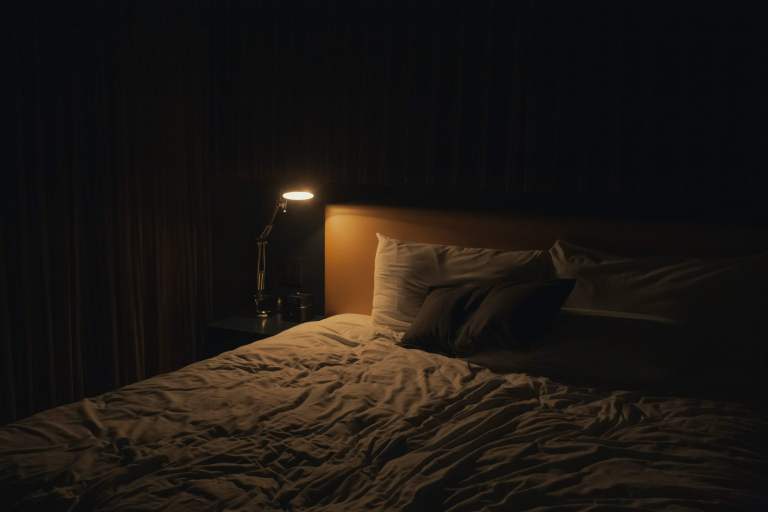
Bedroom sleep by Teekay RM

How to sleep better

Small changes, big difference.

This was supposed to be a simple blogpost about a few changes I made to improve my health. Nothing deep, nothing structured. But once I started writing, one thing became obvious. Sleep wasn’t just one habit among others, it was the foundation behind them all. So instead of burying it in a longer piece, I pulled it out entirely. This is a focused breakdown of how I reshaped my sleep and nervous system.

Sleep isn’t just rest. It’s not just recovery. It’s something far more subtle, almost something we’ve forgotten how to experience properly. The french refer to sleep as “la petite mort”, or “the little death”. Nas, the legendary rapper also referred to it as “the cousin of death.” We all know something deep takes over when we’re asleep, we just don’t know how deep.

Whether you see that as spiritual, neurological, or both, one thing is certain. Sleep isn’t passive. It’s something you prepare for, something you enter, something you either respect or disrupt.

  • Heart rate is the real gatekeeper

Most people focus on how tired they feel, but that’s not what determines sleep quality. Heart rate does. If it’s elevated when you’re about to fall asleep, the night is compromised before it even starts. You might still pass out, but the depth, recovery and continuity won’t be the same. What’s interesting is how many things influence heart rate. Late meals, drinking too close to bed, blue light, mental stimulation, these are all factors. Sleep doesn’t start when you lie down, it starts hours before.

  • The four-hour rule

One of the most effective ways I found. Simple in theory but harder in practice: Stop eating and drinking about 4 hours before sleep.
When I stick to it, the difference is immediate. My heart rate drops more easily, I don’t wake up in the middle of the night to use the bathroom, and my sleep stays uninterrupted. It also extends my fasting window naturally, which supports recovery and deeper cellular processes during the night. I now aim to stop all intake at least 2 to 3 hours before bed, 4 feels long at times..

  • Warm extremities, faster sleep

Another overlooked factor is temperature distribution. If your hands and feet are cold, falling asleep becomes harder because the body struggles to shift into a resting state. I don’t like sleeping in socks, so I use different workarounds to keep my feet warm, like heating pads.

  • Deep pressure and a sense of safety

Sleep is also psychological. The nervous system needs to feel safe enough to let go. One thing that helped more than I expected is using heavier covers or even placing a pillow on top of my torso. That pressure creates a grounding effect. It reduces restlessness and makes it easier to drop into deeper sleep. It’s the same principle behind weighted blankets.

  • Spinal alignment in side positions

Posture doesn’t stop mattering once you’re asleep. I often fall asleep in a fetal position, and adding a pillow between my legs made a clear difference. It keeps my hips aligned, reduces strain on my lower back, and prevents tension from building overnight.

  • No pressure around the waist

I also became sensitive to anything compressing my stomach. Elastic bands started to feel intrusive once I paid attention. So now I have this black pair of very loose shorts with worn-out drawstrings that barely apply any tension. It’s the only piece I can tolerate consistently. Everything else feels restrictive.

  • Sleeping without layers

I didn’t always mind sleeping fully clothed. However, at some point I started waking up overheated and restless. So I adjusted gradually. First to go was the top, then the pants. My body regulates itself better without unnecessary layers.

  • Never sleep in plastic

For some mysterious reason, I used to think fleece was an ideal material. Light, warm, comfortable. But a friend pointed out that it’s just polyester. Plastic. That changed how I looked at it completely. Since then, I’ve moved away from synthetic fabrics in bed. I still own a few fleece items, but only as outer layers. Never directly on the skin and never in bed. So now I mostly sleep in cotton or nothing at all.

  • No charging by the bed

I always knew having devices charging right next to the bed wasn’t ideal, but convenience has a way of creeping back in. Thankfully, my wife reminded to reset that boundary, and I have. Since then, phones charge outside the bedroom. Simple.

  • Sleep as a system

Once all these pieces come together, you stop seeing sleep as a single action. It becomes a system. Timing, temperature, posture, materials, stimulation, all interacting at once. Change one variable and you might feel a difference. Change several, and the entire experience shifts. I don’t see sleep as something I “get” anymore. I see it as something I build, night after night.

Thanks for reading.

Teekay

Winter by Tee

Winter knows something we forgot

You don’t hate winter, you hate how we live through it.

I’m such a winter person. I resisted that idea for years because I don’t particularly enjoy being cold and I absolutely hate humidity, but I’m done arguing with it now.

Winter is my favorite season, the one that makes me feel most alive. Fall comes close behind. Maybe I’m really a fall-first person who only settles once winter arrives. Fall feels like a threshold, a kind of preparation, while winter is the place it all leads to.

Most people say they hate winter, but I don’t even think that’s true. I think they hate winter under capitalism, which is a very different thing.

Winter isn’t simply December 21st to March 20th like we’re taught in school. December 21st is the winter solstice, the shortest day of the year, the deepest point of darkness. In many ways, that’s peak winter. It’s both the heart of it and the beginning of its slow release.

If you look at older seasonal systems, especially the Celtic calendar, winter is often understood differently. It begins around early November, with Samhain, and transitions toward spring around early February, with Imbolc. I’ve always intuitively aligned with this rhythm, a rhythm that feels more real in the body.

Winter always makes me nostalgic about my childhood. Where you grow up shapes your relationship to it. Below the equator, winter falls during what we call summer months. It’s shorter, less harsh. It’s still winter, but it doesn’t carry the same weight. Above the equator, winter has a presence. It changes everything.

Winter in New York, for example, is unmatched. But to understand it, you have to start with fall. Fall is special in a way that’s hard to replicate. The air sharpens, the leaves start falling, the temperature drops just enough to wake you up. School starts again. People return from summer scatteredness with a sense of purpose. There’s motivation, a quiet hope that something new can begin before the year closes.

Then come the holidays. I don’t celebrate them myself, but I can’t deny the atmosphere. Halloween, with kids everywhere. Thanksgiving, massive in New York. Then the Christmas season, with its films, its smells, its food. Cinnamon, baked goods, warmth. Fall is about getting cozy. It’s about preparing, consciously or not, for winter.

And then winter arrives.

One of my favorite childhood memories is hearing on the radio that a blizzard had shut everything down. Schools closed for days. Travel discouraged. The world paused. I remember the feeling of going back to bed, diving under the blanket, watching the snow fall outside. There was a kind of collective stillness. Everyone was home at the same time, in the middle of the week, which almost never happened.

Winter meant snowball fights with family and friends. Building snowmen. Coming back inside after hours in the cold to drink something hot, cinnamon-heavy or just a simple hot chocolate. Winter also meant shorter days, which I’ve always loved. There’s something honest about darkness arriving early. It forces you inward, and you simply sleep better. At least I do.

Now that I live in a coastal town, winter has taken on a different form. The place empties out. It becomes a ghost town. Only a few locals remain. I can walk through the streets, along the beach, into the forests, and not see anyone. Not hear anyone. Just space, and peace.

Fall here is also the perfect time for mushroom picking. There’s something deeply satisfying about finding your own food, bringing it home, cooking it. I don’t do it as often as I used to, but when I do, it reconnects me to something older than all of this.

Winter also brings unpredictability. Storms, floods, strong winds, snow.

I’ve always been fascinated by storms. There’s something humbling about them. They remind you how small you are without humiliating you. Just placing you back in proportion.

And this is where my relationship with winter becomes more than just aesthetic.

Winter, to me, is supposed to be a time of slowing down. A form of hibernation. Not complete inactivity, but a reduction. A softening. A withdrawal from constant output.

But winter under capitalism is the opposite of that.

It’s when everything accelerates. Black Friday. Christmas consumption. New Year’s, January sales. Valentine’s Day. It becomes a concentrated period of economic extraction. A time where people are pushed to spend more, move more, produce more, exactly when their bodies are asking for less.

I don’t adhere to that. I reject it.

Because biologically, intuitively, winter asks something else from us. Even illness patterns reflect that. People don’t just get sick because of viruses. They get sick because they keep pushing at summer pace in a winter body. They ignore the signal to slow down.

Historically, people understood this. They worked through the year, harvested their crops, prepared for winter. Around the end of October, they gathered, celebrated the end of harvest. And then life shifted. Maintenance replaced expansion. Survival replaced growth.

Nature does the same. Animals retreat. Bears hibernate. Bees cluster. Even plants withdraw into themselves. Winter is not death. It’s conservation.

I sometimes imagine a different life. A cabin. A cycle where summer is for harvesting, fall for preparing, winter for resting. Wood gathered. Food stored. Time spent simply maintaining what’s already there.

Life, at its core, is that simple. But systems built on constant expansion don’t allow simplicity to survive.

Winter, for me, is also about people. Not crowds, but closeness. Seeing friends, family. Sitting together, drinking tea, sharing time without urgency. There’s a different quality to connection in winter. It’s slower, deeper.

Even sports feel different. The air, the light, the coziness of it all. Everything sharpens.

And if I’m honest, part of why I love winter is personal. I’m introverted. I need that inward space. But it’s also something else. A fatigue with what humanity has become. The constant noise, the endless movement, the destruction of everything around us.

Winter feels like a counterforce.

It slows us down whether we like it or not. A storm doesn’t ask for permission. A blizzard doesn’t negotiate. When it hits, everything stops. And in that moment, we’re all equal. No one is above it.

There’s something powerful in that.

To me, winter restores balance. It interrupts the illusion that we can operate at maximum intensity all year long. The shortening of days, the stretching of nights, the way time itself feels heavier, slower, none of that is accidental. It’s a form of design.

Fighting that rhythm has consequences. You see it in people who try to live winter like summer. They burn out. They get anxious. They get sick.

I haven’t had a cold in years. That’s not just because I’m active or because of my diet, though those matter. It’s because I try, as much as possible, to align with that rhythm. To accept that winter is not the time to push.

Winter is about gathering. With nature, with people, with yourself. It’s not about peak productivity. It’s not about consumption. It’s not about proving anything.

It’s about remembering.

And maybe that’s why I love it so much. Because despite everything, despite the systems we’ve built to override it, winter still imposes itself. It reminds us, quietly or violently, that we are not in control of everything.

That there is a rhythm beyond us.

And that we’d probably be better off listening to it.

Thanks for reading.

Teekay.

Sprinter track runner teekay rezeau-merah

Why I misunderstood sprinting for so long and why most people still do

Insights from a former student-athlete.

I started sprinting in 2004. I made my high school teams, then college teams and for a long time I thought I understood speed. I trained hard, I listened to my coaches, I did what was asked.

I hit my ceiling at some point, then one thing led to another till I completely stopped running. I went into boxing in the meantime, then bodybuilding, and slowly but surely stopped training altogether. I played football here and there, surfed for a brief moment, but it wasn’t sustained. Hiking became my favorite thing. Great for cardio, makes me happy and snappy. I felt right where I belonged.

In 2025, after years of just living and many injuries later, I came back to sprinting as grownup. But this time, I noticed something uncomfortable that became obvious. For most of my early career as a sprinter, I was running fast without truly understanding why or how.

That realization is frustrating because it feels like wasted time, and wasted potential.

In hindsight, I now feel like I never went beyond 80% of my capacity. It wasn’t because of my coaches, I simply didn’t understand what my sport was all about, so today, I want to make sure whoever reads this does, because sprinting culture rarely helps.

  • What sprinting isn’t

Speed is constantly explained using endurance logic. Even the gadgets we use, however technical, aren’t really designed for sprinters. Not at the highest level anyway.

Sprinting, for the longest time, was explained through running more, working harder, suffering more than the competition. That mindset, aka hustle-porn, comes from the fact that long distance running dominates the athletics scene. Endurance events shape how people think training works, even when it doesn’t apply to their sport.

One of the first myths I believed (and most people believe) is that sprinters run a lot. We don’t, at all. I used to, but not anymore. I always assumed volume built speed. Matter of fact, many coaches still believe that, and end up frying their runners.

  • What sprinting actually is

Research has shown that elite sprinters accumulate very little true sprinting volume. Max velocity running is neurologically brutal. You can’t repeat it endlessly without dulling the signal from the brain to the muscles. When the central nervous system is tired, coordination goes first, technique collapses, ground contact times increase and speed vanishes. Running more just teaches you how to run slower. That was the first realization I made when I went back into it. Never again!

Next, I believed gym work was mandatory and that strength automatically meant speed. Lift heavy, get powerful, get fast. Not true! Sprinting happens in time windows so short that slow strength barely matters. What matters is how fast you can apply force and how well you recycle it through tendons and stiffness. I’ve seen athletes with modest lifts run incredibly fast and others with impressive numbers never move well on the track. Strength only matters if it transfers.

Another point, for years I misunderstood elasticity. I thought plyometrics were optional extras or warm up games. Coming back to sprinting made it obvious that elasticity is the bridge between strength and speed. I’m not saying I never heard this beofre, I’m saying I wasn’t mature (or smart) enouigh to understand it.

Tendons storing and releasing energy, joints staying stiff at the right moments, rhythm staying intact under high speed. Bounds, hops, wickets and short accelerations teach the nervous system timing. They turn power into something usable. Without elasticity, power stays trapped.

Speaking of stiffness, it is the mother of all improvement in sprinting, another aspect we hardly talk about, or train.

Body composition myths confused me too. Being muscular doesn’t make you slow. Being lean doesn’t not make you fast. Non functional mass is the issue. Muscle that can’t be expressed within sprint specific contact times is dead weight. Leanness that compromises force output is just as useless. Speed only cares about force, timing and coordination.

Drills were another blind spot. I used to see them as filler. Now I see them as low cost technical rehearsal. Drills allow you to practice posture, front side mechanics and rhythm without frying the nervous system. When speed is high, there is no thinking. The body falls back on patterns. Drills build those patterns.

Last but not least, the biggest lesson I learned in all these years is how important rest is, and I don’t just mean sleep, which is the obvious one. When I was younger, stopping early felt lazy, like I wasn’t hustling enough. Now I know it’s intelligent, the right thing to do even. Speed doesn’t improve inside fatigue, it improves when the nervous system is fresh enough to adapt. That’s why we take long breaks between sprints, to rest the nervous system. Adding sets instead of reps, ending sessions before speed drops, spacing high intensity days and protecting sleep are not soft choices, they’re performance choices.

Looking back, it wish I understood all these things earlier. But sprinting is misunderstood because endurance logic dominates sports in general. Distance runners train more and win more medals overall, so their methods are treated as universal. Well, science and elite experiences say they’re not. Speed lives in a different world.

Sprinting rewards intelligence. The faster you want to be, the smarter you have to train.

Cheers!

Tee

Pollinating bee

Reasons why we don’t eat honey

Besides the fact that we don’t “need” to.

Honey comes from bees. Bees are tiny creatures who play a huge role in keeping our planet alive and healthy, I’ll explain how.

Bees are born in beehives, where they grow up, work together, and take care of each other. While most people think bees are just busy flying around, they’re not! They actually have specific “jobs”, or tasks if you will. In fact, each bee has a specific role: some clean the hive, some feed the baby bees, and others go out to find food. Basically, they’re like us, except more advanced, because they don’t pollute, fight over nonsense and hate each other for no reason.

Bees are also pollinators.

When bees buzz from one flower to the next, they’re doing something extremely important known as pollination. Here’s how it works: As bees collect nectar for making honey, they carry pollen from flower to flower. This simple act helps plants grow fruits, veggies, seeds, and even more flowers. Without bees doing their thing, a lot of the food we rely on wouldn’t exist.

Let that sink in for a second.

Case in point, 75% of the food we eat depends on pollinators like bees (WEF). 75 freakin’ percent! Apples, strawberries, cucumbers, almonds, and even coffee all need pollination. So, losing bees would mean most of these foods would disappear, or become extremely rare and expensive.

Besides, pollinators also help plants that grow in the wild. These plants give food and shelter to animals and help keep the air clean. So, pollinators help whole ecosystems survive, not just farms and gardens.

While bees are the most famous pollinators, they’re not the only ones. Butterflies, hummingbirds, bats, moths, beetles, and even some types of ants and wasps also help pollinate plants. However, bees are the most effective because they focus their energy on flowers and carry lots of pollen.

This year (2025), we’ve had the worst honeybee loss in recorded history in the US. In fact, 80% of honeybees died suddenly. We still “don’t know” why (pesticides, it’s pesticides).

So, why don’t we eat honey? Simple: bees make honey to feed themselves and keep their hive alive, especially through the winter. When humans harvest honey, they’re taking away the bees’ own food (and heat) source. To make up for it, beekeepers sometimes replace the honey with sugar water, but that doesn’t give bees the nutrients they need to stay healthy. In fact, just like in humans, too much sugar can weaken their immune systems and make them more vulnerable to disease.

Worse still, to harvest honey, beekeepers often use smoke or chemical fumes to force bees out of their hives. This disorients them, causing stress, panic, and confusion, sometimes even leading them to get lost or die as they flee.

Even though it might not seem harmful at first, stealing honey puts a lot of pressure on bee colonies. It is in fact one of the reasons we’ve seen millions of bees die in recent years.

This is why many vegans consider honey as part of animal exploitation. The more we take from bees and damage their homes, the fewer bees we have, which in turn puts entire ecosystems, and our own food systems, at risk. In numbers, honeybees pollinate a worth of 15 billion dollars of crops in the US only, yearly.

If bees disappear, many plants won’t be pollinated. This means fewer fruits, vegetables, and nuts. Animal species that eat these plants will struggle, and so will the animals that eat them. It’s a chain reaction that could cause entire ecosystems to collapse. Eventually, the extermination of bees would entail food shortages even for us, humans, and thus our death as well.

Humans have long seen themselves as sitting at the top of the pyramid, a concept known as speciesism, but in reality, we’re just one part of a vast, interconnected family of living, sentient beings.

Fascinating facts about bees

Here’s where things get interesting: Plants, being rooted in the ground, carry a small negative electric charge. Interestingly, this charge increases the higher up the plant you go, creating an electric field around the flower itself.

Bees, in contrast, acquire a positive charge during flight due to friction with the air, which causes them to lose electrons. So, as a bee approaches a flower, the opposing electric fields of the bee and the plant begin to interact. This interaction subtly changes the flower’s natural vibrations or signals, imperceptible to humans, but detectable to bees.

When the bee lands on the flower, the positive charge from the bee and the negative charge of the flower neutralize each other almost instantly. This leads to two remarkable outcomes:

  1. The negatively charged pollen from the flower is attracted to and effectively “jumps” onto the positively charged bee;
  2. The flower’s electric field is altered, signaling to other approaching bees that it has already been visited. This change communicates that the flower likely has no nectar left, prompting bees to move on and return later. Mindblowing!

So, flowers use electric fields not just to attract pollinators, but also to communicate whether they still have nectar. They have their own language of electricity, completely imperceptible to us.

Other interesting facts about bees: They can also recognize human faces, communicate with each other through a little dance, and even show signs of emotion. Scientists also suggest bees can count and they might even dream.

What can we do to protect the bees and our soils?

  • Ban pesticides.
  • Plant flowers that bees love, like lavender, sunflowers and wildflowers.
  • Replace honey with the million other alternatives in existence: maple syrup, agave nectar, date syrup, molasses, and even fruit-based syrups work great. Why participate in the extinction of a whole species (and many other would follow suite) when you can avoid it?

Bees may be small, but they are mighty. Taking care of them is not just about saving one species, it’s about saving the world we all share.

Thank you for stopping by. This post was inspired by a conversation with my wife ❤

Peace!

Teekay

cabin in the woods

Living without electricity isn’t as hard as you think

Millions of people do it, no bid deal.

Living without a connection to the grid, and mainly the electric grid is a significant lifestyle change.

As a lifelong explorer and survival enthusiast, I’ve always hoped for the best but prepped for the worst.

Live off the grid by Teekay Rezeau-Merah
Off-grid living, photo by Alex Bierwagen

In most Western countries, fundamental commodities such as electricity, running water, well-maintained roads, and a wide range of goods and services are conveniently accessible. However, life is quite different in other parts of the world.

  • Travel with me

For instance, when my family and I relocated to Mozambique in 1996, basic provisions like sugar and cooking oil were exceptionally scarce. Similarly, when we moved to Ethiopia in 2004, dairy products and sugar were also in short supply.

Not only that, but during our time in Cape Town (South Africa), Maputo (Mozambique), Algiers (Algeria), Addis Ababa (Ethiopia), and (very briefly) Cairo (Egypt), water scarcity was a prevalent issue, particularly during the summer months.

In fact, we used to get up at 4 AM to fill up our water tanks and jugs.

Unfortunately, water shortages are still widely common, and some fierce battles for control over water have already begun.

  • Water wars
water scarcity by Teekay Rezeau-Merah
Water battles, Image by Freepik

Take the above-mentioned region of East/North Africa for instance. The Nile River is at the heart of an ongoing battle for water.

Indeed, Ethiopia, Egypt, and Burundi are all entangled in a high-stakes discussion that could reshape their destinies.

Long story short, Ethiopia’s audacious endeavor, the Grand Ethiopian Renaissance Dam (GERD), an engineering marvel rising on the mighty Blue Nile has cause a lot of discussion and anger in that region, rightfully so.

Such an endeavor endangers both Egypt and Burundi, who fear the ripple effects of such a grand project.

  • An electricity-free lifestyle
oil lamps and candles by Teekay Rezeau-Merah
Oil lamp by Photo by Bernard Tuck

Now, in a perplexing paradox, frequent power outages were extremely common in Ethiopia, and I mean several-times-a-week common, even though Ethiopia possesses ample electricity to meet its population’s needs.

Surprisingly, this occurs because the local government chooses to export their energy to neighboring nations, leaving their own citizens in the dark.

I spent over four years (teenage years) in Ethiopia, over four years of persistent power cuts, so I learned a thing or two about adaptability and ingenious hacks to beat the system.

  1. First of all, I hate artificial (street) lights. One of the things I miss the most about Africa is the tranquil stillness of the night. I always found the incessant intrusion of artificial lights aggressive. 
    With that being said, I love candles and oil lamps with all my heart. They embody a charm that captivates me entirely. Indeed, candles and oil lamps are a gentle alternative to artificial light, as they gracefully replace it without imposing their presence. Their warm glow is synonymous with coziness, while their soft illumination remains pleasing and comforting to the eyes. Perfection!
  2. Many of us rely on electric utensils and stoves for cooking, not in Africa (not back then at least). 
    My family always opted for non-electric cooking methods like gas or an outdoor wood-burning stove. Dutch Ovens are also pretty awesome if you want to cook bread and pizzas. No power, no problem.
  3. Food storage: This is a big one. “How did you survive without a fridge?”. First of all, we did have a fridge, it was just turned off most of the time. Since we never had an underground cellar storage (that would’ve saved us the hassle), we had to relearn about ancient cooling techniques, like pot-in-pot coolers (or clay pot coolers). 
    Here’s how they work: First, you’ll need two terra-cotta pots. Place one (the smaller one) inside the other, allowing for an approximate 3 cm (1.2 in) to 4 cm (1.6 in) gap between them. Fill the gap with sand, then saturate it with water.
    Finally, place your fruits and veggies inside the small pot and cover everything with a wet towel.
    As the water slowly evaporates from the cooler, heat is taken from the clay pots, keeping the temperature of the food cool inside. 
    But that’s not the only way to store food, you can also learn about preservation techniques like canning, pickling, and drying.
  4. Heating and cooling: Africa isn’t as hot as they say in movies, it actually gets pretty chilly over there, depending on where you are.
    Fun fact: You can ski in Africa. In fact, there’s so much snow in Algeria, Morocco, and South Africa that they have their own ski resorts, with approximately 40 kilometers (25 miles) of ski slopes. 
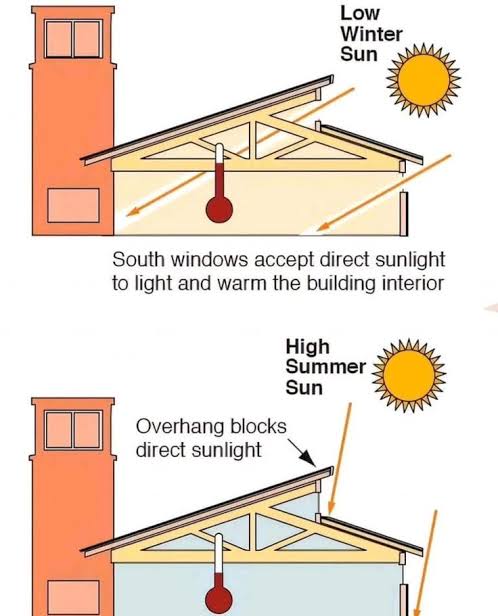
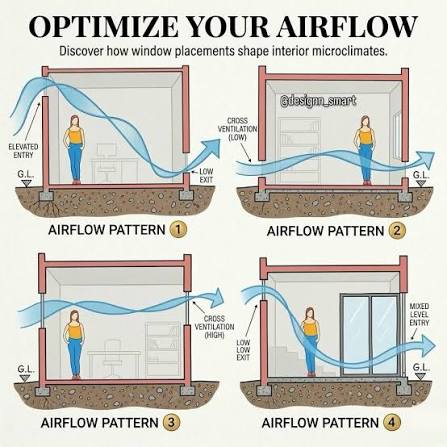
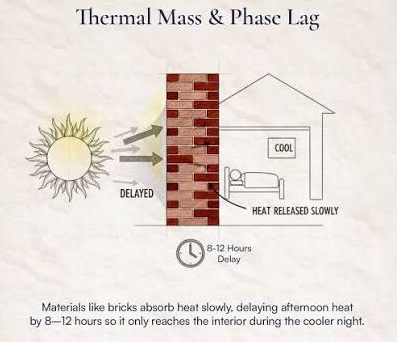
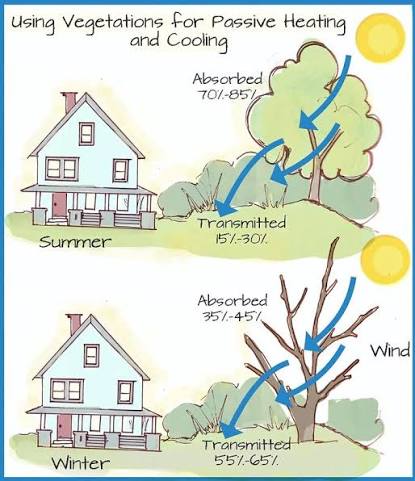
    Anyway, one of the most efficient techniques to regulate indoor temperatures is known as “passive solar design. Passive solar homes use natural ventilation and insulation techniques to regulate the temperature indoors.
    However, in colder climates, wood-burning stoves and passive heating methods like thermal mass and efficient insulation are common. 
    In hotter climates, shading and natural ventilation were our go-to, with evaporative techniques coming in handy (with battery-powered fans).
  5. Water supply: As stated above, we had tankers (or water tanks) in all of our homes. Our water tanks were always placed above the house, allowing for gravity to do the rest.
    However, in total transparency, we still relied on an electric current (and water pump) to get the water up there. We used it once to twice a week. 
    Other methods we used were conventional water wells, hand pumps, and rainwater collection systems. I used to LUHV elaborating and kidgineering rainwater collection systems around the house!
  6. Communication: Well, most of what I’m telling you here went down between 96 and 2010, so iPhones were pretty much nonexistent (for the most part). 
    However, I did have an MP3, then the first iPod, on which I watched hundreds of movies and my favorite bootlegged series. I used to charge my electronics at school or on our drive home.
    We also relied on our landline a lot back then.
  7. Speaking of entertainment, the reason I spent so much time kidgineering and playing outside was that I had no other choice. Video games were a big no-no till I was 15 or 16, so reading, playing board games, puzzles, biking, and pursuing outdoor hobbies was all I did.
    I also read the newspapers. No, this wasn’t the ‘70s ^^
  8. Hygiene: Have you ever washed your clothes by hand? And I mean ALL your clothes, not just a pair of socks? Well, I have, and most people still do. It’s no big deal, it’s pretty fun actually.
  9. Human-powered appliances: My grandma (who obviously didn’t live with us) had the best appliance ever made: A hand-cranked coffee grinder. 
    I loved that thing!
    I genuinely believe we need more of this stuff today. It makes life so much more fun. 
    On a personal level, I’ll always favor an old-school kettle or manual food mill & grinder over new, electric ones. Also, I never owned a microwave.
  • Final Thoughts

Technology is convenient when used properly and I believe electricity is a blessing to humanity.

However, we ought to reduce our reliance on modern tech and learn how to live simply. As you can see, living without one of the most important inventions known to man, electricity, is doable, though it requires careful planning, resourcefulness, and adaptation to alternative methods. Assessing one’s specific needs and resources is paramount for such an endeavor, but it’s manageable and within everyone’s reach.

Self-reliance is the future.

Thanks for reading.

Peace.

Teekay.

How Positive Affirmations Changed the Way I Think

Away from the clichés.

The human brain is a remarkable organ. It’s responsible for everything we think, feel and do. Our brains are the driving force behind our behavior and are constantly working to keep us safe from harm.

The manner in which our brains process information is not always reasonable, hence why it’s extremely common for us to craft negative narratives based on our past experiences.

  • Uncertainty

One of the ways our brains work to keep us safe is by perceiving uncertainty as a danger or a threat.

The reason we panic when we lose our mom in a supermarket, or lose sight of our hiking partner testifies to that. Being in unfamiliar or unpredictable situations makes our brains go into overdrive rather quickly. This phenomenon allows us to better assess the situation and determine whether it’s safe or not.

Whenever our brain perceives said situations as a potential threat, it immediately creates negative stories and outcomes, thus preparing us for the worst case scenario.

Fascinating, right ?

Our brains are wired to prioritize survival over happiness.

In other words, our brains are more concerned with keeping us ALIVE than with making us happy, which seems fair as far as I’m concerned.

However, and as a result, the narratives we create in the present are often based on experiences from the past, and most importantly, experiences that have led to negative outcomes.

These experiences are stored in our subconscious as core beliefs, which our brains use to create our current narratives.

  • Core beliefs

You may have heard this before (or not), but our core beliefs are often formed in childhood and are based on our experiences with our parents or caregivers.

For instance, people who grew up in an environment where they were constantly criticized or told that we weren’t good enough develop a core belief that they are unworthy or unlovable.

This belief then manifests in their present-day narratives, leading them to believe that they’re not capable of success or that they’ll never find happiness, or love.

The problem with these negative narratives is that they can become self-fulfilling prophecies. By believing that you’re not good enough or that you’ll never find happiness, you’re less likely to take risks or pursue your goals, which then leads to an unfulfilling and unsatisfying life.

  • How to overcome negative narratives

One way to overcome these narratives is to challenge your core beliefs.

By examining the beliefs we hold about ourselves and questioning where they come from (learning to unlearn), we begin to see that most of them aren’t based in reality.

It’s obviously easier said than done, but once you’ve taken that first step, the next step, which is to create new, more positive narratives will come more naturally.

For example, if you have a core belief that you’re not good enough, you can challenge that belief by focusing on your strengths and accomplishments, and what got you here.

I’ve always done this whenever I felt down. I love reminding myself of how far I’ve come, all the mountains I’ve climbed and empower myself that way. Positive affirmations are a major confidence boost and gratitude is key to a purposeful life.

Surrounding myself with supportive people and ONLY consuming empowering and positive content (audio, written and video) has also played a huge role in my fight against negativity and fear.

Another way to overcome negative narratives is to practice mindfulness.

Practicing mindfulness is one of my favorite topics on this blog. I wrote multiple pieces about it because I truly believe in the power it possesses in the fight against mediocrity, negative self-talk and defeatism.

Mindfulness, as most of you must know, is the practice of being fully present in the moment and observing our thoughts without judgment.

Practicing mindfulness makes me more aware of my own negative narratives and is a necessary step in my journey of letting go.

Practicing mindfulness also helps me focus on the present moment and the positive experiences I’ve had (or that I’m having), rather than worrying about the future or dwelling on the past.

Photo by Matt Collamer

So whoever is reading this, use this piece as a reminder to cultivate mindfulness, always question everything, including your core beliefs and to be kind to yourself.

Don’t take making it this far for granted, life ain’t easy but you’ve got this. Also, remember, our brains view uncertainty as a peril so don’t trick yourself into believing you’re alone in this fight against negative narratives, you’re not.

While our brains prioritize safety over happiness, positive affirmations are powerful enough to steer negative narratives towards positive ones. If anything, I’m living proof of this.

P.S.: Stay hopeful 🙂

Thanks for reading.

Tee.

An era of unprecedented competition for the average individual

The life of the average man is going to be more competitive than ever.

Numerous people have written about AI before. Most of them focus on the good, some of them focus on the bad.

Is there reason to worry ?

One thing is for sure, life always gets worse before it gets better.

This new era won’t be any different.

The fittest will survive, the rest will get left behind.

But let’s be real for a second, the world has always favored the fittest, those who stand out. Being average is costly.

  • What does it take to stand out ?

Well, you won’t like the answer, my friend, but it takes a lot of suffering.

The cure for pain is in the pain.

Embrace your losses, embrace being discriminated against, injustice, the rigged system. Embrace it, but never accept it. Fight it, that’s how you become resilient, tough.

You have to GO through it in order to GET through it.

Good times make us soft, so let the struggles begin, let it come, we’ll be fine.

Have some faith.

After all, as time passed, the world got meaner. It’s always been like that. This won’t be any different.

Our history is plagued with long periods of cruelty and conflicts. Cruelty has a thousand faces, AI may just be one of them, like automation was a few decades ago.

But again, going through bad times builds resilience, we just have to learn how to manage our demons.

I know not everyone can, which is unfortunate, but humans are as strong as our weakest link. There’s hope in that.

Don’t cower away from difficulty, don’t try to drown your problems. Don’t be that person.

Cowardice feeds our weaknesses.

Face life with bravery and remember, bad things happen to make exceptional people.

If you’re a man of God like me, think about all the messengers that came before us, all the things they went through, from Abraham to Muhammad PUBT.

It’s no coincidence.

Whether it’s AI or something else, humanity will always prevail.

Believe.

Thanks for reading.

Teekay
PSA: Join Me on Medium, My Best Stories Are There !

I love Medium.

Langano in Ethiopia by Teekay Rezeau-Merah

My friend, there are over 100 stories waiting for you to explore on my Medium blog. What are you waiting for ?

Click HERE.

My work focuses on sharing stories regarding my experiences as a minimalist, my international travel escapades, guidance on living a purposeful life, and insights into the van life lifestyle.

For those of you wondering, I will definitely keep this blog up and will try to publish stories on here as often as I can.

Once again, here is a link to my Medium page: https://medium.com/@teekayrezeaumerah

Later !

Tee

30 Stories on Medium in 30 days

2023 is the year I decided to start writing again. Like, everyday !

My goal this year is to post 5 Medium stories every week till my birthday (December 31st).

So far, I managed to publish 31 stories, and I have about 120 more in my notes. February isn’t even over yet (yeah, crazy !).

Just like with my podcast, I want to keep inspiring as many people as I possibly can before I leave this dimension.

My content is mostly timeless or evergreen, except for a few pieces here and there, so I’m pretty sure it will remain relatable for a very long time.

Also, I write a lot more about minimalism and van-living on there.

Of course I still write about my own adventures, but I always twist them to be more than just stories.

That’s the one thing I want from my content. I’m done writing on trends, I now only create to remain relevant FOREVER !

Check out my blog on Medium guys, you’re going to LOVE it !

Peace !