Take back the night

Maybe your sleep isn’t broken, maybe your schedule is

The middle sleep vs capitalism

I’ve always felt there was something strange about the way we talk about sleep.

We speak about it as if it should be clean, obedient and uninterrupted.

You go to bed.

You disappear for 8 hours.

You wake up.

You function.

Then you do it all over again the next night.

And when the body does anything else, we treat it like a problem.

Wake up at 2 AM?

Problem.

Lie there thinking?

Problem.

Feel awake for a while, then tired again?

Problem.

Everything becomes a disorder the moment it fails to fit the schedule.

But I’m no longer convinced the schedule is neutral.

I’m not even convinced it’s natural.

Because I’ve lived another kind of sleep.

Not every night. Not perfectly. Not as some routine I’m trying to sell.

But enough to know there is something real there.

I sleep for 4 or 5 hours.

Then I wake up.

Not violently. Not in panic. Not because an alarm ripped me out of my body.

I just wake up.

The world is silent.

Everyone else is asleep.

The air feels different.

My mind feels different.

I pray, then sit in that strange state between sleep and waking, between night and morning, between the body resting and the soul speaking.

And then something opens.

Ideas arrive.

Problems untangle.

Sentences appear.

Things I couldn’t solve during the day suddenly become obvious.

No noise. No demand. No performance. No one needing anything from me.

Just me, the night and whatever rises when the mind is finally left alone.

That’s when I write some of my best work.

The over-controlled mind of the day goes quiet. The part of me that’s always responding, planning, defending, explaining and calculating finally steps aside.

And something deeper speaks.

Then, after a while, my body gets tired again.

So I go back to sleep.

Another few hours.

And somehow, the whole thing feels natural.

Maybe ancient.

Not broken.

Not disordered.

Not like insomnia.

Just ancient.

As if my body remembers something the modern world has tried to erase.

Maybe sleep was never meant to be one single block for everyone.

Maybe the middle of the night wasn’t always an issue to be addressed.

Maybe waking after a few hours wasn’t always something to fear.

Maybe there was a time when the night had two doors: one for rest, one for reflection, then rest again.

Historians have written about segmented sleep, especially in preindustrial Europe. People spoke of a first sleep and a second sleep. Between the two, they might pray, think, talk, make love, tend to small things or simply exist in the dark without immediately diagnosing themselves.

That detail matters.

Because today, when someone wakes in the middle of the night, they don’t usually ask, “What is this moment giving me?”

They ask, “What’s wrong with me?”

That tells us something.

Not only about sleep.

About the society around sleep.

Because modern life doesn’t tolerate rhythms it can’t use.

It sees darkness and calls it wasted time, hence the horrendous daylight saving invention.

It sees silence and tries to fill it.

It sees the body refusing to behave like a machine and immediately asks which product, pill, app, supplement or routine can force it back into obedience.

This is where sleep becomes political.

Sleep itself is natural.

The modern sleep schedule isn’t.

It belongs to work.

To school.

To office hours.

To alarms.

To productivity culture.

To the economic need to make bodies predictable.

Capitalism colonized our sleep.

It took something ancient, intimate and mysterious, then forced it into a format that serves production.

One block.

One alarm.

One workday.

Repeat.

And because we live in a performance-driven society, even rest has to justify itself.

We don’t sleep because the body is sacred.

We sleep so we can function and be productive.

We don’t rest because life is more than work.

We rest so we can return to work less damaged.

Even sleep has been made useful.

Recovery.

Optimization.

Output.

Efficiency.

A better brain.

A better body.

That’s the real sickness.

Not simply lack of sleep.

Not simply insomnia.

A society that can only respect sleep when sleep serves production is very sick.

Nature doesn’t work like that.

Summer is not winter.

December is not June.

The year breathes.

Days stretch and shrink.

Nights lengthen and shorten.

Trees lose their leaves.

Animals slow down.

Light changes.

Energy changes.

Everything adapts except us.

We expect the same output in winter as in summer.

Same wake-up time.

Same productivity.

Same pressure.

Same artificial brightness.

As if the body should be indifferent to the sun.

As if a dark winter morning and a bright summer morning ask the same thing from us.

They don’t.

Winter asks for slowness.

Modern economic life asks for output.

Winter gives us longer nights.

We turn on the lights and carry on.

Then when people collapse, we call it fatigue, burnout, low motivation, seasonal depression or poor sleep hygiene.

Sometimes those words describe something real.

But they can also hide something.

Many people are not failing at rest.

They’re being forced to live against it.

Their rhythm isn’t broken by nature.

It’s broken by a dying society that still demands performance from exhausted bodies.

That’s why I don’t trust most conversations about sleep.

They talk about blue light, magnesium, melatonin, sleep trackers, cold rooms and perfect pillows.

Fine.

Some of that can help.

But they rarely talk about capitalism and all it entails.

Stress.

Work.

Poverty.

Grief.

Debt.

Noise.

Fear.

The nervous system living under constant pressure.

They rarely admit that many people are tired because their lives are built against the body.

Instead, they sell us solutions to problems the system created, the system being capitalism.

You’re stressed, so they sell you sleep content.

You’re overworked, so they sell you recovery hacks.

You’re anxious, so they sell you supplements.

You’re disconnected from nature, so they sell you artificial routines.

You’re exhausted by capitalism, so they sell you wellness.

And the simplest truth is ignored.

Maybe people need less stress.

More time.

More silence.

More prayer.

Work that doesn’t swallow their life.

Enough space to do things that make them happy before their body collapses at night.

Maybe people don’t need to become better machines.

Maybe they need to stop being treated like machines at all.

Science can tell us many useful things about sleep, but it becomes dangerous when it forgets that humans are not only organisms in a lab.

A sleep study can measure the brain.

It can’t fully measure what the night means to a person.

It can’t measure the feeling of waking naturally after 4 or 5 hours, praying in the dark, writing from a place you can’t access during the day, then returning to sleep as if you had visited some hidden room inside yourself.

That room matters.

That middle space matters.

The world has become so loud that we’ve forgotten what the mind does when it’s not being interrupted.

During the day, thought is constantly attacked.

Messages.

Screens.

Tasks.

People.

Plans.

Bills.

Responsibilities.

Even when we’re alone, we’re rarely alone.

But the middle of the night is different.

It gives the mind a privacy the day can’t offer.

Maybe that’s why creativity often lives near sleep, near dreams, near the strange border where the rational mind loosens and something deeper comes forward.

The edge of sleep is not empty.

It’s fertile.

Not always useful in the capitalist sense.

But sometimes revealing.

And that is not the same thing.

That’s why I refuse to see every night waking as a problem.

Sometimes it’s stress, illness or pain.

Sometimes it’s too much worry, too much light or too much life pressing on the chest.

But sometimes, it’s something else.

Sometimes the body wakes because it has entered the second chamber of the night.

The chamber where the ego is quieter.

Where ideas come without being chased.

Then sleep returns.

Not as defeat.

As completion.

First sleep.

A waking.

Second sleep.

A rhythm, a conversation between the body, the soul and the dark.

Maybe that’s what we’ve lost.

The true meaning of sleep.

We reduced it to recovery.

Made it serve productivity.

Turned it into another thing to optimize, track and monetize.

We forgot that sleep is also surrender.

Also mystery.

A borderland.

One of the last places where the body refuses complete control.

That might be why modern life is so obsessed with managing it.

Because sleep reminds us that we’re not machines and never will be.

No matter how many alarms we set.

No matter how many apps we download.

No matter how many experts explain our cycles.

At some point, the body asks to return to the dark.

And maybe, if we stop being afraid of every interruption, we might discover that the night wasn’t only made for unconsciousness.

Maybe part of it was made for meeting ourselves without the noise of the world.

The most human sleep was never a straight line.

It was a tide.

The middle of the night was never the enemy.

The enemy is a society that turned even rest into a performance.

Resist capitalism, take back your sleep.

Thanks for reading.

Tee.

Small changes to improve life

An interconnected system that made me healthier and more aligned.

You can’t expect your body to function properly if everything you expose it to works against it.

What you touch, what you eat, what you breathe in, what you surround yourself with matters.

Most of these changes didn’t come from theory. They came from small moments of doubt. Something feels off, you look into it, you adjust, and then you don’t go back. Over time, those adjustments start forming a pattern.

  • Plastic was the starting point

Once I started paying attention, plastic was everywhere. Not just single-use items, but containers, cutting boards, utensils, bottles. Even when it’s thick and reusable, it still degrades over time. Microplastics are already present in food and water, so adding more exposure through daily habits made little sense. I removed plastic containers, replaced cutting boards, and shifted entirely to glass, wood, and metal for anything that comes into contact with food. I now store and consume food exclusively using stable, non-degrading materials.

  • Water isn’t neutral

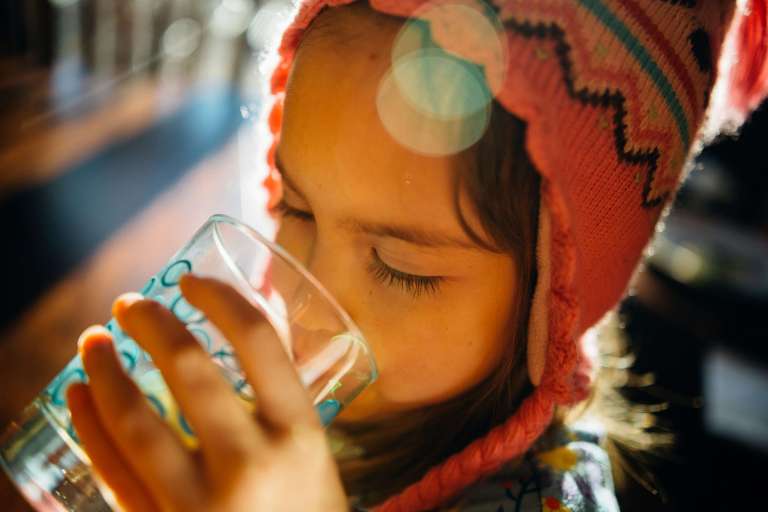
Tap water is often treated as a given, but once you look into what it contains, it changes how you approach it. I invested in a proper filtration system and regret not having done so earlier. Before that, I went with a basic pitcher, the Brita type, then moved to something more advanced (and more expensive) to remove a wider range of contaminants. That said, I also started being more intentional with how I drink water. In the morning, I’ll often have water with cucumber and lemon, and I’ll leave cucumber slices in the bottle throughout the day. Given how much of the body is made up of water (60%, vs 73% for the brain), it doesn’t make sense to treat it casually.

  • Cookware and daily exposure

Cooking used to be about convenience. Non-stick pans, plastic utensils, quick cleaning. Once concerns around certain coatings and chemical residues became more visible, that convenience started to feel like a trade-off. I replaced everything with stainless steel cookware and switched plastic utensils for wood or metal. It requires more attention, but it removes a layer of uncertainty.

  • Eliminating plastic in hygiene products

The same pattern showed up in the bathroom. Most hygiene products come in plastic packaging, and beyond that, their composition raises lots of questions anyway. Shampoo, shower gels, toothpaste, it’s all part of the same system. Moving away from plastic bottles was supposed to be difficult, till it wasn’t. Toothpaste remained the hardest to replace due to cost and availability, though totally doable. Plus, you can make your own, if time allows.
As for shampoo, it’s been close to a decade since I’ve reduced it drastically, once a month on average, and even less in the summer when I’m regularly in the ocean or rivers. When I do use one, it’s always a natural, oil-based, plastic-free option. The rest gets washed with regular, natural soap.

  • Perfumes and what goes through the skin

I used to collect perfumes. At one point I had around thirty bottles. It was part of how I presented myself. Over time, I learned more about what actually goes into most fragrances. They’re not just alcohol and plant extracts. Many contain compounds that interfere with hormonal systems. Applying them directly on the skin, especially around the neck, didn’t make sense anymore. In fact, it became a health hasard. I still use what’s left of my collection, but only and exclusively on my clothes.

  • Body lotions and absorption

That same logic extended to body lotions. At first, plastic packaging was the issue. Then I realized the formulations themselves raised similar concerns. Long-lasting scents rely on chemical stabilizers that don’t just sit on the surface, they penetrate well into our body and weaken our nervous system. I replaced them with simpler alternatives like coconut oil, jojoba oil, and monoi stored in glass bottles. They do what’s needed without unnecessary complexity.

  • Sound, stimulation, and the nervous system

There’s also what we expose our brain to. I used to listen to music at maximum volume for hours every day. Looking back, it’s surprising there wasn’t more damage in my inner ear. More recently, I started questioning constant exposure to wireless ear devices as well. It’s not easy to step away from, but I’ve made adjustments. I use wired earphones more often, reduced how much I listen to anything overall, and capped the volume so it never exceeds 85 decibels on my phone. Silence has taken a bigger place too, especially through long walks.

  • Food as a baseline

Diet was one of the earliest shifts and it stayed consistent. Processed sugars and ultra-processed foods were removed and haven’t come back. The focus is on whole foods, fiber and stable energy rather than spikes. Fermented foods like homemade kefir became part of daily intake to support gut health. Supplements were added with specific purposes. Creatine for performance and recovery, cordyceps and lion’s mane for energy and cognitive support, vitamin D in winter, omega-3 for long-term brain health, turmeric for inflammation. Fruit is eaten whole rather than juiced to avoid unnecessary glucose spikes. Alongside this, I fast intermittently throughout the year, supporting deeper internal regulation. And of course , everything 100% plantbased and palm oil-free.

  • Sun exposure, corrected over time

Sun exposure is another area where I had to adjust. For a long time I approached it carelessly. I even used coconut oil thinking it would protect my skin, when in reality it was doing the opposite. I rarely burned, but that doesn’t mean there was no damage. Over time, I learned to be more controlled. Less direct exposure on the face, protection when needed, and no more chasing tans.

  • Living closer to nature

One of the biggest shifts didn’t come from removing something, but from changing the environment itself. Living closer to nature makes everything easier. Movement, silence, exposure to natural elements. Practices like grounding or earthing stop being abstract ideas and become part of daily life. Walking barefoot, touching the ground, spending time in natural surroundings. There’s a noticeable effect on stress levels, posture, and overall balance. Even something as simple as leaning against a tree or staying still outdoors changes how the body settles. Oh yeah, and tree hugging FTW!

  • Reconnecting with natural signals

Some changes are harder to explain in purely scientific terms, but still feel real in practice. Hair is one of them. There are older ideas about hair acting as a kind of antenna, a connection to the environment. Historically, cutting hair has sometimes been used not only for hygiene but also as a way to strip identity, control individuals, or disconnect them from something deeper, which is why you often see it done immediately in contexts like slavery or imprisonment. Whether or not that idea can be measured, I’ve noticed a difference since growing it out and stopping the use of chemical-heavy products. There’s a stronger sense of awareness and sensitivity, so keep your hair, guy, unless you’re balding, of course !

  • Positive thinking and internal dialogue

Not everything is physical. The way you think shapes how you experience all of this. I’ve always been confident, but intentional self-talk is something else entirely. It requires awareness, especially when you’ve been exposed to environments where things don’t always go well. I’ve been working on reinforcing more constructive internal patterns. At the same time, I’ve developed more understanding for people who lean toward pessimism. Most of the time it’s not a choice. It’s conditioning. Repeated negative experiences shape expectations, and those expectations shape perception. A lot of people judge that without understanding it, don’t be one of them.

  • Interconnectedness

At some point, all of this converges. What you eat, what you drink, what you wear, what you apply to your skin, what you listen to, where you spend your time, it all feeds into the same system. None of these changes exist in isolation. Each one reinforces the others. Once you start seeing that, it becomes difficult to go back to unconscious habits. So, approaching one’s environment and lifestyle as one interconnected system is the key to all this.

Across all these changes, the pattern is consistent. Remove what is unnecessary, reduce synthetic exposure, and replace it with simpler alternatives. When something can’t be avoided, create distance between it and the body. Over time, those small decisions compound, and life gets better.

Thanks for reading.

Teekay

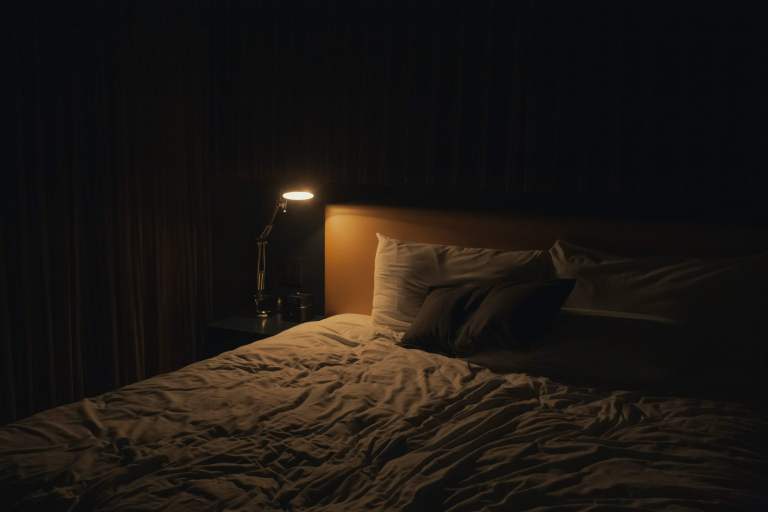
Bedroom sleep by Teekay RM

How to sleep better

Small changes, big difference.

This was supposed to be a simple blogpost about a few changes I made to improve my health. Nothing deep, nothing structured. But once I started writing, one thing became obvious. Sleep wasn’t just one habit among others, it was the foundation behind them all. So instead of burying it in a longer piece, I pulled it out entirely. This is a focused breakdown of how I reshaped my sleep and nervous system.

Sleep isn’t just rest. It’s not just recovery. It’s something far more subtle, almost something we’ve forgotten how to experience properly. The french refer to sleep as “la petite mort”, or “the little death”. Nas, the legendary rapper also referred to it as “the cousin of death.” We all know something deep takes over when we’re asleep, we just don’t know how deep.

Whether you see that as spiritual, neurological, or both, one thing is certain. Sleep isn’t passive. It’s something you prepare for, something you enter, something you either respect or disrupt.

  • Heart rate is the real gatekeeper

Most people focus on how tired they feel, but that’s not what determines sleep quality. Heart rate does. If it’s elevated when you’re about to fall asleep, the night is compromised before it even starts. You might still pass out, but the depth, recovery and continuity won’t be the same. What’s interesting is how many things influence heart rate. Late meals, drinking too close to bed, blue light, mental stimulation, these are all factors. Sleep doesn’t start when you lie down, it starts hours before.

  • The four-hour rule

One of the most effective ways I found. Simple in theory but harder in practice: Stop eating and drinking about 4 hours before sleep.
When I stick to it, the difference is immediate. My heart rate drops more easily, I don’t wake up in the middle of the night to use the bathroom, and my sleep stays uninterrupted. It also extends my fasting window naturally, which supports recovery and deeper cellular processes during the night. I now aim to stop all intake at least 2 to 3 hours before bed, 4 feels long at times..

  • Warm extremities, faster sleep

Another overlooked factor is temperature distribution. If your hands and feet are cold, falling asleep becomes harder because the body struggles to shift into a resting state. I don’t like sleeping in socks, so I use different workarounds to keep my feet warm, like heating pads.

  • Deep pressure and a sense of safety

Sleep is also psychological. The nervous system needs to feel safe enough to let go. One thing that helped more than I expected is using heavier covers or even placing a pillow on top of my torso. That pressure creates a grounding effect. It reduces restlessness and makes it easier to drop into deeper sleep. It’s the same principle behind weighted blankets.

  • Spinal alignment in side positions

Posture doesn’t stop mattering once you’re asleep. I often fall asleep in a fetal position, and adding a pillow between my legs made a clear difference. It keeps my hips aligned, reduces strain on my lower back, and prevents tension from building overnight.

  • No pressure around the waist

I also became sensitive to anything compressing my stomach. Elastic bands started to feel intrusive once I paid attention. So now I have this black pair of very loose shorts with worn-out drawstrings that barely apply any tension. It’s the only piece I can tolerate consistently. Everything else feels restrictive.

  • Sleeping without layers

I didn’t always mind sleeping fully clothed. However, at some point I started waking up overheated and restless. So I adjusted gradually. First to go was the top, then the pants. My body regulates itself better without unnecessary layers.

  • Never sleep in plastic

For some mysterious reason, I used to think fleece was an ideal material. Light, warm, comfortable. But a friend pointed out that it’s just polyester. Plastic. That changed how I looked at it completely. Since then, I’ve moved away from synthetic fabrics in bed. I still own a few fleece items, but only as outer layers. Never directly on the skin and never in bed. So now I mostly sleep in cotton or nothing at all.

  • No charging by the bed

I always knew having devices charging right next to the bed wasn’t ideal, but convenience has a way of creeping back in. Thankfully, my wife reminded to reset that boundary, and I have. Since then, phones charge outside the bedroom. Simple.

  • Sleep as a system

Once all these pieces come together, you stop seeing sleep as a single action. It becomes a system. Timing, temperature, posture, materials, stimulation, all interacting at once. Change one variable and you might feel a difference. Change several, and the entire experience shifts. I don’t see sleep as something I “get” anymore. I see it as something I build, night after night.

Thanks for reading.

Teekay

Sprinter track runner teekay rezeau-merah

Why I misunderstood sprinting for so long and why most people still do

Insights from a former student-athlete.

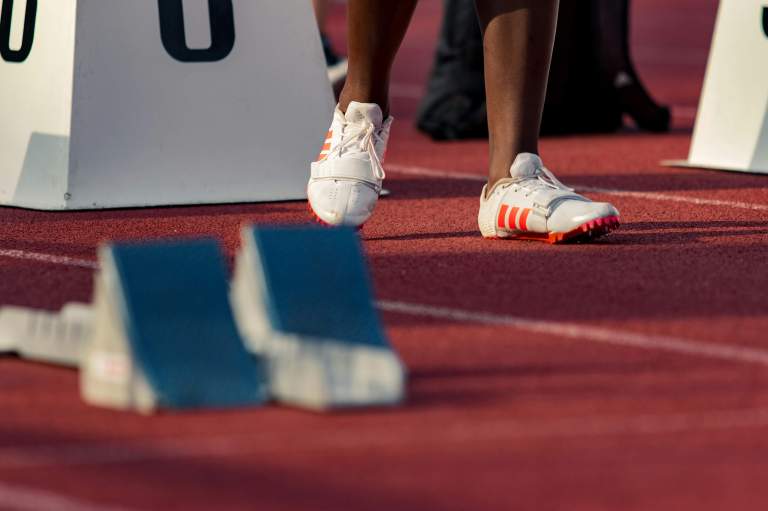
I started sprinting in 2004. I made my high school teams, then college teams and for a long time I thought I understood speed. I trained hard, I listened to my coaches, I did what was asked.

I hit my ceiling at some point, then one thing led to another till I completely stopped running. I went into boxing in the meantime, then bodybuilding, and slowly but surely stopped training altogether. I played football here and there, surfed for a brief moment, but it wasn’t sustained. Hiking became my favorite thing. Great for cardio, makes me happy and snappy. I felt right where I belonged.

In 2025, after years of just living and many injuries later, I came back to sprinting as grownup. But this time, I noticed something uncomfortable that became obvious. For most of my early career as a sprinter, I was running fast without truly understanding why or how.

That realization is frustrating because it feels like wasted time, and wasted potential.

In hindsight, I now feel like I never went beyond 80% of my capacity. It wasn’t because of my coaches, I simply didn’t understand what my sport was all about, so today, I want to make sure whoever reads this does, because sprinting culture rarely helps.

  • What sprinting isn’t

Speed is constantly explained using endurance logic. Even the gadgets we use, however technical, aren’t really designed for sprinters. Not at the highest level anyway.

Sprinting, for the longest time, was explained through running more, working harder, suffering more than the competition. That mindset, aka hustle-porn, comes from the fact that long distance running dominates the athletics scene. Endurance events shape how people think training works, even when it doesn’t apply to their sport.

One of the first myths I believed (and most people believe) is that sprinters run a lot. We don’t, at all. I used to, but not anymore. I always assumed volume built speed. Matter of fact, many coaches still believe that, and end up frying their runners.

  • What sprinting actually is

Research has shown that elite sprinters accumulate very little true sprinting volume. Max velocity running is neurologically brutal. You can’t repeat it endlessly without dulling the signal from the brain to the muscles. When the central nervous system is tired, coordination goes first, technique collapses, ground contact times increase and speed vanishes. Running more just teaches you how to run slower. That was the first realization I made when I went back into it. Never again!

Next, I believed gym work was mandatory and that strength automatically meant speed. Lift heavy, get powerful, get fast. Not true! Sprinting happens in time windows so short that slow strength barely matters. What matters is how fast you can apply force and how well you recycle it through tendons and stiffness. I’ve seen athletes with modest lifts run incredibly fast and others with impressive numbers never move well on the track. Strength only matters if it transfers.

Another point, for years I misunderstood elasticity. I thought plyometrics were optional extras or warm up games. Coming back to sprinting made it obvious that elasticity is the bridge between strength and speed. I’m not saying I never heard this beofre, I’m saying I wasn’t mature (or smart) enouigh to understand it.

Tendons storing and releasing energy, joints staying stiff at the right moments, rhythm staying intact under high speed. Bounds, hops, wickets and short accelerations teach the nervous system timing. They turn power into something usable. Without elasticity, power stays trapped.

Speaking of stiffness, it is the mother of all improvement in sprinting, another aspect we hardly talk about, or train.

Body composition myths confused me too. Being muscular doesn’t make you slow. Being lean doesn’t not make you fast. Non functional mass is the issue. Muscle that can’t be expressed within sprint specific contact times is dead weight. Leanness that compromises force output is just as useless. Speed only cares about force, timing and coordination.

Drills were another blind spot. I used to see them as filler. Now I see them as low cost technical rehearsal. Drills allow you to practice posture, front side mechanics and rhythm without frying the nervous system. When speed is high, there is no thinking. The body falls back on patterns. Drills build those patterns.

Last but not least, the biggest lesson I learned in all these years is how important rest is, and I don’t just mean sleep, which is the obvious one. When I was younger, stopping early felt lazy, like I wasn’t hustling enough. Now I know it’s intelligent, the right thing to do even. Speed doesn’t improve inside fatigue, it improves when the nervous system is fresh enough to adapt. That’s why we take long breaks between sprints, to rest the nervous system. Adding sets instead of reps, ending sessions before speed drops, spacing high intensity days and protecting sleep are not soft choices, they’re performance choices.

Looking back, it wish I understood all these things earlier. But sprinting is misunderstood because endurance logic dominates sports in general. Distance runners train more and win more medals overall, so their methods are treated as universal. Well, science and elite experiences say they’re not. Speed lives in a different world.

Sprinting rewards intelligence. The faster you want to be, the smarter you have to train.

Cheers!

Tee

water magic

Water speaks in ways we ignore

A memory, a teacher, a traveler from space.

Once upon a time, exactly 4.5 billion years ago, Earth was a violent place.

There were no oceans. No rivers, no rain, no life. Just a molten ball of fire and gas, spinning restlessly in space.

And then it came. Not as a storm or a miracle, but as dust, rock, and ice, hurtling through space and crashing into this young planet during what scientists now call the Late Heavy Bombardment.

Over millions of years, icy asteroids and meteorites may have delivered what Earth itself couldn’t produce on its own: water. Drop by drop, this alien substance transformed our planet, cooling its surface, filling its craters, and laying the foundation for every living thing that would ever exist.

In other words, the water in your glass, in your blood, in your tears, may not be from Earth.

This is a common theory among scientists, but how do they back it up?

Well, simply put, traces of deuterium (a form of hydrogen) in Earth’s water match those found in carbon-rich meteorites, not in Earth’s original atmosphere. In other words, water could well be extraterrestrial and we’re walking oceans, born of stardust and comets.

Pretty cool.

“A water molecule is made up of one atom of oxygen and two of hydrogen. Hydrogen was created in the Big Bang, and oxygen in the cores of stars more massive than the Sun. Enormous amounts of water, in gaseous form, exist in the vast stellar nurseries of our galaxy.” – NASA

All that being said, new discoveries have challenged that theory. Science doesn’t care about romance and poetry..

But that’s only the beginning of the story.

Water is alive in ways we’re still discovering

Science has always viewed water as simple H₂O. But the more we look, the more mysterious it becomes.

Water doesn’t just hydrate, it reacts. It listens, and it may even remember!

Case in point, when scientists drill into glaciers in Antarctica or Greenland, they’re not just pulling out ice. They’re pulling out history. Inside those frozen cores are bubbles of ancient air, particles of volcanoes and wildfires, records of rainfall, drought, and dust storms, all preserved in perfect detail. These layers tell us the climate story of Earth going back hundreds of thousands of years.

So yeah, water stores information. It has a memory. It IS a memory, not metaphorically but quite literally.

But what if water also stores something more subtle?

Can water feel ? Like, does it have feelings?

The late Dr. Masaru Emoto, a Japanese researcher, believed it did. In his famous (and controversial) experiments, he exposed water to different words, prayers, music, and intentions, then froze it and photographed the crystals that formed.

On one hand, water blessed with words like “love” or “gratitude” formed stunning, symmetrical snowflake-like shapes. On the other, water exposed to hate, anger, or pollution formed distorted, chaotic patterns.

His work was dismissed by many in the scientific community, as they do. But for others, it cracked open a door. A possibility that consciousness and water might be connected in ways we don’t yet understand.

The mystery of memory in water

In 2009, Luc Montagnier, the Nobel Prize–winning virologist who co-discovered HIV, published a paper suggesting that highly diluted DNA in water emits electromagnetic signals, and that water retains this information even when the DNA is gone.

Another researcher and Swiss chemist, Louis Rey, studied water’s “memory” through thermoluminescence and noticed changes depending on what the water had previously been exposed to.

These findings are controversial, but they echo something ancient cultures have always known:

That water is not just a substance, it’s a carrier. A messenger. A mirror.

Water in religion & spirituality

Across every tradition and belief system, water is sacred.

• In Islam, it is said in the Qur’an: “We made from water every living thing” (21:30). Before drinking or washing, Muslims say “Bismillah”, or In the name of God, inviting His name to bless the water. Then there is the water of Zamzam, a sacred well in Mecca, believed to have sprung miraculously for Hagar and her son Ishmael in the desert. This water is revered for its purity and spiritual significance, and pilgrims often drink it during Hajj and Umrah, and take it home as a cherished gift.

• In Christianity, water baptizes, purifies, rebirths.

• In Buddhism and Taoism, water is a symbol of humility and transformation. It yields but wears down mountains.

• And Bruce Lee, blending martial arts with Eastern philosophy, famously said:

“Be like water, my friend.”

Meaning: stay flexible, formless, adaptive, like the element that takes the shape of whatever holds it, and yet remains itself.

Water teaches us to flow, to remember, and to release.

Our bodies remember too

Our body is made up of about 60% water. Our brain? Closer to 75%.

We are, quite literally, a walking river. Every cell depends on water, not just to survive, but to communicate, to regenerate, to feel.

Our emotions, hormones, sleep, focus, creativity, they all ride on the flow of water inside us.

And yet, for something so vital, we’ve forgotten how rare it is.

Water is scarce and under threat

Earth may be covered in water, but only 0.007% of it is drinkable and accessible. The rest is locked away in oceans, glaciers, or underground.

Meanwhile, pollution, overconsumption, and climate change are drying up and polluting a resource that our very existence relies on. Every environmental campaign is focused on the pollution of air (which causes 7 million deaths a year), which is great, but most campaigns don’t even touch on the irreversible pollution of water (mostly due to the fashion industry and animal breeding). Why? The air is much easier to clean than our fresh water streams. and yet..

Meanwhile, pollution, overconsumption, and climate change are depleting and contaminating a resource essential to our very survival: water. Most environmental campaigns rightly focus on air pollution, which causes 7 million deaths each year btw, but rarely address the irreversible pollution of our freshwater sources, much of it driven by the fashion industry and industrial animal farming. Why? I mean if anything, air is far easier to clean than our streams, rivers, and aquifers..

• The fashion industry produces 20% of global industrial water pollution. Dyes and synthetic materials poison rivers from Asia to South America.

• The meat industry is one of the biggest consumers and polluters of water. One single beef burger requires over 2,000 liters of water to produce. But that’s not it: Waste from livestock contaminates rivers and groundwater. Read about the Green Tide, aka Killer Slime or green algae, a magic seaweed that can kill you in SECONDS, another scandal brushed under the rug because a certain lobby is too powerful to let it be mediatized.

Food production accounts for over a quarter (26%) of global greenhouse gas emissions. 18% of those are due to livestock production. – Stanford

Plastic and pesticides enter our lakes and oceans at alarming rates. Microplastics have now been found in rainwater and even in unborn babies.

By 2030, the United Nations warns that 40% of people could face severe water scarcity if we don’t act.

Water is strong. It’s self-purifying, patient, ancient. But even it has limits.

A call to return to reverence

We live in a world where water comes from a tap, which is why we forget how sacred it is. We wear clothes made in countries we’ll never visit, eat food raised on land we’ll never see, throw away plastics that outlive us by centuries, and we don’t see the water trails behind them.

But now we know better.

We know that water is more than H₂O. It holds the blueprint of life and the story of our planet. It listens. It reflects us.

So what can we do?

• Plant trees.

• Eat more plants and less dead flesh.

• Repair our clothes.

• Use less plastic and ban single use plastics.

• Speak blessings into our glass.

• Treat water like the rare, cosmic treasure that it is.

Because every drop of water you drink has seen stars. It’s been ice. It’s been vapor. It’s fallen as rain, flowed through rivers, and run through the veins of everything that has ever lived.

And maybe, just maybe, when you speak to it, it remembers you too.

Thanks for reading.

Tee.

Atlantic, by Teekay Rezeau-Merah

Life is a beautiful mystery

People are oddly mesmerizing.

Sometimes I catch glimpses of conversations, some are deep, others shallow. Both fascinate me. How humans think and function, how they make their own choices, and sometimes, how they lie to themselves.

I like watching people walk together. I can’t help but think of our ancestors, how they moved in groups, hunter-gatherers, until wheat domesticated us (not the other way around). I wish we could go back.

It’s funny how a child’s walking style often matches a parent’s gait, or how the way someone sits says so much about them.

I get stuck watching clothes spin in the dryer. I don’t wear a lot of black (or any, really), so it’s like a rainbow in there. It always reminds me of this Senegalese myth from Ashura Day, where a rainbow means the Prophet’s (PBUH) daughter is doing her laundry. It’s funny, in a sweet way.

Oral traditions must be protected at all costs.

I love the bees and butterflies that hang around when we’re outside. It’s so peaceful.

Fire is mesmerizing. I’ve always been fascinated by it, so much so that, when I was little, one of my experiments went wrong and set my bedroom on fire. Oops! I love bonfires, fireplaces, candles. I used to burn incense just to watch the smoke. I’m also strangely drawn to steam, idk why.

Most people hate spiders. I love them. They really are special, nature’s elite.

Growing things makes no sense. How can a seed feed me with the most beautiful fruit or vegetable in no time? Just soil, water and sun? Endless abundance. Nature is incredible.

The world is full of magic. The stars, clouds, moving patterns, waves, the wind.

Pain is strange. It’s an immediate physical response, but if you think about it, step outside of it, it becomes something else. Just neuroreceptors sending signals. The whole process is wild. I dread pain. It reminds me of death, like it’s the final step before we go.

Skin is interesting. It’s the largest organ we have, yet we treat it like it’s nothing. I’m always amazed when it heals itself, like how? When I was a baby, I had second-degree burns on my face and third-degree burns on my chest. I went blind for a few days. I think about miracles a lot. We abuse our skin constantly, yet it keeps repairing itself.

Languages are mesmerizing. I think about them often. I compare languages in my head and try to understand those who invented them. Again, I think about our ancestors. How did they communicate? What was their humor like? What did they find funny? Did they understand death quickly? How did they distinguish little death (sleep) from big death?

I love the expression “life as we know it”. It plays in my head quite often. My personalities are different in different languages, I think most polyglots can relate.

Life is a beautiful mystery. One day you’re here…

Anyway, thank you for stopping by.

Peace!

Teekay

How Positive Affirmations Changed the Way I Think

Away from the clichés.

The human brain is a remarkable organ. It’s responsible for everything we think, feel and do. Our brains are the driving force behind our behavior and are constantly working to keep us safe from harm.

The manner in which our brains process information is not always reasonable, hence why it’s extremely common for us to craft negative narratives based on our past experiences.

  • Uncertainty

One of the ways our brains work to keep us safe is by perceiving uncertainty as a danger or a threat.

The reason we panic when we lose our mom in a supermarket, or lose sight of our hiking partner testifies to that. Being in unfamiliar or unpredictable situations makes our brains go into overdrive rather quickly. This phenomenon allows us to better assess the situation and determine whether it’s safe or not.

Whenever our brain perceives said situations as a potential threat, it immediately creates negative stories and outcomes, thus preparing us for the worst case scenario.

Fascinating, right ?

Our brains are wired to prioritize survival over happiness.

In other words, our brains are more concerned with keeping us ALIVE than with making us happy, which seems fair as far as I’m concerned.

However, and as a result, the narratives we create in the present are often based on experiences from the past, and most importantly, experiences that have led to negative outcomes.

These experiences are stored in our subconscious as core beliefs, which our brains use to create our current narratives.

  • Core beliefs

You may have heard this before (or not), but our core beliefs are often formed in childhood and are based on our experiences with our parents or caregivers.

For instance, people who grew up in an environment where they were constantly criticized or told that we weren’t good enough develop a core belief that they are unworthy or unlovable.

This belief then manifests in their present-day narratives, leading them to believe that they’re not capable of success or that they’ll never find happiness, or love.

The problem with these negative narratives is that they can become self-fulfilling prophecies. By believing that you’re not good enough or that you’ll never find happiness, you’re less likely to take risks or pursue your goals, which then leads to an unfulfilling and unsatisfying life.

  • How to overcome negative narratives

One way to overcome these narratives is to challenge your core beliefs.

By examining the beliefs we hold about ourselves and questioning where they come from (learning to unlearn), we begin to see that most of them aren’t based in reality.

It’s obviously easier said than done, but once you’ve taken that first step, the next step, which is to create new, more positive narratives will come more naturally.

For example, if you have a core belief that you’re not good enough, you can challenge that belief by focusing on your strengths and accomplishments, and what got you here.

I’ve always done this whenever I felt down. I love reminding myself of how far I’ve come, all the mountains I’ve climbed and empower myself that way. Positive affirmations are a major confidence boost and gratitude is key to a purposeful life.

Surrounding myself with supportive people and ONLY consuming empowering and positive content (audio, written and video) has also played a huge role in my fight against negativity and fear.

Another way to overcome negative narratives is to practice mindfulness.

Practicing mindfulness is one of my favorite topics on this blog. I wrote multiple pieces about it because I truly believe in the power it possesses in the fight against mediocrity, negative self-talk and defeatism.

Mindfulness, as most of you must know, is the practice of being fully present in the moment and observing our thoughts without judgment.

Practicing mindfulness makes me more aware of my own negative narratives and is a necessary step in my journey of letting go.

Practicing mindfulness also helps me focus on the present moment and the positive experiences I’ve had (or that I’m having), rather than worrying about the future or dwelling on the past.

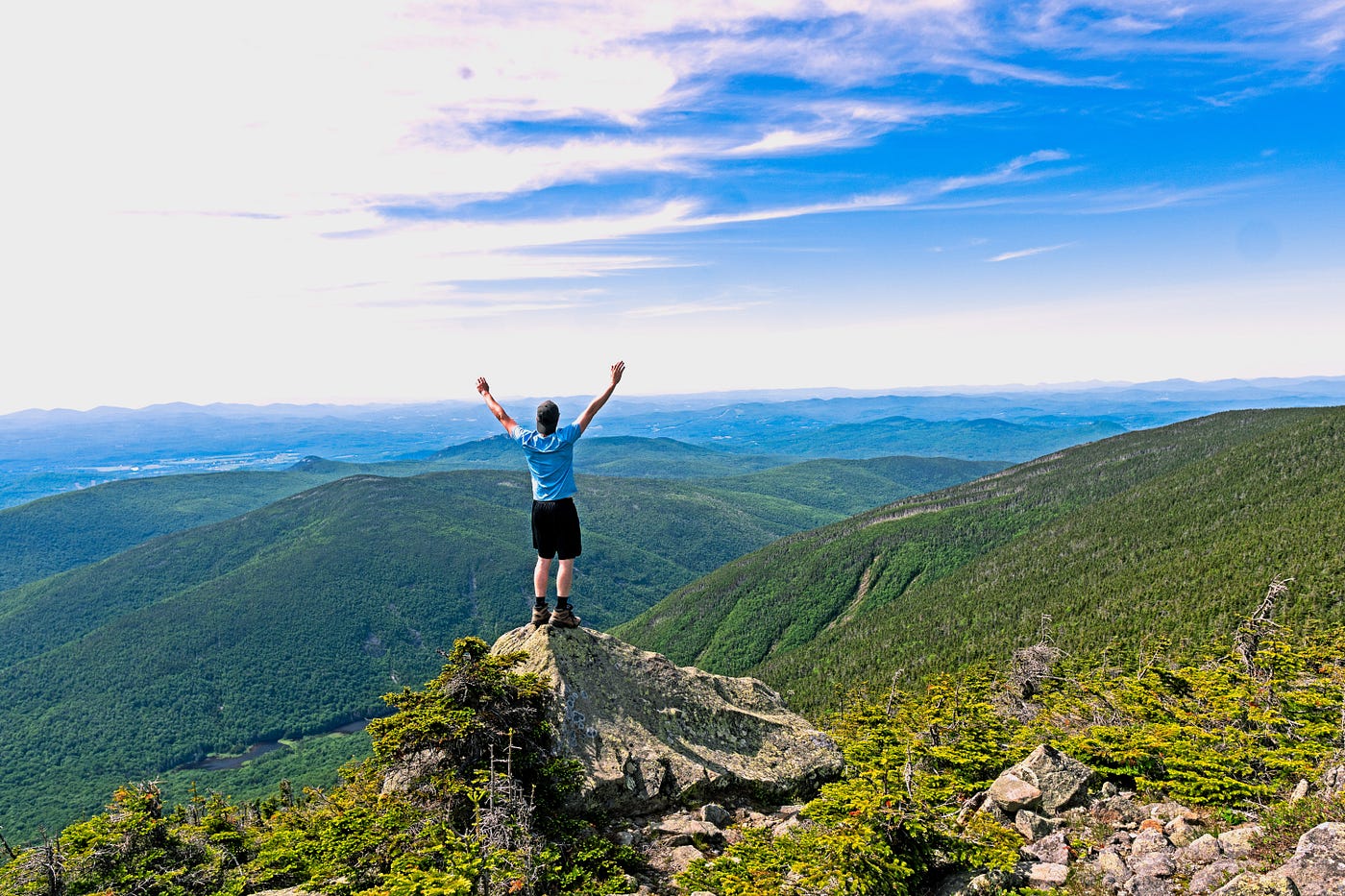
Photo by Matt Collamer

So whoever is reading this, use this piece as a reminder to cultivate mindfulness, always question everything, including your core beliefs and to be kind to yourself.

Don’t take making it this far for granted, life ain’t easy but you’ve got this. Also, remember, our brains view uncertainty as a peril so don’t trick yourself into believing you’re alone in this fight against negative narratives, you’re not.

While our brains prioritize safety over happiness, positive affirmations are powerful enough to steer negative narratives towards positive ones. If anything, I’m living proof of this.

P.S.: Stay hopeful 🙂

Thanks for reading.

Tee.