The middle sleep vs capitalism
I’ve always felt there was something strange about the way we talk about sleep.
We speak about it as if it should be clean, obedient and uninterrupted.
You go to bed.
You disappear for 8 hours.
You wake up.
You function.
Then you do it all over again the next night.
And when the body does anything else, we treat it like a problem.
Wake up at 2 AM?
Problem.
Lie there thinking?
Problem.
Feel awake for a while, then tired again?
Problem.
Everything becomes a disorder the moment it fails to fit the schedule.
But I’m no longer convinced the schedule is neutral.
I’m not even convinced it’s natural.
Because I’ve lived another kind of sleep.
Not every night. Not perfectly. Not as some routine I’m trying to sell.
But enough to know there is something real there.
I sleep for 4 or 5 hours.
Then I wake up.
Not violently. Not in panic. Not because an alarm ripped me out of my body.
I just wake up.
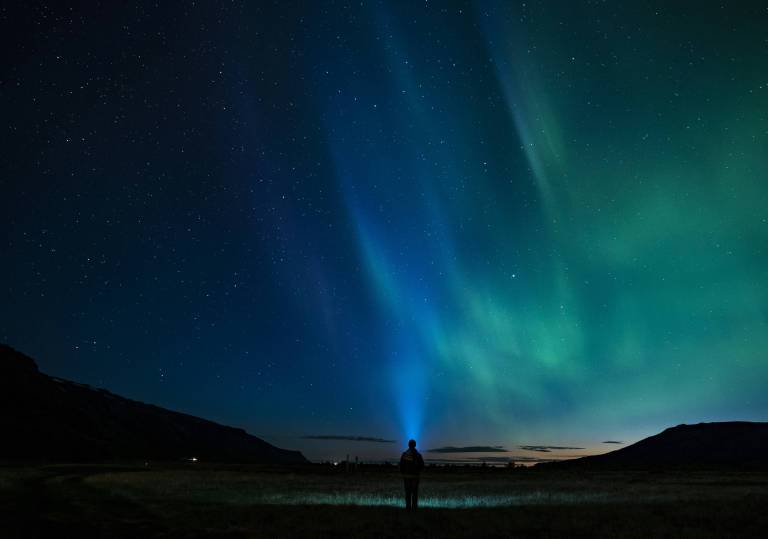
The world is silent.
Everyone else is asleep.
The air feels different.
My mind feels different.
I pray, then sit in that strange state between sleep and waking, between night and morning, between the body resting and the soul speaking.
And then something opens.
Ideas arrive.
Problems untangle.
Sentences appear.
Things I couldn’t solve during the day suddenly become obvious.
No noise. No demand. No performance. No one needing anything from me.
Just me, the night and whatever rises when the mind is finally left alone.
That’s when I write some of my best work.
The over-controlled mind of the day goes quiet. The part of me that’s always responding, planning, defending, explaining and calculating finally steps aside.
And something deeper speaks.
Then, after a while, my body gets tired again.
So I go back to sleep.
Another few hours.
And somehow, the whole thing feels natural.
Maybe ancient.
Not broken.
Not disordered.
Not like insomnia.
Just ancient.
As if my body remembers something the modern world has tried to erase.
Maybe sleep was never meant to be one single block for everyone.
Maybe the middle of the night wasn’t always an issue to be addressed.
Maybe waking after a few hours wasn’t always something to fear.
Maybe there was a time when the night had two doors: one for rest, one for reflection, then rest again.
Historians have written about segmented sleep, especially in preindustrial Europe. People spoke of a first sleep and a second sleep. Between the two, they might pray, think, talk, make love, tend to small things or simply exist in the dark without immediately diagnosing themselves.
That detail matters.
Because today, when someone wakes in the middle of the night, they don’t usually ask, “What is this moment giving me?”
They ask, “What’s wrong with me?”
That tells us something.
Not only about sleep.
About the society around sleep.
Because modern life doesn’t tolerate rhythms it can’t use.
It sees darkness and calls it wasted time, hence the horrendous daylight saving invention.
It sees silence and tries to fill it.
It sees the body refusing to behave like a machine and immediately asks which product, pill, app, supplement or routine can force it back into obedience.
This is where sleep becomes political.
Sleep itself is natural.
The modern sleep schedule isn’t.
It belongs to work.
To school.
To office hours.
To alarms.
To productivity culture.
To the economic need to make bodies predictable.
Capitalism colonized our sleep.
It took something ancient, intimate and mysterious, then forced it into a format that serves production.
One block.
One alarm.
One workday.
Repeat.
And because we live in a performance-driven society, even rest has to justify itself.
We don’t sleep because the body is sacred.
We sleep so we can function and be productive.
We don’t rest because life is more than work.
We rest so we can return to work less damaged.
Even sleep has been made useful.
Recovery.
Optimization.
Output.
Efficiency.
A better brain.
A better body.
That’s the real sickness.
Not simply lack of sleep.
Not simply insomnia.
A society that can only respect sleep when sleep serves production is very sick.
Nature doesn’t work like that.
Summer is not winter.
December is not June.
The year breathes.
Days stretch and shrink.
Nights lengthen and shorten.
Trees lose their leaves.
Animals slow down.
Light changes.
Energy changes.
Everything adapts except us.
We expect the same output in winter as in summer.
Same wake-up time.
Same productivity.
Same pressure.
Same artificial brightness.
As if the body should be indifferent to the sun.
As if a dark winter morning and a bright summer morning ask the same thing from us.
They don’t.
Winter asks for slowness.
Modern economic life asks for output.
Winter gives us longer nights.
We turn on the lights and carry on.
Then when people collapse, we call it fatigue, burnout, low motivation, seasonal depression or poor sleep hygiene.
Sometimes those words describe something real.
But they can also hide something.
Many people are not failing at rest.
They’re being forced to live against it.
Their rhythm isn’t broken by nature.
It’s broken by a dying society that still demands performance from exhausted bodies.
That’s why I don’t trust most conversations about sleep.
They talk about blue light, magnesium, melatonin, sleep trackers, cold rooms and perfect pillows.
Fine.
Some of that can help.
But they rarely talk about capitalism and all it entails.
Stress.
Work.
Poverty.
Grief.
Debt.
Noise.
Fear.
The nervous system living under constant pressure.
They rarely admit that many people are tired because their lives are built against the body.
Instead, they sell us solutions to problems the system created, the system being capitalism.
You’re stressed, so they sell you sleep content.
You’re overworked, so they sell you recovery hacks.
You’re anxious, so they sell you supplements.
You’re disconnected from nature, so they sell you artificial routines.
You’re exhausted by capitalism, so they sell you wellness.
And the simplest truth is ignored.
Maybe people need less stress.
More time.
More silence.
More prayer.
Work that doesn’t swallow their life.
Enough space to do things that make them happy before their body collapses at night.
Maybe people don’t need to become better machines.
Maybe they need to stop being treated like machines at all.
Science can tell us many useful things about sleep, but it becomes dangerous when it forgets that humans are not only organisms in a lab.
A sleep study can measure the brain.
It can’t fully measure what the night means to a person.
It can’t measure the feeling of waking naturally after 4 or 5 hours, praying in the dark, writing from a place you can’t access during the day, then returning to sleep as if you had visited some hidden room inside yourself.
That room matters.
That middle space matters.
The world has become so loud that we’ve forgotten what the mind does when it’s not being interrupted.
During the day, thought is constantly attacked.
Messages.
Screens.
Tasks.
People.
Plans.
Bills.
Responsibilities.
Even when we’re alone, we’re rarely alone.
But the middle of the night is different.
It gives the mind a privacy the day can’t offer.
Maybe that’s why creativity often lives near sleep, near dreams, near the strange border where the rational mind loosens and something deeper comes forward.
The edge of sleep is not empty.
It’s fertile.
Not always useful in the capitalist sense.
But sometimes revealing.
And that is not the same thing.
That’s why I refuse to see every night waking as a problem.
Sometimes it’s stress, illness or pain.
Sometimes it’s too much worry, too much light or too much life pressing on the chest.
But sometimes, it’s something else.
Sometimes the body wakes because it has entered the second chamber of the night.
The chamber where the ego is quieter.
Where ideas come without being chased.
Then sleep returns.
Not as defeat.
As completion.
First sleep.
A waking.
Second sleep.
A rhythm, a conversation between the body, the soul and the dark.
Maybe that’s what we’ve lost.
The true meaning of sleep.
We reduced it to recovery.
Made it serve productivity.
Turned it into another thing to optimize, track and monetize.
We forgot that sleep is also surrender.
Also mystery.
A borderland.
One of the last places where the body refuses complete control.
That might be why modern life is so obsessed with managing it.
Because sleep reminds us that we’re not machines and never will be.
No matter how many alarms we set.
No matter how many apps we download.
No matter how many experts explain our cycles.
At some point, the body asks to return to the dark.
And maybe, if we stop being afraid of every interruption, we might discover that the night wasn’t only made for unconsciousness.
Maybe part of it was made for meeting ourselves without the noise of the world.
The most human sleep was never a straight line.
It was a tide.
The middle of the night was never the enemy.
The enemy is a society that turned even rest into a performance.
Resist capitalism, take back your sleep.
Thanks for reading.
Tee.