Take back the night

Maybe your sleep isn’t broken, maybe your schedule is

The middle sleep vs capitalism

I’ve always felt there was something strange about the way we talk about sleep.

We speak about it as if it should be clean, obedient and uninterrupted.

You go to bed.

You disappear for 8 hours.

You wake up.

You function.

Then you do it all over again the next night.

And when the body does anything else, we treat it like a problem.

Wake up at 2 AM?

Problem.

Lie there thinking?

Problem.

Feel awake for a while, then tired again?

Problem.

Everything becomes a disorder the moment it fails to fit the schedule.

But I’m no longer convinced the schedule is neutral.

I’m not even convinced it’s natural.

Because I’ve lived another kind of sleep.

Not every night. Not perfectly. Not as some routine I’m trying to sell.

But enough to know there is something real there.

I sleep for 4 or 5 hours.

Then I wake up.

Not violently. Not in panic. Not because an alarm ripped me out of my body.

I just wake up.

The world is silent.

Everyone else is asleep.

The air feels different.

My mind feels different.

I pray, then sit in that strange state between sleep and waking, between night and morning, between the body resting and the soul speaking.

And then something opens.

Ideas arrive.

Problems untangle.

Sentences appear.

Things I couldn’t solve during the day suddenly become obvious.

No noise. No demand. No performance. No one needing anything from me.

Just me, the night and whatever rises when the mind is finally left alone.

That’s when I write some of my best work.

The over-controlled mind of the day goes quiet. The part of me that’s always responding, planning, defending, explaining and calculating finally steps aside.

And something deeper speaks.

Then, after a while, my body gets tired again.

So I go back to sleep.

Another few hours.

And somehow, the whole thing feels natural.

Maybe ancient.

Not broken.

Not disordered.

Not like insomnia.

Just ancient.

As if my body remembers something the modern world has tried to erase.

Maybe sleep was never meant to be one single block for everyone.

Maybe the middle of the night wasn’t always an issue to be addressed.

Maybe waking after a few hours wasn’t always something to fear.

Maybe there was a time when the night had two doors: one for rest, one for reflection, then rest again.

Historians have written about segmented sleep, especially in preindustrial Europe. People spoke of a first sleep and a second sleep. Between the two, they might pray, think, talk, make love, tend to small things or simply exist in the dark without immediately diagnosing themselves.

That detail matters.

Because today, when someone wakes in the middle of the night, they don’t usually ask, “What is this moment giving me?”

They ask, “What’s wrong with me?”

That tells us something.

Not only about sleep.

About the society around sleep.

Because modern life doesn’t tolerate rhythms it can’t use.

It sees darkness and calls it wasted time, hence the horrendous daylight saving invention.

It sees silence and tries to fill it.

It sees the body refusing to behave like a machine and immediately asks which product, pill, app, supplement or routine can force it back into obedience.

This is where sleep becomes political.

Sleep itself is natural.

The modern sleep schedule isn’t.

It belongs to work.

To school.

To office hours.

To alarms.

To productivity culture.

To the economic need to make bodies predictable.

Capitalism colonized our sleep.

It took something ancient, intimate and mysterious, then forced it into a format that serves production.

One block.

One alarm.

One workday.

Repeat.

And because we live in a performance-driven society, even rest has to justify itself.

We don’t sleep because the body is sacred.

We sleep so we can function and be productive.

We don’t rest because life is more than work.

We rest so we can return to work less damaged.

Even sleep has been made useful.

Recovery.

Optimization.

Output.

Efficiency.

A better brain.

A better body.

That’s the real sickness.

Not simply lack of sleep.

Not simply insomnia.

A society that can only respect sleep when sleep serves production is very sick.

Nature doesn’t work like that.

Summer is not winter.

December is not June.

The year breathes.

Days stretch and shrink.

Nights lengthen and shorten.

Trees lose their leaves.

Animals slow down.

Light changes.

Energy changes.

Everything adapts except us.

We expect the same output in winter as in summer.

Same wake-up time.

Same productivity.

Same pressure.

Same artificial brightness.

As if the body should be indifferent to the sun.

As if a dark winter morning and a bright summer morning ask the same thing from us.

They don’t.

Winter asks for slowness.

Modern economic life asks for output.

Winter gives us longer nights.

We turn on the lights and carry on.

Then when people collapse, we call it fatigue, burnout, low motivation, seasonal depression or poor sleep hygiene.

Sometimes those words describe something real.

But they can also hide something.

Many people are not failing at rest.

They’re being forced to live against it.

Their rhythm isn’t broken by nature.

It’s broken by a dying society that still demands performance from exhausted bodies.

That’s why I don’t trust most conversations about sleep.

They talk about blue light, magnesium, melatonin, sleep trackers, cold rooms and perfect pillows.

Fine.

Some of that can help.

But they rarely talk about capitalism and all it entails.

Stress.

Work.

Poverty.

Grief.

Debt.

Noise.

Fear.

The nervous system living under constant pressure.

They rarely admit that many people are tired because their lives are built against the body.

Instead, they sell us solutions to problems the system created, the system being capitalism.

You’re stressed, so they sell you sleep content.

You’re overworked, so they sell you recovery hacks.

You’re anxious, so they sell you supplements.

You’re disconnected from nature, so they sell you artificial routines.

You’re exhausted by capitalism, so they sell you wellness.

And the simplest truth is ignored.

Maybe people need less stress.

More time.

More silence.

More prayer.

Work that doesn’t swallow their life.

Enough space to do things that make them happy before their body collapses at night.

Maybe people don’t need to become better machines.

Maybe they need to stop being treated like machines at all.

Science can tell us many useful things about sleep, but it becomes dangerous when it forgets that humans are not only organisms in a lab.

A sleep study can measure the brain.

It can’t fully measure what the night means to a person.

It can’t measure the feeling of waking naturally after 4 or 5 hours, praying in the dark, writing from a place you can’t access during the day, then returning to sleep as if you had visited some hidden room inside yourself.

That room matters.

That middle space matters.

The world has become so loud that we’ve forgotten what the mind does when it’s not being interrupted.

During the day, thought is constantly attacked.

Messages.

Screens.

Tasks.

People.

Plans.

Bills.

Responsibilities.

Even when we’re alone, we’re rarely alone.

But the middle of the night is different.

It gives the mind a privacy the day can’t offer.

Maybe that’s why creativity often lives near sleep, near dreams, near the strange border where the rational mind loosens and something deeper comes forward.

The edge of sleep is not empty.

It’s fertile.

Not always useful in the capitalist sense.

But sometimes revealing.

And that is not the same thing.

That’s why I refuse to see every night waking as a problem.

Sometimes it’s stress, illness or pain.

Sometimes it’s too much worry, too much light or too much life pressing on the chest.

But sometimes, it’s something else.

Sometimes the body wakes because it has entered the second chamber of the night.

The chamber where the ego is quieter.

Where ideas come without being chased.

Then sleep returns.

Not as defeat.

As completion.

First sleep.

A waking.

Second sleep.

A rhythm, a conversation between the body, the soul and the dark.

Maybe that’s what we’ve lost.

The true meaning of sleep.

We reduced it to recovery.

Made it serve productivity.

Turned it into another thing to optimize, track and monetize.

We forgot that sleep is also surrender.

Also mystery.

A borderland.

One of the last places where the body refuses complete control.

That might be why modern life is so obsessed with managing it.

Because sleep reminds us that we’re not machines and never will be.

No matter how many alarms we set.

No matter how many apps we download.

No matter how many experts explain our cycles.

At some point, the body asks to return to the dark.

And maybe, if we stop being afraid of every interruption, we might discover that the night wasn’t only made for unconsciousness.

Maybe part of it was made for meeting ourselves without the noise of the world.

The most human sleep was never a straight line.

It was a tide.

The middle of the night was never the enemy.

The enemy is a society that turned even rest into a performance.

Resist capitalism, take back your sleep.

Thanks for reading.

Tee.

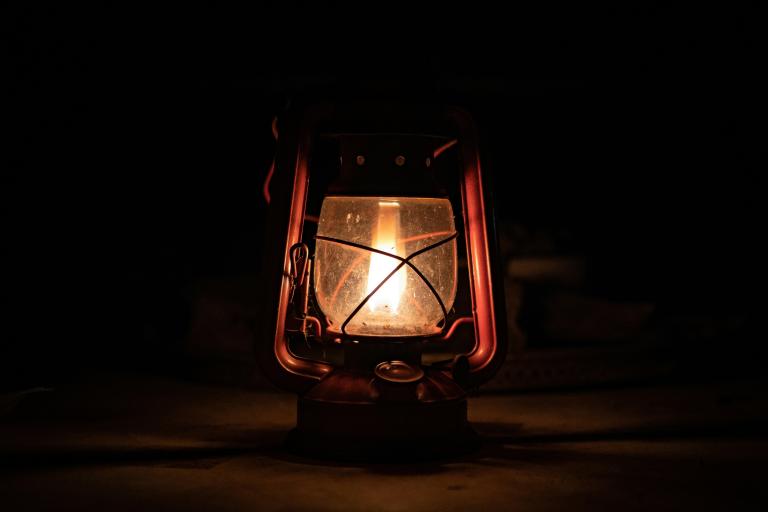
Lantern by teekay

Note from a sleepless night

For the first time in a while, I genuinely can’t sleep  

My whole body hurts, in a good way 🙂

Legs super heavy, ankle kinda messed up, toes on my left foot hurt (got stepped on twice in football practice today), ribcage from that knock Friday, plus some hamstring and inner thigh pain.

What I wouldn’t give for a massage right now  

Anyway, I stopped making blog entries like this for a while. No one really wants to read this kinda thing anymore, amirite?

People would rather hear someone yap on video, I get it  

Still, I miss this

And I miss old school blogs in general  

Plus, reading just hits different, you build everything in your head and it feels way more personal and real

I’ve actually read way more this year than I have in the last five combined

I mean books

I’m a big reader overall, I just don’t read books like that, I go on Medium and read random blogs instead

I don’t really do personal stories though, which is probably why I don’t write these either, but I still think there’s a world for it

Even if there aren’t that many people left reading this kind of stuff

I miss Tumblr, I used to spend hours on there  

So many interesting people, so many stories  

And most of them just wrote like this, no structure, no formatting, just thoughts  

There’s comfort in being natural, it makes everything feel more intimate  

I’m rambling  

Pain’s keeping me up, so maybe I’ll just watch Better Call Saul, eat some peanut butter with a couple bananas and wait for the sun

Nights like this I usually don’t sleep until the next evening anyway

Peace and blessing

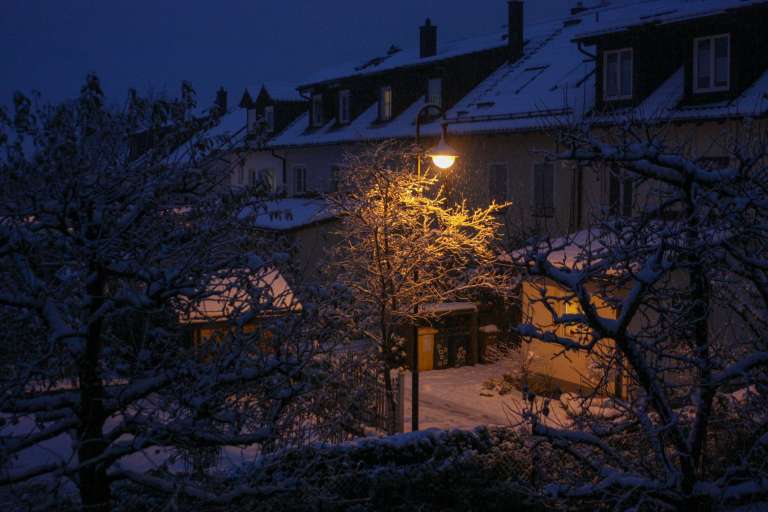
Winter by Tee

Winter knows something we forgot

You don’t hate winter, you hate how we live through it.

I’m such a winter person. I resisted that idea for years because I don’t particularly enjoy being cold and I absolutely hate humidity, but I’m done arguing with it now.

Winter is my favorite season, the one that makes me feel most alive. Fall comes close behind. Maybe I’m really a fall-first person who only settles once winter arrives. Fall feels like a threshold, a kind of preparation, while winter is the place it all leads to.

Most people say they hate winter, but I don’t even think that’s true. I think they hate winter under capitalism, which is a very different thing.

Winter isn’t simply December 21st to March 20th like we’re taught in school. December 21st is the winter solstice, the shortest day of the year, the deepest point of darkness. In many ways, that’s peak winter. It’s both the heart of it and the beginning of its slow release.

If you look at older seasonal systems, especially the Celtic calendar, winter is often understood differently. It begins around early November, with Samhain, and transitions toward spring around early February, with Imbolc. I’ve always intuitively aligned with this rhythm, a rhythm that feels more real in the body.

Winter always makes me nostalgic about my childhood. Where you grow up shapes your relationship to it. Below the equator, winter falls during what we call summer months. It’s shorter, less harsh. It’s still winter, but it doesn’t carry the same weight. Above the equator, winter has a presence. It changes everything.

Winter in New York, for example, is unmatched. But to understand it, you have to start with fall. Fall is special in a way that’s hard to replicate. The air sharpens, the leaves start falling, the temperature drops just enough to wake you up. School starts again. People return from summer scatteredness with a sense of purpose. There’s motivation, a quiet hope that something new can begin before the year closes.

Then come the holidays. I don’t celebrate them myself, but I can’t deny the atmosphere. Halloween, with kids everywhere. Thanksgiving, massive in New York. Then the Christmas season, with its films, its smells, its food. Cinnamon, baked goods, warmth. Fall is about getting cozy. It’s about preparing, consciously or not, for winter.

And then winter arrives.

One of my favorite childhood memories is hearing on the radio that a blizzard had shut everything down. Schools closed for days. Travel discouraged. The world paused. I remember the feeling of going back to bed, diving under the blanket, watching the snow fall outside. There was a kind of collective stillness. Everyone was home at the same time, in the middle of the week, which almost never happened.

Winter meant snowball fights with family and friends. Building snowmen. Coming back inside after hours in the cold to drink something hot, cinnamon-heavy or just a simple hot chocolate. Winter also meant shorter days, which I’ve always loved. There’s something honest about darkness arriving early. It forces you inward, and you simply sleep better. At least I do.

Now that I live in a coastal town, winter has taken on a different form. The place empties out. It becomes a ghost town. Only a few locals remain. I can walk through the streets, along the beach, into the forests, and not see anyone. Not hear anyone. Just space, and peace.

Fall here is also the perfect time for mushroom picking. There’s something deeply satisfying about finding your own food, bringing it home, cooking it. I don’t do it as often as I used to, but when I do, it reconnects me to something older than all of this.

Winter also brings unpredictability. Storms, floods, strong winds, snow.

I’ve always been fascinated by storms. There’s something humbling about them. They remind you how small you are without humiliating you. Just placing you back in proportion.

And this is where my relationship with winter becomes more than just aesthetic.

Winter, to me, is supposed to be a time of slowing down. A form of hibernation. Not complete inactivity, but a reduction. A softening. A withdrawal from constant output.

But winter under capitalism is the opposite of that.

It’s when everything accelerates. Black Friday. Christmas consumption. New Year’s, January sales. Valentine’s Day. It becomes a concentrated period of economic extraction. A time where people are pushed to spend more, move more, produce more, exactly when their bodies are asking for less.

I don’t adhere to that. I reject it.

Because biologically, intuitively, winter asks something else from us. Even illness patterns reflect that. People don’t just get sick because of viruses. They get sick because they keep pushing at summer pace in a winter body. They ignore the signal to slow down.

Historically, people understood this. They worked through the year, harvested their crops, prepared for winter. Around the end of October, they gathered, celebrated the end of harvest. And then life shifted. Maintenance replaced expansion. Survival replaced growth.

Nature does the same. Animals retreat. Bears hibernate. Bees cluster. Even plants withdraw into themselves. Winter is not death. It’s conservation.

I sometimes imagine a different life. A cabin. A cycle where summer is for harvesting, fall for preparing, winter for resting. Wood gathered. Food stored. Time spent simply maintaining what’s already there.

Life, at its core, is that simple. But systems built on constant expansion don’t allow simplicity to survive.

Winter, for me, is also about people. Not crowds, but closeness. Seeing friends, family. Sitting together, drinking tea, sharing time without urgency. There’s a different quality to connection in winter. It’s slower, deeper.

Even sports feel different. The air, the light, the coziness of it all. Everything sharpens.

And if I’m honest, part of why I love winter is personal. I’m introverted. I need that inward space. But it’s also something else. A fatigue with what humanity has become. The constant noise, the endless movement, the destruction of everything around us.

Winter feels like a counterforce.

It slows us down whether we like it or not. A storm doesn’t ask for permission. A blizzard doesn’t negotiate. When it hits, everything stops. And in that moment, we’re all equal. No one is above it.

There’s something powerful in that.

To me, winter restores balance. It interrupts the illusion that we can operate at maximum intensity all year long. The shortening of days, the stretching of nights, the way time itself feels heavier, slower, none of that is accidental. It’s a form of design.

Fighting that rhythm has consequences. You see it in people who try to live winter like summer. They burn out. They get anxious. They get sick.

I haven’t had a cold in years. That’s not just because I’m active or because of my diet, though those matter. It’s because I try, as much as possible, to align with that rhythm. To accept that winter is not the time to push.

Winter is about gathering. With nature, with people, with yourself. It’s not about peak productivity. It’s not about consumption. It’s not about proving anything.

It’s about remembering.

And maybe that’s why I love it so much. Because despite everything, despite the systems we’ve built to override it, winter still imposes itself. It reminds us, quietly or violently, that we are not in control of everything.

That there is a rhythm beyond us.

And that we’d probably be better off listening to it.

Thanks for reading.

Teekay.

Will AI cause the death of humanity?

The hefty cost of convenience in an artificial world

AI tools have made an already bad situation worse.

Every time you touch an AI tool, whether you’re making images or words, you’re feeding a machine that drinks real water and eats real power. Not in theory. Literally. There’s no harmless cloud floating above us. There are data centers on the ground, towers pulling heat out, plants burning fuel, all so content can come out faster while the bill gets paid somewhere else.

Think of it this way. One text request to a large AI model uses roughly the same amount of water as a few mouthfuls from a soda can. That sounds small until you remember these systems handle billions of requests a day! At that scale, we’re not talking about sips. We’re talking about entire truckloads of bottled drinks being poured straight down the drain, every single day, just to keep servers cool.

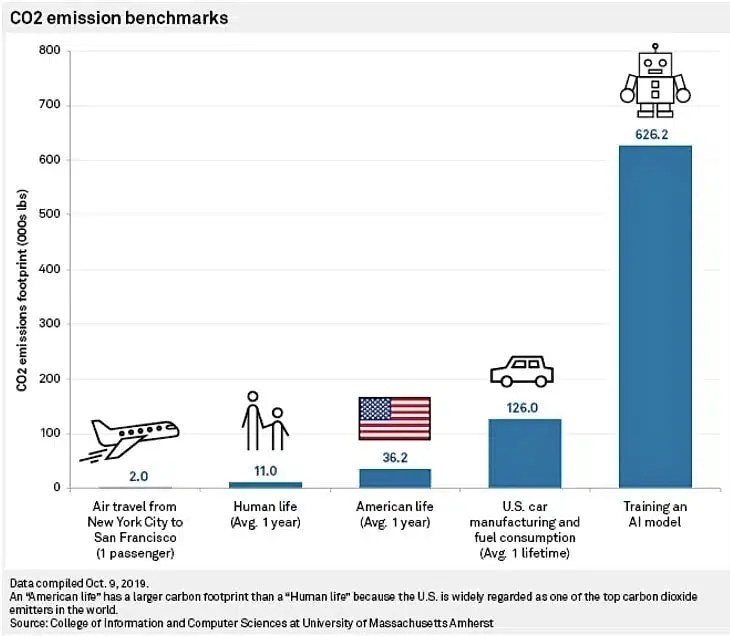
The estimated CO2 emissions from training common NLP models, compared to familiar consumption (University of Massachusetts, 2019)

Generating a single AI image uses several times more energy than a text request. One article with five or six AI images might be using the equivalent electricity of leaving a laptop running for hours. Multiply that by thousands of articles, social posts, newsletters and ads, and suddenly it’s not trivial at all.

Zoom out a little more and the picture gets uglier. AI-related data centers are already using as much electricity as mid-sized cities. Estimates put global AI power demand on track to rival places like San Francisco or Boston within a few years. That’s millions of homes worth of electricity being burned so companies can automate writing, art and video at scale. AI doesn’t just steal jobs, it steals our resources.

Now stack dozens of these facilities across drought-prone states and you start to see why people are angry.

And they are angry.

Lately, I’ve seen organizers in Arizona, Pennsylvania and Georgia mobilize against new data center construction. Nobody wants these things in their communities. They strain power grids, drain water supplies and mostly benefit companies that don’t live there (don’t they always?). Luckily, these fights seem to be working. Projects are being delayed, while others are being stopped altogether. We can and will win against these tech oligarchs, but first, we need to be smart about our usage.

This is why it’s so frustrating to see articles about resistance, climate justice or helping nature paired with AI-written images. You can’t talk about fighting extraction while actively participating in it. You can’t warn about corporate overreach while relying on the most opaque, resource-hungry tech industry on the planet.

And it’s not just images. AI-written articles, AI-edited videos, AI voiceovers, all of it runs on the same infrastructure. Longer outputs mean more compute. Videos are especially brutal, far more than text or AI generated images. That one slick AI video you just posted (or liked) could represent the electricity use of a household for days. Yes, dayzz!

The worst part is how little transparency there is. AI companies won’t clearly say how much water or energy a specific model or request uses. Communities are asked to trust them, just like users are. Meanwhile the meters keep spinning.

Just to be clear, I’m not saying we need to go off-grid or stop using technology entirely, but we should start making conscious choices. Take your own photos. Use art made by real people. Scan a drawing, even a bad one. Use stock photos from photographers who actually went outside and did the work. Write things yourself or don’t write at all!

If you’re serious about resistance, about protecting nature, about fighting back against corporate power, your tools matter. Using AI by default, especially for images and media, actively undermines your message. People feel that contradiction, even if they don’t always have the numbers to explain it.

Food for thought.

Thank you for stopping by.

Teekay.

How to Juggle Between Different Writing Platforms

After navigating a bunch of posts on juggling multiple writing platforms, I’ve come up with a simple plan for my content distribution.

The greatest challenge for a creator is being spread too thin. The internet era has brought a wealth of tools and platforms for publishing, many of which are free, making it difficult to commit to just one.

Floppy disks by Teekay Rezeau-Merah
Yes, I’ve used a floppy disk before. Photo by Fredy Jacob

As a long-time fan of blogging, I returned to the practice in 2020, choosing WordPress for its ease of use and affordability, especially if you skip the fancy plugins.

WordPress was intuitive and allowed me to rebuy my own domain. My domain, moreteekay.com, is a brand I created 14 years ago on Tumblr (do people still use Tumblr btw?).

Moreteekay is an ecosystem, a collection of tools and content types that I use to express my creativity, share important messages, and inspire change in any way I can.

It encompasses my blog but also links to my Medium page, my newsletter, and my LinkedIn page, as well as my audio show and parts of my photography portfolio.

As I work my up the acting realm, moreteekay will also include my filmography in the not-so-distant future, God willing.

  • Attention is the new currency

To capture attention in a sea of online noise and compete with media behemoths, creators must have a compelling story and a unique voice.

Making a name for yourself on Google without spending money is nearly impossible nowadays. You’re competing with companies that spend millions of dollars every year.

Focus is the key here.

  • My new strategy is completely different.

For a few months, I made the mistake of publishing the same pieces on my blog, Medium, and newsletter simultaneously. The issue with this strategy was that some of my followers subscribed to all three platforms and were overwhelmed with the same content three times a week. Not ideal (sorry, guys).

Those times are over.

From here on out, my usual how-tos, health tips, environmental solutions, and personal stories will remain on Medium.

My newsletter, on the other end, will exclusively feature my Vanlife stories. Comment below if you want an invite.

Lastly, my WordPress blog will serve as the hub, the glue holding everything together. It will feature the most important updates and links to my writing, socials, podcast, IMDb page, and more.

I mainly took this decision because building a native community on WordPress is quite challenging, while it’s far more feasible on Medium and Substack.

What is your distribution strategy?

Thanks for reading.

Peace!

Tee.