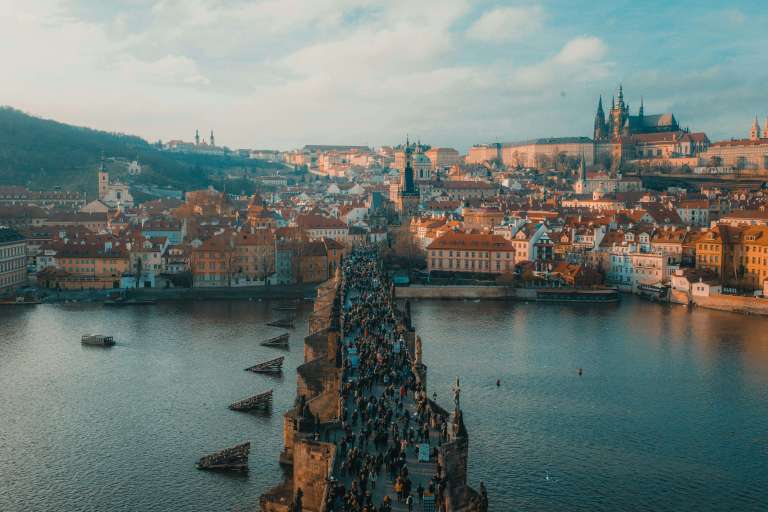
It’s funny how easily we take things for granted once we’ve lived them.
I hadn’t set foot in continental Europe until I was 17. I was never particularly fascinated by it, but I was curious, mainly because I’ve always been a football head (aka soccer). My understanding of Europe came almost entirely through football. It’s surprising how much you can learn about a place through the way it presents itself to the world.
For me, football was Europe’s Hollywood.
Sure, I’d read books by European thinkers like Rousseau, Voltaire, Dostoevsky, Adam Smith (dad’s an economist), Marx (capitalism’s greatest critic), Montesquieu and plenty of Greek philosophers, but most of them weren’t contemporary thinkers. They wrote about their own times, their realities. Football, on the other hand, made Europe feel present, dynamic, real. It gave me a window into the continent’s character.
For instance, I knew about the English and their pub culture way before I had set foot in England. I already knew they loved to drink before games, loved to sing in the stands and viewed the sport almost like a religion.
The Dutch, with their total football philosophy, played the game differently. Organized, intelligent, team-oriented, their football reflects a society that values structure and versatility.
The Germans famously love their beer. Bayern Munich holds a photoshoot every year to promote Oktoberfest, which I only knew about thanks to their events.
The Turks are loud and proud. Fireworks in the stands, packed stadiums on a weekday, and fans who treat football like life or death, it perfectly depicts their character.
The Spanish, on the other hand, are just as proud, but more divided. The Basques, Catalans and Andalusians all bring their own flair to the game. They also have their own holidays, like San Jordi (Catalan Valentine’s day), and you learn about those through football too.
The Italians are perhaps the only ones who proudly exposed the ugly face of their society through the beautiful game: their racism toward Black players, their theatrics and machismo are ever present on the pitch and off of it. Their passion is unmatched and unapologetic, but so is their cheating. Not great, thank God people outside of football are different.
Anyway, last but not least, the French. It was already striking to me how different people within the country were. France is so diverse, which I already knew then, but which became even clearer the second I set foot here.
I’ve been to more than 20 European countries since moving here, and visited over 100 cities in Europe. I’ve made lifelong friends who became family. I studied, partied and worked with them. Better yet, I ended falling in love with a European, who then became my wife and lifelong partner. Who would’ve thought?
And yet, I take it all for granted now.
I love living in Europe, and there is nowhere else I’d rather be, but traveling around Europe doesn’t excite me as much as it used to. It feels like I’ve seen it all, which, of course, isn’t true.
It’s strange how easy it is to feel indifferent to things you once dreamed of.
Gratitude, I’ve learned, isn’t just a feeling. It’s an action. A choice.
Our next trip in Europe will be to the Balkans, and Greece. Albania, Montenegro and Bosnia are on our list. I hear the culture there is very different to Western Europe, which is super exciting!
In September 2024, after touring Europe for 9 months, I realized I needed a new challenge. I had no routine back then, but I was itching for something that would push me out of my comfort zone. I hesitated between picking up rollerblading again, something familiar and nostalgic, or diving into something completely new.
As someone captivated by the ocean and its many mysteries, I started thinking why not do something with that? That’s how I got into scuba diving.
Now, I knew absolutely nothing about scuba diving. I’d snorkeled a million times before, sure, but as I quickly learned, scuba is a different beast altogether.
There was one small problem, though: I was only going to be around for a couple of weeks before heading off on a another road trip through Belgium, the Netherlands, Germany, and Luxembourg, before eventually visiting friends in Strasbourg and Romans. Not exactly the ideal time to start something new.
Still, I called the local dive club and got through to P. I think he’s the president, though I’m not entirely sure. What I do know is that he’s an experienced instructor and sounded like a genuinely nice guy. I told him I’d have to disappear for a couple of months after my first session, and he just said, “No problem. We’ll pick it up from there when you’re back in December.” That put me at ease.
Before leaving, I squeezed in my first-ever scuba dive in the pool, and let’s just say it didn’t go smoothly.
At barely two meters deep, the pressure was too much for my ears. We had to resurface twice before I could finally stay down. I was tense, bloated, and extremely uncomfortable, definitely not my finest hour. I left with more doubts than confidence. But I had two months to reflect, refocus, and maybe strengthen my Eustachian tube.
When I came back in December, I jumped right back in. The group had changed, most of the other “newbies” weren’t so new anymore, and they all seemed to know each other pretty well. I didn’t mind. P was there and made sure I was comfortable. Besides, I’ve always been a bit of an outsider anyway.
So, the second session? A total game changer. Thanks to the dryland workouts P had recommended, I was way more relaxed, and my ears cooperated this time. I actually enjoyed myself. It was the confidence boost I needed.
But not so fast.
Session three was a swim session. And here’s something I may have mentioned on this blog before: I’ve always wanted to learn how to swim properly, but never got around to it. Growing up by the sea, I swam “freestyle” almost every summer. My dad first threw me in the water at age 5. He’s always been a strong swimmer but me? Not so much. Or not at all!
So during that swim session, the lack of technique finally caught up with me. Everyone else swam like they knew what they were doing. I felt like I was flailing.
When I remember the most from that session was that the instructor on duty that day wasn’t exactly kind about it. However, another one quietly pulled me aside, explained what I was doing wrong, and gave me tips on how to improve. That five-minute exchange was all I needed.
Then came the sting.
At the end of the session, I overheard some instructors talking to P, my “supervisor.” Let’s just say that they were extremely harsh. I knew that I wasn’t ready, that I could barely float, that I couldn’t swim, but the stuff and the way they said it was just mean. But in hindsight, that moment made me push through to prove them wrong. I had no doubt that I would improve. Talk is cheap.
Right after that incident, I started taking proper swimming lessons outside of scuba. I practiced every chance I got. Little by little, things started clicking.
Weeks went by. My scuba technique improved. I got more confident in the water. I stopped feeling like I was just surviving and started actually enjoying it.
And just this past weekend, I went on my first dive in nature.
It was amazing.
Sure, I lost my weight belt (50 bucks gone in a splash) but I didn’t care. The dive itself was beautiful. I was paired with G, a quiet guy who knows his stuff. Not a chatterbox, but full of good advice. I also really like E, another club member. Super chill and probably the nicest guy there, even though I don’t see him often.
Now summer is right around the corner. In a few weeks, we have a diving weekend coming up, and I can’t wait. I’m close to getting my first-level certification. It’s been tough, my technique was abysmal when I started, but I’ve grown a lot. I’m feeling more comfortable, more daring.
My instructors helped me a lot. But I’m also proud of the work I put in. I earned this progress.
Will I continue next year? I think so. I want to see where this journey goes.
The human brain is a remarkable organ. It’s responsible for everything we think, feel and do. Our brains are the driving force behind our behavior and are constantly working to keep us safe from harm.
The manner in which our brains process information is not always reasonable, hence why it’s extremely common for us to craft negative narratives based on our past experiences.
Uncertainty
One of the ways our brains work to keep us safe is by perceiving uncertainty as a danger or a threat.
The reason we panic when we lose our mom in a supermarket, or lose sight of our hiking partner testifies to that. Being in unfamiliar or unpredictable situations makes our brains go into overdrive rather quickly. This phenomenon allows us to better assess the situation and determine whether it’s safe or not.
Whenever our brain perceives said situations as a potential threat, it immediately creates negative stories and outcomes, thus preparing us for the worst case scenario.
Fascinating, right ?
Our brains are wired to prioritize survival over happiness.
In other words, our brains are more concerned with keeping us ALIVE than with making us happy, which seems fair as far as I’m concerned.
However, and as a result, the narratives we create in the present are often based on experiences from the past, and most importantly, experiences that have led to negative outcomes.
These experiences are stored in our subconscious as core beliefs, which our brains use to create our current narratives.
Core beliefs
You may have heard this before (or not), but our core beliefs are often formed in childhood and are based on our experiences with our parents or caregivers.
For instance, people who grew up in an environment where they were constantly criticized or told that we weren’t good enough develop a core belief that they are unworthy or unlovable.
This belief then manifests in their present-day narratives, leading them to believe that they’re not capable of success or that they’ll never find happiness, or love.
The problem with these negative narratives is that they can become self-fulfilling prophecies. By believing that you’re not good enough or that you’ll never find happiness, you’re less likely to take risks or pursue your goals, which then leads to an unfulfilling and unsatisfying life.
How to overcome negative narratives
One way to overcome these narratives is to challenge your core beliefs.
By examining the beliefs we hold about ourselves and questioning where they come from (learning to unlearn), we begin to see that most of them aren’t based in reality.
It’s obviously easier said than done, but once you’ve taken that first step, the next step, which is to create new, more positive narratives will come more naturally.
For example, if you have a core belief that you’re not good enough, you can challenge that belief by focusing on your strengths and accomplishments, and what got you here.
I’ve always done this whenever I felt down. I love reminding myself of how far I’ve come, all the mountains I’ve climbed and empower myself that way. Positive affirmations are a major confidence boost and gratitude is key to a purposeful life.
Surrounding myself with supportive people and ONLY consuming empowering and positive content (audio, written and video) has also played a huge role in my fight against negativity and fear.
Practicing mindfulness is one of my favorite topics on this blog. I wrote multiple pieces about it because I truly believe in the power it possesses in the fight against mediocrity, negative self-talk and defeatism.
Mindfulness, as most of you must know, is the practice of being fully present in the moment and observing our thoughts without judgment.
Practicing mindfulness makes me more aware of my own negative narratives and is a necessary step in my journey of letting go.
Practicing mindfulness also helps me focus on the present moment and the positive experiences I’ve had (or that I’m having), rather than worrying about the future or dwelling on the past.
Photo by Matt Collamer
So whoever is reading this, use this piece as a reminder to cultivate mindfulness, always question everything, including your core beliefs and to be kind to yourself.
Don’t take making it this far for granted, life ain’t easy but you’ve got this. Also, remember, our brains view uncertainty as a peril so don’t trick yourself into believing you’re alone in this fight against negative narratives, you’re not.
While our brains prioritize safety over happiness, positive affirmations are powerful enough to steer negative narratives towards positive ones. If anything, I’m living proof of this.
The life of the average man is going to be more competitive than ever.
Numerous people have written about AI. Most focus on the technology itself, whether it’s a blessing or a threat.
I’m less interested in AI than in what it will demand from us. Because regardless of what happens, one thing seems certain: life for the average person is about to become far more competitive.
Is there reason to worry?
One thing is for sure, life always gets worse before it gets better.
This new era won’t be any different.
Those who adapt will thrive. Those who don’t will struggle.
The world has always favored the fittest, those who stand out. Being average is costly when it’s not convenient anymore.
What does it take to stand out ?
Well, you won’t like the answer, my friend, but it takes a lot of suffering.
The cure for pain is in the pain.
Embrace your losses, embrace being discriminated against, injustice, the rigged system. Embrace it, but never accept it. Fight it, that’s how you become resilient, tough.
You have to GO through it in order to GET through it.
Good times make us soft, so let the struggles begin, let it come, we’ll be fine.
Have some faith.
After all, as time passed, the world got meaner. It’s always been like that. This won’t be any different.
Our history is plagued with long periods of cruelty and conflicts. Cruelty has a thousand faces, AI may just be one of them, like automation was a few decades ago.
But again, going through bad times builds resilience, we just have to learn how to manage our demons.
I know not everyone can, which is unfortunate, but humans are as strong as our weakest link. There’s hope in that.
Don’t cower away from difficulty, don’t try to drown your problems. Don’t be that person.
Cowardice feeds our weaknesses.
Face life with bravery and remember, bad things happen to make exceptional people.
If you’re a man of God like me, think about all the messengers that came before us, all the things they went through.
It’s no coincidence.
Whether it’s AI or something else, humanity will always prevail.
Minimalism didn’t begin with Netflix documentaries, Scandinavian furniture or YouTube creators.
Humanity has been rediscovering the same idea for thousands of years.
I’ve noticed a genuine interest from my readers in the “HOWs” of minimalism, but how about the “WHYs” and the “WHEREs” ?
Well, that’s what we’re here for today. What you’re about to read will bring things full circle.
After reading and writing about minimalism for 5+ years, I realized that this philosophy is nothing new. In fact, throughout history, most cultures and religions have emphasized the importance of living a simple and minimalist life.
Minimalism in ancient European Civilizations
In ancient Greece, Socrates famously espoused the idea that “the secret of happiness is not found in seeking more, but in developing the capacity to enjoy less.”
Socrates believed that living a simple life was key to achieving contentment and stressed the importance of focusing on the essentials. His philosophy also focused on avoiding excess and materialism.
Similarly, in ancient Rome, Seneca wrote extensively about the virtues of minimalism.
In fact, Seneca believed that focusing on the basics and refraining from excess granted human beings a sure sense of inner peace and tranquility, and he couldn’t be more right.
Not only that, Seneca also emphasized the importance of mindfulness, advocating for individuals to live in the present moment and appreciate the simple pleasures in life.
Minimalism in Eastern religions
The concept of minimalism is central to many teachings in Buddhism and Hinduism.
In fact, Buddhism teaches that “desire is the root of all suffering” and that inner peace can only be achieved by letting go of our attachment to material possessions.
Indeed, the Buddha himself renounced his belongings and lived as a monk, teaching his followers to let go of desires and attachments in order to achieve enlightenment.
The Buddhist practice of meditation is the perfect illustration of that. While Seneca didn’t insist on one particular practice to promote mindfulness and presence, his ideas perfectly match Buddhist philosophy on this point.
Similarly, in Hinduism, the concept of “Sannyasa” or “renunciation”, is a central theme.
Sannyasa involves renouncing material possessions and living simply and in pursuit of spiritual enlightenment.
But Sannyasa isn’t the only Hindu concept that highlights a certain form of minimalism.
“Aparigraha” or “non-possessiveness” also points up the importance of avoiding excess and materialism in favor of simplicity and contentment, which ultimately shows that minimalism is nothing new, and that it took center stage in century long beliefs and religious practices in the East as much as in the West.
Minimalism in Monotheistic religions
In Judaism, the concept of “Tzedakah” or charity, is an essential part of the religion.
Tzedakah involves giving to those in need and promoting social justice.
By giving to others, we learn to reduce our attachment to stuff. Not only that, giving means we learn to prioritize the needs of others over our own desires.
The world needs more of this practice.
How about in Christianity?
Well, one of Jesus’ (AS) most famous teachings says “it is easier for a camel to go through the eye of a needle than for someone who is rich to enter the kingdom of God.”
This idea highlights the importance of avoiding excess and materialism, and promotes selflessness and spiritual values.
Last but certainly not least, Islam.
Prophet Muhammad (PBUH) lived a humble and simple life. He owned the bare minimum, despite his influence, status and the wealth of his wife hazrat Khadija (RA).
Many of Prophet Muhammad’s (PUBH) teachings revolved around the above-mentionedvalues of charity, avoiding excess and emphasizing spiritual and ethical values over material possessions.
Case in point, the Islamic concept of “Zakat” involves giving a fixed and predetermined percentage of one’s wealth (once a year) to the less fortunate, promoting empathy and compassion for others.
The universality of minimalism is evident in its presence across different cultures and regions worldwide, and there’s more !
Minimalism in ancient South American culture
Often forgotten when talking about minimalism and anti-consumerism, South American cultures and civilizations had some equally impressive values to the ones mentioned above.
“When the rivers are all dried up, and the trees cut down, man will then realise that he will not be able to eat money.” Native American proverb
For instance, if you look at the Inca civilization (present-day Peru, 13th to 16th century), living simply and in harmony with nature was paramount.
The Incas prioritized the concept of “Ayni,” which involved the reciprocal exchange of goods and services among members of the community, encouraging mutual aid and support.
Similarly, the Maya civilization (present-day Mexico and Central America, 2000 BC to the 16th century) practiced a simple and sustainable way of life as well.
The Maya were famous for their beliefs in the conservation of natural resources and living in harmony with the surrounding nature.
This was reflected in their agricultural practices, namely terrace farming and irrigation systems, which were brilliantly designed to maximize efficiency and minimize waste.
Quite the opposite of what we do today.
While the Incas and the Mayas are quite well-known, there’s another lesser-known civilization in the Nazca civilization.
Nazcas lived in a desert region (in modern day Peru) and relied on sustainable practices to survive.
For instance, they built underground aqueducts and water management systems to make sure they survived in their harsh environment.
The Nazcas also produced simple but elegant pottery, textiles, and other crafts, demonstrating their appreciation for the beauty in simplicity.
Last but not least, Asian ancient cultures also provide numerous examples of minimalism and simplicity being valued and practiced way back.
For instance, in ancient China, one of the oldest civilizations in the world, Taoism highlights the importance of living a simple and natural life,in harmony with the flow of the universe this time.
This is commonly known as the concept of “Wu Wei.”
“He who knows he has enough is rich.” Lao Tzu
But besides ancient China and India (through Buddhism and Hinduism), another gigantic civilization from the East has its own form of minimalism: Japan.
Indeed, the Japanese aesthetic of “wabi-sabi” is a great example of minimalism and simplicity.
Wabi-sabi celebrates the beauty of imperfection and transience, emphasizing the importance of finding joy and contentment in the simple things in life.
Final word
What has been will be again, what has been done will be done again; there is nothing new under the sun.
That’s what fascinates me most about minimalism.
Across continents, religions and civilizations, people repeatedly arrived at the same conclusion, that a meaningful life is rarely built on excess. Time and again, humanity discovered that simplicity, generosity and moderation lead to a greater sense of peace and contentment.
Minimalism isn’t a Western trend or a passing lifestyle. It’s one of humanity’s oldest ideas.
Perhaps that’s because our deepest needs have never really changed.
We all seek purpose, inner peace and a sense of belonging. Throughout history, countless people found that owning less often helped them appreciate more.
I hope minimalism helps you live a life that is not only simpler, but also more ethical, more intentional and more fulfilling.
Ask someone what they do and they’ll usually answer with their job.
Ask them what they’re passionate about and many struggle to answer.
Somewhere along the way, many of us began confusing what we do for a living with who we are. We spend years building careers, yet often neglect the hobbies, projects and ideas that make us unique.
Work is important. It pays the bills, provides stability and gives many people a sense of purpose.
But your passions shape a different part of your life.
They shape who you become.
You don’t find your passion. You protect it.
People often talk about “finding their passion” as if it’s hidden somewhere, waiting to be discovered.
I don’t think that’s how it works.
Most passions begin as simple curiosities.
A book that sparks your interest.
A camera you decide to pick up.
A language you start learning.
A notebook you begin filling with ideas.
The difference isn’t talent.
The difference is that some people keep making time for those interests long after the initial excitement fades.
Passions aren’t found.
They’re protected.
Creativity deserves a place in your life
For years, I’ve spent my free time writing, recording podcast episodes, building my van and exploring new places.
None of these projects began because they promised financial success.
I pursued them because I genuinely enjoyed them.
Ironically, the more time I invested in these creative pursuits, the more meaningful they became.
They taught me new skills, introduced me to incredible people and gave me experiences that no job ever could.
Looking back, I’m grateful I didn’t wait for permission or perfect conditions before starting.
Stop waiting for more time
One of the biggest mistakes we make is believing we’ll pursue our passions later.
When work becomes less demanding.
When we earn more money.
When life settles down.
The problem is that life rarely becomes less busy on its own.
If something matters to you, you have to make room for it now, even if it’s only thirty minutes a few evenings each week.
Small, consistent efforts are what turn interests into lifelong passions.
Keep learning
When was the last time you learned something completely new?
Not because your employer asked you to.
Not because it would look good on your résumé.
But simply because you were curious.
Learn a language.
Pick up an instrument.
Start writing.
Learn photography.
Build something with your hands.
Cook meals you’ve never made before.
The goal isn’t to become an expert.
The goal is to keep growing.
Curiosity is one of the greatest gifts we have, and it deserves to be nurtured throughout our lives.
Your job isn’t your identity
Most of us work.
Most of us care deeply about our families and our friends.
Those things matter.
But they’re also things millions of other people share.
What often makes someone memorable is what they choose to create, learn or contribute outside of work.
The novels they write.
The photographs they take.
The gardens they grow.
The businesses they build.
The music they compose.
The adventures they pursue.
Those are the things that reveal who we are.
Final thoughts
Your job may pay your bills, but your passions shape your life.
Protect them.
Make time for them.
Nurture them.
Years from now, you probably won’t remember every meeting you attended or every deadline you met.
But you’ll remember the things you created, the skills you learned and the moments when you allowed your curiosity to lead the way.
As Nelson Mandela once said:
“There is no passion to be found playing small, in settling for a life that is less than the one you are capable of living.”