
Simplicity unites.
Minimalism didn’t begin with Netflix documentaries, Scandinavian furniture or YouTube creators.
Humanity has been rediscovering the same idea for thousands of years.
I’ve noticed a genuine interest from my readers in the “HOWs” of minimalism, but how about the “WHYs” and the “WHEREs” ?
Well, that’s what we’re here for today. What you’re about to read will bring things full circle.
After reading and writing about minimalism for 5+ years, I realized that this philosophy is nothing new. In fact, throughout history, most cultures and religions have emphasized the importance of living a simple and minimalist life.
- Minimalism in ancient European Civilizations
In ancient Greece, Socrates famously espoused the idea that “the secret of happiness is not found in seeking more, but in developing the capacity to enjoy less.”
Socrates believed that living a simple life was key to achieving contentment and stressed the importance of focusing on the essentials. His philosophy also focused on avoiding excess and materialism.
Similarly, in ancient Rome, Seneca wrote extensively about the virtues of minimalism.
In fact, Seneca believed that focusing on the basics and refraining from excess granted human beings a sure sense of inner peace and tranquility, and he couldn’t be more right.
Not only that, Seneca also emphasized the importance of mindfulness, advocating for individuals to live in the present moment and appreciate the simple pleasures in life.
- Minimalism in Eastern religions
The concept of minimalism is central to many teachings in Buddhism and Hinduism.
In fact, Buddhism teaches that “desire is the root of all suffering” and that inner peace can only be achieved by letting go of our attachment to material possessions.
Indeed, the Buddha himself renounced his belongings and lived as a monk, teaching his followers to let go of desires and attachments in order to achieve enlightenment.
The Buddhist practice of meditation is the perfect illustration of that. While Seneca didn’t insist on one particular practice to promote mindfulness and presence, his ideas perfectly match Buddhist philosophy on this point.
Similarly, in Hinduism, the concept of “Sannyasa” or “renunciation”, is a central theme.
Sannyasa involves renouncing material possessions and living simply and in pursuit of spiritual enlightenment.
But Sannyasa isn’t the only Hindu concept that highlights a certain form of minimalism.
“Aparigraha” or “non-possessiveness” also points up the importance of avoiding excess and materialism in favor of simplicity and contentment, which ultimately shows that minimalism is nothing new, and that it took center stage in century long beliefs and religious practices in the East as much as in the West.
- Minimalism in Monotheistic religions
In Judaism, the concept of “Tzedakah” or charity, is an essential part of the religion.
Tzedakah involves giving to those in need and promoting social justice.
By giving to others, we learn to reduce our attachment to stuff. Not only that, giving means we learn to prioritize the needs of others over our own desires.
The world needs more of this practice.
How about in Christianity?
Well, one of Jesus’ (AS) most famous teachings says “it is easier for a camel to go through the eye of a needle than for someone who is rich to enter the kingdom of God.”
This idea highlights the importance of avoiding excess and materialism, and promotes selflessness and spiritual values.
Last but certainly not least, Islam.
Prophet Muhammad (PBUH) lived a humble and simple life. He owned the bare minimum, despite his influence, status and the wealth of his wife hazrat Khadija (RA).
Many of Prophet Muhammad’s (PUBH) teachings revolved around the above-mentioned values of charity, avoiding excess and emphasizing spiritual and ethical values over material possessions.
Case in point, the Islamic concept of “Zakat” involves giving a fixed and predetermined percentage of one’s wealth (once a year) to the less fortunate, promoting empathy and compassion for others.
The universality of minimalism is evident in its presence across different cultures and regions worldwide, and there’s more !
- Minimalism in ancient South American culture
Often forgotten when talking about minimalism and anti-consumerism, South American cultures and civilizations had some equally impressive values to the ones mentioned above.
“When the rivers are all dried up, and the trees cut down, man will then realise that he will not be able to eat money.” Native American proverb
For instance, if you look at the Inca civilization (present-day Peru, 13th to 16th century), living simply and in harmony with nature was paramount.
The Incas prioritized the concept of “Ayni,” which involved the reciprocal exchange of goods and services among members of the community, encouraging mutual aid and support.
Similarly, the Maya civilization (present-day Mexico and Central America, 2000 BC to the 16th century) practiced a simple and sustainable way of life as well.
The Maya were famous for their beliefs in the conservation of natural resources and living in harmony with the surrounding nature.
This was reflected in their agricultural practices, namely terrace farming and irrigation systems, which were brilliantly designed to maximize efficiency and minimize waste.
Quite the opposite of what we do today.
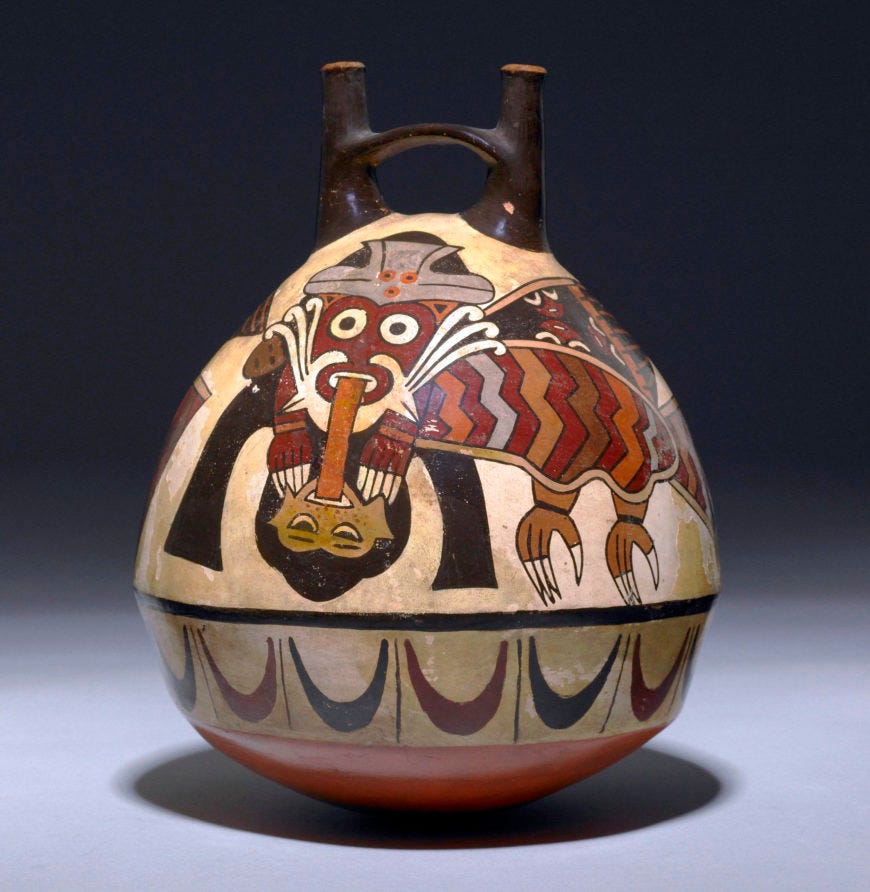
While the Incas and the Mayas are quite well-known, there’s another lesser-known civilization in the Nazca civilization.
Nazcas lived in a desert region (in modern day Peru) and relied on sustainable practices to survive.
For instance, they built underground aqueducts and water management systems to make sure they survived in their harsh environment.
The Nazcas also produced simple but elegant pottery, textiles, and other crafts, demonstrating their appreciation for the beauty in simplicity.
- Minimalism in ancient Asia
Last but not least, Asian ancient cultures also provide numerous examples of minimalism and simplicity being valued and practiced way back.
For instance, in ancient China, one of the oldest civilizations in the world, Taoism highlights the importance of living a simple and natural life, in harmony with the flow of the universe this time.
This is commonly known as the concept of “Wu Wei.”
“He who knows he has enough is rich.” Lao Tzu
But besides ancient China and India (through Buddhism and Hinduism), another gigantic civilization from the East has its own form of minimalism: Japan.
Indeed, the Japanese aesthetic of “wabi-sabi” is a great example of minimalism and simplicity.
Wabi-sabi celebrates the beauty of imperfection and transience, emphasizing the importance of finding joy and contentment in the simple things in life.
- Final word
What has been will be again, what has been done will be done again; there is nothing new under the sun.
That’s what fascinates me most about minimalism.
Across continents, religions and civilizations, people repeatedly arrived at the same conclusion, that a meaningful life is rarely built on excess. Time and again, humanity discovered that simplicity, generosity and moderation lead to a greater sense of peace and contentment.
Minimalism isn’t a Western trend or a passing lifestyle. It’s one of humanity’s oldest ideas.
Perhaps that’s because our deepest needs have never really changed.
We all seek purpose, inner peace and a sense of belonging. Throughout history, countless people found that owning less often helped them appreciate more.
I hope minimalism helps you live a life that is not only simpler, but also more ethical, more intentional and more fulfilling.
Thanks for reading.
Teekay.

