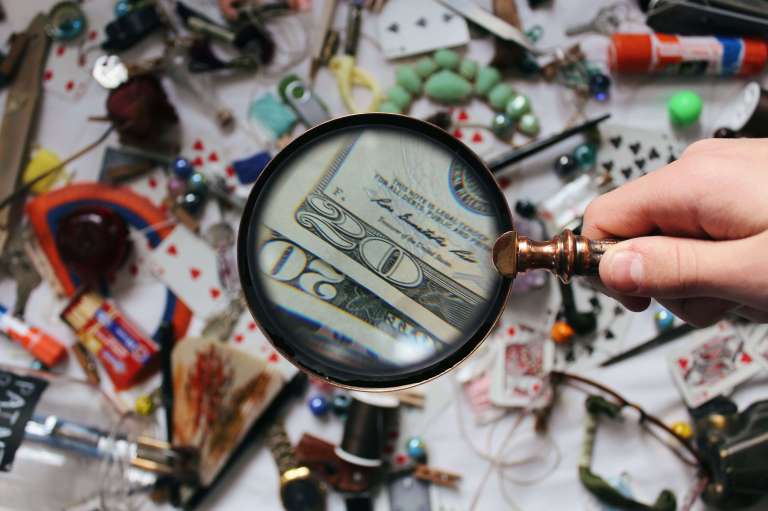
From cash to trash.
Your home is meant to be a sanctuary
You home wasn’t meant to become a graveyard for your old gadgets and excess stuff.
Home is where we retreat from the outside world, unwind, and recharge ourselves. It’s where we seek solace, relaxation, and tranquility.
Americans spend $1.2 trillion annually on nonessential goods. In other words, items they do not need – The Wall Street Journal.
For most people, home has become the place where they store their stuff.
- Do you ever feel overwhelmed by the clutter in your living space?
- Is it a challenge for you to locate items or decide what to wear?
- Are you occasionally faced with a shortage of hangers?
- Does the sight of your closet alone make you feel tired?
- Does it take an excessive amount of time to tidy up your home?
- Would relocating from your current residence require multiple utility trucks?
If you find yourself answering “yes” to any of these questions, here are the likely culprits for this draining situation.
Note: The following examples and numbers paint a jarring picture of excessive consumption and unnecessary accumulation. Clearly, many of us have far too much stuff.
- Food storage containers
How many containers does one need ? Research says 6 to 10 containers per person, we’ve got 3 in our home, for 2 persons.
It’s shocking to me that people hoard these things. Some accumulate them to the point of overflowing cupboards!
Wouldn’t it be great if neighborhoods and buildings provided a designated space where people can share their surplus containers, allowing others to utilize them as needed ? This would help curb the unnecessary purchase of food containers and promote a more sustainable approach to storage.
Note: This doesn’t apply if you meal prep, which is awesome by the way.
- Pens
There are already enough pens in circulation that many of us could go years without buying another.
Most people don’t use pens anyway.
- Auto tools
You don’t need ten wrenches, Bob ! Seriously, you don’t. One is enough, two is MAX, unless you’re a mechanic.
And just like with containers, I wholeheartedly believe neighborhoods and buildings must provide a space where people can share their tools.
I got mine when I was building my Campervan. I’m more than happy to share them with others.
- Reusable shopping bags
Reusable shopping bags are the new plastic bags.
A massive scam.
People collect those even more than they did plastic bags, because they paid more for them.
The problem ? Reusable bags require more plastic, energy and fabric to make.
Forgot your bag at home ? It’s okay, just grab what you can carry. You won’t die of hunger, and it’ll train you to think about your bag next time.
Also, always leave a reusable bag in your bike/car or coat.
Better yet, we must promote the introduction of returnable bags. They have those here in France, they cost 15c each (pricey), which is refunded back to you when you return them.
In fact, we don’t have ANY bags at home, reusable or otherwise. We operate with returnable bags only (and my backpack if need be).
- Handbags
Why do people even buy those ? When did this trend begin ?
Since around 1500 AD, handbags have been an essential part of everyday life for both men and women.
It wasn’t until the post-war economic period of the 1950s that handbags were propelled into a cult status.
Can we go back in time ?
To those of you who own a thousand and one bag, you only need ONE, two tops.
It kills me to notice people, particularly women, having an extensive collection in their closets and consistently using the same old handbag. Sell them !
- Backpacks
Why would anyone purchase a new backpack if they still have the old one? Aesthetics? Boredom? Maybe a size or quality upgrade?
Whatever the case may be, how about you retire the old one (by giving it to charity) before purchasing a new one ? Just an idea.
- Coats
What do you need THREE coats for? It’s not like you can wear them simultaneously, right ? Think about it.
- Vases (and other decorative objects)
I don’t even know why vases exist, such a waste of energy, materials and space in my opinion. I like my flowers in a garden, but to each their own.
- Toys
British research found that the average 10-year-old owns 238 toys but plays with just 12 daily — The Telegraph.
3.1% of the world’s children live in America, but they own 40% of the toys consumed globally — UCLA.
Let your kids play outside, run around, play sports. Some toys help children develop their curiosity and learn about the world, which I’m all for, long as we buy them used. There are enough toys out in the world that’ll never see the light of day ever again, and even more toys in landfills. Enough !
Let’s stop wasting resources and start thinking differently. By the way, gifts don’t always have to be NEW.
- Kitchenware
Perhaps I’m a bit extreme but I only have one single plate, and my wife has one too. A couple of bowls and a mug complete our tableware set ^^
If you’re the type to host lots of gatherings and parties, it makes sense that you have more, but we don’t really, so that’s that.
That said, there are billions of used plates and bowls (and other kitchenware) in the world. Stop buying those at IKEA, flea markets are where it’s at !
Note: We only own one mug because I love drinking out of my 34Oz reusable bottle. Easier to keep track of my water intake that way, and less “stuff” to clutter our home.
- Furniture
Nightstands, bed frames (unless absolutely necessary, like for people with bad knees), shelves, chairs, TV stands, coat racks and everything in between. We don’t own any of this stuff and we’re extremely happy with our lives.
Don’t clutter your sanctuary with useless furniture. It costs money, it’s heavy to carry, it makes cleaning more annoying and most of it serves no real purpose.
Empty spaces don’t always need to be filled.
- Hangers
If you don’t have enough hangers for your clothes, you have too many clothes.
It’s time to stop buying new and to get rid of all that excess.
By the same token, this logic also applies to closet space: If you don’t have enough space in your closet, you have too much of whatever you’re trying to store in there. Declutter.
- Clothes
Speaking of which, we all have too many clothes. I don’t even have to know you to say this.
The average American woman owns 30 outfits — one for every day of the month. In 1930, that figure was nine — Forbes.
Also:
The average American throws away 65 pounds of clothing per year — Huffington Post.
Need I say more ? Sort that stuff out, have just what you need.
Each year, we produce as many clothes as humans have ever existed on Earth. Over 100 billion, for 8 billion people living.
- TVs
Why would anyone need an iPad, an iPhone, a MacBook AND a TV ?
Some homes have more television sets than people, it’s crazy ! For me it’s a sign of civilizational decline. It hurts to think nowadays.
Americans spend more on shoes, jewelry, and watches ($100 billion) than on higher education — Psychology Today.
Besides, it’s also time to refocus our attention on how energy consuming TVs are to make and to use.
That aside, we must also find new solutions to FIX them. It makes no sense that fixing an appliance costs as much as buying a new one, it really doesn’t.
Also, we’ve reached a point where TVs are slim enough and smart enough that we hardly need more quality, so why are we pushing for more ? What’s the point ? Most TVs today offer 4K quality, which is already too much.
Want to enjoy a GREAT movie ? Go watch it in a movie theatre. Otherwise, your laptop is more than enough for your late night lullaby.
- Offsite storage units
If you live in an apartment, a house or anywhere in between and feel the NEED to have an offsite storage unit, you have a problem.
Your stuff isn’t supposed to take up that much space. If you can’t contain it, get rid of it.
- Grooming and hygiene products
People have dozens of shampoos, body lotions, shower gels, and an array of other “beauty” products in their bathrooms.
The multitude of these items cluttering up drawers creates a sense of disorder, disarray and mental fatigue.
But I get it. The “latest and greatest” always looks better. Packaging is always evolving, and marketers work hard to make us buy more.
However, we’ve all been blessed with a sense of logic and reason. Often times, these shiny new objects don’t live up to our expectations. Instead, they end up abandoned in drawers, collecting dust.
They’re also a waste of money and resources, and are likely to end up in landfills or worse, the Great Pacific Garbage Patch.
Think before you buy.
Note: I personally use a single natural, organic, vegan and local bar of soap to wash my hair, my face and the rest of my body. My wife and I also share a natural Shea butter bar to keep our skin healthy and hydrated.
Aloe Vera is another great option for the skin but is often sold in plastic, so we don’t buy it.
As for oral hygiene, I use my Miswak during the day and baking soda to brush my teeth after meals. My wife often uses solid toothpaste (so no plastic in our home).
- Non-refillable toiletries
Plastic bottles (of all sorts) must be illegal by now. Plastic shampoos and shower gels must be the first ones to go.
I strongly believe that refillable toiletries are the way to a more sustainable future, and I advocate for a higher initial cost when purchasing them.
A higher price point would discourage people from disposing of these items after use, encouraging greater reusability and reducing waste.
- Travel size toiletries
People don’t even travel that much, the fact they steal (or borrow permanently) travel size toiletries to keep them in their bathrooms is beyond me.
The greater the usage, the higher the production rate of any particular item. Supply and demand. If we want to eradicate plastic, we must stop financing and promoting the plastic industry.
For those who already have travel size toiletries, don’t toss them. Instead, put them in your shower and use them.
Better yet, give your toiletries to a local homeless shelter or women’s shelter that accepts them. It’ll lighten your load and help someone in need at the same time.
- Humans
Yeah, there are way too many humans on this planet.
- Final Word
Presently, North America and Western Europe, comprising merely 12% of the global population, contribute to 60% of private consumption spending.
In contrast, the combined population of South Asia and sub-Saharan Africa, accounting for one-third of the world’s pop, represents a mere 3.2% of private consumption spending. (Worldwatch Institute).
Do you see the problems here ?
It’s not just that we overconsume in the West, because that’s a given. But what will happen when South Asia and sub-Saharan Africa starts consuming as much as we do ?
Because they’re coming, and they want everything we have. After all, why would they not ? Many people look up to this absurdity and want the same for themselves.
Consumerism, fashion and flex culture will be the death of us. They are a sign of the dumbing of our current generation. After all, there are more shopping malls than high schools in America, and 93% of teenage girls rank shopping as their favorite pastime (Affluenza).
Question everything guys. Food for thought.
Thanks for reading.
Read more of the same on my Medium page.
Tee.