Backpacking

Backpacking lost its soul

On the ego that turned exploration into consumption.

People often ask why I spend weeks in one place when I could be crossing several countries off my list instead. I suppose I’ve never understood how moving more is supposed to mean seeing more.

I don’t travel to collect countries.

I travel to disappear into one.

Backpackers don’t stay anywhere anymore.

They arrive. They sleep. They photograph. They publish. They leave.

Then they repeat the process somewhere else until the trip ends and they return home exhausted, convinced they’ve seen the world because they were physically present in it.

They haven’t.

They’ve consumed it.

That’s what backpacking has become.

Not exploration.

Consumption.

Call me a gatekeeper if you want, but I don’t think making travel accessible to everyone was a good thing.

Some things deserve to remain difficult.

Difficulty isn’t just an obstacle.

It’s a filter.

Backpacking once demanded uncertainty. You hitchhiked because there wasn’t another option. You camped because you couldn’t afford hotels. You got lost because Google Maps didn’t exist. You depended on strangers because there was nobody else.

You didn’t stay three weeks because slow travel was fashionable.

You stayed because leaving wasn’t simple.

That difficulty selected people.

Not better people.

People with different motivations.

People who wanted to understand rather than display.

Then technology removed almost every barrier.

Flights became cheap.

Hostels multiplied.

Google Maps eliminated uncertainty.

Translation apps eliminated effort.

Social media eliminated the need to tell stories because photographs could pretend to tell them for you.

The filter disappeared.

The culture changed.

Today, travel isn’t sold as curiosity.

It’s sold as identity.

The tourism industry doesn’t ask what a country might teach you.

It asks who you’ll become once other people know you’ve been there.

Travel has become one of the cheapest ways to manufacture an identity.

You don’t need to become interesting.

You just need to stand somewhere interesting.

That’s why so many people return with bigger egos instead of broader minds.

Ask them what they learned.

Most will tell you what they saw.

Ask them about the people.

They’ll tell you about the monuments.

Ask them about the language.

They’ll proudly repeat the three words they learned after spending 90 days crossing six countries.

They’re collecting locations, not understanding and certainly not growth.

Tourism has become another branch of consumerism.

Countries are products.

Experiences are products.

Cultures are products.

Even people become products.

Everything exists to be consumed, photographed and replaced by the next destination.

The strangest part is how proud we are of this.

I’ve been to 25 countries.

Why is that impressive?

Wouldn’t it be more impressive to deeply understand one?

To speak its language.

To know its neighborhoods instead of its viewpoints.

To have friends instead of recommendations.

To return home with your certainties broken instead of your passport filled.

Movement has become confused with growth.

They’re not the same thing.

Most people don’t travel to become different.

They travel to confirm the person they already believe themselves to be.

Travel becomes evidence.

Proof that they’re adventurous.

Proof of their supposed open-mindedness, despite the racist behavior they display toward locals.

Proof that they’re successful.

It’s ego disguised as curiosity.

The environmental hypocrisy follows naturally.

People cry in front of ancient forests before buying products linked to deforestation.

They snorkel around coral reefs while financing industries that destroy them.

They admire wild animals, then return home and continue consuming the system driving those animals toward extinction.

Nature isn’t changing them.

It’s entertaining them.

People tell me tourism creates conservation.

I think that’s backwards.

Conservation is usually the bill we pay after treating the natural world like a warehouse.

The less we consume, the less there is to rescue.

The same thing happens with culture.

We’re constantly told cultural exchange is inherently beautiful.

Sometimes it is.

Sometimes it spreads destructive habits faster than wisdom.

The world is becoming culturally flatter.

Walk through enough cities and they begin to blur together.

The same cafés.

The same apartment blocks.

The same shopping streets.

The same influencers taking the same photographs.

We’ve mistaken imitation for development.

We’ve decided that progress means looking like whoever industrialized first.

Traditional architecture disappears because concrete and glass looks richer.

Buildings that evolved over centuries to suit local climates are demolished so cities can resemble places they were never meant to resemble.

I don’t call that progress.

I call it forgetting.

A yurt isn’t inferior because it doesn’t resemble a skyscraper.

An earth house isn’t backward because it isn’t made of concrete.

Architecture should answer the climate before it answers fashion.

A society should adapt to its environment before adapting to global trends.

That’s my definition of progress.

Better adaptation.

Not better imitation.

The same principle applies everywhere.

The easier photography became, the less people learned photography.

The easier publishing became, the less people learned to write.

The easier backpacking became, the more it became tourism.

Convenience doesn’t simply allow more people to participate.

It changes why they participate.

And once the reason changes, the activity changes with it.

That’s what happened to travel.

The greatest journeys aren’t measured by distance.

They’re measured by transformation.

You should come home questioning yourself more than the people you visited.

If all you brought back were photographs, opinions and a stronger sense of your own importance, then you didn’t really travel.

You consumed another place.

The tragedy isn’t that the world became accessible.

The tragedy is that accessibility turned one of humanity’s greatest opportunities for humility into another marketplace for ego.

Backpacking didn’t disappear.

Its soul did.

Thanks for reading.

Teekay

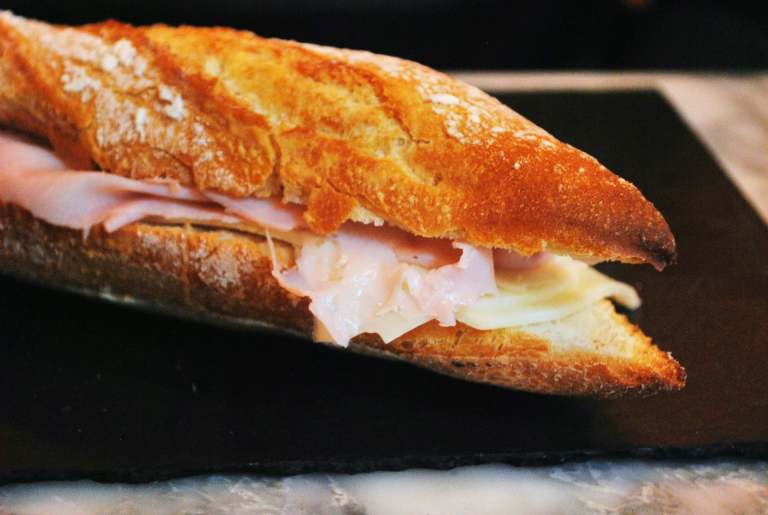
ham sandwich in a baguette

Every Wildfire Begins with a Sandwich

France braces for 5th heat wave since June.

France has barely extinguished one of its largest wildfires in decades. An area roughly the size of Hong Kong has burned, and we’re only halfway through the summer. But another heatwave is already here.

People ask how this keeps happening.

I think we’re asking the wrong question.

Every wildfire begins with a sandwich.

Not because a ham sandwich can physically ignite a forest, but because it represents the countless ordinary decisions that build the world in which forests burn.

The sandwich.

The cigarette.

The dairy ice cream we hand to our children without a second thought.

The Shein order arriving tomorrow.

The new backpack and notebooks bought every September even though last year’s are still perfectly usable.

Each decision appears harmless. Each is too small to matter. That is exactly how systems survive. It’s recreated every morning when we choose convenience over necessity, novelty over sufficiency, habit over reflection.

Every purchase is a vote. Not because one purchase changes the world overnight, but because billions of purchases, repeated every day, determine which industries grow, which disappear, and what kind of civilization we continue to finance.

One Amazon order won’t send a billionaire and his friends into space. One dairy ice cream won’t destroy a forest. One unnecessary notebook won’t fill a landfill.

But none of those things happens only once. They happen millions of times, every single day. Eventually those “insignificant” decisions become greenhouse gases, deforestation, polluted rivers, shrinking biodiversity, exhausted soils, expanding infrastructure and ecosystems pushed beyond their limits.

Then comes the heat. Then the drought. Then the spark.

And suddenly everyone becomes an environmentalist.

Hundreds of volunteers leave their homes to protect forests from the flames. They carry water, clear vegetation, do everything they can to stop the fire from reaching nearby villages. Most people see humanity at its finest.

I see humanity desperately trying to repair yesterday while continuing to finance it this morning.

The same people who volunteer their time and energy to protect the forest are then handed tables full of ham and butter sandwiches, soft drinks, sometimes cigarettes.

Volunteering is great. These people are giving their time to protect their homes, their communities, the forest around them. That matters. What bothers me is how easily we separate the emergency from everything that preceded it. We celebrate the person who runs toward the flames while treating the quieter forms of prevention as optional, eccentric, even ridiculous.

Refusing unnecessary consumption isn’t celebrated.

Reusing old supplies isn’t celebrated.

Eating less meat and dairy isn’t celebrated.

Living with less isn’t celebrated.

Those choices rarely earn applause because they happen long before the crisis, when there is no fire to fight and nobody watching. Yet they may matter far more than the dramatic moments that make the evening news.

We have confused loving the way nature makes us feel with caring about nature itself.

We hike through forests while eating products that contribute to the destruction of ecosystems. We photograph mountains while wrapped in disposable consumption. We defend a burning forest while continuing to finance the industries that place increasing pressure on forests around the world. We rush to fight the fire while throwing fuel onto it for the rest of the year. Economic fuel. Cultural fuel. Political fuel.

None of this means every choice weighs the same. A handful of industries and a handful of governments make decisions that outweigh what any individual could do in a lifetime, and no amount of reused notebooks cancels out a pipeline. But that asymmetry is not an excuse. It’s the reason our purchases are also our politics. Every dollar we hand to an industry is a small vote for its continued expansion, and the industries we’re describing don’t grow without millions of us feeding them first.

People often ask who is responsible for ecological collapse. The government? Corporations? Consumers? The uncomfortable answer is that there isn’t a single culprit. There is a chain, a chain in which every link seems too small to matter until the whole thing snaps.

That’s the butterfly effect.

A civilization is not destroyed by one catastrophic decision. It’ss destroyed by millions of ordinary ones.

And every wildfire begins with a sandwich.

Food for thought.

Teekay

Why We Love Nature but Keep Destroying It

How can we do better, collectively?

My self-professed love for nature is no secret to my readers.

Being close to nature is and has always been my thing.

Nature is wondrous, full of beauty and peace.

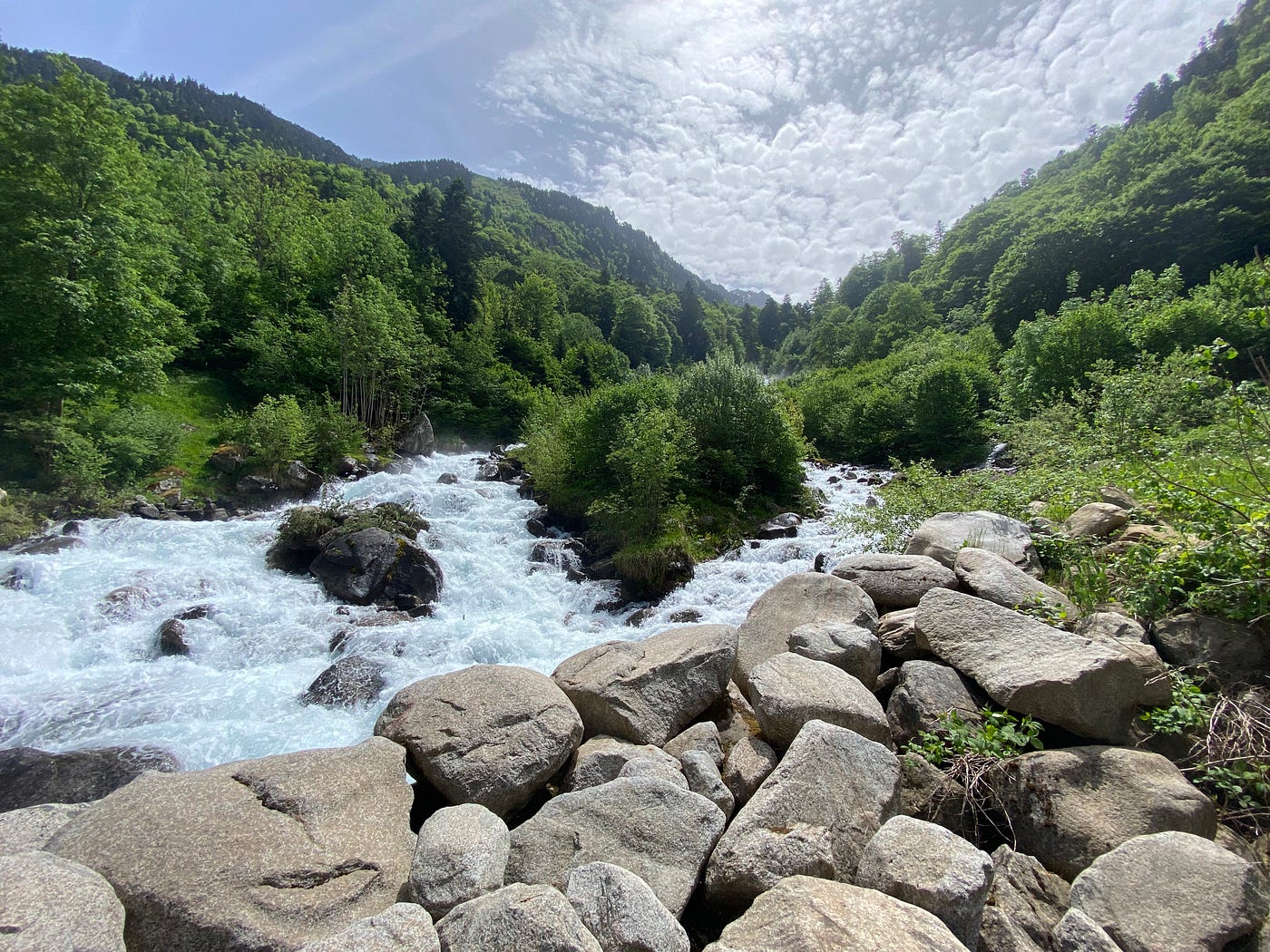
Hiking photo by Teekay Rezeau-Merah
Hiking photo by author Teekay Rezeau-Merah

The reason I became a vegan minimalist was mainly to protect it and its inhabitants.

But doing so opened my eyes on a fascinating paradox, especially in the vegan and vanlife communities; a paradox I ponder upon on a daily basis.

Spending more time in the great outdoors allowed me to come to a poignant realization: The very nature that we, avid nature enthusiasts and animal lovers, hold dear to our hearts, is the very same nature we often unwittingly damage with our bad habits.

How can we enjoy something so much while simultaneously participate in its destruction?

Teekay @teekayrezeaumerah
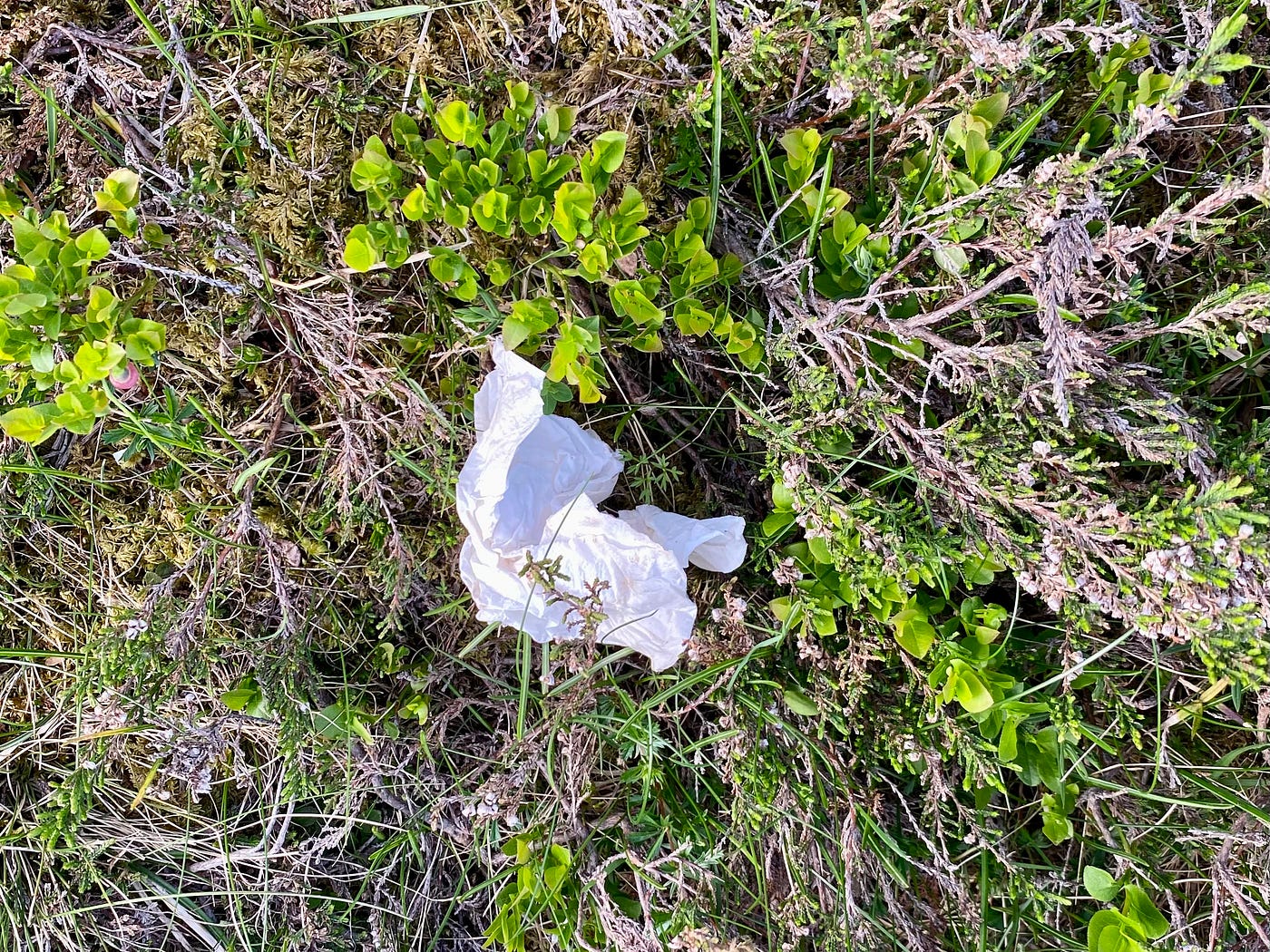
Please don’t leave toilet paper in nature (photo by author)

Well, here’s where my thinking is at the moment.

  • Reasoning

First of all, I want to make something clear: As pragmatic as I can be, my personal belief is that human beings are born good.

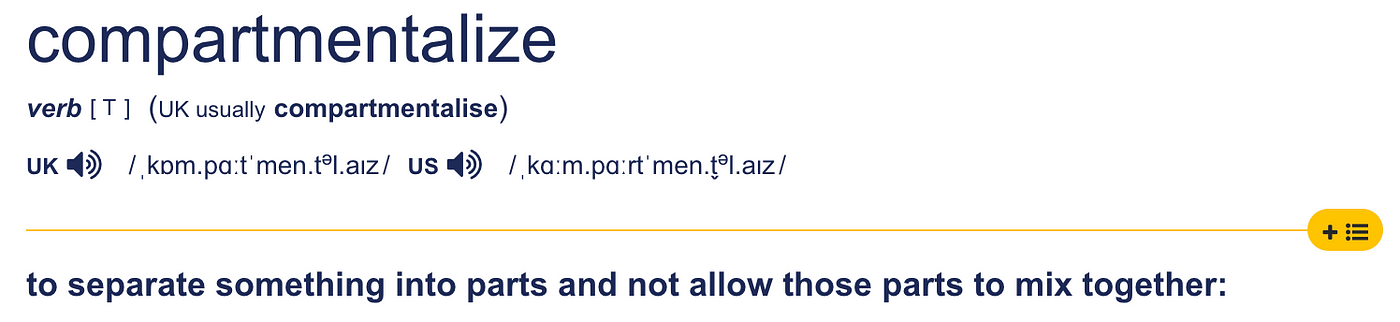
However, human beings are also amazing at compartmentalizing.

meaning of compatmentalize by Teekay Rezeau-Merah
Screenshot by author

A fitting illustration of my point is that of individuals who profess to be staunch advocates for human rights, yet they contradictorily sport Nike shoes, H&M dresses and Zara pants.

Note: If you don’t know what I’m hinting at, read this.

The same can be said about vegans who consume palm oil, or vanlifers who consume animal products (that destroy the very nature we want to be surrounded by).

Now look, I always say life is all about balance, and I believe it is, but sometimes — often times — rocking something ethically sourced won’t hurt you in any way, shape or form. Perhaps you’ll pay more for it, but you don’t have to if you buy second hand.

This applies to almost all consumables.

So the first takeaway from this piece is to think twice before your next purchases. Always consider the added value of what you buy, its environmental impact and whether there are other alternatives.

That’s one way to tackle this paradox.

Another reason we engage in actions that cause harm to nature is our toxic sense of entitlement, or deservingness.

This manifests itself in different forms: Arrogance, greed, boastfulness or in some cases, negative narcissism.

Some of us behave as if the world owes us. This sense of entitlement emanates from a lack of self-awareness and gratitude, which itself is the result of a Godless, non-religious and non-spiritual society.

Many people believe, wholeheartedly and arrogantly, that everything they have was owed to them.

Hustle culture prescribes “hard work and determination” as the ultimate solution for success, often discarding external factors that also contribute to one’s accomplishments.

Unfortunately, such attitude blinds us from seeing the bigger picture: That none of what we have, none of what we achieve is truly ours, and that it can be taken away from us at any time. It will be when we die.

More humility would do us all a world of good, and without it, we will continue indulging in things that harm us and everything we love.

When the last tree has been cut down, the last fish caught, the last river poisoned, only then will we realize that one cannot eat money. — Native American saying

The third reason behind this great paradox is our lack of concern for the future.

In other words, selfishness.

Social Media may have exasperated this, but many people believe they MUST prioritize their own pleasures and conveniences over the well-being of the environment and future generations.

It’s sickening when you think about it.

But I don’t blame us, not entirely. If anything, we were programmed and brought up this way, but it’s time for a change, a big one.

As a matter of fact, we can’t live like we did 30 years ago, times are changing and so should we, evolution and all.

Indeed, our planet can’t sustain our greed and selfishness for too long, and the time to turn things around is now.

I would never advocate for anything radical, life is all about balance once again.

As such, we don’t have to move to self-built huts, nor do we have to wear banana leaves, but it’s our duty to watch what we consume, how we consume it, and what we want to support.

Your dollars are more potent than your vote and your words. So put your money where your mouth is.

  • How

You see, I often write about boycotting certain products: Palm oilwhite sugaranimal products, single use plastic, brands that pollute our water and source their products in Chinese slave camps and Bengali/Indian sweatshops, brands that support wars, so on and so forth.

To take part of this would make the world significantly better. To do so and to raised our collective awareness is as close to perfection as we can get.

That and reversing consumerism. Remember, minimalism (and essentialism) isn’t just an aesthetic, it’s a philosophy.

In 1927, a Boston-born, Harvard educated son of immigrants went to work for Lehman Brothers. His name was Paul Mazur and his interest in the economics of consumption and retailing made him a rising star in the investment banking establishment for more than 50 years.

Mostly he was responsible for manipulating the psyche of the American consumer. — Sherry Truitt

His philosophy in a nutshell:

“We must shift America from a needs, to a desires culture,” He wrote. “People must be trained to desire, to want new things even before the old had been entirely consumed. We must shape a new mentality in America. Man’s desires must overshadow his needs.

Man’s desires must overshadow his needs.” That’s a powerful statement, and a scary one.

So you see, as stated above, human beings are born good, but we were led astray for many decades.

Indeed, our actions are often shaped by cultural and societal norms. Unfortunately, said norms favor efficiency and convenience over wellbeing and ethics. They also favor desires over altruism and consumerism over self-awareness.

We all follow patterns and attitudes considered “normal” in our society, hence why we hardly question anything.

With that being said, let’s not forget that we’re still human, and luckily for us, God bestowed upon us reason and logic.

God gave us free will too, so it’s on us to outgrow our biases and harness original thinking.

  • Final word

All in all, the paradox of enjoying and destroying nature at the same time is a complex and deeply ingrained issue.

It’s not just about individual behavior, it’s rooted in our cultural, political, and economic systems, making it extremely difficult to shake off.

The one thing I want to leave you with is to question things and at least make sure your actions are aligned with your values, that’s it.

Perhaps some of us have a stronger moral obligation to protect nature, while others don’t. That’s okay, life can’t be perfect and neither can we, but does that mean we should stop trying?

Peace!

Tee.

Own less

19 Everyday Things We Own Too Many Of

From cash to trash.

Your home is meant to be a sanctuary

You home wasn’t meant to become a graveyard for your old gadgets and excess stuff.

Home is where we retreat from the outside world, unwind, and recharge ourselves. It’s where we seek solace, relaxation, and tranquility.

Americans spend $1.2 trillion annually on nonessential goods. In other words, items they do not need – The Wall Street Journal.

For most people, home has become the place where they store their stuff.

  • Do you ever feel overwhelmed by the clutter in your living space?
  • Is it a challenge for you to locate items or decide what to wear?
  • Are you occasionally faced with a shortage of hangers?
  • Does the sight of your closet alone make you feel tired?
  • Does it take an excessive amount of time to tidy up your home?
  • Would relocating from your current residence require multiple utility trucks?

If you find yourself answering “yes” to any of these questions, here are the likely culprits for this draining situation.

Note: The following examples and numbers paint a jarring picture of excessive consumption and unnecessary accumulation. Clearly, many of us have far too much stuff.

  • Food storage containers

How many containers does one need ? Research says 6 to 10 containers per person, we’ve got 3 in our home, for 2 persons.

It’s shocking to me that people hoard these things. Some accumulate them to the point of overflowing cupboards!

Wouldn’t it be great if neighborhoods and buildings provided a designated space where people can share their surplus containers, allowing others to utilize them as needed ? This would help curb the unnecessary purchase of food containers and promote a more sustainable approach to storage.

Note: This doesn’t apply if you meal prep, which is awesome by the way.

  • Pens

There are already enough pens in circulation that many of us could go years without buying another.

Most people don’t use pens anyway.

  • Auto tools

You don’t need ten wrenches, Bob ! Seriously, you don’t. One is enough, two is MAX, unless you’re a mechanic.

And just like with containers, I wholeheartedly believe neighborhoods and buildings must provide a space where people can share their tools.

I got mine when I was building my Campervan. I’m more than happy to share them with others.

  • Reusable shopping bags

Reusable shopping bags are the new plastic bags.

A massive scam.

People collect those even more than they did plastic bags, because they paid more for them.

The problem ? Reusable bags require more plastic, energy and fabric to make.

Forgot your bag at home ? It’s okay, just grab what you can carry. You won’t die of hunger, and it’ll train you to think about your bag next time.

Also, always leave a reusable bag in your bike/car or coat.

Better yet, we must promote the introduction of returnable bags. They have those here in France, they cost 15c each (pricey), which is refunded back to you when you return them.

In fact, we don’t have ANY bags at home, reusable or otherwise. We operate with returnable bags only (and my backpack if need be).

  • Handbags

Why do people even buy those ? When did this trend begin ?

Since around 1500 AD, handbags have been an essential part of everyday life for both men and women.

It wasn’t until the post-war economic period of the 1950s that handbags were propelled into a cult status.

Can we go back in time ?

To those of you who own a thousand and one bag, you only need ONE, two tops.

It kills me to notice people, particularly women, having an extensive collection in their closets and consistently using the same old handbag. Sell them !

  • Backpacks

Why would anyone purchase a new backpack if they still have the old one? Aesthetics? Boredom? Maybe a size or quality upgrade?

Whatever the case may be, how about you retire the old one (by giving it to charity) before purchasing a new one ? Just an idea.

  • Coats

What do you need THREE coats for? It’s not like you can wear them simultaneously, right ? Think about it.

  • Vases (and other decorative objects)

I don’t even know why vases exist, such a waste of energy, materials and space in my opinion. I like my flowers in a garden, but to each their own.

  • Toys

British research found that the average 10-year-old owns 238 toys but plays with just 12 daily — The Telegraph.

3.1% of the world’s children live in America, but they own 40% of the toys consumed globally — UCLA.

Let your kids play outside, run around, play sports. Some toys help children develop their curiosity and learn about the world, which I’m all for, long as we buy them used. There are enough toys out in the world that’ll never see the light of day ever again, and even more toys in landfills. Enough !

Let’s stop wasting resources and start thinking differently. By the way, gifts don’t always have to be NEW.

  • Kitchenware

Perhaps I’m a bit extreme but I only have one single plate, and my wife has one too. A couple of bowls and a mug complete our tableware set ^^

If you’re the type to host lots of gatherings and parties, it makes sense that you have more, but we don’t really, so that’s that.

That said, there are billions of used plates and bowls (and other kitchenware) in the world. Stop buying those at IKEA, flea markets are where it’s at !

Note: We only own one mug because I love drinking out of my 34Oz reusable bottle. Easier to keep track of my water intake that way, and less “stuff” to clutter our home.

  • Furniture

Nightstands, bed frames (unless absolutely necessary, like for people with bad knees), shelves, chairs, TV stands, coat racks and everything in between. We don’t own any of this stuff and we’re extremely happy with our lives.

Don’t clutter your sanctuary with useless furniture. It costs money, it’s heavy to carry, it makes cleaning more annoying and most of it serves no real purpose.

Empty spaces don’t always need to be filled.

  • Hangers

If you don’t have enough hangers for your clothes, you have too many clothes.

It’s time to stop buying new and to get rid of all that excess.

By the same token, this logic also applies to closet space: If you don’t have enough space in your closet, you have too much of whatever you’re trying to store in there. Declutter.

  • Clothes

Speaking of which, we all have too many clothes. I don’t even have to know you to say this.

The average American woman owns 30 outfits — one for every day of the month. In 1930, that figure was nine — Forbes.

Also:

The average American throws away 65 pounds of clothing per year — Huffington Post.

Need I say more ? Sort that stuff out, have just what you need.

Each year, we produce as many clothes as humans have ever existed on Earth. Over 100 billion, for 8 billion people living.

  • TVs

Why would anyone need an iPad, an iPhone, a MacBook AND a TV ?

Some homes have more television sets than people, it’s crazy ! For me it’s a sign of civilizational decline. It hurts to think nowadays.

Americans spend more on shoes, jewelry, and watches ($100 billion) than on higher education — Psychology Today.

Besides, it’s also time to refocus our attention on how energy consuming TVs are to make and to use.

That aside, we must also find new solutions to FIX them. It makes no sense that fixing an appliance costs as much as buying a new one, it really doesn’t.

Also, we’ve reached a point where TVs are slim enough and smart enough that we hardly need more quality, so why are we pushing for more ? What’s the point ? Most TVs today offer 4K quality, which is already too much.

Want to enjoy a GREAT movie ? Go watch it in a movie theatre. Otherwise, your laptop is more than enough for your late night lullaby.

  • Offsite storage units

If you live in an apartment, a house or anywhere in between and feel the NEED to have an offsite storage unit, you have a problem.

Your stuff isn’t supposed to take up that much space. If you can’t contain it, get rid of it.

  • Grooming and hygiene products

People have dozens of shampoos, body lotions, shower gels, and an array of other “beauty” products in their bathrooms.

The multitude of these items cluttering up drawers creates a sense of disorder, disarray and mental fatigue.

But I get it. The “latest and greatest” always looks better. Packaging is always evolving, and marketers work hard to make us buy more.

However, we’ve all been blessed with a sense of logic and reason. Often times, these shiny new objects don’t live up to our expectations. Instead, they end up abandoned in drawers, collecting dust.

They’re also a waste of money and resources, and are likely to end up in landfills or worse, the Great Pacific Garbage Patch.

Think before you buy.

Note: I personally use a single natural, organic, vegan and local bar of soap to wash my hair, my face and the rest of my body. My wife and I also share a natural Shea butter bar to keep our skin healthy and hydrated.

Aloe Vera is another great option for the skin but is often sold in plastic, so we don’t buy it.

As for oral hygiene, I use my Miswak during the day and baking soda to brush my teeth after meals. My wife often uses solid toothpaste (so no plastic in our home).

  • Non-refillable toiletries

Plastic bottles (of all sorts) must be illegal by now. Plastic shampoos and shower gels must be the first ones to go.

I strongly believe that refillable toiletries are the way to a more sustainable future, and I advocate for a higher initial cost when purchasing them.

A higher price point would discourage people from disposing of these items after use, encouraging greater reusability and reducing waste.

  • Travel size toiletries

People don’t even travel that much, the fact they steal (or borrow permanently) travel size toiletries to keep them in their bathrooms is beyond me.

The greater the usage, the higher the production rate of any particular item. Supply and demand. If we want to eradicate plastic, we must stop financing and promoting the plastic industry.

For those who already have travel size toiletries, don’t toss them. Instead, put them in your shower and use them.

Better yet, give your toiletries to a local homeless shelter or women’s shelter that accepts them. It’ll lighten your load and help someone in need at the same time.

  • Humans

Yeah, there are way too many humans on this planet.

  • Final Word

Presently, North America and Western Europe, comprising merely 12% of the global population, contribute to 60% of private consumption spending.

In contrast, the combined population of South Asia and sub-Saharan Africa, accounting for one-third of the world’s pop, represents a mere 3.2% of private consumption spending. (Worldwatch Institute).

Do you see the problems here ?

It’s not just that we overconsume in the West, because that’s a given. But what will happen when South Asia and sub-Saharan Africa starts consuming as much as we do ?

Because they’re coming, and they want everything we have. After all, why would they not ? Many people look up to this absurdity and want the same for themselves.

Consumerism, fashion and flex culture will be the death of us. They are a sign of the dumbing of our current generation. After all, there are more shopping malls than high schools in America, and 93% of teenage girls rank shopping as their favorite pastime (Affluenza).

Question everything guys. Food for thought.

Thanks for reading.

Read more of the same on my Medium page.

Tee.

monkey see, monkey do by Teekay Rezeau-Merah

How Marketing Manipulates Your Brain Through Mirror Neurons

An article is about a NeuroScientific and neuromarketing concept you never knew existed!

Our brains have this exceptional ability to act as a mirror. This ability is made possible thanks to what we call “mirror neurons”.

Mirror neurons are a type of brain cell responsible for mirroring or simulating the actions of others.

The knowledge of these neurons is relatively recent. In fact, it wasn’t until the 90s that researchers first identified mirror neurons in macaque monkeys.

And what they found was fascinating !

Mirror neurons were found to activate when a monkey performed a specific action, such as grasping a piece of food.

However, the same neurons also activated when the monkey watched another monkey (or a human) perform the same action.

It was unexpected.

  • The Point

These incredibly cool neurons are said to play an important role in our ability to imitate and learn from others, as well as in our ability to empathize with and understand the intentions of others.

And to be honest, it makes perfect sense.

For instance, I realized very early on that my proficiency in learning new languages was attributed (in part) to my habit of mimicking the language patterns and communication styles of native speakers.

In fact, even when my knowledge of a language is limited, I make a conscious effort to replicate the way words and phrases are pronounced, rather than how they are written and spelled.

By “mirroring” others, I learned 10X faster than before, and I hardly forget anything. I can also sound “native” if I want to, in any language that I speak.

This strategy has been instrumental for me. Becoming fluent in six different languages and comfortable in a couple more didn’t happen overnight, but with the right tactic, language-learning can be a piece of cake.

Check out this little 3-minute clip if you wish to understand how it works.

With that being said, the effect of mirror neurons isn’t just limited to what we see or what we hear, our brain can even experience vicarious touch through others.

Perhaps this explains the boom of ASMR and the porn industry?

New technologies like Virtual Reality are already using the power of our mirror neurons to their advantage, and perhaps ours, as well.

For instance, VR is now used to help us fight certain mental illnesses and cure certain phobias.

VR can obviously never substitute real life, but it could potentially help many of us heal from certain things.

  • The Dark Side

As an ethical marketer, I must mention this.

In the world of marketing, understanding vicarious touch and mirror neurons has been a game changer.

Instead of designing ads and products blindly, we now purposely target your subconscious mind.

Doing so allows us to create more engaging and memorable experiences for our audience, thus driving up sales and clicks.

Marketers increasingly design experiences that engage our senses and make products feel more tangible, even through a screen.

So instead of making commercials that focus on the product alone, big corporations and marketers now hire actors and tap into all your senses to deliberately activate mirror neurons in you, the viewer.

There are numerous other tactics to trigger buying, here are a couple I’ve used in the past:

  • Product packaging: Mirror neurons can even be triggered through packaging. In fact, the texture and feel of product packaging evoke more tactile sensations in consumers than they know. For example, a package with a soft, velvety texture creates the impression of luxury and comfort, while a clear, matte packaging evokes warmth and superior quality.
  • Audio-visual experiences: Videos, music, podcasts and other types of media can evoke sensations of touch through sound and image. These techniques have long been used in the entertainment industry and in adverts to shape culture as a whole.
  • Scented products: Products that smell cut grass or mint create the sensation of coolness, while the the smell of lavender provides us with a sense of warmth and reminds us of our childhood (and possibly grandparents). Yes, smell is also used to drive up sales, but can only be used in physical businesses (for now).

Understanding human behavior allows us to look at ourselves with more depth.

Understanding ourselves doesn’t just make us wiser, it actually improves our decision making, hence this piece.

By reading this, I hope you’ve gained a bit more self-awareness and understanding of human behavior.

Thanks for reading.

Teekay

Minimalism Across Cultures and Religions

Simplicity unites.

Minimalism didn’t begin with Netflix documentaries, Scandinavian furniture or YouTube creators.

Humanity has been rediscovering the same idea for thousands of years.

I’ve noticed a genuine interest from my readers in the “HOWs” of minimalism, but how about the “WHYs” and the “WHEREs” ?

Well, that’s what we’re here for today. What you’re about to read will bring things full circle.

After reading and writing about minimalism for 5+ years, I realized that this philosophy is nothing new. In fact, throughout history, most cultures and religions have emphasized the importance of living a simple and minimalist life.

  • Minimalism in ancient European Civilizations

In ancient Greece, Socrates famously espoused the idea that “the secret of happiness is not found in seeking more, but in developing the capacity to enjoy less.

Socrates believed that living a simple life was key to achieving contentment and stressed the importance of focusing on the essentials. His philosophy also focused on avoiding excess and materialism.

Similarly, in ancient Rome, Seneca wrote extensively about the virtues of minimalism.

In fact, Seneca believed that focusing on the basics and refraining from excess granted human beings a sure sense of inner peace and tranquility, and he couldn’t be more right.

Not only that, Seneca also emphasized the importance of mindfulness, advocating for individuals to live in the present moment and appreciate the simple pleasures in life.

  • Minimalism in Eastern religions

The concept of minimalism is central to many teachings in Buddhism and Hinduism.

In fact, Buddhism teaches that “desire is the root of all suffering” and that inner peace can only be achieved by letting go of our attachment to material possessions.

Indeed, the Buddha himself renounced his belongings and lived as a monk, teaching his followers to let go of desires and attachments in order to achieve enlightenment.

The Buddhist practice of meditation is the perfect illustration of that. While Seneca didn’t insist on one particular practice to promote mindfulness and presence, his ideas perfectly match Buddhist philosophy on this point.

Similarly, in Hinduism, the concept of “Sannyasa” or “renunciation”, is a central theme.

Sannyasa involves renouncing material possessions and living simply and in pursuit of spiritual enlightenment.

But Sannyasa isn’t the only Hindu concept that highlights a certain form of minimalism.

“Aparigraha” or “non-possessiveness” also points up the importance of avoiding excess and materialism in favor of simplicity and contentment, which ultimately shows that minimalism is nothing new, and that it took center stage in century long beliefs and religious practices in the East as much as in the West.

  • Minimalism in Monotheistic religions

In Judaism, the concept of “Tzedakah” or charity, is an essential part of the religion.

Tzedakah involves giving to those in need and promoting social justice.

By giving to others, we learn to reduce our attachment to stuff. Not only that, giving means we learn to prioritize the needs of others over our own desires.

The world needs more of this practice.

How about in Christianity?

Well, one of Jesus’ (AS) most famous teachings says “it is easier for a camel to go through the eye of a needle than for someone who is rich to enter the kingdom of God.”

This idea highlights the importance of avoiding excess and materialism, and promotes selflessness and spiritual values.

Last but certainly not least, Islam.

Prophet Muhammad (PBUH) lived a humble and simple life. He owned the bare minimum, despite his influence, status and the wealth of his wife hazrat Khadija (RA).

Many of Prophet Muhammad’s (PUBH) teachings revolved around the above-mentioned values of charity, avoiding excess and emphasizing spiritual and ethical values over material possessions.

Case in point, the Islamic concept of “Zakat” involves giving a fixed and predetermined percentage of one’s wealth (once a year) to the less fortunate, promoting empathy and compassion for others.

The universality of minimalism is evident in its presence across different cultures and regions worldwide, and there’s more !

  • Minimalism in ancient South American culture

Often forgotten when talking about minimalism and anti-consumerism, South American cultures and civilizations had some equally impressive values to the ones mentioned above.

“When the rivers are all dried up, and the trees cut down, man will then realise that he will not be able to eat money.” Native American proverb

For instance, if you look at the Inca civilization (present-day Peru, 13th to 16th century), living simply and in harmony with nature was paramount.

The Incas prioritized the concept of “Ayni,” which involved the reciprocal exchange of goods and services among members of the community, encouraging mutual aid and support.

Similarly, the Maya civilization (present-day Mexico and Central America, 2000 BC to the 16th century) practiced a simple and sustainable way of life as well.

The Maya were famous for their beliefs in the conservation of natural resources and living in harmony with the surrounding nature.

This was reflected in their agricultural practices, namely terrace farming and irrigation systems, which were brilliantly designed to maximize efficiency and minimize waste.

Quite the opposite of what we do today.

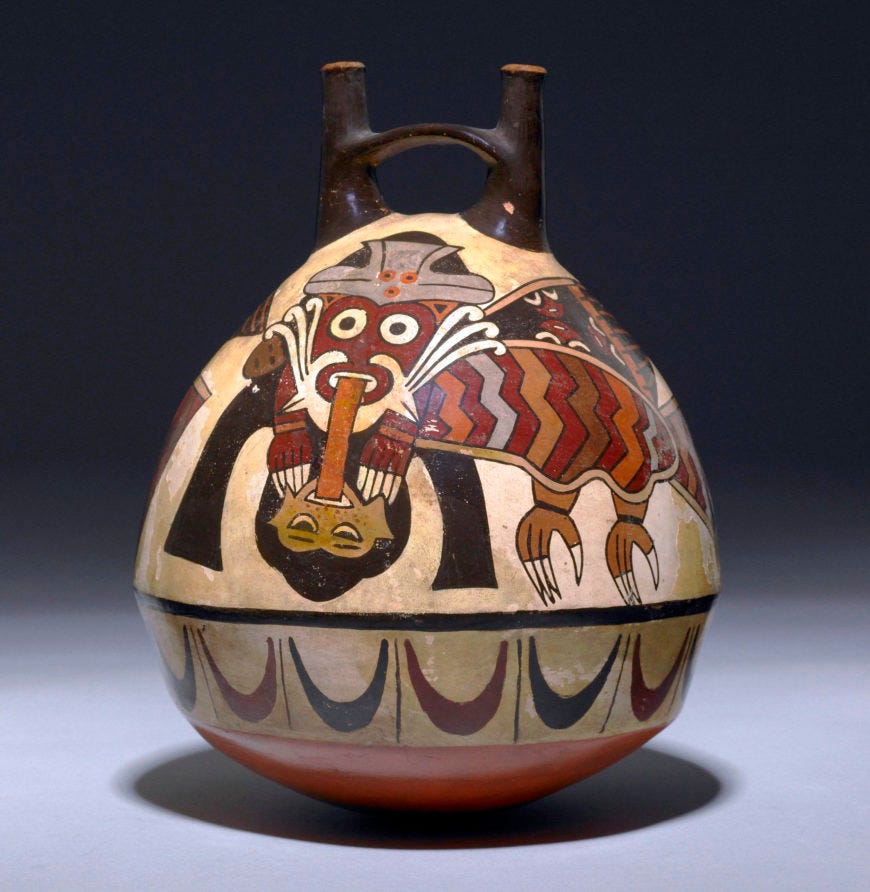
While the Incas and the Mayas are quite well-known, there’s another lesser-known civilization in the Nazca civilization.

Nazcas lived in a desert region (in modern day Peru) and relied on sustainable practices to survive.

For instance, they built underground aqueducts and water management systems to make sure they survived in their harsh environment.

The Nazcas also produced simple but elegant pottery, textiles, and other crafts, demonstrating their appreciation for the beauty in simplicity.

Nazca pottery by Teekay RM
Nazca, painted pottery (© Trustees of the British Museum)
  • Minimalism in ancient Asia

Last but not least, Asian ancient cultures also provide numerous examples of minimalism and simplicity being valued and practiced way back.

For instance, in ancient China, one of the oldest civilizations in the world, Taoism highlights the importance of living a simple and natural life, in harmony with the flow of the universe this time.

This is commonly known as the concept of “Wu Wei.”

“He who knows he has enough is rich.” Lao Tzu

But besides ancient China and India (through Buddhism and Hinduism), another gigantic civilization from the East has its own form of minimalism: Japan.

Indeed, the Japanese aesthetic of “wabi-sabi” is a great example of minimalism and simplicity.

Wabi-sabi celebrates the beauty of imperfection and transience, emphasizing the importance of finding joy and contentment in the simple things in life.

  • Final word

What has been will be again, what has been done will be done again; there is nothing new under the sun.

That’s what fascinates me most about minimalism.

Across continents, religions and civilizations, people repeatedly arrived at the same conclusion, that a meaningful life is rarely built on excess. Time and again, humanity discovered that simplicity, generosity and moderation lead to a greater sense of peace and contentment.

Minimalism isn’t a Western trend or a passing lifestyle. It’s one of humanity’s oldest ideas.

Perhaps that’s because our deepest needs have never really changed.

We all seek purpose, inner peace and a sense of belonging. Throughout history, countless people found that owning less often helped them appreciate more.

I hope minimalism helps you live a life that is not only simpler, but also more ethical, more intentional and more fulfilling.

Thanks for reading.

Teekay.

You Don’t Need to Trust the Media to See Climate Change

Global warming is here to stay.

Climate change has become one of the most polarizing topics of our time.

Depending on who you ask, it’s either the greatest challenge humanity has ever faced or a problem that’s been exaggerated beyond recognition. Politicians argue about it. Television debates it. Social media turns it into another battleground.

But what if we stepped away from all of that for a moment?

What if, instead of asking what politicians, journalists or commentators think, we simply looked around us?

Sometimes, reality speaks for itself.

Over the past few years, I’ve watched rivers shrink, forests burn and heatwaves become increasingly common in places where they once felt exceptional. Friends living in different parts of the world tell similar stories. Farmers talk about unpredictable seasons. Water restrictions have become more frequent. Wildfires have intensified across multiple continents.

You don’t have to agree with every headline to notice that something is changing.

You don’t have to trust every report to observe what’s happening around you.

Talk to older relatives.

Talk to people who work the land.

Talk to fishermen, hikers or anyone who spends significant time outdoors.

Ask them whether the seasons still feel the same as they did twenty or thirty years ago.

Whether you trust politicians, journalists or climate scientists isn’t actually the point I’m making.

Reality exists independently of who reports it.

Climate change doesn’t care whether we’re conservative or progressive, religious or secular, rich or poor.

The atmosphere doesn’t vote.

Nature doesn’t negotiate.

The real question isn’t whether the climate is changing.

It’s how we choose to respond.

For me, the answer has less to do with waiting for revolutionary technologies than with rethinking the way we live.

We consume far more than we need.

We replace products that still work.

We normalize waste.

We chase convenience even when it comes at a tremendous environmental cost.

Modern consumerism has taught us that happiness comes from buying more.

The planet is telling us otherwise.

That doesn’t mean giving up comfort or returning to life centuries ago.

It means consuming more intentionally.

Buying fewer but better things.

Repairing instead of replacing.

Walking when we can.

Using public transportation more often.

Supporting companies that take sustainability seriously.

Reducing food waste.

Sharing resources instead of duplicating them.

Holding companies like banks accountable.

Many of these habits don’t just reduce our environmental impact.

They also save money, reduce stress and improve our quality of life.

That’s one of the reasons I was drawn to minimalism in the first place.

The same choices that help us live with less clutter often happen to be the same choices that place less strain on the planet.

Perhaps that isn’t a coincidence.

Maybe we’ve spent so long looking for complicated solutions that we’ve overlooked the simple ones.

Throughout history, humanity has repeatedly adapted to new challenges.

This one is no different.

The question isn’t whether change is coming.

It’s whether we’re willing to change with it.

Thanks for reading.

Teekay.

Minimalism: removing things that remove you from your life

From owning 51 pairs of shoes to less than 40 overall clothing items, how did I get here?

I could write a whole book about the many benefits of minimalism.

I talk a lot about minimalism and mindfulness on my podcast.

I truly and wholeheartedly believe this lifestyle can spark a change in the world, help people feel happier, lighter, achieve financial stability, work less and live more.

There are no good arguments against minimalism, just like there are none against veganism, but that’s another story.

That said, lately I’ve been exploring a different terminology. I felt as though the term “minimalism” wasn’t impactful enough.

Hear me out.

Most of us think we know what minimalism is, or what it entails. We don’t, not really.

The word “minimalism” is somewhat self-explanatory, which, IMHO, doesn’t do it justice.

This really got me thinking, so I decided to come up (or explain further) my own work-in-progress minimalism, which is a bit extreme, so I call it mindful essentialism, or just essentialism.

Why “essentialism” you ask? Simple: because I own the bare minimum, or rather, essentials only, no extras.

As an essentialist, one of the main focuses of my lifestyle is protecting the environment.

Consuming less leads to cutting down waste and living with a smaller ecological footprint. Simple.

I obviously still own and need some stuff, but the things I own and buy (when need be) are 100% environmentally friendly, and absolutely necessary. I also live frugally, and try to repair and repurpose all my belongings.

I’ve talked about this time and again on my podcast, but consuming less helps reduce the harmful impact of mindless consumerism on our planet. This makes essentialism a pro-environment and anti-consumption mindset and philosophy above everything else.

From shopping second hand and eco-friendly to investing in quality products (that last longer), my new shopping habits (close to nonexistent nowadays) help me reduce my carbon footprint significantly.

For instance, mindful shopping and making sure I don’t bring any unnecessary things into my life is the first thing on my mind when I’m out looking shopping;

Having the preservation of the planet in mind, essentialists like myself usually follow a vegan lifestyle as the two philosophies go hand in hand.

My other focus as an essentialist is to experience the world without getting tied down to a permanent place and financial burdens.

Instead of embracing materialism, I believe creating memories of my experiences is one of the two most important aspects of my life, the other one being giving (time and money) to charity and NPOs.

  • Travel-wise

As a lifelong traveler, I’ve always had trouble finding the right amount of things to pack up, so I always ended packing way more than I needed.

Since embracing this philosophy, I’ve noticed how traveling with fewer distractions allowed me to be more present and get the best out of each and every experience. It’s the little things, right?

For some nomadic minimalists, this lifestyle is just a practical way of moving around. For me, it’s challengingly fun to experience how little I (and now WE) can live with.

  • The mindful part of essentialism

As an essentialist, peace of mind is an integral part of why I chose this life.

Owning fewer things automatically reduced mental clutter for me, which is the number one cause of stress and anxiety for most people.

Owning less also reduces distractions and gives me the ability to focus on self-reflection (hence this post), self-love and personal development (once again, hence this post).

As a mindful essentialist, owning less possessions and being more present in the moment with my thoughts, my loved ones, my feelings and emotions has increased my quality of life in a significant manner. It’s made my life more meaningful and fulfilling.

Now, I’m not there yet, and I will keep working on shaping a better version of myself, pursuing excellence (a religious principle in my case) and adding value to other people’s lives.

I started my essentialist journey to escape the suffocation of stressful and expensive lifestyles, but I ended up finding a whole different facet of myself, a more relaxed and positive one.

In short:

Cutting down on “stuff” helped me become more mindful about self-care and my core values as well.

Essentialism has become a powerful tool in my journey of developing a better me. It’s helped me become more thoughtful as well.

Thank you for stopping by!

Here’s a short list of my favorite minimalists:

  • Leo Babauta from Zen Habits 
  • The minimalists
  • Sorelle Amore
  • Colin Write
  • Youheum from Heal your Living (personal fave)
  • and of course Matt D’Avella