Orangutan protection

Smoke has no passport

Kuala Lumpur is choking on a fire it didn’t light.

For weeks, smoke from Indonesian fires has drifted across Southeast Asia. Schools closed. Air quality collapsed. Millions of people breathed what nobody should.

Everyone’s asking why the fires keep happening.

Wrong question.

The real one is simpler and nastier. Why is burning a forest still cheaper than keeping it standing?

Because somebody profits from that math while somebody else pays with their health.

My father’s Nutella problem

When I was a kid, my father refused to buy products containing palm oil.

Nutella was the biggest casualty. Every other child had it at home. I’d walk into a friend’s kitchen, spot the jar on the breakfast table and wonder what my dad had against happiness.

I get it now.

Forests were being cleared to feed an ingredient hiding in half the supermarket.

One month, 3 560 bodies

Between 2001 and 2019, Indonesia lost about 9.79 million hectares of forest. A PLOS One study traced 3.09 million of them to oil palm, roughly a third.

Now the bill. The Centre for Research on Energy and Clean Air estimates that fire-related pollution killed 3 560 people in Indonesia in September 2026 alone. Not over a decade. One month.

That’s more than the 2 977 people killed on 9/11.

One country. One month. Barely a headline.

Almost 58 million Indonesians breathed unhealthy or hazardous air.

The smoke didn’t stop at the border. One study estimates 1 700 premature deaths in Malaysia from the haze.

Singapore felt it too. On October 16, its National Environment Agency sent preventive notices to seven companies holding land in Indonesia, after signs that smoke from their concessions had crossed the water.

Keep that detail in mind. We’ll come back to it.

The land was rigged to burn

Dry weather and El Niño get blamed first. They’re getting blame for everything nowadays. In reality, they only light the match.

To plant palm trees, companies drained peatlands, ancient swamps packed with carbon.
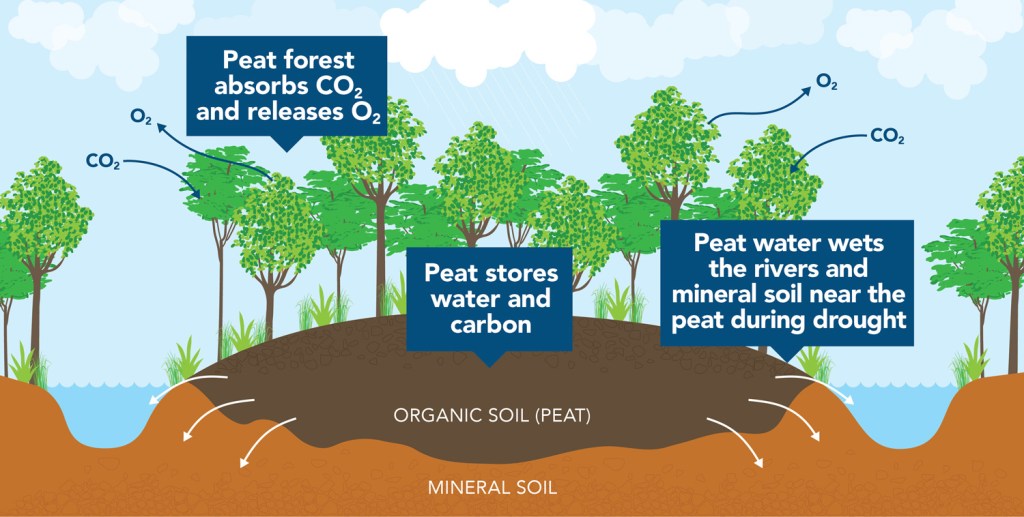
https://winrock.org/preserving-peatlands-a-hidden-key-to-reducing-greenhouse-gas-emissions/

Drained peat dries out, and dry peat burns. Underground. For weeks. A peat fire doesn’t end when the flames vanish, it just waits.

That’s why blaming the weather is a convenient lie. We rewired the landscape and then acted shocked when it sparked.

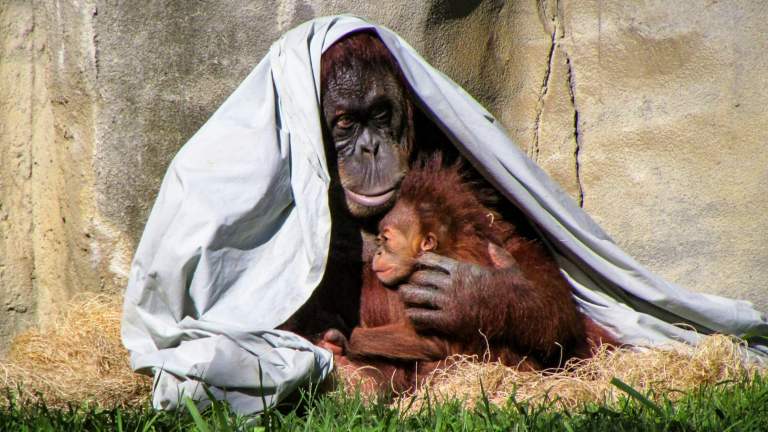
And no, a plantation is not a forest. From a plane it passes for one. Orangutans can tell the difference. So can Sumatran tigers.

Don’t just blame Europe

The lazy version of this story ends at a European breakfast table. My Nutella story included.

It’s incomplete.

India and China buy enormous amounts of Indonesian palm oil. Indonesia itself is one of its biggest customers, and its biodiesel mandate means a large share of the harvest ends up in fuel tanks at home. Palm oil isn’t only a luxury we spread on toast. It’s a national energy policy.

So who profits? Concession holders, local elites and the officials who sign off on licenses.

Burning is the cheapest way to clear land. The law is supposed to make it expensive, and on paper it does. Indonesian courts have ordered plantation companies to pay more than 21 trillion rupiah, about $1.3 billion, for forest and peatland fires.

Almost none of it has been collected.

The pattern is old and brutally efficient. The profit stays with whoever holds the concession. The smoke goes to whoever’s downwind.

Economists call that an externality. Those 3 560 families call it a funeral.

Swap palm for soy, Indonesia for Brazil, and the script barely changes. Burn, plant, ship, profit. Someone else breathes the cost.

Call it what it is.

Burning a forest to cut costs isn’t business. It’s a crime. Against the people who breathe the smoke. Against every animal that flees or burns in it. Against a climate that belongs to everyone.

We now call this an ecocide. We all pay. Not equally and not in the same currency. Some pay with their lungs. Others with floods, heat and failed harvests, but nobody’s exempt.

And a crime that goes unpunished is unfair to humanity as a whole.

The way out isn’t another monoculture

The easy fix goes like this. Ban palm oil. Swap it for something else. Feel good.

It doesn’t work. The IUCN found that soy, sunflower and rapeseed need up to nine times more land to make the same amount of oil. Swap one monoculture for another and you don’t end the destruction. You relocate the match. To the Amazon. To Argentina’s forests, perhaps to Africa?

Then there’s the fuel tank. Biodiesel is palm oil blended into diesel for trucks, buses and generators. Around 23% of Indonesia’s output went into it.

Millions of people run on that diesel. They can’t quit overnight.

None of this is a defense of palm. It’s a refusal to pretend a boycott is a plan.

The plan is bigger. Get out of the system that made this madness profitable. Fewer plantations, not smarter ones. Forests back, massively. Not just for the carbon. For the orangutans, the tigers, the elephants and the insects and fungi nobody bothered to count. Reintroduce life.

Plantations won’t vanish overnight, so the order matters. Stop the clearing now. Manage what exists properly. Then shrink it, year after year, as real alternatives arrive.

Clear options

Enough with vague calls to protect nature. Here’s what each side can actually do.

Governments. Collect the fines. Seize assets, revoke licenses and prosecute the executives, not just the company names. Indonesia has long held companies liable for fires on their land, whoever lit them. The law exists. The will doesn’t.

Then stop raising the biofuel mandate and move that subsidy money toward cleaner transport and power. Rewet the drained peat. Fund native reforestation and the return of the species that lived there.

Neighbors. Singapore’s notices proved smoke can be traced to a concession and named. Make that routine across Southeast Asia, with penalties attached.

Companies and retailers. Trace every drop. Refuse oil from land that was forest or peat after a fixed cutoff date.

You. Eat less of what needs an ingredient list. Palm hides in processed food, soap and cosmetics under many names. Cut the product instead of swapping the oil, because less oil in total is the only swap with no land bill. Buy from brands that publish where their ingredients come from. Question the ones that don’t.

Consumers can’t carry this alone. A household with a jar of chocolate spread and a company with thousands of hectares don’t hold the same power. But demand writes the order forms, and orders can change.

What was in the jar

My father was right about the palm oil. He just didn’t have the full story, and neither did I.

The problem was never only what was in the jar. It was who got to keep the profit and who got handed the smoke.

Smoke doesn’t respect borders.

Accountability shouldn’t either.

Teekay

Why We Love Nature but Keep Destroying It

How can we do better, collectively?

My self-professed love for nature is no secret to my readers.

Being close to nature is and has always been my thing.

Nature is wondrous, full of beauty and peace.

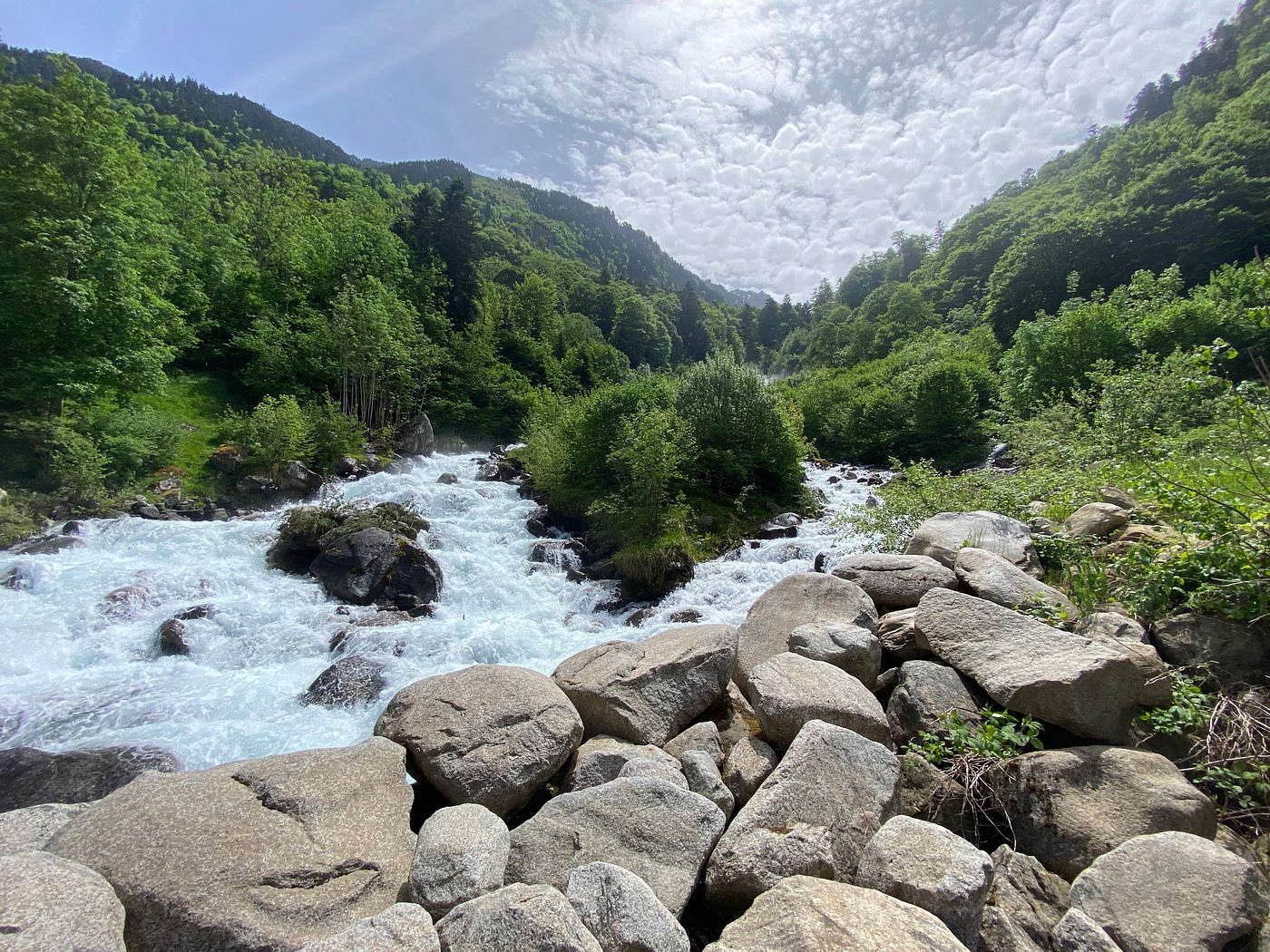
Hiking photo by Teekay Rezeau-Merah
Hiking photo by author Teekay Rezeau-Merah

The reason I became a vegan minimalist was mainly to protect it and its inhabitants.

But doing so opened my eyes on a fascinating paradox, especially in the vegan and vanlife communities; a paradox I ponder upon on a daily basis.

Spending more time in the great outdoors allowed me to come to a poignant realization: The very nature that we, avid nature enthusiasts and animal lovers, hold dear to our hearts, is the very same nature we often unwittingly damage with our bad habits.

How can we enjoy something so much while simultaneously participate in its destruction?

Teekay @teekayrezeaumerah
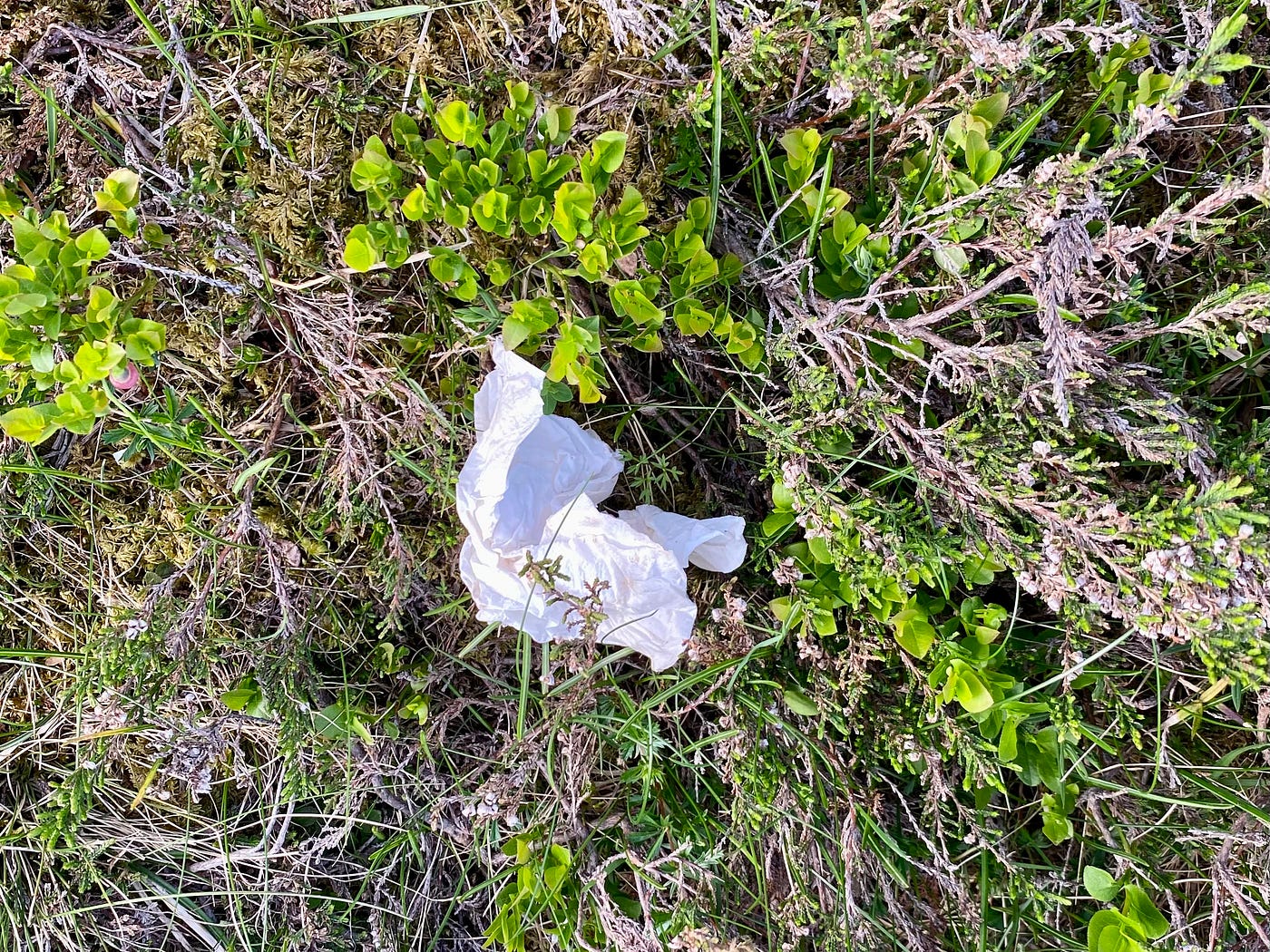
Please don’t leave toilet paper in nature (photo by author)

Well, here’s where my thinking is at the moment.

  • Reasoning

First of all, I want to make something clear: As pragmatic as I can be, my personal belief is that human beings are born good.

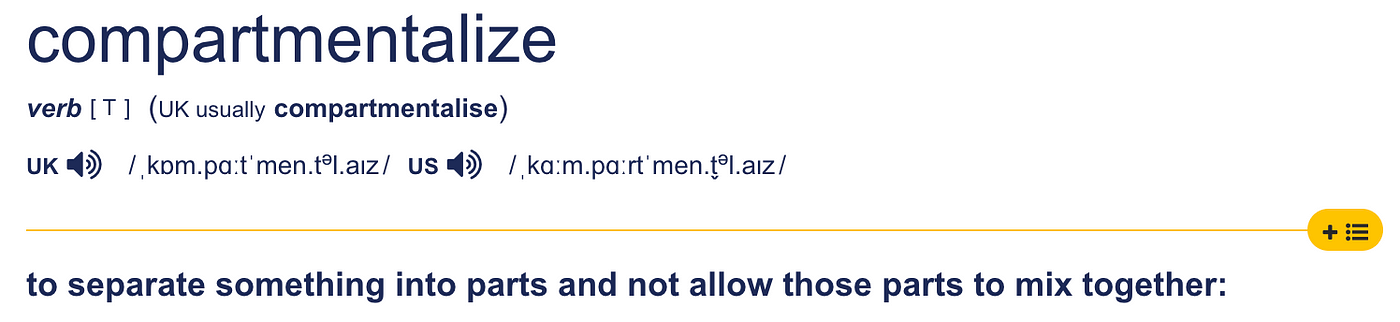
However, human beings are also amazing at compartmentalizing.

meaning of compatmentalize by Teekay Rezeau-Merah
Screenshot by author

A fitting illustration of my point is that of individuals who profess to be staunch advocates for human rights, yet they contradictorily sport Nike shoes, H&M dresses and Zara pants.

Note: If you don’t know what I’m hinting at, read this.

The same can be said about vegans who consume palm oil, or vanlifers who consume animal products (that destroy the very nature we want to be surrounded by).

Now look, I always say life is all about balance, and I believe it is, but sometimes — often times — rocking something ethically sourced won’t hurt you in any way, shape or form. Perhaps you’ll pay more for it, but you don’t have to if you buy second hand.

This applies to almost all consumables.

So the first takeaway from this piece is to think twice before your next purchases. Always consider the added value of what you buy, its environmental impact and whether there are other alternatives.

That’s one way to tackle this paradox.

Another reason we engage in actions that cause harm to nature is our toxic sense of entitlement, or deservingness.

This manifests itself in different forms: Arrogance, greed, boastfulness or in some cases, negative narcissism.

Some of us behave as if the world owes us. This sense of entitlement emanates from a lack of self-awareness and gratitude, which itself is the result of a Godless, non-religious and non-spiritual society.

Many people believe, wholeheartedly and arrogantly, that everything they have was owed to them.

Hustle culture prescribes “hard work and determination” as the ultimate solution for success, often discarding external factors that also contribute to one’s accomplishments.

Unfortunately, such attitude blinds us from seeing the bigger picture: That none of what we have, none of what we achieve is truly ours, and that it can be taken away from us at any time. It will be when we die.

More humility would do us all a world of good, and without it, we will continue indulging in things that harm us and everything we love.

When the last tree has been cut down, the last fish caught, the last river poisoned, only then will we realize that one cannot eat money. — Native American saying

The third reason behind this great paradox is our lack of concern for the future.

In other words, selfishness.

Social Media may have exasperated this, but many people believe they MUST prioritize their own pleasures and conveniences over the well-being of the environment and future generations.

It’s sickening when you think about it.

But I don’t blame us, not entirely. If anything, we were programmed and brought up this way, but it’s time for a change, a big one.

As a matter of fact, we can’t live like we did 30 years ago, times are changing and so should we, evolution and all.

Indeed, our planet can’t sustain our greed and selfishness for too long, and the time to turn things around is now.

I would never advocate for anything radical, life is all about balance once again.

As such, we don’t have to move to self-built huts, nor do we have to wear banana leaves, but it’s our duty to watch what we consume, how we consume it, and what we want to support.

Your dollars are more potent than your vote and your words. So put your money where your mouth is.

  • How

You see, I often write about boycotting certain products: Palm oil, white sugar, animal products, single use plastic, brands that pollute our water and source their products in Chinese slave camps and Bengali/Indian sweatshops, brands that support wars, so on and so forth.

To take part of this would make the world significantly better. To do so and to raised our collective awareness is as close to perfection as we can get.

That and reversing consumerism. Remember, minimalism (and essentialism) isn’t just an aesthetic, it’s a philosophy.

In 1927, a Boston-born, Harvard educated son of immigrants went to work for Lehman Brothers. His name was Paul Mazur and his interest in the economics of consumption and retailing made him a rising star in the investment banking establishment for more than 50 years.

Mostly he was responsible for manipulating the psyche of the American consumer. — Sherry Truitt

His philosophy in a nutshell:

“We must shift America from a needs, to a desires culture,” He wrote. “People must be trained to desire, to want new things even before the old had been entirely consumed. We must shape a new mentality in America. Man’s desires must overshadow his needs.”

“Man’s desires must overshadow his needs.” That’s a powerful statement, and a scary one.

So you see, as stated above, human beings are born good, but we were led astray for many decades.

Indeed, our actions are often shaped by cultural and societal norms. Unfortunately, said norms favor efficiency and convenience over wellbeing and ethics. They also favor desires over altruism and consumerism over self-awareness.

We all follow patterns and attitudes considered “normal” in our society, hence why we hardly question anything.

With that being said, let’s not forget that we’re still human, and luckily for us, God bestowed upon us reason and logic.

God gave us free will too, so it’s on us to outgrow our biases and harness original thinking.

  • Final word

All in all, the paradox of enjoying and destroying nature at the same time is a complex and deeply ingrained issue.

It’s not just about individual behavior, it’s rooted in our cultural, political, and economic systems, making it extremely difficult to shake off.

The one thing I want to leave you with is to question things and at least make sure your actions are aligned with your values, that’s it.

Perhaps some of us have a stronger moral obligation to protect nature, while others don’t. That’s okay, life can’t be perfect and neither can we, but does that mean we should stop trying?

Peace!

Tee.