My Honest Experience After Three Years
Lyon was the city where I became an adult.
I moved there to study at university and stayed for three years. During those three years, I learned how to live on my own, manage money, make mistakes and figure out what kind of life I wanted.
Would I move back?
Probably not.
Would I recommend it?
Absolutely, to the right person.
Those two answers aren’t contradictory.
I’ve lived in several countries and cities since then, so I naturally compare Lyon with many other places. Looking back, I appreciate it much more today than I did while I was actually living there.
It’s not my favorite city in France.
It never felt like home.
But that’s okay.
Some cities aren’t meant to be your final destination. They’re meant to prepare you for whatever comes next.
Lyon did exactly that.
If you’re thinking about moving there, studying there or you’re simply curious about what everyday life is like, here’s my honest experience, the good, the bad and everything in between.
Big enough to keep you busy, small enough to breathe
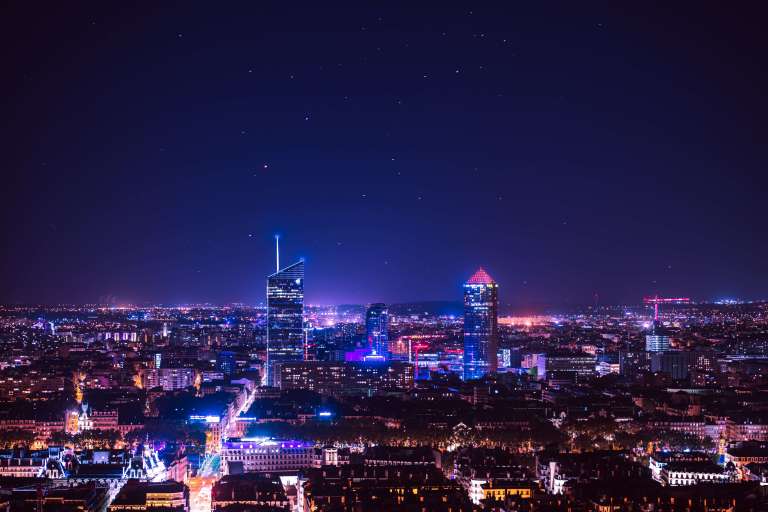
One of the first things I appreciated about Lyon was its size.
It’s a proper city.
You’ll find concerts, museums, football matches, festivals, universities and pretty much everything you’d expect from one of France’s biggest urban areas.
Yet it never felt overwhelming.
I’ve spent time in cities where leaving the house already feels exhausting. Too many people. Too much traffic. Too much noise.
Lyon never gave me that feeling.
You can cross the city without turning it into an expedition. After a while, you start recognizing neighborhoods instead of feeling lost in them.
I think Lyon found a balance that many cities never do.
It’s large enough that you’ll rarely run out of things to do.
It’s small enough that everyday life still feels manageable.
Public transportation is one of Lyon’s biggest strengths
I’ve always believed that a good city is one where you don’t need to think about transportation.
Lyon is one of those cities.
The metro works.
The trams work.
The buses work.
The funicular still feels fun no matter how many times you take it.
Most days, I simply left my apartment and went wherever I needed without thinking twice about how I’d get there.
That’s probably the highest compliment I can give any transportation system.
I’ve lived in places where owning a car felt almost mandatory.
Lyon wasn’t one of them.
Even today, if someone asked me which French city impressed me most when it comes to public transportation, Lyon would easily make my shortlist.
Its location is almost unfair
If I had to choose Lyon’s biggest advantage, this would probably be it.
You’re close to almost everything.
The Alps.
Switzerland.
Italy.
Southern France.
Paris.
Whether you enjoy hiking, skiing or simply taking weekend trips, Lyon makes it ridiculously easy.
Some of my favorite memories from those three years weren’t actually in Lyon.
They were outside it.
I spent weekends hiking around Grenoble, exploring Annecy, discovering Aix-les-Bains and getting lost in places I’d never heard of before moving there.
Annecy quickly became one of my favorite places in France.
If you’ve never been, put it on your list.
Seriously.
Living in Lyon made all those trips possible.
Instead of spending every weekend in the same city, I could keep discovering somewhere new.
That suited me perfectly.
I’ve never been someone who enjoys staying in one place for too long.
Student life
Lyon has a reputation for being one of France’s best student cities.
From what I saw, it deserves it.
The universities attract students from all over France and abroad. There are always events happening, cafés full of students and plenty of nightlife if that’s your thing.
It wasn’t really mine.
I’ve never been much of a drinker.
While many of my classmates spent Thursday nights in bars, I was usually somewhere else.
Watching football.
Learning about investing.
Trying to earn money.
Or simply enjoying a quiet evening.
I had just left home, and my priorities were different.
I wanted to become independent.
I wanted to stop relying on my parents as quickly as possible.
So my experience of Lyon probably wasn’t the typical student experience.
That doesn’t mean the city lacked nightlife.
Quite the opposite.
It simply means I chose a different path.
And looking back, I wouldn’t change it.
The People
If there’s one thing I never fully connected with in Lyon, it was the people.
Before anyone gets offended, let me explain.
I’d lived in several countries across four continents by then (6 by now). Every place has its own personality, and every person experiences it differently. This is simply how I felt during my three years there.
Compared with other places I’d lived, people in Lyon often seemed more reserved. Conversations didn’t happen as naturally. Making friends took time.
That doesn’t mean people were cold.
In fact, once you got to know them, many were kind, loyal and welcoming.
The first step just felt a little harder.
Ironically, some of the friendliest interactions I had weren’t in the neighborhoods people usually recommend.
The neighborhoods everyone warned me about
Whenever Vénissieux or Les Minguettes came up, people usually had something negative to say.
Crime.
Poverty.
Avoid them.
That was the reputation.
Then I actually went there.
What I found were families doing their shopping, kids playing outside, neighbors talking to one another and people simply living their lives.
Were there problems?
Of course.
No one should pretend those neighborhoods don’t face real social and economic challenges.
But reducing entire communities to their crime statistics never sat right with me.
Those visits reminded me of something I’ve experienced in many countries.
Places are rarely as simple as their reputation.
Some of the wealthiest neighborhoods I’ve visited felt emotionally empty.
Some of the poorest felt surprisingly alive.
Lyon reinforced that lesson.
The city where I stopped eating meat
Most people associate Lyon with food.
It’s often called the gastronomic capital of France.
Ironically, it’s also where I stopped eating meat.
When I arrived in Lyon, I was still omnivorous. That said, I never really enjoyed meat.
I mostly ate it because everyone around me did.
Then I started having recurring digestive problems.
One day I simply thought:
Enough. Not because I knew it was the issue, simply because I stopped liking it.
To my surprise, many of my digestive problems disappeared.
At the time, I became pescatarian.
Years later, that decision eventually led me to veganism, but that’s another story for another day.
So whenever someone asks me about Lyon’s famous cuisine, I smile a little.
Most people remember Lyon because they discovered French food.
I remember it because I discovered I didn’t want to eat red meat anymore.
Funny how life works.
Cost of living
Lyon isn’t cheap.
Then again, compared with Paris, it almost feels affordable.
Housing was my biggest expense, just like it is for most people.
Finding an apartment wasn’t always easy either.
French administration loves paperwork.
Sometimes it feels like you need paperwork to prove you have paperwork.
If you’re moving from abroad, be prepared.
You’ll probably hear words like garant, dossier and justificatif more often than you’d like.
Once I got through all of that, everyday life became much easier.
Public transportation kept transportation costs low.
Walking was often faster than driving.
And because I wasn’t someone who spent every weekend partying, my student budget stretched surprisingly well.
My favorite places
Even years later, certain places immediately come back to me.
Fourvière
If you only visit one place in Lyon, make it Fourvière.
The basilica dominates the city, but honestly, I remember the view just as much as the building itself.
Standing up there, Lyon suddenly makes sense.
You can see how the city grew around the Rhône and the Saône.
It’s one of those places where you naturally slow down for a few minutes.
Vieux Lyon
Yes, it’s touristy.
Yes, you should still go.
I never got tired of wandering through its narrow streets.
Sometimes I’d intentionally take a different route just to see where I’d end up.
That’s usually the best way to explore old cities.
Parc de la Tête d’Or
I’ve always believed every city needs somewhere people can simply exist without spending money.
Parc de la Tête d’Or is that place.
You can walk.
Read.
Exercise.
Sit under a tree.
Or do absolutely nothing.
Cities need spaces like that.
Probably more than shopping malls.
Along the rivers
The Rhône and the Saône quietly became part of my routine.
Sometimes I’d walk for no particular reason.
Sometimes I’d stop and watch people cycling past.
Other times I’d just sit there.
Not every memorable place has to be spectacular.
Sometimes it’s enough that it makes you slow down.
Football
Anyone who knows me knew this section was coming.
Olympique Lyonnais was impossible to ignore while living there.
Watching matches at Gerland became part of my time in Lyon, I truly loved it.
Football has a way of connecting you to a city, even when you know you won’t stay forever.
What I didn’t love
As much as I appreciate Lyon today, I never felt a strong desire to stay.
Part of that had nothing to do with the city itself.
Even in my early twenties, I knew I wanted to keep exploring the world. Lyon was never meant to be my final destination. It was simply the next chapter.
The weather didn’t always help either.
If you enjoy long, sunny summers and mild winters, Lyon might disappoint you. Winters often felt gray, and snowy, and after a while I found myself craving the ocean.
That’s one of the reasons I eventually fell in love with southwest France.
I also never developed the emotional connection I later felt with other places.
Some cities grab you almost immediately.
Lyon never did that for me.
It earned my respect long before it earned my affection.
Looking back, those are two very different things.
Would I move back?
Probably not.
Not because there’s anything wrong with Lyon.
Simply because today I know what I’m looking for.
I need nature close by.
I prefer smaller cities.
I love being able to reach the ocean within minutes.
I enjoy quieter places where life feels a little slower.
Lyon doesn’t pretend to be that city, and I wouldn’t ask it to be.
That doesn’t make it worse.
It just makes it different.
So, who is Lyon actually for?
If you’re a student, I think Lyon is one of the best choices in France.
If you enjoy public transportation, you’ll probably love it.
If you like having concerts, museums, football matches and weekend trips all within easy reach, Lyon has a lot to offer.
If you enjoy hiking or skiing, its location alone is almost enough to convince you.
If you’re looking for your first experience living away from home, it’s a city where it’s relatively easy to become independent.
On the other hand, if your dream is living beside the sea, spending every weekend at the beach or escaping into nature within a few minutes, there are probably better places.
And if warm weather is essential to your happiness, Lyon’s winters may eventually wear you down.
Three years that changed me
When I moved to Lyon, I thought I was moving there to get a degree.
Looking back, I learned much more than what happened inside a classroom.
It’s where I learned how to live alone.
It’s where I started managing my own money.
It’s where I stopped eating meat after years of digestive problems and eventually began the journey that would later lead me to veganism.
It’s where I realized I cared more about freedom than status.
More about experiences than possessions.
More about discovering the world than settling in one place.
Lyon didn’t turn me into the person I am today.
But it helped shape that person.
For that, I’ll always be grateful.
Verdict
Would I recommend Lyon?
Yes.
Without hesitation.
Not because I think it’s the greatest city in France.
Not because it’s perfect.
No city is.
I’d recommend it because it’s a city that works.
It offers opportunities without the intensity of Paris.
It has excellent public transportation.
It’s beautiful without feeling like an open-air museum.
It’s surrounded by incredible places to discover.
And if you’re willing to make the effort, you can build a very good life there.
Would I choose to live there again?
No.
My life has taken me in a different direction.
But every time I think about Lyon, I remember the city where I became independent, where I challenged old habits, where I grew up, and where I quietly started building the life I live today.
Some cities become your home.
Others become part of your story.
For me, Lyon will always be the latter.
Thanks for reading.
Teekay
Update (2026): I lived in Lyon over a decade ago. While things like housing prices, bike infrastructure and vegan options have evolved since then, this article remains an honest account of what it was like to live there and the lessons I took away from those three years.