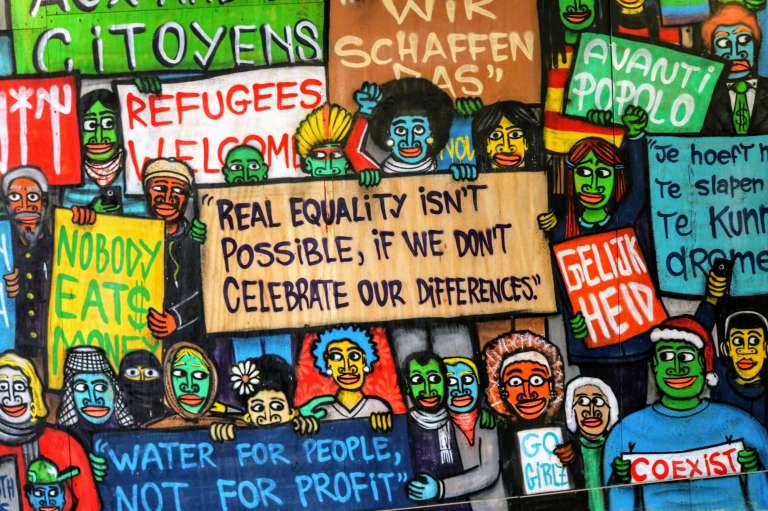
On migration, belonging and home
People often ask me why I settled in France.
It’s a fair question.
I’ve lived in enough countries that staying anywhere probably seems unexpected. If I met someone who had spent years moving across continents only to settle in one place, I’d ask the same thing.
But I think they’re asking the wrong question.
The real question isn’t why I chose France.
It’s how a foreign country slowly became my country.
Not legally.
Humanly.
People often say a place “feels like home.”
I’ve never liked that expression because it tells us nothing.
Home isn’t something you feel the day you arrive. It’s something you build so gradually that, one day, you realize you’ve stopped looking elsewhere.
That wasn’t immediate.
When I first moved to France, I came to study. Like every newcomer, I was an outsider trying to understand unfamiliar customs, another language, a different way of living. I had no idea that the people I met during my first days in business school would still be among my closest friends a decade later. I didn’t know the colleagues I’d work alongside, the associations I’d join or the teammates I’d train with would become part of my life in ways I couldn’t have imagined.
France didn’t simply welcome me.
It became a part of me.
I learned its language until it became almost as natural as my own. I immersed myself in its history, geography and culture, not because I had to, but because I wanted to understand the place I was living in.
I studied here, worked here, volunteered here and explored it far beyond what any tourist ever would.
I’ve lived in Lyon, in the east, and on the Atlantic coast, completely west. Two places that could hardly be more different, and I’ve traveled through more than a dozen cities, each adding another layer to my understanding of the country.
Somewhere along the way, I stopped being a visitor.
Not because I received a document.
Because I became invested.
What I love most about France.
It isn’t the monuments, though they’re amazing.
Tourists remember monuments.
Residents remember people.
When I think about France, I don’t picture the Eiffel Tower or postcard villages.
I picture birthdays.
Barbecues that stretched long after sunset.
Entire afternoons at the beach.
Summer days by the lake, in the mountains.
New Year’s Eve celebrations with friends who’ve become family.
Late-night conversations that somehow always lasted longer than expected.
Afterworks that turned into debates about everything and nothing.
Association events where strangers became lifelong friends.
I don’t think about France as a collection of places.
I think of it as a collection of people.
Today, almost every part of the country reminds me of someone I love.
Friends in Bordeaux, Lacanau, Lyon, Paris, Strasbourg, Poitiers, and much more.
Family in Angers, Laval, Rochefort, Nice.
Those cities are no longer dots on a map.
They’re invitations.
They’re stories.
They’re people waiting for me.
That’s something I never expected when I first arrived.
France also gave me something I struggled to find elsewhere.
Depth.
I’ve lived in countries where people were incredibly friendly yet relationships rarely moved beyond the surface. Australia is a good example. People were kind, generous and always willing to help, but I never found the deep friendships I was searching for. It simply wasn’t a social culture that suited me.
In France, friendships often take longer to build.
But once they exist, they become remarkably strong.
People invite you into their homes.
Into their families.
Into their lives.
They challenge your ideas, celebrate your successes and stay beside you during difficult times.
That’s the kind of friendship I’ve always valued.
Another reason I stayed is nature.
Anyone who’s read my work knows how deeply I care about the natural world.
After traveling through many countries, I became increasingly aware of how differently societies treat their environment. I’ve seen breathtaking landscapes buried under litter, rivers treated as dumping grounds and forests disappearing with barely a second thought.
France isn’t perfect.
No country is.
But I’ve always felt that people here still recognize that nature deserves protection. National parks, coastal paths, forests, mountains, local environmental groups and countless volunteers reflect a culture that, despite its contradictions, still understands that these places matter.
That matters to me.
Because I don’t just enjoy beautiful landscapes.
I feel responsible for them.
The day you begin worrying about a country’s forests, rivers and coastline as if they were your own, something has changed.
The greatest gift.
The greatest gift France gave me wasn’t professional, cultural or even philosophical.
It was personal.
It’s where I met the woman who changed my life.
Through her, I didn’t just find a partner.
I found another family.
After years of moving from place to place, having a family here changed everything.
Belonging.
People sometimes think belonging comes from your environment.
I don’t.
I think belonging comes from participation.
From showing up.
From learning the language instead of expecting everyone else to speak yours.
From contributing to your community.
From joining local associations.
From building friendships that survive distance and time.
From caring about the country’s future even when you’re frustrated by its present.
France has many flaws.
I hope it becomes safer for women and vulnerable people.
I hope its social model regains the strength that has weakened over the past decade.
I criticize those things precisely because I care.
Indifference belongs to tourists, responsibility belongs to those who intend to stay.
Maybe one day I’ll officially become French.
If that happens, a passport won’t suddenly make me belong.
It will simply recognize something that has been growing for years.
People often ask why I chose France.
The truth is more complicated.
I chose France.
But France chose me too.
Not through luck.
Through thousands of ordinary moments.
Conversations.
Shared meals.
Volunteer projects.
Family gatherings.
Train rides across the country.
Days by the ocean.
Years spent building a life alongside people who slowly became part of it.
I wasn’t looking for the perfect country.
I was looking for the place where my actions mattered more than my passport.
After all these years, when I think about France, I don’t see a map.
I see faces.
And I can’t think of a better definition of belonging than that.
Thanks for reading.
Teekay