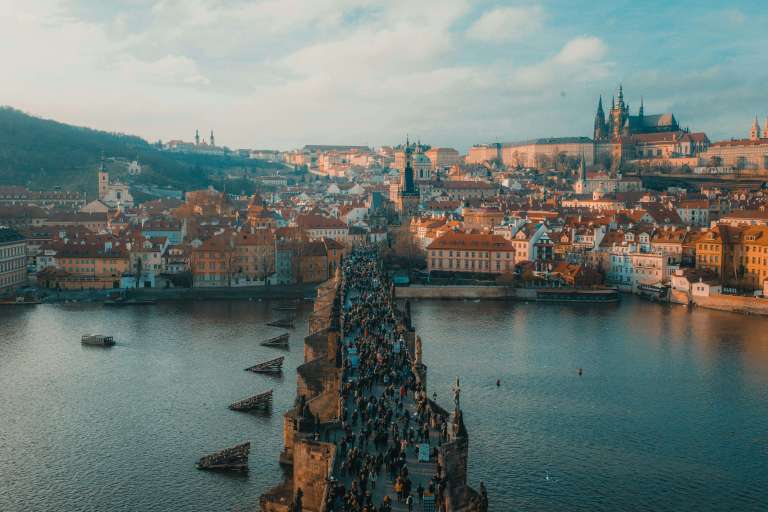
Lacanau océan beach by Teekay

How France Became Home

On migration, belonging and home

People often ask me why I settled in France.

It’s a fair question.

I’ve lived in enough countries that staying anywhere probably seems unexpected. If I met someone who had spent years moving across continents only to settle in one place, I’d ask the same thing.

But I think they’re asking the wrong question.

The real question isn’t why I chose France.

It’s how a foreign country slowly became my country.

Not legally.

Humanly.

People often say a place “feels like home.”

I’ve never liked that expression because it tells us nothing.

Home isn’t something you feel the day you arrive. It’s something you build so gradually that, one day, you realize you’ve stopped looking elsewhere.

That wasn’t immediate.

When I first moved to France, I came to study. Like every newcomer, I was an outsider trying to understand unfamiliar customs, another language, a different way of living. I had no idea that the people I met during my first days in business school would still be among my closest friends a decade later. I didn’t know the colleagues I’d work alongside, the associations I’d join or the teammates I’d train with would become part of my life in ways I couldn’t have imagined.

France didn’t simply welcome me.

It became a part of me.

I learned its language until it became almost as natural as my own. I immersed myself in its history, geography and culture, not because I had to, but because I wanted to understand the place I was living in.

I studied here, worked here, volunteered here and explored it far beyond what any tourist ever would.

I’ve lived in Lyon, in the east, and on the Atlantic coast, completely west. Two places that could hardly be more different, and I’ve traveled through more than a dozen cities, each adding another layer to my understanding of the country.

Somewhere along the way, I stopped being a visitor.

Not because I received a document.

Because I became invested.

What I love most about France.

It isn’t the monuments, though they’re amazing.

Tourists remember monuments.

Residents remember people.

When I think about France, I don’t picture the Eiffel Tower or postcard villages.

I picture birthdays.

Barbecues that stretched long after sunset.

Entire afternoons at the beach.

Summer days by the lake, in the mountains.

New Year’s Eve celebrations with friends who’ve become family.

Late-night conversations that somehow always lasted longer than expected.

Afterworks that turned into debates about everything and nothing.

Association events where strangers became lifelong friends.

I don’t think about France as a collection of places.

I think of it as a collection of people.

Today, almost every part of the country reminds me of someone I love.

Friends in Bordeaux, Lacanau, Lyon, Paris, Strasbourg, Poitiers, and much more.

Family in Angers, Laval, Rochefort, Nice.

Those cities are no longer dots on a map.

They’re invitations.

They’re stories.

They’re people waiting for me.

That’s something I never expected when I first arrived.

France also gave me something I struggled to find elsewhere.

Depth.

I’ve lived in countries where people were incredibly friendly yet relationships rarely moved beyond the surface. Australia is a good example. People were kind, generous and always willing to help, but I never found the deep friendships I was searching for. It simply wasn’t a social culture that suited me.

In France, friendships often take longer to build.

But once they exist, they become remarkably strong.

People invite you into their homes.

Into their families.

Into their lives.

They challenge your ideas, celebrate your successes and stay beside you during difficult times.

That’s the kind of friendship I’ve always valued.

Another reason I stayed is nature.

Anyone who’s read my work knows how deeply I care about the natural world.

After traveling through many countries, I became increasingly aware of how differently societies treat their environment. I’ve seen breathtaking landscapes buried under litter, rivers treated as dumping grounds and forests disappearing with barely a second thought.

France isn’t perfect.

No country is.

But I’ve always felt that people here still recognize that nature deserves protection. National parks, coastal paths, forests, mountains, local environmental groups and countless volunteers reflect a culture that, despite its contradictions, still understands that these places matter.

That matters to me.

Because I don’t just enjoy beautiful landscapes.

I feel responsible for them.

The day you begin worrying about a country’s forests, rivers and coastline as if they were your own, something has changed.

The greatest gift.

The greatest gift France gave me wasn’t professional, cultural or even philosophical.

It was personal.

It’s where I met the woman who changed my life.

Through her, I didn’t just find a partner.

I found another family.

After years of moving from place to place, having a family here changed everything.

Belonging.

People sometimes think belonging comes from your environment.

I don’t.

I think belonging comes from participation.

From showing up.

From learning the language instead of expecting everyone else to speak yours.

From contributing to your community.

From joining local associations.

From building friendships that survive distance and time.

From caring about the country’s future even when you’re frustrated by its present.

France has many flaws.

I hope it becomes safer for women and vulnerable people.

I hope its social model regains the strength that has weakened over the past decade.

I criticize those things precisely because I care.

Indifference belongs to tourists, responsibility belongs to those who intend to stay.

Maybe one day I’ll officially become French.

If that happens, a passport won’t suddenly make me belong.

It will simply recognize something that has been growing for years.

People often ask why I chose France.

The truth is more complicated.

I chose France.

But France chose me too.

Not through luck.

Through thousands of ordinary moments.

Conversations.

Shared meals.

Volunteer projects.

Family gatherings.

Train rides across the country.

Days by the ocean.

Years spent building a life alongside people who slowly became part of it.

I wasn’t looking for the perfect country.

I was looking for the place where my actions mattered more than my passport.

After all these years, when I think about France, I don’t see a map.

I see faces.

And I can’t think of a better definition of belonging than that.

Thanks for reading.

Teekay
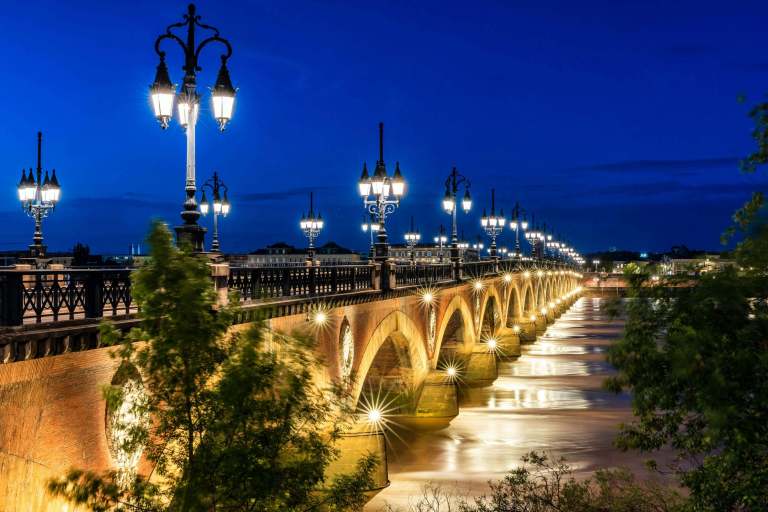
Bordeaux by Teekay Rezeau-Merah

Living in Bordeaux, mostly pros and some cons

Bordeaux was never the plan

I never planned on living in Bordeaux.

Like, at all.

I never thought it would become anything close to “home” either. Actually, I don’t even really know what home means.

Not in a fake deep way.

Not in the cliché traveler way where people say “home is wherever the heart is” and then post a picture of an airport window or whatever.

I mean it literally.

I’ve moved too much, traveled too much and lived in too many different places to tie that word neatly to one city, one country, one childhood street or one fixed point on a map.

Some people have that.

A place they come from.

A place that explains them.

A place they can point to and say, yeah, that’s home.

I don’t really have that.

So when I say Bordeaux became important to me, I don’t mean it became home in the normal sense.

I just mean it’s one of the rare places where staying made sense.

And for me, that’s already a lot.

What living in Bordeaux is actually like

I’ve lived in and around Bordeaux for years now, after living in places like New York, Barcelona, Lyon, Buenos Aires, Sydney, Addis Ababa, Penang and Hong Kong.

So this isn’t a tourist guide.

It’s not a “48 hours in Bordeaux” thing.

It’s not about where to take cute pictures, where to drink wine or which square looks best on Instagram.

This is a personal look at what living in Bordeaux is actually like. The beauty, the comfort, the cost, the rain, the summer heat, the transport, the vegan options, the access to nature and the strange feeling of a city that somehow made sense to me.

Somehow, over the years, Bordeaux ended up being the place I stayed the longest.

Funny how these things play out.

What’s also interesting is that it wasn’t because I woke up one day and thought, yes, this is the city where I’m going to build my life.

It just kept making sense to stay a little longer.

Then a little longer again.

I’ve been in France on and off for around 20 years now, which is actually mad when I write it down. At one point I studied in Lyon and listen, Lyon is beautiful. I’m not one of those people who pretends a city is ugly just because I didn’t connect with it.

Lyon has history, architecture, culture, food, all that heavy old French city stuff.

But I never felt that comfortable there.

In fact, when I left Lyon, I genuinely thought I was done with France entirely.

Then one day I drove through Bordeaux and that was kind of it.

Immediate click.

No long intellectual analysis.

No checklist.

No “let me compare quality of life, transport, rent and cultural infrastructure.”

Just a feeling.

Like, ok, I get this place.

That’s it.

And I don’t get many places like that.

The feeling of Bordeaux

Bordeaux is beautiful, but not in a loud way.

That’s probably one of the main reasons I like it.

It doesn’t scream at you.

It’s not trying to be Paris. It’s not trying to impress you with giant towers, endless glass buildings or some fake futuristic skyline.

There are no skyscrapers eating the sky.

No weird corporate city-centre energy making you feel like you accidentally walked into someone’s LinkedIn profile.

There’s light.

There’s air.

There are streets that don’t feel like they’re closing in on you.

If you’ve lived in big cities, you know how quickly you can lose the sky. Everything becomes concrete, traffic, glass, noise, pigeons, people walking too fast, cars everywhere, buildings blocking every bit of openness.

Bordeaux doesn’t feel like that.

At least not to me.

It feels softer.

The town hall is genuinely beautiful. The old churches too. The bridges, the stone buildings, the river, the way the city catches light when the weather changes.

Walking around the centre feels visually calm in a way most cities don’t.

Not perfect.

Not magical.

Just soft.

And I like that.

The best things about living in Bordeaux

One of the best things about Bordeaux is that it feels small enough to understand, but not so small that it feels completely closed.

A lot of people in Bordeaux aren’t even really from Bordeaux. They come from nearby towns, the Arcachon Bay, Paris, other parts of France and sometimes somewhere else entirely, like me.

So the city has this mixed energy.

It feels medium-sized, but socially bigger than it looks on paper.

Not too provincial.

Not too massive.

Not too stuck in itself.

That works for me.

Culture is everywhere too, but again, not in a try-hard way.

Montaigne, Montesquieu, Mauriac, universities, opera, theatres. That whole old intellectual background is just there. And yeah, that sounds a bit like something from a tourist office brochure, but you do feel it.

Not every day.

Not every second.

But it sits in the background.

Also, random fact, Bordeaux was the capital of France three times.

Most people don’t know that.

I love facts like that.

Nature, ocean and weekend escapes

Honestly, one of the best things about living in Bordeaux is how easily you can leave it.

Which sounds like an insult, but it really isn’t.

The ocean is just over an hour away.

And not the kind of beach where you’ve got buildings stacked behind the sand, overpriced ice cream stands and people sitting on top of each other.

I’m talking long Atlantic coastlines, dunes, pine forests, surf towns, wind, space.

A completely different rhythm.

You leave the city and suddenly your body remembers that life doesn’t have to feel so tight all the time.

Further south you’ve got the Pyrenees. Sure, they’re about a 3-hour drive away, but still, close enough for a weekend getaway.

Mountains, lakes, hikes, waterfalls, caves, little villages.

A totally different landscape again.

And if you drive inland, say to the Dordogne, you find quiet villages, old mills, open plains and places where everything slows down without asking for permission.

Bordeaux is one of those cities where a short drive can completely change your environment.

That matters to me.

I need nature around me.

Not as an aesthetic.

Not as a weekend hobby.

I genuinely think I get tense without it.

Transport, walking and cycling

Travel is surprisingly easy for a city this size.

You’ve got flights to a lot of major European cities. Paris, London, Lisbon, Madrid, Barcelona, Rome, Istanbul and more.

North Africa is close too, especially Morocco.

Then the TGV gets you to Paris in about two hours, which still feels a bit unreal when you think about it.

From there, everything connects.

You’ve also got trains to Toulouse, Nantes, La Rochelle and other places, plus coaches if you want to travel more slowly into Spain or Portugal.

The city gives you options.

I like places that give you options.

Inside Bordeaux itself, public transport is decent.

Not perfect.

Rush hour can be annoying. The tramway gets packed. Buses can be a bit much sometimes.

But overall, it works.

And the city is walkable, which changes everything.

A city you can walk through is not the same as a city you only pass through.

Cycling is easy too. You can get almost anywhere by bike, which makes owning one feel less like a lifestyle choice and more like common sense.

Just lock it properly.

Actually, lock it very properly.

Bike theft is real.

Weather in Bordeaux

The weather has its own personality.

It rains a lot.

Like, a lot.

People complain about it, but I’ve never really hated Bordeaux rain. Most of the time it doesn’t feel violent or miserable. Not to me anyway.

It feels more like a reset.

Like the city needed to rinse itself off a little.

Summers though?

Yeah.

Summers can be rough.

Sometimes too hot.

I usually leave during peak heat when I can, because Bordeaux in a heatwave is not my favorite version of Bordeaux, that’s for sure.

That’s one thing people should know before moving here.

Bordeaux can look soft and elegant for most of the year, then suddenly become heavy, hot and uncomfortable in summer.

Still beautiful.

But sweaty.

Daily life in Bordeaux

The centre has character.

Small local shops, thrift stores, cafés, concept stores, cobblers, vinyl shops, second-hand electronics, markets.

There’s even a monthly vegan market, which is rare enough to matter in a city this size.

It’s relatively clean and relatively safe too.

People argue about safety a lot, especially online, because apparently everything has to become a dramatic debate now.

But in normal day-to-day life, compared to many urban places, Bordeaux still feels fairly balanced.

There’s greenery as well. Parks, trees, open little pockets of space.

Not enough trees in the very heart of the city in my opinion, and still too many cars, obviously.

But the base is solid.

It’s a city where you can have a normal day without feeling like the city is attacking your nervous system.

That might sound small.

It isn’t.

Cost of living and rent in Bordeaux

Now, let’s not romanticize it too much.

Bordeaux has problems.

Rent is ridiculous for what the city offers in terms of work.

That’s probably one of the biggest contradictions of living here.

The city became desirable, people came, prices went up and now you get this strange gap between the lifestyle Bordeaux sells and the economic reality many people actually live with.

It’s beautiful, yes.

It’s comfortable, yes.

But comfort is never neutral when people are priced out of it.

That’s the thing with cities like Bordeaux. They look soft from the outside, but they still carry all the usual pressures underneath.

Rent.

Work.

Class.

Tourism.

Gentrification.

The slow replacement of ordinary life by polished lifestyle.

It’s not Paris-level brutal, obviously.

But it’s there.

And if you’re thinking of moving to Bordeaux, you should know that the city can be expensive compared to the job opportunities available locally.

Beautiful cities always know how to charge for their beauty.

Vegan life in Bordeaux

Vegan life in Bordeaux is manageable, but limited.

That’s probably the most honest way to put it.

You can find options. You can eat out. You can shop. You can make it work.

But if you’re coming from bigger cities with stronger vegan scenes, Bordeaux will probably feel small.

Not impossible.

Just not abundant.

There’s a monthly vegan market, which I appreciate, and there are some good places around the city, but it’s not the kind of place where vegan food is everywhere without thinking.

You still have to look.

You still have to plan a little.

And sometimes you still end up eating fries and pretending that’s a meal.

It happens.

The downsides of living in Bordeaux

So no, Bordeaux isn’t perfect.

No city is.

Rent is too high.

Transport isn’t cheap.

Bike theft is very real.

Summers can be intense.

Vegan options are still limited compared to bigger cities.

There are still too many cars.

The centre needs more trees.

And there’s this strange seasonal emptiness where a lot of people leave during summer, especially since many residents aren’t originally from there.

The city kind of exhales and partially empties out.

Some people hate that.

I get it.

It can feel peaceful, but also a bit strange, like everyone quietly agreed to disappear at the same time.

Bordeaux can also feel a little too comfortable sometimes.

That might sound like a fake complaint, but I mean it.

Some cities push you. Some cities rough you up. Some cities force you into movement.

Bordeaux doesn’t always do that.

It can soften you.

Which is nice.

Until it isn’t.

So, is Bordeaux a good place to live?

Yes, if you want a beautiful, walkable, culturally rich French city with decent public transport, strong access to the ocean and nature, enough social life to not feel isolated and a softer rhythm than Paris.

No, or not easily, if you need cheap rent, strong local salaries, big-city vegan options, endless nightlife, reliable summer comfort or a city that feels fully alive all year.

For me, Bordeaux isn’t perfect.

But it’s one of the rare places where staying made sense.

And for someone like me, that’s not nothing.

Would I live in Bordeaux again?

Honestly, yes.

In fact, we’re just over an hour away.

I go back almost weekly to volunteer, see friends, run errands or just walk around for a few hours.

And every time, there’s still something.

Not home exactly.

But Bordeaux is one of the few places that ever made me understand why people use that word.

Maybe that’s enough.

If you want to read about another french city I lived in (Lyon), check this article out.

Peace!

Teekay

European cities

Realizations after 9 years of living and traveling in Europe

Suddenly, the world feels so small.

It’s funny how easily we take things for granted once we’ve lived them.

I hadn’t set foot in continental Europe until I was 17. I was never particularly fascinated by it, but I was curious, mainly because I’ve always been a football head (aka soccer). My understanding of Europe came almost entirely through football. It’s surprising how much you can learn about a place through the way it presents itself to the world.

For me, football was Europe’s Hollywood.

Sure, I’d read books by European thinkers like Rousseau, Voltaire, Dostoevsky, Adam Smith (dad’s an economist), Marx (capitalism’s greatest critic), Montesquieu and plenty of Greek philosophers, but most of them weren’t contemporary thinkers. They wrote about their own times, their realities. Football, on the other hand, made Europe feel present, dynamic, real. It gave me a window into the continent’s character.

For instance, I knew about the English and their pub culture way before I had set foot in England. I already knew they loved to drink before games, loved to sing in the stands and viewed the sport almost like a religion.

The Dutch, with their total football philosophy, played the game differently. Organized, intelligent, team-oriented, their football reflects a society that values structure and versatility.

The Germans famously love their beer. Bayern Munich holds a photoshoot every year to promote Oktoberfest, which I only knew about thanks to their events.

The Turks are loud and proud. Fireworks in the stands, packed stadiums on a weekday, and fans who treat football like life or death, it perfectly depicts their character.

The Spanish, on the other hand, are just as proud, but more divided. The Basques, Catalans and Andalusians all bring their own flair to the game. They also have their own holidays, like San Jordi (Catalan Valentine’s day), and you learn about those through football too.

The Italians are perhaps the only ones who proudly exposed the ugly face of their society through the beautiful game: their racism toward Black players, their theatrics and machismo are ever present on the pitch and off of it. Their passion is unmatched and unapologetic, but so is their cheating. Not great, thank God people outside of football are different.

Anyway, last but not least, the French. It was already striking to me how different people within the country were. France is so diverse, which I already knew then, but which became even clearer the second I set foot here.

I’ve been to more than 20 European countries since moving here, and visited over 100 cities in Europe. I’ve made lifelong friends who became family. I studied, partied and worked with them. Better yet, I ended falling in love with a European, who then became my wife and lifelong partner. Who would’ve thought?

And yet, I take it all for granted now.

I love living in Europe, and there is nowhere else I’d rather be, but traveling around Europe doesn’t excite me as much as it used to. It feels like I’ve seen it all, which, of course, isn’t true.

It’s strange how easy it is to feel indifferent to things you once dreamed of.

Gratitude, I’ve learned, isn’t just a feeling. It’s an action. A choice.

Our next trip in Europe will be to the Balkans, and Greece. Albania, Montenegro and Bosnia are on our list. I hear the culture there is very different to Western Europe, which is super exciting!

Thank you for stopping by.

Peace!

Teekay