Sometimes I catch glimpses of conversations, some are deep, others shallow. Both fascinate me. How humans think and function, how they make their own choices, and sometimes, how they lie to themselves.
I like watching people walk together. I can’t help but think of our ancestors, how they moved in groups, hunter-gatherers, until wheat domesticated us (not the other way around). I wish we could go back.
It’s funny how a child’s walking style often matches a parent’s gait, or how the way someone sits says so much about them.
I get stuck watching clothes spin in the dryer. I don’t wear a lot of black (or any, really), so it’s like a rainbow in there. It always reminds me of this Senegalese myth from Ashura Day, where a rainbow means the Prophet’s (PBUH) daughter is doing her laundry. It’s funny, in a sweet way.
Oral traditions must be protected at all costs.
I love the bees and butterflies that hang around when we’re outside. It’s so peaceful.
Fire is mesmerizing. I’ve always been fascinated by it, so much so that, when I was little, one of my experiments went wrong and set my bedroom on fire. Oops! I love bonfires, fireplaces, candles. I used to burn incense just to watch the smoke. I’m also strangely drawn to steam, idk why.
Most people hate spiders. I love them. They really are special, nature’s elite.
Growing things makes no sense. How can a seed feed me with the most beautiful fruit or vegetable in no time? Just soil, water and sun? Endless abundance. Nature is incredible.
The world is full of magic. The stars, clouds, moving patterns, waves, the wind.
Pain is strange. It’s an immediate physical response, but if you think about it, step outside of it, it becomes something else. Just neuroreceptors sending signals. The whole process is wild. I dread pain. It reminds me of death, like it’s the final step before we go.
Skin is interesting. It’s the largest organ we have, yet we treat it like it’s nothing. I’m always amazed when it heals itself, like how? When I was a baby, I had second-degree burns on my face and third-degree burns on my chest. I went blind for a few days. I think about miracles a lot. We abuse our skin constantly, yet it keeps repairing itself.
Languages are mesmerizing. I think about them often. I compare languages in my head and try to understand those who invented them. Again, I think about our ancestors. How did they communicate? What was their humor like? What did they find funny? Did they understand death quickly? How did they distinguish little death (sleep) from big death?
I love the expression “life as we know it”. It plays in my head quite often. My personalities are different in different languages, I think most polyglots can relate.
The reason I became a vegan minimalist was mainly to protect it and its inhabitants.
But doing so opened my eyes on a fascinating paradox, especially in the vegan and vanlife communities; a paradox I ponder upon on a daily basis.
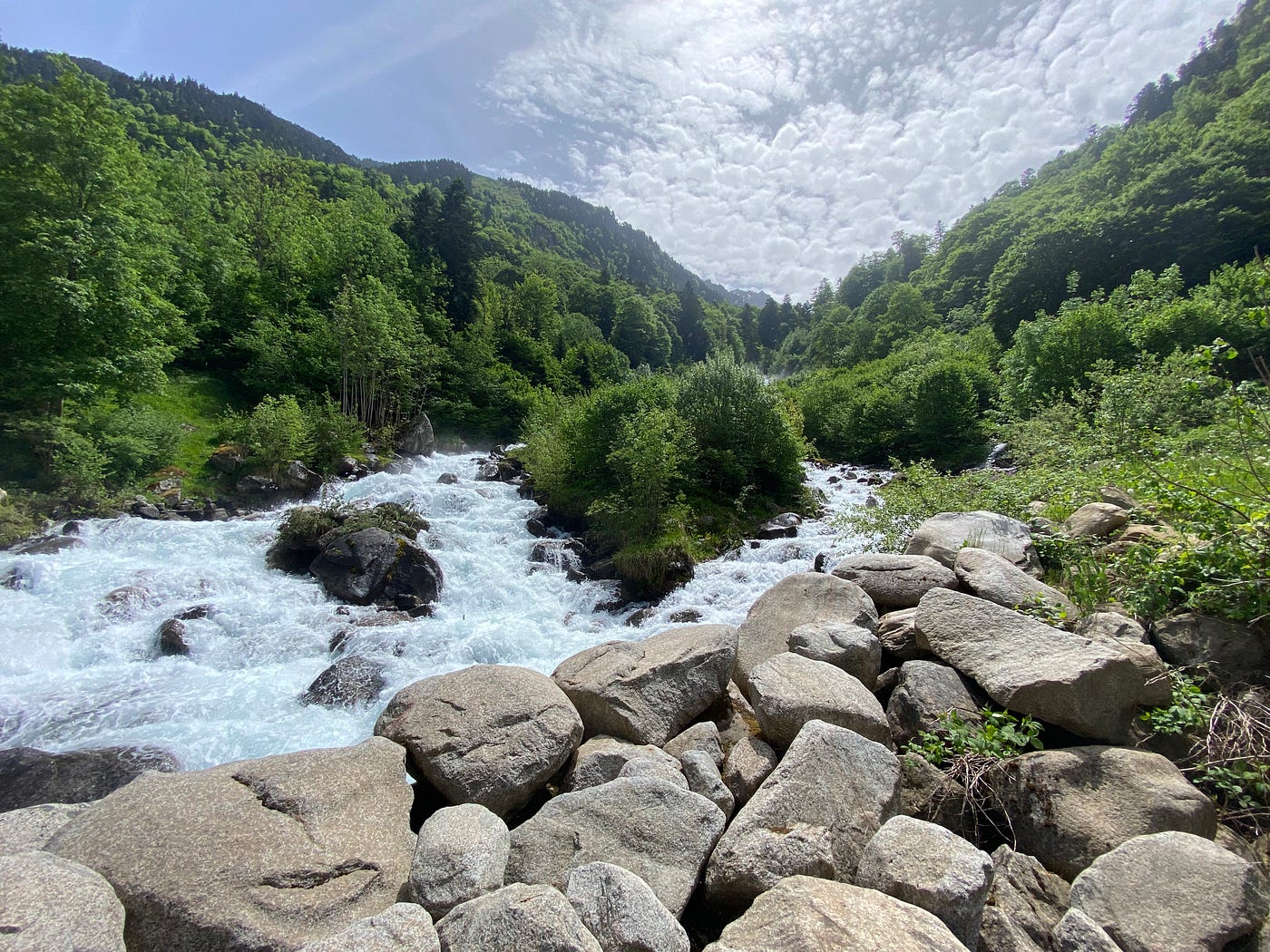
Spending more time in the great outdoors allowed me to come to a poignant realization: The very nature that we, avid nature enthusiasts and animal lovers, hold dear to our hearts, is the very same nature we often unwittingly damage with our bad habits.
How can we enjoy something so much while simultaneously participate in its destruction?
Please don’t leave toilet paper in nature (photo by author)
Well, here’s where my thinking is at the moment.
Reasoning
First of all, I want to make something clear: As pragmatic as I can be, my personal belief is that human beings are born good.
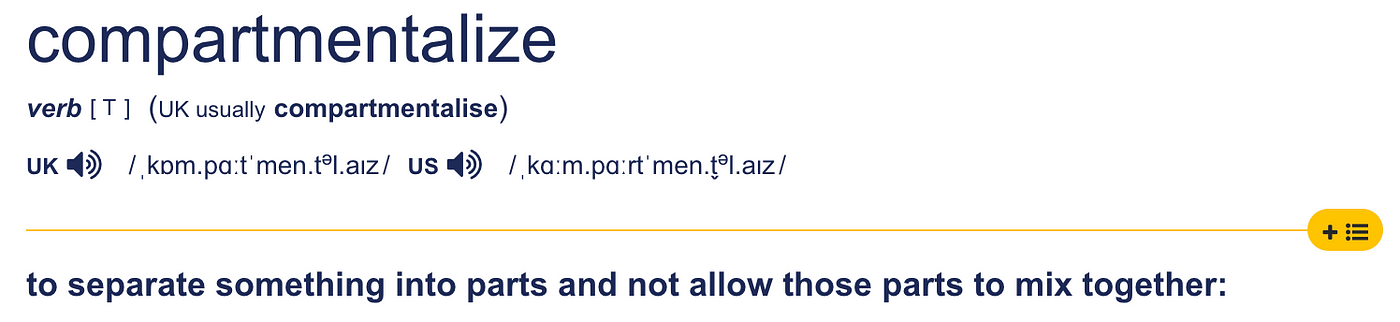
However, human beings are also amazing at compartmentalizing.
Screenshot by author
A fitting illustration of my point is that of individuals who profess to be staunch advocates for human rights, yet they contradictorily sport Nike shoes, H&M dresses and Zara pants.
Note: If you don’t know what I’m hinting at, read this.
The same can be said about vegans who consume palm oil, or vanlifers who consume animal products (that destroy the very nature we want to be surrounded by).
Now look, I always say life is all about balance, and I believe it is, but sometimes — often times — rocking something ethically sourced won’t hurt you in any way, shape or form. Perhaps you’ll pay more for it, but you don’t have to if you buy second hand.
This applies to almost all consumables.
So the first takeaway from this piece is to think twice before your next purchases. Always consider the added value of what you buy, its environmental impact and whether there are other alternatives.
That’s one way to tackle this paradox.
Another reason we engage in actions that cause harm to nature is our toxic sense of entitlement, or deservingness.
This manifests itself in different forms: Arrogance, greed, boastfulness or in some cases, negative narcissism.
Some of us behave as if the world owes us. This sense of entitlement emanates from a lack of self-awareness and gratitude, which itself is the result of a Godless, non-religious and non-spiritual society.
Many people believe, wholeheartedly and arrogantly, that everything they have was owed to them.
Hustle culture prescribes “hard work and determination” as the ultimate solution for success, often discarding external factors that also contribute to one’s accomplishments.
Unfortunately, such attitude blinds us from seeing the bigger picture: That none of what we have, none of what we achieve is truly ours, and that it can be taken away from us at any time. It will be when we die.
More humility would do us all a world of good, and without it, we will continue indulging in things that harm us and everything we love.
When the last tree has been cut down, the last fish caught, the last river poisoned, only then will we realize that one cannot eat money. — Native American saying
The third reason behind this great paradox is our lack of concern for the future.
In other words, selfishness.
Social Media may have exasperated this, but many people believe they MUST prioritize their own pleasures and conveniences over the well-being of the environment and future generations.
It’s sickening when you think about it.
But I don’t blame us, not entirely. If anything, we were programmed and brought up this way, but it’s time for a change, a big one.
As a matter of fact, we can’t live like we did 30 years ago, times are changing and so should we, evolution and all.
Indeed, our planet can’t sustain our greed and selfishness for too long, and the time to turn things around is now.
I would never advocate for anything radical, life is all about balance once again.
As such, we don’t have to move to self-built huts, nor do we have to wear banana leaves, but it’s our duty to watch what we consume, how we consume it, and what we want to support.
Your dollars are more potent than your vote and your words. So put your money where your mouth is.
How
You see, I often write about boycotting certain products: Palm oil, white sugar, animal products, single use plastic, brands that pollute our water and source their products in Chinese slave camps and Bengali/Indian sweatshops, brands that support wars, so on and so forth.
To take part of this would make the world significantly better. To do so and to raised our collective awareness is as close to perfection as we can get.
That and reversing consumerism. Remember, minimalism (and essentialism) isn’t just an aesthetic, it’s a philosophy.
In 1927, a Boston-born, Harvard educated son of immigrants went to work for Lehman Brothers. His name was Paul Mazur and his interest in the economics of consumption and retailing made him a rising star in the investment banking establishment for more than 50 years.
Mostly he was responsible for manipulating the psyche of the American consumer. — Sherry Truitt
His philosophy in a nutshell:
“We must shift America from a needs, to a desires culture,” He wrote. “People must be trained to desire, to want new things even before the old had been entirely consumed. We must shape a new mentality in America. Man’s desires must overshadow his needs.”
“Man’s desires must overshadow his needs.” That’s a powerful statement, and a scary one.
So you see, as stated above, human beings are born good, but we were led astray for many decades.
Indeed, our actions are often shaped by cultural and societal norms. Unfortunately, said norms favor efficiency and convenience over wellbeing and ethics. They also favor desires over altruism and consumerism over self-awareness.
We all follow patterns and attitudes considered “normal” in our society, hence why we hardly question anything.
With that being said, let’s not forget that we’re still human, and luckily for us, God bestowed upon us reason and logic.
God gave us free will too, so it’s on us to outgrow our biases and harness original thinking.
Final word
All in all, the paradox of enjoying and destroying nature at the same time is a complex and deeply ingrained issue.
It’s not just about individual behavior, it’s rooted in our cultural, political, and economic systems, making it extremely difficult to shake off.
The one thing I want to leave you with is to question things and at least make sure your actions are aligned with your values, that’s it.
Perhaps some of us have a stronger moral obligation to protect nature, while others don’t. That’s okay, life can’t be perfect and neither can we, but does that mean we should stop trying?
Minimalism didn’t begin with Netflix documentaries, Scandinavian furniture or YouTube creators.
Humanity has been rediscovering the same idea for thousands of years.
I’ve noticed a genuine interest from my readers in the “HOWs” of minimalism, but how about the “WHYs” and the “WHEREs” ?
Well, that’s what we’re here for today. What you’re about to read will bring things full circle.
After reading and writing about minimalism for 5+ years, I realized that this philosophy is nothing new. In fact, throughout history, most cultures and religions have emphasized the importance of living a simple and minimalist life.
Minimalism in ancient European Civilizations
In ancient Greece, Socrates famously espoused the idea that “the secret of happiness is not found in seeking more, but in developing the capacity to enjoy less.”
Socrates believed that living a simple life was key to achieving contentment and stressed the importance of focusing on the essentials. His philosophy also focused on avoiding excess and materialism.
Similarly, in ancient Rome, Seneca wrote extensively about the virtues of minimalism.
In fact, Seneca believed that focusing on the basics and refraining from excess granted human beings a sure sense of inner peace and tranquility, and he couldn’t be more right.
Not only that, Seneca also emphasized the importance of mindfulness, advocating for individuals to live in the present moment and appreciate the simple pleasures in life.
Minimalism in Eastern religions
The concept of minimalism is central to many teachings in Buddhism and Hinduism.
In fact, Buddhism teaches that “desire is the root of all suffering” and that inner peace can only be achieved by letting go of our attachment to material possessions.
Indeed, the Buddha himself renounced his belongings and lived as a monk, teaching his followers to let go of desires and attachments in order to achieve enlightenment.
The Buddhist practice of meditation is the perfect illustration of that. While Seneca didn’t insist on one particular practice to promote mindfulness and presence, his ideas perfectly match Buddhist philosophy on this point.
Similarly, in Hinduism, the concept of “Sannyasa” or “renunciation”, is a central theme.
Sannyasa involves renouncing material possessions and living simply and in pursuit of spiritual enlightenment.
But Sannyasa isn’t the only Hindu concept that highlights a certain form of minimalism.
“Aparigraha” or “non-possessiveness” also points up the importance of avoiding excess and materialism in favor of simplicity and contentment, which ultimately shows that minimalism is nothing new, and that it took center stage in century long beliefs and religious practices in the East as much as in the West.
Minimalism in Monotheistic religions
In Judaism, the concept of “Tzedakah” or charity, is an essential part of the religion.
Tzedakah involves giving to those in need and promoting social justice.
By giving to others, we learn to reduce our attachment to stuff. Not only that, giving means we learn to prioritize the needs of others over our own desires.
The world needs more of this practice.
How about in Christianity?
Well, one of Jesus’ (AS) most famous teachings says “it is easier for a camel to go through the eye of a needle than for someone who is rich to enter the kingdom of God.”
This idea highlights the importance of avoiding excess and materialism, and promotes selflessness and spiritual values.
Last but certainly not least, Islam.
Prophet Muhammad (PBUH) lived a humble and simple life. He owned the bare minimum, despite his influence, status and the wealth of his wife hazrat Khadija (RA).
Many of Prophet Muhammad’s (PUBH) teachings revolved around the above-mentionedvalues of charity, avoiding excess and emphasizing spiritual and ethical values over material possessions.
Case in point, the Islamic concept of “Zakat” involves giving a fixed and predetermined percentage of one’s wealth (once a year) to the less fortunate, promoting empathy and compassion for others.
The universality of minimalism is evident in its presence across different cultures and regions worldwide, and there’s more !
Minimalism in ancient South American culture
Often forgotten when talking about minimalism and anti-consumerism, South American cultures and civilizations had some equally impressive values to the ones mentioned above.
“When the rivers are all dried up, and the trees cut down, man will then realise that he will not be able to eat money.” Native American proverb
For instance, if you look at the Inca civilization (present-day Peru, 13th to 16th century), living simply and in harmony with nature was paramount.
The Incas prioritized the concept of “Ayni,” which involved the reciprocal exchange of goods and services among members of the community, encouraging mutual aid and support.
Similarly, the Maya civilization (present-day Mexico and Central America, 2000 BC to the 16th century) practiced a simple and sustainable way of life as well.
The Maya were famous for their beliefs in the conservation of natural resources and living in harmony with the surrounding nature.
This was reflected in their agricultural practices, namely terrace farming and irrigation systems, which were brilliantly designed to maximize efficiency and minimize waste.
Quite the opposite of what we do today.
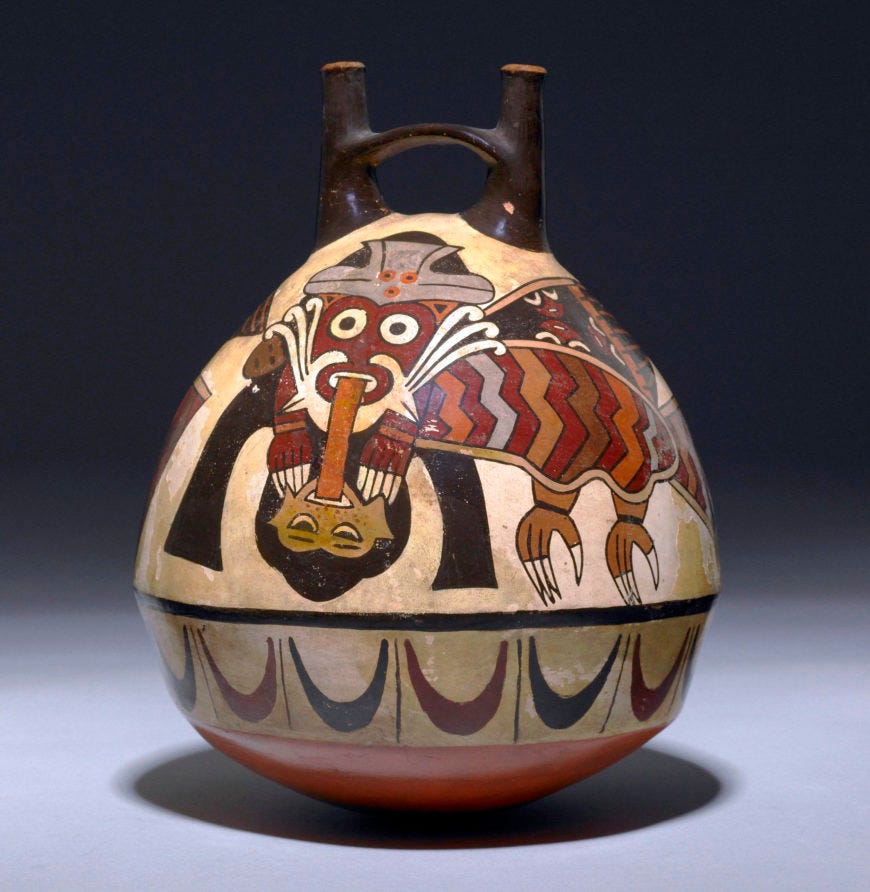
While the Incas and the Mayas are quite well-known, there’s another lesser-known civilization in the Nazca civilization.
Nazcas lived in a desert region (in modern day Peru) and relied on sustainable practices to survive.
For instance, they built underground aqueducts and water management systems to make sure they survived in their harsh environment.
The Nazcas also produced simple but elegant pottery, textiles, and other crafts, demonstrating their appreciation for the beauty in simplicity.
Last but not least, Asian ancient cultures also provide numerous examples of minimalism and simplicity being valued and practiced way back.
For instance, in ancient China, one of the oldest civilizations in the world, Taoism highlights the importance of living a simple and natural life,in harmony with the flow of the universe this time.
This is commonly known as the concept of “Wu Wei.”
“He who knows he has enough is rich.” Lao Tzu
But besides ancient China and India (through Buddhism and Hinduism), another gigantic civilization from the East has its own form of minimalism: Japan.
Indeed, the Japanese aesthetic of “wabi-sabi” is a great example of minimalism and simplicity.
Wabi-sabi celebrates the beauty of imperfection and transience, emphasizing the importance of finding joy and contentment in the simple things in life.
Final word
What has been will be again, what has been done will be done again; there is nothing new under the sun.
That’s what fascinates me most about minimalism.
Across continents, religions and civilizations, people repeatedly arrived at the same conclusion, that a meaningful life is rarely built on excess. Time and again, humanity discovered that simplicity, generosity and moderation lead to a greater sense of peace and contentment.
Minimalism isn’t a Western trend or a passing lifestyle. It’s one of humanity’s oldest ideas.
Perhaps that’s because our deepest needs have never really changed.
We all seek purpose, inner peace and a sense of belonging. Throughout history, countless people found that owning less often helped them appreciate more.
I hope minimalism helps you live a life that is not only simpler, but also more ethical, more intentional and more fulfilling.