man in the mirror

What Happens When You Stop Looking at Yourself

A trap or a starting point?

My wife and I spent a few months traveling Europe in our van in 2024. We had one mirror on board, small and retractable, and it barely got used. I’d flip it down to shave or put in my contacts, maybe twice a month. My wife used it even less.

I rarely thought about my appearance during that time. Between writing, working, hiking, upgrading the van and taking photos, my attention was usually somewhere else.

I’d think about a sentence I couldn’t get right, or the light on a trail I wanted to capture before it disappeared. I’d think about a client’s project or a strange noise coming from the engine. Some mornings, I woke up and had no idea what I looked like, and it didn’t cross my mind to check.

That’s what happens when you stop looking at yourself. Your attention doesn’t disappear. It just goes somewhere else.

The striking part is when we went back into a regular house.

Whenever we stayed with family or traveled without the van, we were suddenly surrounded by mirrors again. In the bathroom, the bedroom, the elevator, hotel lobbies and shopping malls. Within hours, I noticed myself looking into them without even realizing it.

Nothing about me had changed.

Only my environment had.

Every time that happened, I thought of something Fernando Pessoa once wrote.

“Man shouldn’t be able to see his own face. There’s nothing more sinister. The inventor of the mirror poisoned the human heart.”

The first time I read those words, they sounded ridiculous.

Now I’m not so sure.

Michael Jackson had a different read on the same object. “Man in the Mirror” was reportedly his favorite of his own songs, and its argument is the opposite of Pessoa’s. Look at your reflection not to admire it, but to change what needs changing. The man in the mirror isn’t just an image. He’s the one you’re accountable to.

Both men were talking about the same glass. One saw a trap. The other saw a starting point.

Vanity didn’t begin with the mirror. Humans have always cared about beauty and compared themselves to one another.

But the mirror changed our relationship with ourselves.

Before mirrors became common, the closest thing people had to a reflection was still water. Lakes, ponds and quiet rivers occasionally revealed a face looking back. The experience was fleeting. A ripple or a gust of wind was enough to erase it.

Even today, that’s usually how I see myself while hiking. Sometimes my reflection appears in a calm lake or a stream. I notice it for a second, then keep walking.

Water reflects.

It doesn’t invite inspection.

The mirror does.

For the first time, people could study themselves whenever they wanted. Every wrinkle, every expression and every imperfection became something to examine. Our face slowly stopped being something other people recognized and became something we managed.

Then the mirror evolved.

Today, it fits inside our pockets.

Every smartphone is a portable mirror. Every front-facing camera gives us another opportunity to check ourselves. Social media takes it one step further. It doesn’t simply encourage us to look at ourselves. It encourages us to compare ourselves.

The question quietly changes.

Not what am I doing?

But how do I look doing it?

Experiences become performances.

A meal becomes a photograph before it becomes lunch.

A mountain becomes a backdrop before it becomes a destination.

A sunset becomes content before it becomes a memory.

The image slowly replaces the experience.

The myth of Narcissus wasn’t really about self-love. It was about confusing reality with its reflection.

Perhaps we’ve built an entire culture around that confusion.

Capitalism couldn’t have asked for a better invention than the smartphone. A device that constantly reminds people they are incomplete is also a device that constantly sells solutions.

You don’t like your skin? Buy this.

Your clothes? Replace them.

Your face? Filter it.

Your life? Compare it to someone else’s until it feels inadequate.

The reflection no longer shows who we are. It tells us who we should become. We look to it for answers, but all it gives us back is a question.

I don’t think mirrors are the enemy. They help us shave, treat a cut or make sure there’s nothing in our teeth. Like every tool, they have a purpose.

The problem begins when they stop serving us and begin shaping us.

Living in the van hadn’t made me immune to vanity. It had simply removed thousands of small reminders to think about myself.

Returning to a conventional home reminds me how unusual that has become.

Modern life is designed to redirect our attention back toward ourselves. Not just through mirrors, but through advertisements, cameras, screens and algorithms that constantly ask the same question:

How do you look?

Far fewer things ask a more important one.

What are you paying attention to?

Maybe that’s why nature feels so restorative.

The forest doesn’t care what I’m wearing.

The mountains aren’t impressed by beauty.

A lake reflects my face for a moment before the wind carries it away.

Nature never asks me to perform.

It simply asks me to be present.

That’s the gift a mirror can’t give.

Pessoa was probably exaggerating.

The inventor of the mirror didn’t poison the human heart.

But he may have started a process that eventually led us here.

A civilization that spends more time looking at itself than at the world eventually mistakes appearance for reality.

Teekay

Why We Love Nature but Keep Destroying It

How can we do better, collectively?

My self-professed love for nature is no secret to my readers.

Being close to nature is and has always been my thing.

Nature is wondrous, full of beauty and peace.

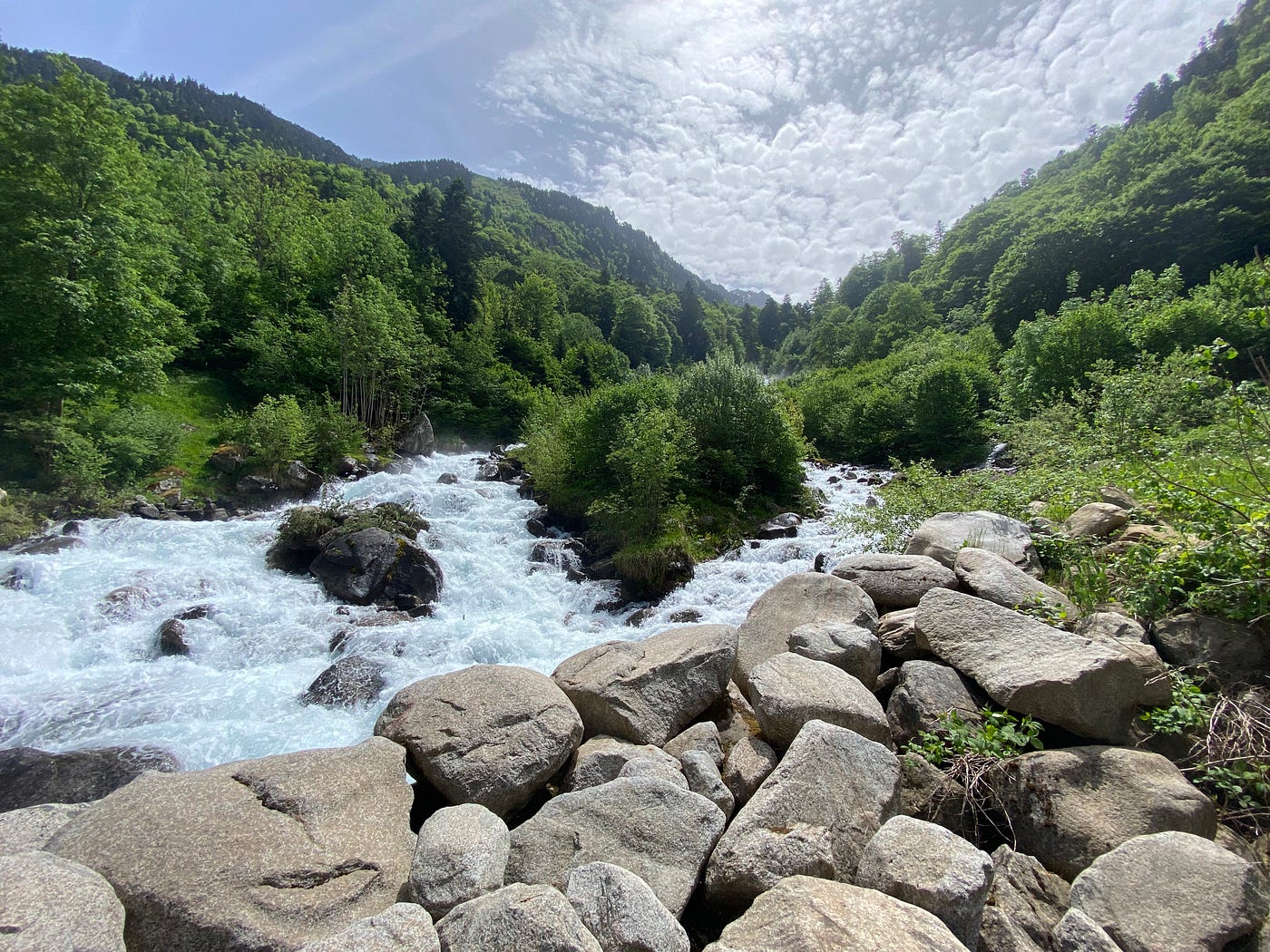
Hiking photo by Teekay Rezeau-Merah
Hiking photo by author Teekay Rezeau-Merah

The reason I became a vegan minimalist was mainly to protect it and its inhabitants.

But doing so opened my eyes on a fascinating paradox, especially in the vegan and vanlife communities; a paradox I ponder upon on a daily basis.

Spending more time in the great outdoors allowed me to come to a poignant realization: The very nature that we, avid nature enthusiasts and animal lovers, hold dear to our hearts, is the very same nature we often unwittingly damage with our bad habits.

How can we enjoy something so much while simultaneously participate in its destruction?

Teekay @teekayrezeaumerah
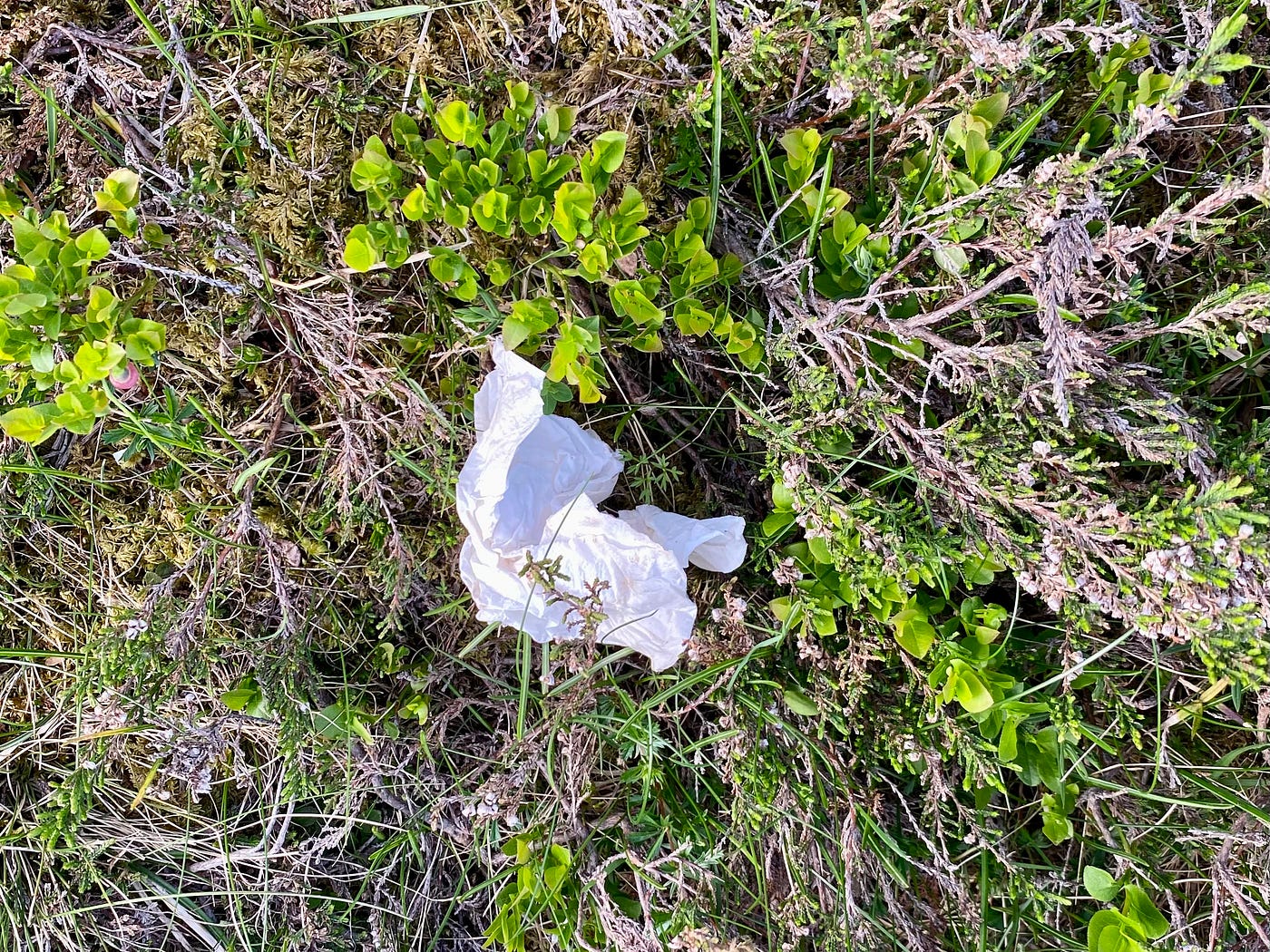
Please don’t leave toilet paper in nature (photo by author)

Well, here’s where my thinking is at the moment.

  • Reasoning

First of all, I want to make something clear: As pragmatic as I can be, my personal belief is that human beings are born good.

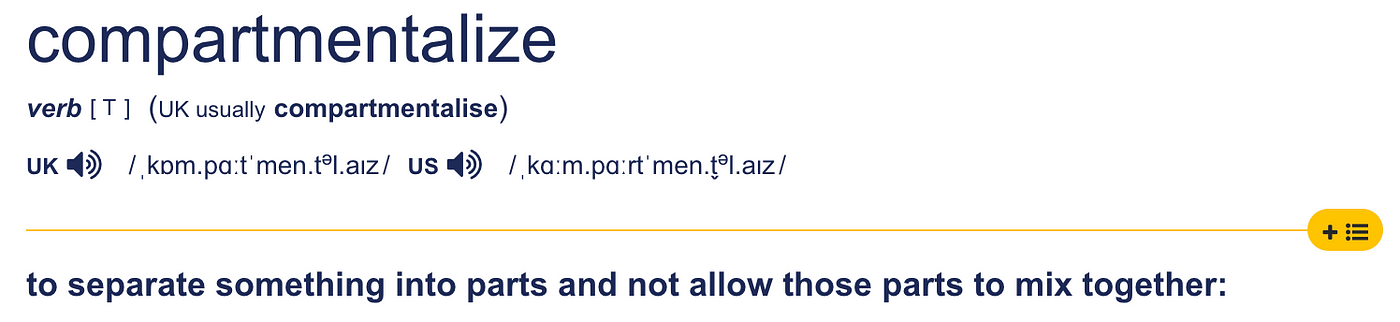
However, human beings are also amazing at compartmentalizing.

meaning of compatmentalize by Teekay Rezeau-Merah
Screenshot by author

A fitting illustration of my point is that of individuals who profess to be staunch advocates for human rights, yet they contradictorily sport Nike shoes, H&M dresses and Zara pants.

Note: If you don’t know what I’m hinting at, read this.

The same can be said about vegans who consume palm oil, or vanlifers who consume animal products (that destroy the very nature we want to be surrounded by).

Now look, I always say life is all about balance, and I believe it is, but sometimes — often times — rocking something ethically sourced won’t hurt you in any way, shape or form. Perhaps you’ll pay more for it, but you don’t have to if you buy second hand.

This applies to almost all consumables.

So the first takeaway from this piece is to think twice before your next purchases. Always consider the added value of what you buy, its environmental impact and whether there are other alternatives.

That’s one way to tackle this paradox.

Another reason we engage in actions that cause harm to nature is our toxic sense of entitlement, or deservingness.

This manifests itself in different forms: Arrogance, greed, boastfulness or in some cases, negative narcissism.

Some of us behave as if the world owes us. This sense of entitlement emanates from a lack of self-awareness and gratitude, which itself is the result of a Godless, non-religious and non-spiritual society.

Many people believe, wholeheartedly and arrogantly, that everything they have was owed to them.

Hustle culture prescribes “hard work and determination” as the ultimate solution for success, often discarding external factors that also contribute to one’s accomplishments.

Unfortunately, such attitude blinds us from seeing the bigger picture: That none of what we have, none of what we achieve is truly ours, and that it can be taken away from us at any time. It will be when we die.

More humility would do us all a world of good, and without it, we will continue indulging in things that harm us and everything we love.

When the last tree has been cut down, the last fish caught, the last river poisoned, only then will we realize that one cannot eat money. — Native American saying

The third reason behind this great paradox is our lack of concern for the future.

In other words, selfishness.

Social Media may have exasperated this, but many people believe they MUST prioritize their own pleasures and conveniences over the well-being of the environment and future generations.

It’s sickening when you think about it.

But I don’t blame us, not entirely. If anything, we were programmed and brought up this way, but it’s time for a change, a big one.

As a matter of fact, we can’t live like we did 30 years ago, times are changing and so should we, evolution and all.

Indeed, our planet can’t sustain our greed and selfishness for too long, and the time to turn things around is now.

I would never advocate for anything radical, life is all about balance once again.

As such, we don’t have to move to self-built huts, nor do we have to wear banana leaves, but it’s our duty to watch what we consume, how we consume it, and what we want to support.

Your dollars are more potent than your vote and your words. So put your money where your mouth is.

  • How

You see, I often write about boycotting certain products: Palm oilwhite sugaranimal products, single use plastic, brands that pollute our water and source their products in Chinese slave camps and Bengali/Indian sweatshops, brands that support wars, so on and so forth.

To take part of this would make the world significantly better. To do so and to raised our collective awareness is as close to perfection as we can get.

That and reversing consumerism. Remember, minimalism (and essentialism) isn’t just an aesthetic, it’s a philosophy.

In 1927, a Boston-born, Harvard educated son of immigrants went to work for Lehman Brothers. His name was Paul Mazur and his interest in the economics of consumption and retailing made him a rising star in the investment banking establishment for more than 50 years.

Mostly he was responsible for manipulating the psyche of the American consumer. — Sherry Truitt

His philosophy in a nutshell:

“We must shift America from a needs, to a desires culture,” He wrote. “People must be trained to desire, to want new things even before the old had been entirely consumed. We must shape a new mentality in America. Man’s desires must overshadow his needs.

Man’s desires must overshadow his needs.” That’s a powerful statement, and a scary one.

So you see, as stated above, human beings are born good, but we were led astray for many decades.

Indeed, our actions are often shaped by cultural and societal norms. Unfortunately, said norms favor efficiency and convenience over wellbeing and ethics. They also favor desires over altruism and consumerism over self-awareness.

We all follow patterns and attitudes considered “normal” in our society, hence why we hardly question anything.

With that being said, let’s not forget that we’re still human, and luckily for us, God bestowed upon us reason and logic.

God gave us free will too, so it’s on us to outgrow our biases and harness original thinking.

  • Final word

All in all, the paradox of enjoying and destroying nature at the same time is a complex and deeply ingrained issue.

It’s not just about individual behavior, it’s rooted in our cultural, political, and economic systems, making it extremely difficult to shake off.

The one thing I want to leave you with is to question things and at least make sure your actions are aligned with your values, that’s it.

Perhaps some of us have a stronger moral obligation to protect nature, while others don’t. That’s okay, life can’t be perfect and neither can we, but does that mean we should stop trying?

Peace!

Tee.