
Kuala Lumpur is choking on a fire it didn’t light.
For weeks, smoke from Indonesian fires has drifted across Southeast Asia. Schools closed. Air quality collapsed. Millions of people breathed what nobody should.
Everyone’s asking why the fires keep happening.
Wrong question.
The real one is simpler and nastier. Why is burning a forest still cheaper than keeping it standing?
Because somebody profits from that math while somebody else pays with their health.
My father’s Nutella problem
When I was a kid, my father refused to buy products containing palm oil.
Nutella was the biggest casualty. Every other child had it at home. I’d walk into a friend’s kitchen, spot the jar on the breakfast table and wonder what my dad had against happiness.
I get it now.
Forests were being cleared to feed an ingredient hiding in half the supermarket.
One month, 3 560 bodies
Between 2001 and 2019, Indonesia lost about 9.79 million hectares of forest. A PLOS One study traced 3.09 million of them to oil palm, roughly a third.
Now the bill. The Centre for Research on Energy and Clean Air estimates that fire-related pollution killed 3 560 people in Indonesia in September 2026 alone. Not over a decade. One month.
That’s more than the 2 977 people killed on 9/11.
One country. One month. Barely a headline.
Almost 58 million Indonesians breathed unhealthy or hazardous air.
The smoke didn’t stop at the border. One study estimates 1 700 premature deaths in Malaysia from the haze.
Singapore felt it too. On October 16, its National Environment Agency sent preventive notices to seven companies holding land in Indonesia, after signs that smoke from their concessions had crossed the water.
Keep that detail in mind. We’ll come back to it.
The land was rigged to burn
Dry weather and El Niño get blamed first. They’re getting blame for everything nowadays. In reality, they only light the match.
To plant palm trees, companies drained peatlands, ancient swamps packed with carbon.
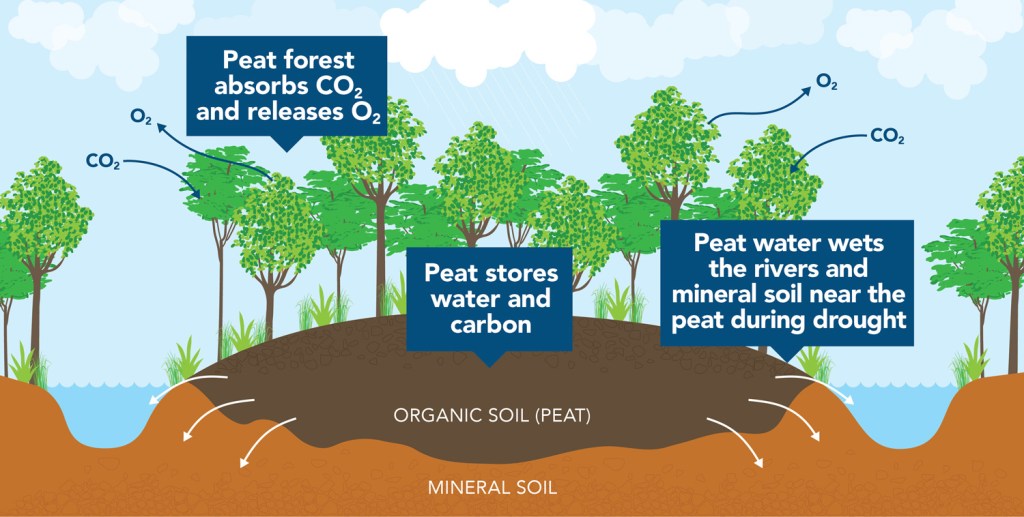
Drained peat dries out, and dry peat burns. Underground. For weeks. A peat fire doesn’t end when the flames vanish, it just waits.
That’s why blaming the weather is a convenient lie. We rewired the landscape and then acted shocked when it sparked.
And no, a plantation is not a forest. From a plane it passes for one. Orangutans can tell the difference. So can Sumatran tigers.
Don’t just blame Europe
The lazy version of this story ends at a European breakfast table. My Nutella story included.
It’s incomplete.
India and China buy enormous amounts of Indonesian palm oil. Indonesia itself is one of its biggest customers, and its biodiesel mandate means a large share of the harvest ends up in fuel tanks at home. Palm oil isn’t only a luxury we spread on toast. It’s a national energy policy.
So who profits? Concession holders, local elites and the officials who sign off on licenses.
Burning is the cheapest way to clear land. The law is supposed to make it expensive, and on paper it does. Indonesian courts have ordered plantation companies to pay more than 21 trillion rupiah, about $1.3 billion, for forest and peatland fires.
Almost none of it has been collected.
The pattern is old and brutally efficient. The profit stays with whoever holds the concession. The smoke goes to whoever’s downwind.
Economists call that an externality. Those 3 560 families call it a funeral.
Swap palm for soy, Indonesia for Brazil, and the script barely changes. Burn, plant, ship, profit. Someone else breathes the cost.
Call it what it is.
Burning a forest to cut costs isn’t business. It’s a crime. Against the people who breathe the smoke. Against every animal that flees or burns in it. Against a climate that belongs to everyone.
We now call this an ecocide. We all pay. Not equally and not in the same currency. Some pay with their lungs. Others with floods, heat and failed harvests, but nobody’s exempt.
And a crime that goes unpunished is unfair to humanity as a whole.
The way out isn’t another monoculture
The easy fix goes like this. Ban palm oil. Swap it for something else. Feel good.
It doesn’t work. The IUCN found that soy, sunflower and rapeseed need up to nine times more land to make the same amount of oil. Swap one monoculture for another and you don’t end the destruction. You relocate the match. To the Amazon. To Argentina’s forests, perhaps to Africa?
Then there’s the fuel tank. Biodiesel is palm oil blended into diesel for trucks, buses and generators. Around 23% of Indonesia’s output went into it.
Millions of people run on that diesel. They can’t quit overnight.
None of this is a defense of palm. It’s a refusal to pretend a boycott is a plan.
The plan is bigger. Get out of the system that made this madness profitable. Fewer plantations, not smarter ones. Forests back, massively. Not just for the carbon. For the orangutans, the tigers, the elephants and the insects and fungi nobody bothered to count. Reintroduce life.
Plantations won’t vanish overnight, so the order matters. Stop the clearing now. Manage what exists properly. Then shrink it, year after year, as real alternatives arrive.
Clear options
Enough with vague calls to protect nature. Here’s what each side can actually do.
Governments. Collect the fines. Seize assets, revoke licenses and prosecute the executives, not just the company names. Indonesia has long held companies liable for fires on their land, whoever lit them. The law exists. The will doesn’t.
Then stop raising the biofuel mandate and move that subsidy money toward cleaner transport and power. Rewet the drained peat. Fund native reforestation and the return of the species that lived there.
Neighbors. Singapore’s notices proved smoke can be traced to a concession and named. Make that routine across Southeast Asia, with penalties attached.
Companies and retailers. Trace every drop. Refuse oil from land that was forest or peat after a fixed cutoff date.
You. Eat less of what needs an ingredient list. Palm hides in processed food, soap and cosmetics under many names. Cut the product instead of swapping the oil, because less oil in total is the only swap with no land bill. Buy from brands that publish where their ingredients come from. Question the ones that don’t.
Consumers can’t carry this alone. A household with a jar of chocolate spread and a company with thousands of hectares don’t hold the same power. But demand writes the order forms, and orders can change.
What was in the jar
My father was right about the palm oil. He just didn’t have the full story, and neither did I.
The problem was never only what was in the jar. It was who got to keep the profit and who got handed the smoke.
Smoke doesn’t respect borders.
Accountability shouldn’t either.
Teekay

