Kuala Lumpur is choking on a fire it didn’t light.
For weeks, smoke from Indonesian fires has drifted across Southeast Asia. Schools closed. Air quality collapsed. Millions of people breathed what nobody should.
Everyone’s asking why the fires keep happening.
Wrong question.
The real one is simpler and nastier. Why is burning a forest still cheaper than keeping it standing?
Because somebody profits from that math while somebody else pays with their health.
My father’s Nutella problem
When I was a kid, my father refused to buy products containing palm oil.
Nutella was the biggest casualty. Every other child had it at home. I’d walk into a friend’s kitchen, spot the jar on the breakfast table and wonder what my dad had against happiness.
I get it now.
Forests were being cleared to feed an ingredient hiding in half the supermarket.
One month, 3 560 bodies
Between 2001 and 2019, Indonesia lost about 9.79 million hectares of forest. A PLOS One study traced 3.09 million of them to oil palm, roughly a third.
Now the bill. The Centre for Research on Energy and Clean Air estimates that fire-related pollution killed 3 560 people in Indonesia in September 2026 alone. Not over a decade. One month.
That’s more than the 2 977 people killed on 9/11.
One country. One month. Barely a headline.
Almost 58 million Indonesians breathed unhealthy or hazardous air.
The smoke didn’t stop at the border. One study estimates 1 700 premature deaths in Malaysia from the haze.
Singapore felt it too. On October 16, its National Environment Agency sent preventive notices to seven companies holding land in Indonesia, after signs that smoke from their concessions had crossed the water.
Keep that detail in mind. We’ll come back to it.
The land was rigged to burn
Dry weather and El Niño get blamed first. They’re getting blame for everything nowadays. In reality, they only light the match.
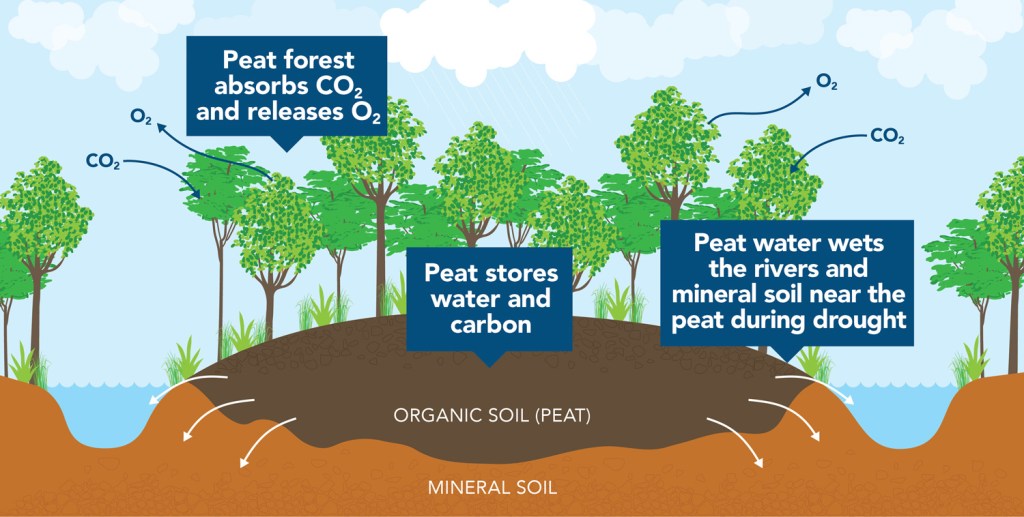
To plant palm trees, companies drained peatlands, ancient swamps packed with carbon.
Drained peat dries out, and dry peat burns. Underground. For weeks. A peat fire doesn’t end when the flames vanish, it just waits.
That’s why blaming the weather is a convenient lie. We rewired the landscape and then acted shocked when it sparked.
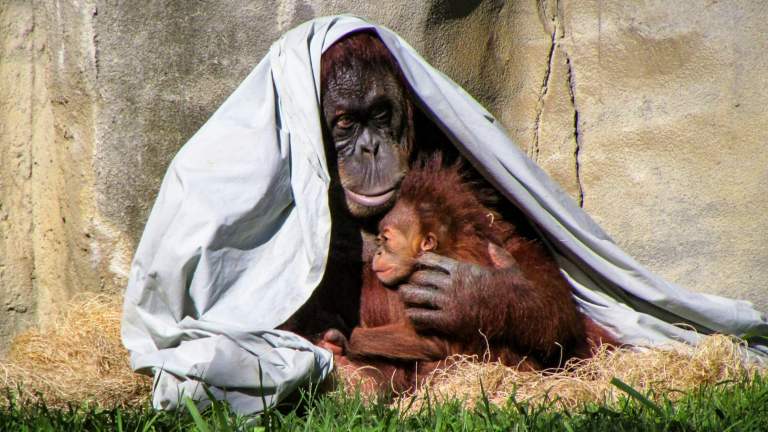
And no, a plantation is not a forest. From a plane it passes for one. Orangutans can tell the difference. So can Sumatran tigers.
Don’t just blame Europe
The lazy version of this story ends at a European breakfast table. My Nutella story included.
It’s incomplete.
India and China buy enormous amounts of Indonesian palm oil. Indonesia itself is one of its biggest customers, and its biodiesel mandate means a large share of the harvest ends up in fuel tanks at home. Palm oil isn’t only a luxury we spread on toast. It’s a national energy policy.
So who profits? Concession holders, local elites and the officials who sign off on licenses.
Burning is the cheapest way to clear land. The law is supposed to make it expensive, and on paper it does. Indonesian courts have ordered plantation companies to pay more than 21 trillion rupiah, about $1.3 billion, for forest and peatland fires.
Almost none of it has been collected.
The pattern is old and brutally efficient. The profit stays with whoever holds the concession. The smoke goes to whoever’s downwind.
Economists call that an externality. Those 3 560 families call it a funeral.
Swap palm for soy, Indonesia for Brazil, and the script barely changes. Burn, plant, ship, profit. Someone else breathes the cost.
Call it what it is.
Burning a forest to cut costs isn’t business. It’s a crime. Against the people who breathe the smoke. Against every animal that flees or burns in it. Against a climate that belongs to everyone.
We now call this an ecocide. We all pay. Not equally and not in the same currency. Some pay with their lungs. Others with floods, heat and failed harvests, but nobody’s exempt.
And a crime that goes unpunished is unfair to humanity as a whole.
The way out isn’t another monoculture
The easy fix goes like this. Ban palm oil. Swap it for something else. Feel good.
It doesn’t work. The IUCN found that soy, sunflower and rapeseed need up to nine times more land to make the same amount of oil. Swap one monoculture for another and you don’t end the destruction. You relocate the match. To the Amazon. To Argentina’s forests, perhaps to Africa?
Then there’s the fuel tank. Biodiesel is palm oil blended into diesel for trucks, buses and generators. Around 23% of Indonesia’s output went into it.
Millions of people run on that diesel. They can’t quit overnight.
None of this is a defense of palm. It’s a refusal to pretend a boycott is a plan.
The plan is bigger. Get out of the system that made this madness profitable. Fewer plantations, not smarter ones. Forests back, massively. Not just for the carbon. For the orangutans, the tigers, the elephants and the insects and fungi nobody bothered to count. Reintroduce life.
Plantations won’t vanish overnight, so the order matters. Stop the clearing now. Manage what exists properly. Then shrink it, year after year, as real alternatives arrive.
Clear options
Enough with vague calls to protect nature. Here’s what each side can actually do.
Governments. Collect the fines. Seize assets, revoke licenses and prosecute the executives, not just the company names. Indonesia has long held companies liable for fires on their land, whoever lit them. The law exists. The will doesn’t.
Then stop raising the biofuel mandate and move that subsidy money toward cleaner transport and power. Rewet the drained peat. Fund native reforestation and the return of the species that lived there.
Neighbors. Singapore’s notices proved smoke can be traced to a concession and named. Make that routine across Southeast Asia, with penalties attached.
Companies and retailers. Trace every drop. Refuse oil from land that was forest or peat after a fixed cutoff date.
You. Eat less of what needs an ingredient list. Palm hides in processed food, soap and cosmetics under many names. Cut the product instead of swapping the oil, because less oil in total is the only swap with no land bill. Buy from brands that publish where their ingredients come from. Question the ones that don’t.
Consumers can’t carry this alone. A household with a jar of chocolate spread and a company with thousands of hectares don’t hold the same power. But demand writes the order forms, and orders can change.
What was in the jar
My father was right about the palm oil. He just didn’t have the full story, and neither did I.
The problem was never only what was in the jar. It was who got to keep the profit and who got handed the smoke.
Schools are closing or changing schedules. Trains are slowing down. Workers are being told to adapt. Older people are urged to stay indoors. Animals are dying in barns. Rivers are warming. Nuclear power stations are struggling to cool their reactors and being closed down. Farmers are watching the sky, hoping for rain that never comes. Cities are discovering, once again, that concrete, asphalt and glass are not neutral materials. They trap heat.
Every heatwave ends the same way.
“We need to adapt.”
Of course we do. Nobody serious argues otherwise. When temperatures reach 40°C, we need shade, cool public spaces, drinking fountains, schools that do not become ovens, hospitals that can keep functioning and cooling in strategic public buildings, especially for older people, children, sick people, outdoor workers and anyone trapped in poorly designed housing.
But adaptation cannot become the polite word for surrender.
The real question is not how we survive longer heatwaves.
The real question is why we continue to organize society in ways that make them worse.
Unfortunately, that’s the conversation many people would rather avoid.
The climate crisis is not a natural disaster in the way an earthquake is. Scientists warned us for decades. Communities raised the alarm. The solutions have been available for years. Yet, governments protected fossil fuel interests. Oil and gas companies expanded production. Executives collected billions. Politicians delayed, negotiated, softened regulations, greenwashed and lied.
This was not inevitable.
It was a political and economic choice.
Now, the same system that chose fire is trying to sell us fans, bottled water, air conditioners, climate insurance, private pools, green capitalism and survival kits.
The house is burning, and someone has opened a shop in the living room.
Heat Is Only the Symptom
The mistake is thinking this is only about high temperatures.
A heatwave is a stress test for almost everything that keeps society running.
It pushes the human body beyond its limits. It kills directly, especially when nights remain hot and people cannot recover. It damages sleep, concentration, heart health and kidney function. It turns classrooms into places where children struggle to learn and workplaces into places where people struggle to work.
It pushes infrastructure to its limits. Railway tracks expand. Roads soften. Electricity grids strain under rising demand. Hospitals become overloaded.
The irony is that ACs draw more power precisely when energy systems are already under pressure. Nuclear plants need cool water, yet rivers become warmer and shallower. The same heat that increases electricity demand can make electricity harder to produce.
It pushes agriculture as well. Cows produce less milk. Chickens die in industrial sheds. Crops dry out and/or suffer damage that only becomes visible weeks or months later. Soil loses moisture. Water restrictions arrive. Harvests shrink. Food prices rise.
Then everyone acts surprised that groceries become more expensive.
The damage does not end when the thermometer falls.
That’s why surviving the next heatwave is not enough.
The Food System Nobody Wants to Discuss
Climate conversations usually focus on transport.
And transport matters. Flying less matters. Driving less whenever possible matters. The World Cup spread across North America is a perfect example of climate absurdity, an event marketed as global unity while sending teams, fans, journalists and sponsors across an entire continent for entertainment.
But another major part of the crisis rarely receives the same attention because it sits on our plates.
Animal agriculture is one of the least efficient uses of land, water, energy and living ecosystems on Earth.
Livestock occupies roughly three quarters to more than four fifths of global agricultural land, depending on how it is measured, once grazing land and crops grown for animal feed are included. Yet, animal products provide only a minority of the world’s calories and protein. One widely cited Science study found that meat, dairy, eggs and aquaculture use about 83% of farmland while supplying just 18% of calories and 37% of protein.
Read that again.
Most of the farmland.
A fraction of the food.
That is not efficiency.
It is ideology disguised as agriculture.
The system produces far more than meat, milk and eggs. It produces methane, deforestation, polluted rivers, antibiotic resistance, dead zones in coastal waters and immense pressure on land and water.
It also produces immense suffering.
During heatwaves, pigs, chickens and cows cannot simply adapt because consumers expect cheap animal products. Ventilation systems fail. Cooling systems are inadequate or absent. Transport trucks become ovens. Poultry dies by the hundreds of thousands. Dairy cows suffer severe heat stress and milk production falls.
Then the industry presents itself as another victim of climate change while helping drive the crisis in the first place.
This is not about blaming someone trying to feed their family on a tight budget.
The ocean may be the most neglected part of the climate conversation.
We rightly describe forests as the lungs of the planet. They deserve that attention. But the ocean is far more essential to life on Earth. It has absorbed more than 90% of the excess heat trapped by greenhouse gases. It takes in a large share of the carbon dioxide we emit. It produces roughly half of the oxygen we breathe, largely through microscopic phytoplankton.
The ocean is not scenery.
It’s not a backdrop for holidays.
It is one of the reasons this planet is still habitable.
There is something profoundly irrational about destroying marine ecosystems while wondering why the planet keeps overheating.
Industrial fishing is not simply the act of catching fish. It tears apart ecosystems. It removes key species from food webs, kills countless non-target animals and drags heavy nets across the seabed, destroying habitats that took decades, centuries or even millennia to develop.
Yet this rarely appears in mainstream climate debates.
We are told to fly less, and rightly so.
We are told to drive less, and rightly so.
We are only beginning to hear serious discussion about livestock.
But fishing is still treated as though fish simply appear on supermarket shelves and the ocean can absorb endless extraction without consequence.
It cannot.
If the ocean regulates climate, absorbs carbon dioxide, produces oxygen and stores enormous amounts of heat, protecting marine ecosystems is climate policy.
Eating less fish, or choosing not to eat it at all, is not only an ethical position. It is a climate position.
For those who continue to eat seafood, there is at least an important distinction to make between small-scale fisheries and industrial fleets that empty entire ecosystems.
The ocean is one of Earth’s greatest cooling systems. Protect it at all costs.
Why Air Conditioning Can’t Be the Plan
Air conditioning has an important role.
During extreme heat, it saves lives. Hospitals, schools, care homes, public libraries, emergency shelters and social housing all need effective cooling strategies. No one should die inside an apartment built for a climate that no longer exists.
But air conditioning can’t become our primary response.
Every unit cools an indoor space by releasing heat outdoors. Across an entire city, that extra heat makes streets even hotter, particularly after sunset. Air conditioners also increase electricity demand during the hottest periods of the year. Where electricity still depends on fossil fuels, emissions rise. Even cleaner grids face greater strain as peak demand grows.
Singapore illustrates both the benefits and the limits of this approach.
The city has become highly dependent on cooling. Buildings require constant air conditioning. Those systems release heat into the streets. Outdoor spaces become less comfortable, encouraging people to remain indoors, which increases demand for cooling still further.
The cycle reinforces itself.
That’s not resilience, it’s technological dependence.
We don’t need cities filled with cooled rooms.
We need cities that stay cool in the first place.
We Forgot How to Build for Nature
The most effective cooling technology has existed for millions of years.
Trees.
Not decorative saplings planted in tiny squares of concrete, but mature urban forests and healthy green canopies.
Anyone who has walked barefoot from hot pavement onto shaded grass already understands this without reading a scientific paper.
So why, every time France approaches 40°C, do we talk about buying more air conditioners before planting more trees?
Why do we pave over soil, remove mature trees, expand shopping centres, build vast parking lots and approve developments that trap heat, only to claim that more machines are the answer?
They store water, protect biodiversity, stabilise soils, reduce erosion, create humidity and lower temperatures. They make landscapes more resilient long before a heatwave arrives.
Yet even forests are increasingly treated as another industrial resource.
Living ecosystems become timber reserves. Old-growth forests become biomass. Trees are cut down, burned for energy and labelled renewable, while complex ecosystems that took centuries to develop are reduced to units of production.
The same logic appears again and again.
If something can be extracted, it is.
If something can be sold, it is.
The living world is valued less for keeping us alive than for generating another stream of profit.
Water Is Becoming Political
Water is becoming one of the defining political issues of this century.
Yet we still manage it as though nothing has changed.
During droughts, ordinary people are told to take shorter showers. Farmers are asked to reduce irrigation. Small growers are criticised for watering their crops.
Meanwhile, luxury uses fight for exemptions.
Golf courses have become symbols of this contradiction because they expose the politics behind water allocation. While vegetables struggle and ecosystems dry out, perfectly green fairways are often defended. Leisure for the comfortable can receive more protection than food production or ecosystem survival.
Mega-basins reveal the same mindset.
On paper, the idea sounds simple. Capture water in winter and use it during summer.
Reality is more complicated.
Many of these reservoirs are open to the air, increasing evaporation as temperatures rise. They can concentrate control of water in the hands of a limited number of large farms. They often allow water-intensive agricultural models to continue instead of encouraging the transition toward crops and farming systems adapted to the climate that is already arriving.
The question is not whether storing water can ever make sense.
The question is who controls it, who benefits from it and whether it helps transform agriculture or merely postpones change.
A society preparing for the future would treat every drop of freshwater as precious.
Rainwater would be collected wherever possible.
Wastewater would be safely reused.
Leaking infrastructure would be repaired.
Soils would be restored so they can retain moisture.
Cities would remove unnecessary concrete and allow water to return to the ground.
Farmers would receive support to transition toward more resilient practices.
Luxury water use would never be treated as equivalent to drinking water, food production or healthy ecosystems.
The Logic Behind the Crisis
The deeper problem is that our economic system rarely asks what keeps life alive.
It asks what can be sold.
That’s why so many climate conversations end in absurdity.
We’re told to separate our recycling while billionaires fly private jets.
We’re reminded to save water while enormous data centres consume vast amounts of electricity and freshwater to cool servers powering artificial intelligence, advertising and endless digital consumption.
We debate plastic straws while militaries burn enormous quantities of fuel, flatten cities, destroy farms, poison soil and create another wave of emissions through reconstruction.
The priorities are impossible to ignore once you see them.
The Climate Cost of War
War remains one of the largest blind spots in climate politics.
The climate impact of the war on Gaza has been estimated in the tens of millions of tonnes of carbon dioxide equivalent once direct military activity and reconstruction are included.
The opening weeks of the US-Israel war on Iran were estimated to produce several million tonnes of emissions.
Lebanon has accused Israel of ecocide following the destruction of forests, farmland and ecosystems in the south.
Yet military emissions are still treated as though they exist outside the atmosphere.
As though bombs leave no carbon footprint.
As though fighter jets fly on moral complexity.
As though hospitals, schools, roads, farms and homes rebuild themselves without steel, cement, machinery and energy.
We can’t keep pretending these emissions don’t count simply because they’re politically inconvenient.
The pattern is difficult to ignore.
Capitalism drives extraction.
Extraction fuels empire.
Empire produces war.
War destroys societies.
Destruction demands reconstruction.
Reconstruction creates more emissions.
Then we’re told that buying a bamboo toothbrush is the meaningful response.
It is not.
Personal Responsibility Matters, but It Is Not Equal
None of this means personal choices are meaningless.
They matter because they reduce demand for destructive industries, help shift culture and make political demands more credible.
But responsibility is not shared equally.
A working family struggling to pay rent is not comparable to a billionaire with private aircraft, multiple homes, yachts and investments in fossil fuels.
Someone eating the foods they were encouraged to consume from childhood is not comparable to multinational agribusinesses lobbying to protect industrial livestock.
A commuter driving because public transport is inadequate is not comparable to governments that refuse to invest in reliable trains, cycling infrastructure and walkable cities.
The message can’t be that ordinary people are the problem.
The message is that we live inside a system designed to make destructive choices easy, profitable and normal while making better choices more expensive, less accessible or socially unusual.
Recognising that distinction is not about avoiding responsibility.
It is the first step toward directing responsibility where it belongs.
What We Can Do
None of this means waiting for someone else to act.
Some of the simplest changes are still among the most effective.
Eat less meat, or stop eating it.
Eat less fish, or stop eating it. If you choose to keep eating fish, understand the difference between small-scale fisheries and industrial fleets that empty entire ecosystems.
Buy fewer clothes. Buy second hand. Repair what you own. Stop treating fashion as a weekly identity update.
Do the same with appliances. Borrow, share, repair and buy used whenever possible.
Build a culture where tools, equipment, transport and household goods are shared instead of endlessly duplicated.
Fly less.
Drive less whenever practical.
Support political parties and movements that take climate change, biodiversity, animal welfare, water management, public services and peace seriously. Voting alone will not solve the crisis, but electing governments that deny climate science, protect fossil fuel interests and normalise war will accelerate it.
Above all, reject fake solutions.
A city with air conditioning but no trees is not prepared.
A country with mega-basins but dying soils is not prepared.
A food system built on industrial animal suffering is not prepared.
A sporting culture that flies millions of people across continents for profit is not prepared.
A digital economy that consumes ever more electricity and water in pursuit of endless growth is not prepared.
A world that treats war as ordinary is not prepared.
France is not ready for what’s coming, and that pains me.
Europe and America aren’t ready either.
The Crisis Behind the Crisis
The tragedy is that even by the narrow standards of economic growth, this system is failing.
Heat kills workers.
It reduces productivity.
It damages harvests.
It weakens infrastructure.
It raises healthcare costs.
It disrupts schools.
It destabilises insurance.
It pushes food prices higher.
It forces governments to spend billions (of our money) responding to disasters they chose not to prevent.
Even someone who cares nothing for animals, forests, rivers, oceans or social justice should recognise one simple reality.
This model is becoming too expensive to sustain itself.
The climate crisis is not only an ecological crisis.
It is a crisis of imagination.
We keep trying to preserve the lifestyle that created the emergency, then call that realism.
But there is nothing realistic about filling unliveable cities with more air conditioners while cutting down trees.
There is nothing realistic about building reservoirs while refusing to transform agriculture.
There is nothing realistic about defending industrial livestock, industrial fishing, fossil fuels, permanent war and luxury consumption while asking ordinary people to adapt.
Realism begins by accepting that an economy built on endless extraction can’t produce a liveable planet.
We don’t need a parasasol over the apocalypse.
We need accountability.
We need to recognise that climate is not a separate issue. It runs through everything.
Our cities.
Our countryside.
Our food.
Our transport.
Our water.
Our forests.
Our oceans.
Our economies.
Our wars.
Not because that sounds radical.
Because the moderate path has become the one driving the crisis.
The planet is not burning because we failed to understand what was happening.
It’s burning because those with the power to change course chose not to.
That choice can still be reversed.
But only if we stop confusing adaptation with acceptance and start confronting the system that keeps choosing fire.