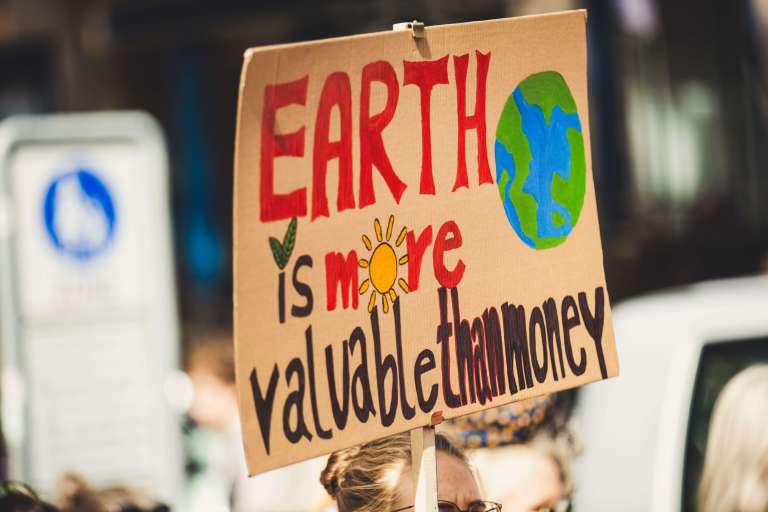
Global warming is here to stay.
Climate change has become one of the most polarizing topics of our time.
Depending on who you ask, it’s either the greatest challenge humanity has ever faced or a problem that’s been exaggerated beyond recognition. Politicians argue about it. Television debates it. Social media turns it into another battleground.
But what if we stepped away from all of that for a moment?
What if, instead of asking what politicians, journalists or commentators think, we simply looked around us?
Sometimes, reality speaks for itself.
Over the past few years, I’ve watched rivers shrink, forests burn and heatwaves become increasingly common in places where they once felt exceptional. Friends living in different parts of the world tell similar stories. Farmers talk about unpredictable seasons. Water restrictions have become more frequent. Wildfires have intensified across multiple continents.
You don’t have to agree with every headline to notice that something is changing.
You don’t have to trust every report to observe what’s happening around you.
Talk to older relatives.
Talk to people who work the land.
Talk to fishermen, hikers or anyone who spends significant time outdoors.
Ask them whether the seasons still feel the same as they did twenty or thirty years ago.
Whether you trust politicians, journalists or climate scientists isn’t actually the point I’m making.
Reality exists independently of who reports it.
Climate change doesn’t care whether we’re conservative or progressive, religious or secular, rich or poor.
The atmosphere doesn’t vote.
Nature doesn’t negotiate.
The real question isn’t whether the climate is changing.
It’s how we choose to respond.
For me, the answer has less to do with waiting for revolutionary technologies than with rethinking the way we live.
We consume far more than we need.
We replace products that still work.
We normalize waste.
We chase convenience even when it comes at a tremendous environmental cost.
Modern consumerism has taught us that happiness comes from buying more.
The planet is telling us otherwise.
That doesn’t mean giving up comfort or returning to life centuries ago.
It means consuming more intentionally.
Buying fewer but better things.
Repairing instead of replacing.
Walking when we can.
Using public transportation more often.
Supporting companies that take sustainability seriously.
Reducing food waste.
Sharing resources instead of duplicating them.
Holding companies like banks accountable.
Many of these habits don’t just reduce our environmental impact.
They also save money, reduce stress and improve our quality of life.
That’s one of the reasons I was drawn to minimalism in the first place.
The same choices that help us live with less clutter often happen to be the same choices that place less strain on the planet.
Perhaps that isn’t a coincidence.
Maybe we’ve spent so long looking for complicated solutions that we’ve overlooked the simple ones.
Throughout history, humanity has repeatedly adapted to new challenges.
This one is no different.
The question isn’t whether change is coming.
It’s whether we’re willing to change with it.
Thanks for reading.
Teekay.
Discover more from Teekay Rezeau-Merah
Subscribe to get the latest posts sent to your email.

