France braces for 5th heat wave since June.
France has barely extinguished one of its largest wildfires in decades. An area roughly the size of Hong Kong has burned, and we’re only halfway through the summer. But another heatwave is already here.
People ask how this keeps happening.
I think we’re asking the wrong question.
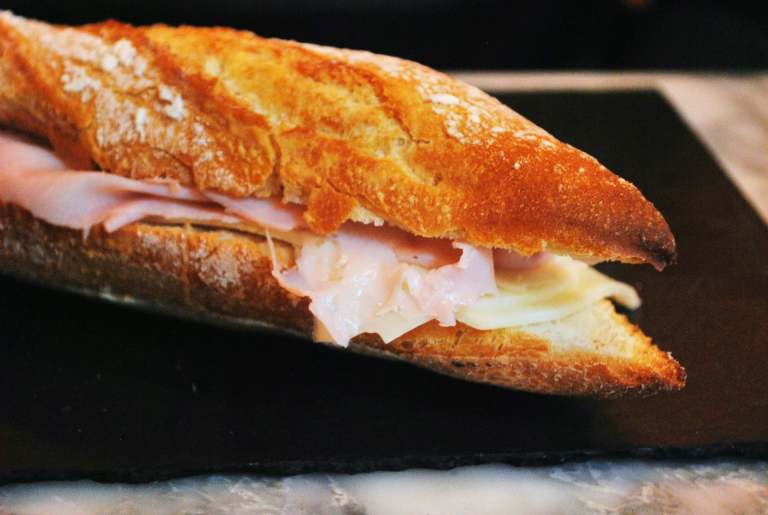
Every wildfire begins with a sandwich.
Not because a ham sandwich can physically ignite a forest, but because it represents the countless ordinary decisions that build the world in which forests burn.
The sandwich.
The cigarette.
The dairy ice cream we hand to our children without a second thought.
The Shein order arriving tomorrow.
The new backpack and notebooks bought every September even though last year’s are still perfectly usable.
Each decision appears harmless. Each is too small to matter. That is exactly how systems survive. It’s recreated every morning when we choose convenience over necessity, novelty over sufficiency, habit over reflection.
Every purchase is a vote. Not because one purchase changes the world overnight, but because billions of purchases, repeated every day, determine which industries grow, which disappear, and what kind of civilization we continue to finance.
One Amazon order won’t send a billionaire and his friends into space. One dairy ice cream won’t destroy a forest. One unnecessary notebook won’t fill a landfill.
But none of those things happens only once. They happen millions of times, every single day. Eventually those “insignificant” decisions become greenhouse gases, deforestation, polluted rivers, shrinking biodiversity, exhausted soils, expanding infrastructure and ecosystems pushed beyond their limits.
Then comes the heat. Then the drought. Then the spark.
And suddenly everyone becomes an environmentalist.
Hundreds of volunteers leave their homes to protect forests from the flames. They carry water, clear vegetation, do everything they can to stop the fire from reaching nearby villages. Most people see humanity at its finest.
I see humanity desperately trying to repair yesterday while continuing to finance it this morning.
The same people who volunteer their time and energy to protect the forest are then handed tables full of ham and butter sandwiches, soft drinks, sometimes cigarettes.
Volunteering is great. These people are giving their time to protect their homes, their communities, the forest around them. That matters. What bothers me is how easily we separate the emergency from everything that preceded it. We celebrate the person who runs toward the flames while treating the quieter forms of prevention as optional, eccentric, even ridiculous.
Refusing unnecessary consumption isn’t celebrated.
Reusing old supplies isn’t celebrated.
Eating less meat and dairy isn’t celebrated.
Living with less isn’t celebrated.
Those choices rarely earn applause because they happen long before the crisis, when there is no fire to fight and nobody watching. Yet they may matter far more than the dramatic moments that make the evening news.
We have confused loving the way nature makes us feel with caring about nature itself.
We hike through forests while eating products that contribute to the destruction of ecosystems. We photograph mountains while wrapped in disposable consumption. We defend a burning forest while continuing to finance the industries that place increasing pressure on forests around the world. We rush to fight the fire while throwing fuel onto it for the rest of the year. Economic fuel. Cultural fuel. Political fuel.
None of this means every choice weighs the same. A handful of industries and a handful of governments make decisions that outweigh what any individual could do in a lifetime, and no amount of reused notebooks cancels out a pipeline. But that asymmetry is not an excuse. It’s the reason our purchases are also our politics. Every dollar we hand to an industry is a small vote for its continued expansion, and the industries we’re describing don’t grow without millions of us feeding them first.
People often ask who is responsible for ecological collapse. The government? Corporations? Consumers? The uncomfortable answer is that there isn’t a single culprit. There is a chain, a chain in which every link seems too small to matter until the whole thing snaps.
That’s the butterfly effect.
A civilization is not destroyed by one catastrophic decision. It’ss destroyed by millions of ordinary ones.
And every wildfire begins with a sandwich.
Food for thought.
Teekay
 Teekay Rezeau-Merah