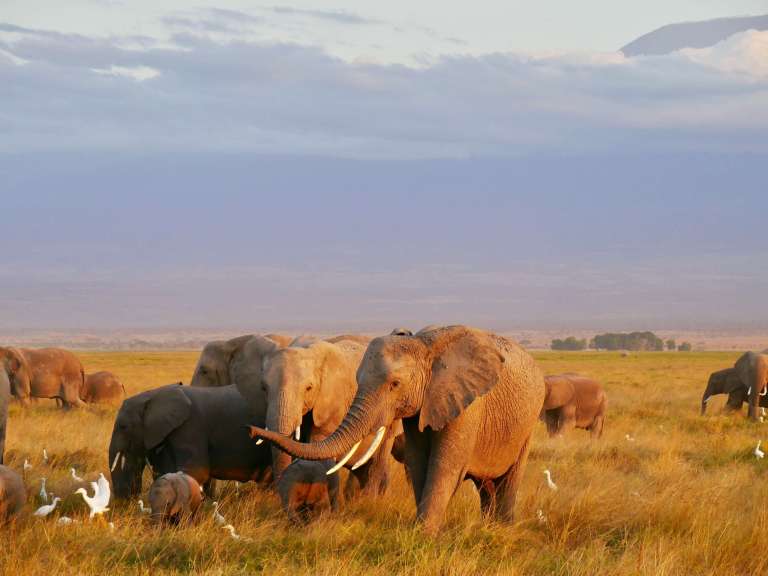
Elephant conservation in Zimbabwe

The animals we save and the ones we eat

On the women guarding Zimbabwe’s elephants.

In 2017, sixteen women walked into the Zimbabwean bush to stop poachers.

Some had survived domestic violence.

Some had survived sexual assault.

Some were raising children alone, with almost nothing.

Nobody had ever trusted them with anything worth protecting.

Now they were protecting elephants.

They became Akashinga. In Shona, the brave ones.

National Geographic followed them as they trained, patrolled and confronted the people killing wildlife for profit.

Akashinga was founded by Damien Mander, a former Australian special forces soldier. He recruited women from poor rural communities and gave them training, a salary and a role in protecting the land they grew up on.

That last part matters.

Conservation loves a story in which wildlife only became valuable once outsiders arrived to protect it.

Zimbabwe never needed that lesson.

Shona communities lived by totems, ancestral beliefs and customary rules that governed which animals could be hunted and which resources could be taken. Nature wasn’t a wilderness behind a fence. It was law, family and memory.

What changed wasn’t how much people valued wildlife.

It was who got to decide what happened to it.

Akashinga puts local women on the front line. For decades, conservation treated the communities living beside parks as the problem to keep out.

Now those communities are the ones keeping watch.

The program also breaks the idea that conservation is something wealthy Westerners do on vacation.

And there’s one more detail that’s easy to skim past.

The rangers eat a plant-based diet.

They patrol the bush and face down poachers on it.

Mander himself is vegan.

So much for plant-based food being a soft, urban luxury for people with yoga mats and oat milk.

That detail brings me to the question I can’t put down.

We fly across continents to see elephants.

We donate to save them.

We mourn when they’re killed.

Then we grill a pig and call it Sunday.

Why?

Not because we’ve weighed what each animal does for the planet.

We protect the animals that move us. Researchers who tracked thousands of zoo donors found people backed the species they found charismatic, not the ones closest to extinction.

Even people who share their land with elephants think this way. In northeast India, tea-estate communities support elephant conservation out of cultural reverence and a belief in the animal’s right to exist, not for anything it does for the ecosystem.

And we eat the animals we were raised to eat. When people defend meat, nearly every justification falls into four buckets: natural, normal, necessary and nice.

Tradition and taste, dressed up as reasons.

None of them has anything to say about a pig’s suffering.

We inherit categories. Companion. Food. Sacred. Pest. Every culture draws those lines differently, and every culture believes its own lines are obvious.

Then the food system finishes the job. By the time a pig reaches the supermarket shelf, there’s no pig left. Just a product, packaged so nobody has to wonder where it came from.

Familiarity isn’t an argument.

And the contradiction isn’t only moral.

Livestock and the crops grown to feed them swallow enormous amounts of land. Cattle ranching is the biggest driver of deforestation in the Amazon. Globally, livestock produce a sixth of humanity’s greenhouse gas emissions.

So we pay rangers to defend wildlife while our plates finance the destruction of the places wildlife lives.

Yes, subsidies, trade rules and corporations shape the system far more than any single shopper.

That’s a reason to demand better policy.

It’s not an excuse to eat as if nothing is connected.

I wrote recently that conservation is usually the bill we pay after treating the natural world like a warehouse.

This is the same bill.

We just pay it at dinner.

I can’t think about any of this without thinking about Islam.

It gives me three words for our place in creation.

Khalifah, or stewardship.

Amanah, or trust.

Mizan, or balance.

None of them mean ownership. Power over other creatures isn’t a license. It’s a debt.

The Quran permits eating certain animals. It doesn’t command veganism, and I won’t pretend it does.

But permission isn’t obligation.

Halal tells us what we’re allowed to eat.

Tayyib asks whether it’s good. Pure. Wholesome.

Was the animal raised, killed and brought to our table in a way we could defend?

Most of us stop at the first question.

I can’t stop at the second.

If I’m a steward, that animal’s safety was entrusted to me.

So the real question isn’t whether I’m allowed to eat it.

It’s whether I should cowardly pay someone else to kill an innocent, sentient being I’m meant to protect, when my plate has countless options that don’t require a death.

For me, the answer is obviously no.

That’s where faith stops being a rulebook and becomes a conscience.

The women of Akashinga know what it means to live at the mercy of someone stronger.

Today, they stand between the strong and the defenseless.

They protect elephants from people who look at a living animal and see only what it’s worth to them.

That’s the habit they fight every day.

I find the same habit on my plate.

Teekay

WATCH: 31 Documentaries that will change your perception of food (with trailers)

You are what you eat.

An Updated Guide to Must-Watch Documentaries on Health, the Environment, and Animal Welfare

A few years ago, I compiled a list of powerful documentaries that opened eyes and sparked conversations about the connections between our diets, personal health, the planet, and animal welfare. Since then, new documentaries have emerged, offering fresh perspectives and deeper insights into these critical topics.

This updated list features 31 must-watch documentaries that will inspire you to rethink your choices, understand the broader impact of what’s on your plate, and consider the powerful role food plays in shaping our world.

Whether you’re passionate about health, sustainability, or ethics, these films are a compelling call to action, and a perfect way to kickstart meaningful change.

You Are What You Eat: The Twin Experiment (2024)
A twin-focused dietary experiment exploring the effects of different eating habits on health.
Notable Figures: None known.

Earthlings (2005)
A groundbreaking documentary examining humanity’s reliance on animals for food, clothing, and entertainment.
Notable Figures: Narrated by Joaquin Phoenix.

Dominion (2018)
Exposing the darker side of animal agriculture through hidden-camera footage.
Notable Figures: Narrated by Joaquin Phoenix, Rooney Mara, and Sia.

Forks Over Knives (2011)
A case for adopting a plant-based diet to combat chronic diseases.
Notable Figures: Dr. T. Colin Campbell, Dr. Caldwell Esselstyn.

What the Health (2017)
Investigating the link between diet, disease, and corporate influence in health organizations.
Notable Figures: Kip Andersen, Keegan Kuhn.

Cowspiracy: The Sustainability Secret (2014)
Revealing the environmental impact of animal agriculture.
Notable Figures: Directed by Kip Andersen.

Seaspiracy (2022)
A critique of the fishing industry’s devastating impact on marine ecosystems.
Notable Figures: Directed by Ali Tabrizi and Kip Andersen

Christpiracy (2024)
Examining the intersection of religion and ethical food choices.
Notable Figures: Directed by Kip Andersen and Kameron Waters.

The Game Changers (2018)
Debunking myths about plant-based diets and athletic performance.
Notable Figures: Produced by James Cameron, Arnold Schwarzenegger.

I Could Never Go Vegan (2024)
Addressing common excuses and challenges against veganism.
Notable Figures: None known.

Vegucated (2011)
Following three people as they attempt to adopt a vegan lifestyle.
Notable Figures: Directed by Marisa Miller Wolfson.

Milked (2021)
A deep dive into the dairy industry and its global implications.
Notable Figures: Created by Chris Huriwai.

Pignorant (2024)
Exploring the psychology behind ignoring the ethics of animal consumption.
Notable Figures: Created Joey Carbstrong.

Eating Animals (2018)
An exposé of industrial farming and its impact on food systems.
Notable Figures: Based on Jonathan Safran Foer’s book, narrated by Natalie Portman

Carnage: Swallowing the Past (2017)
A satirical take on a future where veganism is the norm and meat-eating is taboo.
Notable Figures: Directed by Simon Amstell.

The Smell of Money (2022)
Investigating the environmental racism tied to industrial pig farming.
Notable Figures: Guess appearance: Cory Booker

The End of Meat (2017)
Imagining a world where meat consumption has ended.
Notable Figures: Directed by Marc Pierschel.

The Invisible Vegan (2019)
A focus on the often-overlooked contributions of Black communities to veganism.
Notable Figures: Directed by Jasmine Leyva, guest appearance by John Salley

Mission Blue (2014)
Chronicling Dr. Sylvia Earle’s mission to protect ocean habitats.
Notable Figures: Featuring Sylvia Earle.

Eating Our Way to Extinction
Exploring how our diets are destroying ecosystems and biodiversity.
Notable Figures: Narrated by Kate Winslet.

Eating You Alive (2018)
Highlighting the health benefits of a whole-food, plant-based diet.
Notable Figures: Featuring Samuel L. Jackson, James Cameron.

H.O.P.E. What You Eat Matters (2018)
Demonstrating the health, environmental, and ethical reasons for eating consciously.
Notable Figures: Guests;  Jane Goodall, Vandana Shiva

Food Choices (2016)
A comprehensive look at how dietary choices impact health and the planet.
Notable Figures: Directed by Michal Siewierski.

Peaceable Kingdom: The Journey Home (2009)
Farmers recount their journeys from animal agriculture to veganism.
Notable Figures: Directed by Jenny Stein.

Simply Raw: Reversing Diabetes in 30 Days (2009)
Following individuals reversing diabetes through a raw vegan diet.
Notable Figures: Featuring Gabriel Cousens.

The Cove (2009)
Unveiling the horrors of dolphin hunting in Japan.
Notable Figures: Featuring Ric O’Barry.

Speciesism: The Movie (2013)
Challenging societal norms about animal exploitation.
Notable Figures: Directed by Mark Devries.

73 Cows (2018)
The journey of a farmer transitioning from cattle farming to sustainable living.
Notable Figures: Directed by Alex Lockwood.

Live and Let Live (2013)
Examining ethical veganism and its implications.
Notable Figures: Directed by Marc Pierschel.

Land of Hope and Glory (2017)
An exposé on UK factory farming practices.
Notable Figures: Directed by Ed Winters.

Rowdy Girl (2023)
A former cattle rancher turns her farm into an animal sanctuary.
Notable Figures: Featuring Renee King-Sonnen.