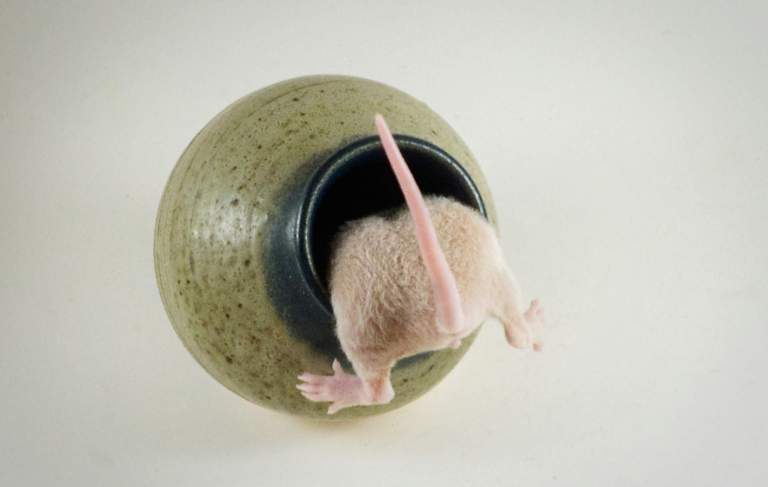
An animal’s right to live shouldn’t depend on its cuteness.
Every year, rats in Paris are estimated to consume around 850 metric tons of waste. That’s roughly 2.3 metric tons a day. Think about that for a second. Without rats eating that waste, we’d have even more garbage to collect from our streets, more work for sanitation workers and more waste ending up in landfills.
We throw food away, rats eat some of it, and then we poison them for being there.
In cities around the world, rats are killed with poison or caught on glue boards, where they struggle for hours before dying of exhaustion, dehydration or injury. If we inflicted the same suffering on a cat or a dog, we’d call it cruelty. When the victim is a rat, we call it “pest control”.
Why should the species determine whether a death is acceptable?
For centuries, rats have been cast as villains in the story of the plague. The connection between rodents, fleas and plague is real, but the history is more complicated than the familiar account suggests. A 2018 study published in PNAS found that human fleas and body lice could explain the spread of several major European plague epidemics better than rat fleas could. The findings challenge the story we’ve told about them for generations.
Rats are also far more complex than their reputation suggests. They groom themselves, play, learn and form social relationships. In a 2011 experiment published in Science, researchers found that rats learned to release trapped companions, sometimes freeing them before accessing chocolate and later sharing it. The researchers interpreted their findings as evidence of prosocial behavior consistent with empathy-like motivation.
We can’t know whether rats experience empathy exactly as we do. But imagine if they had soft faces, expressive eyes and a reputation for loyalty. Would we describe their behavior differently? We celebrate a dog comforting another dog. A rat helping a companion rarely enters our collective imagination.
That said, a rat shouldn’t have to prove its intelligence, demonstrate affection or resemble us to earn the right to live.
The same problem appears whenever wildlife conflicts with human interests. A wild boar destroys a field. A fox takes poultry. A deer eats young shoots. The damage can be real, and farmers have every right to protect their livelihoods. But we rarely ask how much of the conflict stems from the way we’ve transformed the land around us.
We clear forests, fragment habitats, build roads and expand farms. Wildlife loses places to live and sources of food. When animals enter our fields and settlements to survive, we treat their presence as an offense. We claim the land, draw the boundaries and expect other species to adapt. When they do, we punish them for it.
I’m not saying people shouldn’t have to accept every loss or leave their homes and crops unprotected. What I’m saying is that we can secure food and waste, use non-lethal deterrents and find ways to coexist without killing the animals whose presence inconveniences us. Too often, killing is treated as the obvious answer before other approaches have been seriously considered.
A glue board doesn’t become humane because the animal caught on it is a rat. Poison doesn’t become less cruel because its victim is a fox. A deer doesn’t become incapable of suffering because someone has decided there are too many of them (there aren’t). Words like culling, population management and pest control may describe what we’re doing, but they don’t change what happens to the animal.
I don’t believe an animal should have to die because it damages our property, threatens our crops or costs us money. Protecting a livelihood is not the same as defending a life. If an animal poses an immediate threat to our safety, self-defense is another matter. But a damaged field, a raided bin or a fox in a chicken coop isn’t an attack on us.
We shouldn’t confuse the loss of something we own with a threat to our lives, then make another living being pay for the difference.
We’ve built a world in which our needs are treated as facts and other animals’ needs as problems. A rat looks for food, a fox seeks shelter and a boar wanders into a field. We see damage, infestation and a population to control. The animals are trying to survive in a world we’ve reshaped around ourselves.
The question isn’t whether rats are lovable. It’s whether an animal’s right to live should depend on how well it fits into the world we’ve claimed for ourselves.
We keep asking what these animals cost us. Perhaps it’s time to ask what we’re willing to make them pay.
Thanks for reading.
Teekay
Discover more from Teekay Rezeau-Merah
Subscribe to get the latest posts sent to your email.

