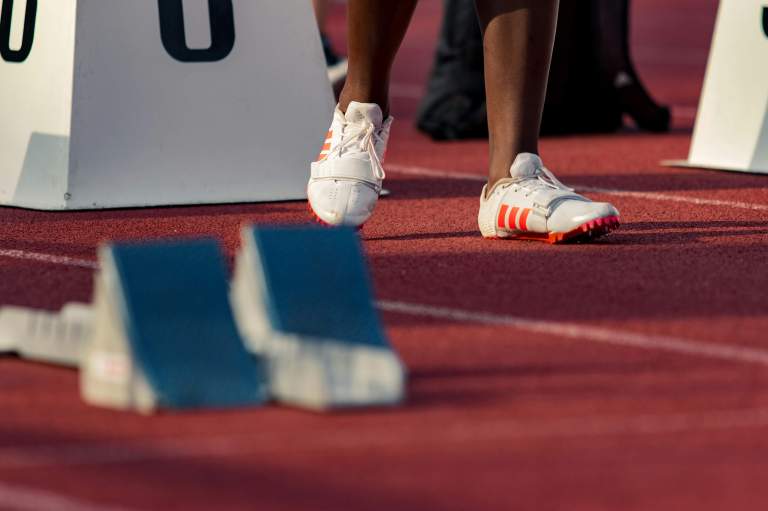
Sprinter track runner teekay rezeau-merah

Why I misunderstood sprinting for so long and why most people still do

Insights from a former student-athlete.

I started sprinting in 2004. I made my high school teams, then college teams and for a long time I thought I understood speed. I trained hard, I listened to my coaches, I did what was asked.

I hit my ceiling at some point, then one thing led to another till I completely stopped running. I went into boxing in the meantime, then bodybuilding, and slowly but surely stopped training altogether. I played football here and there, surfed for a brief moment, but it wasn’t sustained. Hiking became my favorite thing. Great for cardio, makes me happy and snappy. I felt right where I belonged.

In 2025, after years of just living and many injuries later, I came back to sprinting as grownup. But this time, I noticed something uncomfortable that became obvious. For most of my early career as a sprinter, I was running fast without truly understanding why or how.

That realization is frustrating because it feels like wasted time, and wasted potential.

In hindsight, I now feel like I never went beyond 80% of my capacity. It wasn’t because of my coaches, I simply didn’t understand what my sport was all about, so today, I want to make sure whoever reads this does, because sprinting culture rarely helps.

  • What sprinting isn’t

Speed is constantly explained using endurance logic. Even the gadgets we use, however technical, aren’t really designed for sprinters. Not at the highest level anyway.

Sprinting, for the longest time, was explained through running more, working harder, suffering more than the competition. That mindset, aka hustle-porn, comes from the fact that long distance running dominates the athletics scene. Endurance events shape how people think training works, even when it doesn’t apply to their sport.

One of the first myths I believed (and most people believe) is that sprinters run a lot. We don’t, at all. I used to, but not anymore. I always assumed volume built speed. Matter of fact, many coaches still believe that, and end up frying their runners.

  • What sprinting actually is

Research has shown that elite sprinters accumulate very little true sprinting volume. Max velocity running is neurologically brutal. You can’t repeat it endlessly without dulling the signal from the brain to the muscles. When the central nervous system is tired, coordination goes first, technique collapses, ground contact times increase and speed vanishes. Running more just teaches you how to run slower. That was the first realization I made when I went back into it. Never again!

Next, I believed gym work was mandatory and that strength automatically meant speed. Lift heavy, get powerful, get fast. Not true! Sprinting happens in time windows so short that slow strength barely matters. What matters is how fast you can apply force and how well you recycle it through tendons and stiffness. I’ve seen athletes with modest lifts run incredibly fast and others with impressive numbers never move well on the track. Strength only matters if it transfers.

Another point, for years I misunderstood elasticity. I thought plyometrics were optional extras or warm up games. Coming back to sprinting made it obvious that elasticity is the bridge between strength and speed. I’m not saying I never heard this beofre, I’m saying I wasn’t mature (or smart) enouigh to understand it.

Tendons storing and releasing energy, joints staying stiff at the right moments, rhythm staying intact under high speed. Bounds, hops, wickets and short accelerations teach the nervous system timing. They turn power into something usable. Without elasticity, power stays trapped.

Speaking of stiffness, it is the mother of all improvement in sprinting, another aspect we hardly talk about, or train.

Body composition myths confused me too. Being muscular doesn’t make you slow. Being lean doesn’t not make you fast. Non functional mass is the issue. Muscle that can’t be expressed within sprint specific contact times is dead weight. Leanness that compromises force output is just as useless. Speed only cares about force, timing and coordination.

Drills were another blind spot. I used to see them as filler. Now I see them as low cost technical rehearsal. Drills allow you to practice posture, front side mechanics and rhythm without frying the nervous system. When speed is high, there is no thinking. The body falls back on patterns. Drills build those patterns.

Last but not least, the biggest lesson I learned in all these years is how important rest is, and I don’t just mean sleep, which is the obvious one. When I was younger, stopping early felt lazy, like I wasn’t hustling enough. Now I know it’s intelligent, the right thing to do even. Speed doesn’t improve inside fatigue, it improves when the nervous system is fresh enough to adapt. That’s why we take long breaks between sprints, to rest the nervous system. Adding sets instead of reps, ending sessions before speed drops, spacing high intensity days and protecting sleep are not soft choices, they’re performance choices.

Looking back, it wish I understood all these things earlier. But sprinting is misunderstood because endurance logic dominates sports in general. Distance runners train more and win more medals overall, so their methods are treated as universal. Well, science and elite experiences say they’re not. Speed lives in a different world.

Sprinting rewards intelligence. The faster you want to be, the smarter you have to train.

Cheers!

Tee

water magic

Water speaks in ways we ignore

A memory, a teacher, a traveler from space.

Once upon a time, exactly 4.5 billion years ago, Earth was a violent place.

There were no oceans. No rivers, no rain, no life. Just a molten ball of fire and gas, spinning restlessly in space.

And then it came. Not as a storm or a miracle, but as dust, rock, and ice, hurtling through space and crashing into this young planet during what scientists now call the Late Heavy Bombardment.

Over millions of years, icy asteroids and meteorites may have delivered what Earth itself couldn’t produce on its own: water. Drop by drop, this alien substance transformed our planet, cooling its surface, filling its craters, and laying the foundation for every living thing that would ever exist.

In other words, the water in your glass, in your blood, in your tears, may not be from Earth.

This is a common theory among scientists, but how do they back it up?

Well, simply put, traces of deuterium (a form of hydrogen) in Earth’s water match those found in carbon-rich meteorites, not in Earth’s original atmosphere. In other words, water could well be extraterrestrial and we’re walking oceans, born of stardust and comets.

Pretty cool.

“A water molecule is made up of one atom of oxygen and two of hydrogen. Hydrogen was created in the Big Bang, and oxygen in the cores of stars more massive than the Sun. Enormous amounts of water, in gaseous form, exist in the vast stellar nurseries of our galaxy.” – NASA

All that being said, new discoveries have challenged that theory. Science doesn’t care about romance and poetry..

But that’s only the beginning of the story.

Water is alive in ways we’re still discovering

Science has always viewed water as simple H₂O. But the more we look, the more mysterious it becomes.

Water doesn’t just hydrate, it reacts. It listens, and it may even remember!

Case in point, when scientists drill into glaciers in Antarctica or Greenland, they’re not just pulling out ice. They’re pulling out history. Inside those frozen cores are bubbles of ancient air, particles of volcanoes and wildfires, records of rainfall, drought, and dust storms, all preserved in perfect detail. These layers tell us the climate story of Earth going back hundreds of thousands of years.

So yeah, water stores information. It has a memory. It IS a memory, not metaphorically but quite literally.

But what if water also stores something more subtle?

Can water feel ? Like, does it have feelings?

The late Dr. Masaru Emoto, a Japanese researcher, believed it did. In his famous (and controversial) experiments, he exposed water to different words, prayers, music, and intentions, then froze it and photographed the crystals that formed.

On one hand, water blessed with words like “love” or “gratitude” formed stunning, symmetrical snowflake-like shapes. On the other, water exposed to hate, anger, or pollution formed distorted, chaotic patterns.

His work was dismissed by many in the scientific community, as they do. But for others, it cracked open a door. A possibility that consciousness and water might be connected in ways we don’t yet understand.

The mystery of memory in water

In 2009, Luc Montagnier, the Nobel Prize–winning virologist who co-discovered HIV, published a paper suggesting that highly diluted DNA in water emits electromagnetic signals, and that water retains this information even when the DNA is gone.

Another researcher and Swiss chemist, Louis Rey, studied water’s “memory” through thermoluminescence and noticed changes depending on what the water had previously been exposed to.

These findings are controversial, but they echo something ancient cultures have always known:

That water is not just a substance, it’s a carrier. A messenger. A mirror.

Water in religion & spirituality

Across every tradition and belief system, water is sacred.

• In Islam, it is said in the Qur’an: “We made from water every living thing” (21:30). Before drinking or washing, Muslims say “Bismillah”, or In the name of God, inviting His name to bless the water. Then there is the water of Zamzam, a sacred well in Mecca, believed to have sprung miraculously for Hagar and her son Ishmael in the desert. This water is revered for its purity and spiritual significance, and pilgrims often drink it during Hajj and Umrah, and take it home as a cherished gift.

• In Christianity, water baptizes, purifies, rebirths.

• In Buddhism and Taoism, water is a symbol of humility and transformation. It yields but wears down mountains.

• And Bruce Lee, blending martial arts with Eastern philosophy, famously said:

“Be like water, my friend.”

Meaning: stay flexible, formless, adaptive, like the element that takes the shape of whatever holds it, and yet remains itself.

Water teaches us to flow, to remember, and to release.

Our bodies remember too

Our body is made up of about 60% water. Our brain? Closer to 75%.

We are, quite literally, a walking river. Every cell depends on water, not just to survive, but to communicate, to regenerate, to feel.

Our emotions, hormones, sleep, focus, creativity, they all ride on the flow of water inside us.

And yet, for something so vital, we’ve forgotten how rare it is.

Water is scarce and under threat

Earth may be covered in water, but only 0.007% of it is drinkable and accessible. The rest is locked away in oceans, glaciers, or underground.

Meanwhile, pollution, overconsumption, and climate change are drying up and polluting a resource that our very existence relies on. Every environmental campaign is focused on the pollution of air (which causes 7 million deaths a year), which is great, but most campaigns don’t even touch on the irreversible pollution of water (mostly due to the fashion industry and animal breeding). Why? The air is much easier to clean than our fresh water streams. and yet..

Meanwhile, pollution, overconsumption, and climate change are depleting and contaminating a resource essential to our very survival: water. Most environmental campaigns rightly focus on air pollution, which causes 7 million deaths each year btw, but rarely address the irreversible pollution of our freshwater sources, much of it driven by the fashion industry and industrial animal farming. Why? I mean if anything, air is far easier to clean than our streams, rivers, and aquifers..

• The fashion industry produces 20% of global industrial water pollution. Dyes and synthetic materials poison rivers from Asia to South America.

• The meat industry is one of the biggest consumers and polluters of water. One single beef burger requires over 2,000 liters of water to produce. But that’s not it: Waste from livestock contaminates rivers and groundwater. Read about the Green Tide, aka Killer Slime or green algae, a magic seaweed that can kill you in SECONDS, another scandal brushed under the rug because a certain lobby is too powerful to let it be mediatized.

Food production accounts for over a quarter (26%) of global greenhouse gas emissions. 18% of those are due to livestock production. – Stanford

• Plastic and pesticides enter our lakes and oceans at alarming rates. Microplastics have now been found in rainwater and even in unborn babies.

By 2030, the United Nations warns that 40% of people could face severe water scarcity if we don’t act.

Water is strong. It’s self-purifying, patient, ancient. But even it has limits.

A call to return to reverence

We live in a world where water comes from a tap, which is why we forget how sacred it is. We wear clothes made in countries we’ll never visit, eat food raised on land we’ll never see, throw away plastics that outlive us by centuries, and we don’t see the water trails behind them.

But now we know better.

We know that water is more than H₂O. It holds the blueprint of life and the story of our planet. It listens. It reflects us.

So what can we do?

• Plant trees.

• Eat more plants and less dead flesh.

• Repair our clothes.

• Use less plastic and ban single use plastics.

• Speak blessings into our glass.

• Treat water like the rare, cosmic treasure that it is.

Because every drop of water you drink has seen stars. It’s been ice. It’s been vapor. It’s fallen as rain, flowed through rivers, and run through the veins of everything that has ever lived.

And maybe, just maybe, when you speak to it, it remembers you too.

Thanks for reading.

Tee.

Atlantic, by Teekay Rezeau-Merah

Life is a beautiful mystery

People are oddly mesmerizing.

Sometimes I catch glimpses of conversations, some are deep, others shallow. Both fascinate me. How humans think and function, how they make their own choices, and sometimes, how they lie to themselves.

I like watching people walk together. I can’t help but think of our ancestors, how they moved in groups, hunter-gatherers, until wheat domesticated us (not the other way around). I wish we could go back.

It’s funny how a child’s walking style often matches a parent’s gait, or how the way someone sits says so much about them.

I get stuck watching clothes spin in the dryer. I don’t wear a lot of black (or any, really), so it’s like a rainbow in there. It always reminds me of this Senegalese myth from Ashura Day, where a rainbow means the Prophet’s (PBUH) daughter is doing her laundry. It’s funny, in a sweet way.

Oral traditions must be protected at all costs.

I love the bees and butterflies that hang around when we’re outside. It’s so peaceful.

Fire is mesmerizing. I’ve always been fascinated by it, so much so that, when I was little, one of my experiments went wrong and set my bedroom on fire. Oops! I love bonfires, fireplaces, candles. I used to burn incense just to watch the smoke. I’m also strangely drawn to steam, idk why.

Most people hate spiders. I love them. They really are special, nature’s elite.

Growing things makes no sense. How can a seed feed me with the most beautiful fruit or vegetable in no time? Just soil, water and sun? Endless abundance. Nature is incredible.

The world is full of magic. The stars, clouds, moving patterns, waves, the wind.

Pain is strange. It’s an immediate physical response, but if you think about it, step outside of it, it becomes something else. Just neuroreceptors sending signals. The whole process is wild. I dread pain. It reminds me of death, like it’s the final step before we go.

Skin is interesting. It’s the largest organ we have, yet we treat it like it’s nothing. I’m always amazed when it heals itself, like how? When I was a baby, I had second-degree burns on my face and third-degree burns on my chest. I went blind for a few days. I think about miracles a lot. We abuse our skin constantly, yet it keeps repairing itself.

Languages are mesmerizing. I think about them often. I compare languages in my head and try to understand those who invented them. Again, I think about our ancestors. How did they communicate? What was their humor like? What did they find funny? Did they understand death quickly? How did they distinguish little death (sleep) from big death?

I love the expression “life as we know it”. It plays in my head quite often. My personalities are different in different languages, I think most polyglots can relate.

Life is a beautiful mystery. One day you’re here…

Anyway, thank you for stopping by.

Peace!

Teekay

How Positive Affirmations Changed the Way I Think

Away from the clichés.

The human brain is a remarkable organ. It’s responsible for everything we think, feel and do. Our brains are the driving force behind our behavior and are constantly working to keep us safe from harm.

The manner in which our brains process information is not always reasonable, hence why it’s extremely common for us to craft negative narratives based on our past experiences.

  • Uncertainty

One of the ways our brains work to keep us safe is by perceiving uncertainty as a danger or a threat.

The reason we panic when we lose our mom in a supermarket, or lose sight of our hiking partner testifies to that. Being in unfamiliar or unpredictable situations makes our brains go into overdrive rather quickly. This phenomenon allows us to better assess the situation and determine whether it’s safe or not.

Whenever our brain perceives said situations as a potential threat, it immediately creates negative stories and outcomes, thus preparing us for the worst case scenario.

Fascinating, right ?

Our brains are wired to prioritize survival over happiness.

In other words, our brains are more concerned with keeping us ALIVE than with making us happy, which seems fair as far as I’m concerned.

However, and as a result, the narratives we create in the present are often based on experiences from the past, and most importantly, experiences that have led to negative outcomes.

These experiences are stored in our subconscious as core beliefs, which our brains use to create our current narratives.

  • Core beliefs

You may have heard this before (or not), but our core beliefs are often formed in childhood and are based on our experiences with our parents or caregivers.

For instance, people who grew up in an environment where they were constantly criticized or told that we weren’t good enough develop a core belief that they are unworthy or unlovable.

This belief then manifests in their present-day narratives, leading them to believe that they’re not capable of success or that they’ll never find happiness, or love.

The problem with these negative narratives is that they can become self-fulfilling prophecies. By believing that you’re not good enough or that you’ll never find happiness, you’re less likely to take risks or pursue your goals, which then leads to an unfulfilling and unsatisfying life.

  • How to overcome negative narratives

One way to overcome these narratives is to challenge your core beliefs.

By examining the beliefs we hold about ourselves and questioning where they come from (learning to unlearn), we begin to see that most of them aren’t based in reality.

It’s obviously easier said than done, but once you’ve taken that first step, the next step, which is to create new, more positive narratives will come more naturally.

For example, if you have a core belief that you’re not good enough, you can challenge that belief by focusing on your strengths and accomplishments, and what got you here.

I’ve always done this whenever I felt down. I love reminding myself of how far I’ve come, all the mountains I’ve climbed and empower myself that way. Positive affirmations are a major confidence boost and gratitude is key to a purposeful life.

Surrounding myself with supportive people and ONLY consuming empowering and positive content (audio, written and video) has also played a huge role in my fight against negativity and fear.

Another way to overcome negative narratives is to practice mindfulness.

Practicing mindfulness is one of my favorite topics on this blog. I wrote multiple pieces about it because I truly believe in the power it possesses in the fight against mediocrity, negative self-talk and defeatism.

Mindfulness, as most of you must know, is the practice of being fully present in the moment and observing our thoughts without judgment.

Practicing mindfulness makes me more aware of my own negative narratives and is a necessary step in my journey of letting go.

Practicing mindfulness also helps me focus on the present moment and the positive experiences I’ve had (or that I’m having), rather than worrying about the future or dwelling on the past.

Photo by Matt Collamer

So whoever is reading this, use this piece as a reminder to cultivate mindfulness, always question everything, including your core beliefs and to be kind to yourself.

Don’t take making it this far for granted, life ain’t easy but you’ve got this. Also, remember, our brains view uncertainty as a peril so don’t trick yourself into believing you’re alone in this fight against negative narratives, you’re not.

While our brains prioritize safety over happiness, positive affirmations are powerful enough to steer negative narratives towards positive ones. If anything, I’m living proof of this.

P.S.: Stay hopeful 🙂

Thanks for reading.

Tee.

The Age of Unprecedented Competition

The life of the average man is going to be more competitive than ever.

Numerous people have written about AI. Most focus on the technology itself, whether it’s a blessing or a threat.

I’m less interested in AI than in what it will demand from us. Because regardless of what happens, one thing seems certain: life for the average person is about to become far more competitive.

Is there reason to worry?

One thing is for sure, life always gets worse before it gets better.

This new era won’t be any different.

Those who adapt will thrive. Those who don’t will struggle.

The world has always favored the fittest, those who stand out. Being average is costly when it’s not convenient anymore.

  • What does it take to stand out ?

Well, you won’t like the answer, my friend, but it takes a lot of suffering.

The cure for pain is in the pain.

Embrace your losses, embrace being discriminated against, injustice, the rigged system. Embrace it, but never accept it. Fight it, that’s how you become resilient, tough.

You have to GO through it in order to GET through it.

Good times make us soft, so let the struggles begin, let it come, we’ll be fine.

Have some faith.

After all, as time passed, the world got meaner. It’s always been like that. This won’t be any different.

Our history is plagued with long periods of cruelty and conflicts. Cruelty has a thousand faces, AI may just be one of them, like automation was a few decades ago.

But again, going through bad times builds resilience, we just have to learn how to manage our demons.

I know not everyone can, which is unfortunate, but humans are as strong as our weakest link. There’s hope in that.

Don’t cower away from difficulty, don’t try to drown your problems. Don’t be that person.

Cowardice feeds our weaknesses.

Face life with bravery and remember, bad things happen to make exceptional people.

If you’re a man of God like me, think about all the messengers that came before us, all the things they went through.

It’s no coincidence.

Whether it’s AI or something else, humanity will always prevail.

Believe.

Thanks for reading.

Teekay

10 Unconventional Ways to Sleep Better

Mastering the mechanics of sleep transformed my lifelong struggle.

This is a follow up to my first piece I wrote on Medium titled: Snooze or Lose: 10 Sleep Secrets to Catch Those Z’s!

Let’s dive right in!

warm feet by Teekay Rezeay-Merah
Warm feet by Freepik
  1. CBD: Use it however you want, CBD may help some people relax before bed, although results vary.
  2. Sleep mask: Unless your room is PITCH BLACK, you need one of these. Light is the enemy of sleep, so get yourself a sleeping mask. You’ll thank me later. FYI, get ready to start dreaming for real !
  3. Stop eating three hours before bed. That’s right, three full hours. You know what’s the best part about this? By doing so, you will inadvertently start your Intermittent Fasting journey.
  4. Weighted blankets: They provide a calming effect and promote better sleep by increasing feelings of comfort and security. Some people find the gentle pressure calming.
  5. Warming your feet before bed, either with a warm foot bath or by wearing warm socks, helps dilate blood vessels and signal to your body that it’s time to sleep. I bet you didn’t know this one !
  6. Experiment with sleep positions: For example, sleeping on your left side alleviates acid reflux symptoms (but ditching dairy will eliminate those symptoms altogether, for good), while elevating your legs slightly improves circulation and reduces leg and back pain.
    I sleep on my back first, then turn. I like stretching my backbone before bed as well, hence my first position.
  7. Sleep in a cool room: Do keep your feet warm, though. A cool bedroom (around 65°F or 18°C) is often associated with better sleep. Our bedroom is often cooler than that in the winter.
  8. Use pink noise (I looked up why it’s call pink noise, I still don’t get it): This ambient noise has a soothing effect and drowns out other sounds that may disrupt your sleep.
  9. Try aromatherapy: Certain scents like lavender, chamomile, or vanilla have a calming effect and promote sleep. They also create a relaxing atmosphere, which is paramount to sleep well.
  10. Practice lucid dreaming techniques: These techniques allow me to become aware and almost control my dreams. Lucid dreaming has definitely enhanced my sleep experience and made it more restful, and fun. Yes, sleep can be fun too.

Many sleep problems improve once we address the habits surrounding sleep, though persistent insomnia deserves professional attention.

Update: recent studies have linked the lack of dreaming to certain illnesses like dementia and depression, and you can’t dream if you’re not getting proper sleep consistently.

Thanks for reading.

Tee.

Neuromarketing power

How marketing manipulates your brain through mirror neurons

A concept you never knew existed.

A hand peels an orange on your screen. The skin tears. A fine mist catches the light.

Your mouth waters.

You didn’t touch anything. You didn’t smell anything. You’re sitting there scrolling and your body just reacted to a stranger’s breakfast.

Somebody designed it that way. And I used to be one of the people who did.

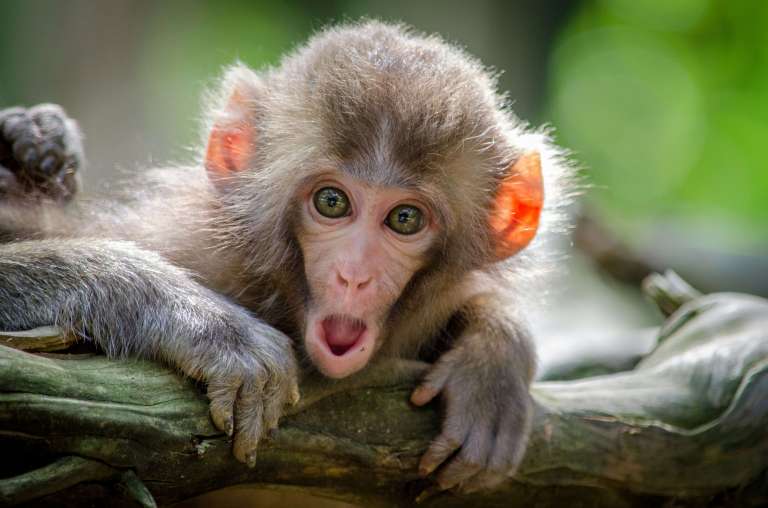
The monkey that didn’t move

In the 90s, researchers in Italy were recording the brain activity of macaque monkeys. One neuron fired every time a monkey grabbed a piece of food.

Then it fired again when the monkey only watched someone else grab it.

The monkey wasn’t moving. Its brain acted like it was.

They called these cells mirror neurons. The idea is that doing an action and watching one share some of the same wiring. That could explain how we imitate, learn and read other people’s intentions.

A fair warning. The evidence in humans is harder to pin down, and scientists still debate how much mirror neurons alone can explain. But the broader finding holds up. Brains simulate what they observe.

Marketers don’t need the debate settled. They only need the behavior.

How mirroring made me fluent

I speak six languages, a few of them at a native level. I don’t credit talent. I credit imitation.

I copy how native speakers sound, not how the words are spelled. Spelling lies. Sound doesn’t.

Even with a tiny vocabulary, I copy the music of the language first. I learn far faster this way than I ever did before, and I hardly forget anything.

Imitation in monkeys and children is a form of social learning and social integration. That’s how we learn the norms, gestures and expectations of our tribe.

Feeling without touching

The mirroring doesn’t stop at movement. Researchers have found that watching someone get touched can activate some of the same brain regions as being touched yourself.

Virtual reality leans on this. Therapists use it to help people face phobias in a controlled setting, and it has helped some people heal.

Where marketing comes in

As an ethical marketer, I owe you this part.

I studied this during my MBA, where neuromarketing was my minor. Later I used some of it in real campaigns.

Old ads showed you a product. Modern ads show you a person using it. A hand, a bite, a sigh. The goal is to make you feel the experience before you’ve paid for it.

And a feeling you’ve already had is easier to buy.

Texture sells before touch

Soft, velvety packaging suggests comfort and luxury before anyone holds the box. Matte finishes tend to signal quality and calm. You feel it through the screen, and no one has to hand you anything.

Sound and image

Crisp pours, slow unboxings, the crunch of a first bite. Audio and video can evoke touch and taste through the senses we can reach remotely. Entertainment has used this for decades to shape culture as a whole.

Scent

Mint and cut grass suggest coolness. Lavender tends to read as calm and often nostalgic. Scent only works in physical spaces, which makes it the one lever a screen can’t pull. Brands still build it into their stores and call it identity.

Who’s holding the mirror

You can’t switch off your mirror neurons. You can notice when they’re being used.

Next time an ad makes your mouth water or your hands itch to hold something, ask who’s holding the mirror.

Marketers want you to mirror. Try to reflect.

Teekay

Smartphones are our generation’s cigarettes

Everybody lit up

Picture a dinner table in 1957.

The air is blue. Grandpa’s cigarette sits in the ashtray between the bread and the butter. Mom lit hers off the stove. The neighbor stopped by and lit up too, and nobody blinked, not even the pregnant woman at the end.

Nobody coughs. Nobody finds it strange. Everyone’s doing it.

Now picture your table tonight.

Same faces. Same blue glow. Only it comes from rectangles now, one per person.

That’s the trick. Smoke at least stung your eyes. A screen just takes your evening.

We laugh at the 50s. Doctors in the ads. “More doctors smoke Camels.” How did anyone fall for that?

The same way you did at 7:42 this morning, before you even got out of bed.

Cigarettes killed you fast enough to make the news. Phones are patient. Same years, different thief.

And make no mistake, this was engineered. Tobacco companies tuned the nicotine. Tech companies went to school on B.F. Skinner, who kept pigeons pecking by rewarding them at random. Slot machines run on the same idea. So does your phone, and the lever is right there on the screen. They even call it pull to refresh.

A cigarette burns down. A feed never does. Nobody ever stubbed out a feed.

When the public got nervous, both industries offered the same fix. In the 50s it was the filter tip. Today it’s screen time limits. A filter never made a cigarette healthy. It just made smokers feel better about the next one.

I’m not above this table. I’ve been the fifth rectangle at it.

And I’m no enemy of the screen. I met my wife on a dating app, the best thing one ever did for me. That’s the cruelty of it. The device that introduced us can still eat dinner with her while I’m sitting right there and nowhere at all.

I grew up in cyber cafes. Counter-Strike, Red Alert, the hum of old computers. The cafe charged by the hour, so when our money ran out the game did too. We stumbled out squinting, loud and hungry, and rode our bikes around town until somebody’s mom called us home.

The internet had a door and a meter back then. Now the cyber cafe lives in your pocket, and it has neither.

So who’s to blame? Big Tech built the lever. We keep pulling it. Blame only one side and the other walks free. Laws should force these companies to build less addictive products. But waiting on them to fix this is like waiting on a tobacco company to talk you out of smoking.

So here’s a dare, and it’s small. One dinner. Phones in a basket by the door.

Let the table be lit by something else. A candle. A lamp. Somebody’s face.

If that sounds impossible, you just got your diagnosis.

Then ask what you do with the evening you just got back.

Hike. Nothing in the woods has a refresh button.

Talk to someone with no schedule and no agenda. No agenda, no algorithm. Let the conversation run until it runs out.

Pick up something you’re bad at. A guitar, a language. Being bad at it is the point, because nobody optimized it to keep you.

Wasted life never gets a bad rep. It gets a push notification.

Teekay

Minimalist japan

The biggest lessons I’ve learned since becoming a minimalist

Minimalism gave me my time back

I used to spend 20 minutes on the dishes. Now it takes me about 5.

That gap made me reevaluate what time means to me and how much of it I wasted on essentially nonsense.

Minimalism makes you wonder. Do I enjoy spending all my free time cleaning and doing maintenance? Do I like spending so much time in stores? Do I enjoy working so many hours and/or side jobs to pay for stuff that’s mostly wants or impulse buys instead of needs?

The beauty of minimalism is that it doesn’t force you to do anything. It’s about the freedom to choose and the power that comes from making decisions based on awareness instead of being ruled by unconscious impulses and societal conditioning (hello, neuromarketing).

I don’t know why it took me so long to realize this, but when you own fewer dishes or clothes, nothing has room to pile up. If you want a clean plate or outfit, you have to keep them clean.

Speaking of which, here’s a short and perfect story on how to deal with laundry, by Matt D’Avella.

The same goes for everything else. I don’t dust anymore because there’s nothing sitting out to collect it. I have no trinkets and barely any furniture, so there’s nothing to clean around and nothing to worry about when I move.

Since becoming a minimalist, I also need less self-discipline. There’s no other option than to wash whatever is dirty, and there isn’t much to maintain in the first place.

All of it boils down to a simple idea: Minimizing means having less work to do. Less stuff equals less work equals less stress.

When my go-to isn’t buying more or asking someone else to fix it, I become more resourceful and creative with what I have.

Another thing is that the momentum from downsizing or organizing one area of your physical life carries over into others. You want to experience the thrill of accomplishment again and again. It also stopped me from ignoring my problems. Instead I started facing them and shrinking them.

Owning less also meant fewer decisions, which leads to less decision fatigue. When you don’t burn your decision-making power on non-essentials (like what to wear or which cup to use), you have more energy for the decisions that matter. A personal uniform could be the answer for some, not for me, yet.

Last but not least, minimalism promotes self-mastery. It teaches you to question everything.

Thanks for reading.

Teekay