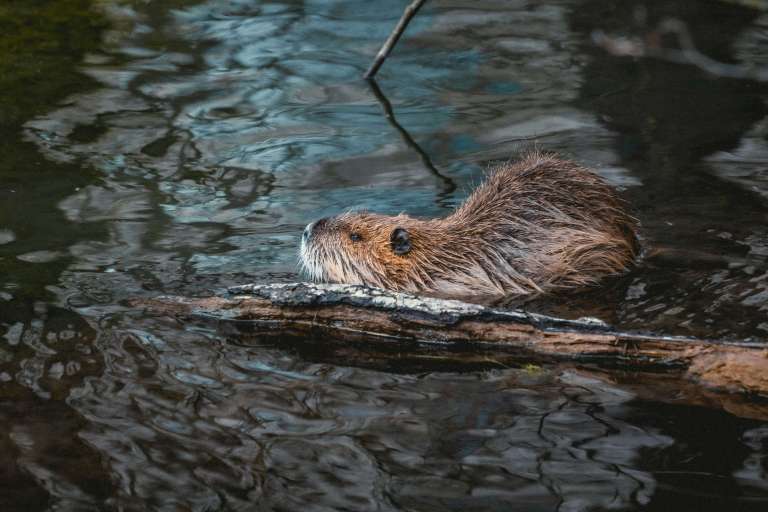
Beaver

The intelligence of slow water

And how unlikely engineers are fixing what we broke.

Somewhere between dams, drains and forgotten beaver ponds, we taught water to behave unnaturally.

For centuries, rivers weren’t linear channels cutting through land. They were living systems with multiple rhythms. They had (some still do) a normal bed, a medium bed and a larger floodplain. During certain periods, rivers would overflow into nearby fields and forests, depositing sediments, organic matter and nutrients. They would slow down, spread out, feed themselves and recharge the surrounding soils before returning to their usual course. Water lingered. Land absorbed it like a sponge. Life depended on that slowness.

Modern (human) engineering broke this balance. To protect infrastructure, agriculture and urban areas, rivers were straightened, dredged and confined between embankments. Their wider beds were erased. This caused for river channels to deepen because the straighter a river is, the faster it goes, and the faster it goes, the more it digs under itself, thus lowering its bed. This phenom’ had two immediate consequences. First, rivers stopped feeding themselves. Cut off from floodplains, they no longer collect organic matter, sediments and nutrients that once sustained aquatic ecosystems. Second, and more critically, they stopped feeding the land around them. The earth lost its role as a sponge.

When soils are regularly rehydrated by slow, spreading water, they remain loose, alive and porous. Microorganisms thrive. Roots penetrate deeply. Organic matter accumulates.

When this process is interrupted, soils dry out and compact. They become stiff and tight. Rain no longer infiltrates. It slides across the surface, picking up speed, eroding topsoil and rushing straight into rivers, then quickly into the ocean. Water is no longer stored in landscapes but evacuated as quickly as possible. What we call floods and droughts are often two sides of the same engineered mistake.

This acceleration of water is a massive stress on the planet. Freshwater ecosystems collapse. Groundwater reserves fail to recharge. Agricultural soils lose fertility. Coastal zones receive sudden, polluted surges of freshwater and sediments. The problem is not a lack of rain but a lack of time. Water is not allowed to stay.

Nature, left to itself, mirrors its creator’s perfection. So naturally, solutions do exist, and one of the most powerful allies in restoring hydrological balance is none other than the beaver.

Often dismissed as a nuisance or a pest, the beaver is in fact a master engineer, working in harmony with natural laws rather than against them. By building “dams”, beavers slow water down. They raise river levels back toward their natural height. They reconnect streams with floodplains. They recreate the layered beds that humans spent centuries destroying, and still are.

Beaver dams create chains of small wetlands and ponds, true oases across landscapes. These wetlands filter water by trapping sediments and pollutants. They store water during wet periods and release it slowly during dry ones, reducing both floods and droughts. They soften the surrounding soils, allowing water to infiltrate deeply and recharge aquifers. Land regains its sponge-like function.

The ecological benefits are extraordinary. Beaver wetlands provide habitat for fish, amphibians, aquatic insects, birds and mammals. Frogs, salamanders, dragonflies, trout, ducks and herons all thrive in these environments. Biodiversity increases not despite the dams but because of them. Even forests benefit, as higher groundwater levels support healthier trees and reduce vulnerability to fires.

Beavers don’t build for profit, efficiency or short-term control. They build for stability. Their work reverses, piece by piece, the damage caused by rigid, fast and extractive water management systems, built by us.

Where humans forced rivers to behave like drains, beavers restore them as living systems.

Reintroducing and protecting beavers is not a romantic gesture or a return to some imagined past. It’s a practical, science-backed response to centuries of bad engineering. Beavers show that the solution to water crises is not always more concrete, deeper channels or faster flows. Sometimes, the solution is to slow down, raise water back into the land and let ecosystems do what they have always done best.

If we’re serious about restoring soils, securing water and easing the planetary stress we created, we should stop fighting nature’s intelligence and start learning from it.

In that lesson, the beaver is the blueprint.

Food for thought.

Thank you for stopping by.

Teekay

water magic

Water: The misunderstood cosmic messenger

A memory, a teacher, a traveler from space.

Once upon a time, exactly 4.5 billion years ago, Earth was a violent place.

There were no oceans. No rivers, no rain, no life. Just a molten ball of fire and gas, spinning restlessly in space.

And then it came. Not as a storm or a miracle, but as dust, rock, and ice, hurtling through space and crashing into this young planet during what scientists now call the Late Heavy Bombardment.

Over millions of years, icy asteroids and meteorites may have delivered what Earth itself couldn’t produce on its own: water. Drop by drop, this alien substance transformed our planet, cooling its surface, filling its craters, and laying the foundation for every living thing that would ever exist.

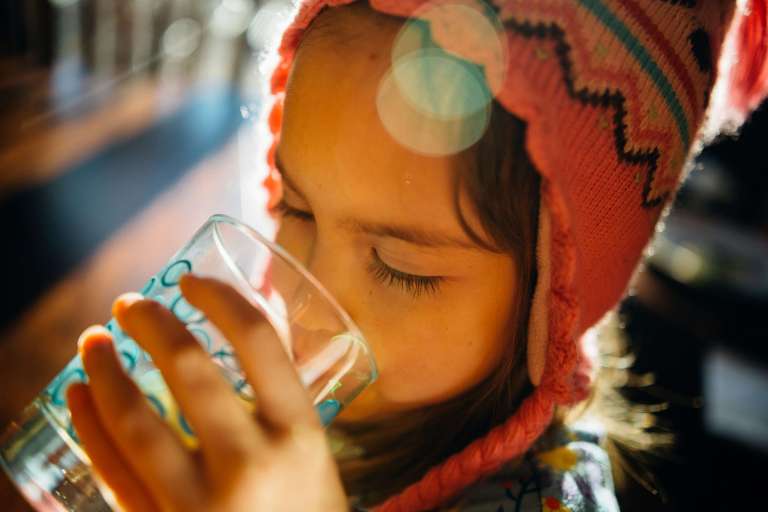
In other words, the water in your glass, in your blood, in your tears, may not be from Earth.

This is a common theory among scientists, but how do they back it up?

Well, simply put, traces of deuterium (a form of hydrogen) in Earth’s water match those found in carbon-rich meteorites, not in Earth’s original atmosphere. In other words, water could well be extraterrestrial and we’re walking oceans, born of stardust and comets.

Pretty cool.

“A water molecule is made up of one atom of oxygen and two of hydrogen. Hydrogen was created in the Big Bang, and oxygen in the cores of stars more massive than the Sun. Enormous amounts of water, in gaseous form, exist in the vast stellar nurseries of our galaxy.” – NASA

All that being said, new discoveries have challenged that theory. Science doesn’t care about romance and poetry..

But that’s only the beginning of the story.

Water is alive in ways we’re still discovering

Science has always viewed water as simple H₂O. But the more we look, the more mysterious it becomes.

Water doesn’t just hydrate, it reacts. It listens, and it may even remember!

Case in point, when scientists drill into glaciers in Antarctica or Greenland, they’re not just pulling out ice. They’re pulling out history. Inside those frozen cores are bubbles of ancient air, particles of volcanoes and wildfires, records of rainfall, drought, and dust storms, all preserved in perfect detail. These layers tell us the climate story of Earth going back hundreds of thousands of years.

So yeah, water stores information. It has a memory. It IS a memory, not metaphorically but quite literally.

But what if water also stores something more subtle?

Can water feel ? Like, does it have feelings?

The late Dr. Masaru Emoto, a Japanese researcher, believed it did. In his famous (and controversial) experiments, he exposed water to different words, prayers, music, and intentions, then froze it and photographed the crystals that formed.

On one hand, water blessed with words like “love” or “gratitude” formed stunning, symmetrical snowflake-like shapes. On the other, water exposed to hate, anger, or pollution formed distorted, chaotic patterns.

His work was dismissed by many in the scientific community, as they do. But for others, it cracked open a door. A possibility that consciousness and water might be connected in ways we don’t yet understand.

The mystery of memory in water

In 2009, Luc Montagnier, the Nobel Prize–winning virologist who co-discovered HIV, published a paper suggesting that highly diluted DNA in water emits electromagnetic signals, and that water retains this information even when the DNA is gone.

Another researcher and Swiss chemist, Louis Rey, studied water’s “memory” through thermoluminescence and noticed changes depending on what the water had previously been exposed to.

These findings are controversial, but they echo something ancient cultures have always known:

That water is not just a substance, it’s a carrier. A messenger. A mirror.

Water in religion & spirituality

Across every tradition and belief system, water is sacred.

• In Islam, it is said in the Qur’an: “We made from water every living thing” (21:30). Before drinking or washing, Muslims say “Bismillah”, or In the name of God, inviting His name to bless the water. Then there is the water of Zamzam, a sacred well in Mecca, believed to have sprung miraculously for Hagar and her son Ishmael in the desert. This water is revered for its purity and spiritual significance, and pilgrims often drink it during Hajj and Umrah, and take it home as a cherished gift.

• In Christianity, water baptizes, purifies, rebirths.

• In Buddhism and Taoism, water is a symbol of humility and transformation. It yields but wears down mountains.

• And Bruce Lee, blending martial arts with Eastern philosophy, famously said:

“Be like water, my friend.”

Meaning: stay flexible, formless, adaptive, like the element that takes the shape of whatever holds it, and yet remains itself.

Water teaches us to flow, to remember, and to release.

Our bodies remember too

Our body is made up of about 60% water. Our brain? Closer to 75%.

We are, quite literally, a walking river. Every cell depends on water, not just to survive, but to communicate, to regenerate, to feel.

Our emotions, hormones, sleep, focus, creativity, they all ride on the flow of water inside us.

And yet, for something so vital, we’ve forgotten how rare it is.

Water is scarce and under threat

Earth may be covered in water, but only 0.007% of it is drinkable and accessible. The rest is locked away in oceans, glaciers, or underground.

Meanwhile, pollution, overconsumption, and climate change are drying up and polluting a resource that our very existence relies on. Every environmental campaign is focused on the pollution of air (which causes 7 million deaths a year), which is great, but most campaigns don’t even touch on the irreversible pollution of water (mostly due to the fashion industry and animal breeding). Why? The air is much easier to clean than our fresh water streams. and yet..

Meanwhile, pollution, overconsumption, and climate change are depleting and contaminating a resource essential to our very survival: water. Most environmental campaigns rightly focus on air pollution, which causes 7 million deaths each year btw, but rarely address the irreversible pollution of our freshwater sources, much of it driven by the fashion industry and industrial animal farming. Why? I mean if anything, air is far easier to clean than our streams, rivers, and aquifers..

• The fashion industry produces 20% of global industrial water pollution. Dyes and synthetic materials poison rivers from Asia to South America.

• The meat industry is one of the biggest consumers and polluters of water. One single beef burger requires over 2,000 liters of water to produce. But that’s not it: Waste from livestock contaminates rivers and groundwater. Read about the Green Tide, aka Killer Slime or green algae, a magic seaweed that can kill you in SECONDS, another scandal brushed under the rug because a certain lobby is too powerful to let it be mediatized.

Food production accounts for over a quarter (26%) of global greenhouse gas emissions. 18% of those are due to livestock production. – Stanford

Plastic and pesticides enter our lakes and oceans at alarming rates. Microplastics have now been found in rainwater and even in unborn babies.

By 2030, the United Nations warns that 40% of people could face severe water scarcity if we don’t act.

Water is strong. It’s self-purifying, patient, ancient. But even it has limits.

A call to return to reverence

We live in a world where water comes from a tap, which is why we forget how sacred it is. We wear clothes made in countries we’ll never visit, eat food raised on land we’ll never see, throw away plastics that outlive us by centuries, and we don’t see the water trails behind them.

But now we know better.

We know that water is more than H₂O. It holds the blueprint of life and the story of our planet. It listens. It reflects us.

So what can we do?

• Plant trees.

• Eat more plants and less dead flesh.

• Repair our clothes.

• Use less plastic and ban single use plastics.

• Speak blessings into our glass.

• Treat water like the rare, cosmic treasure that it is.

Because every drop of water you drink has seen stars. It’s been ice. It’s been vapor. It’s fallen as rain, flowed through rivers, and run through the veins of everything that has ever lived.

And maybe, just maybe, when you speak to it, it remembers you too.

Thanks for reading.

Tee.

Pollinating bee

Reasons why we don’t eat honey

Besides the fact that we don’t “need” to.

Honey comes from bees. Bees are tiny creatures who play a huge role in keeping our planet alive and healthy, I’ll explain how.

Bees are born in beehives, where they grow up, work together, and take care of each other. While most people think bees are just busy flying around, they’re not! They actually have specific “jobs”, or tasks if you will. In fact, each bee has a specific role: some clean the hive, some feed the baby bees, and others go out to find food. Basically, they’re like us, except more advanced, because they don’t pollute, fight over nonsense and hate each other for no reason.

Bees are also pollinators.

When bees buzz from one flower to the next, they’re doing something extremely important known as pollination. Here’s how it works: As bees collect nectar for making honey, they carry pollen from flower to flower. This simple act helps plants grow fruits, veggies, seeds, and even more flowers. Without bees doing their thing, a lot of the food we rely on wouldn’t exist.

Let that sink in for a second.

Case in point, 75% of the food we eat depends on pollinators like bees (WEF). 75 freakin’ percent! Apples, strawberries, cucumbers, almonds, and even coffee all need pollination. So, losing bees would mean most of these foods would disappear, or become extremely rare and expensive.

Besides, pollinators also help plants that grow in the wild. These plants give food and shelter to animals and help keep the air clean. So, pollinators help whole ecosystems survive, not just farms and gardens.

While bees are the most famous pollinators, they’re not the only ones. Butterflies, hummingbirds, bats, moths, beetles, and even some types of ants and wasps also help pollinate plants. However, bees are the most effective because they focus their energy on flowers and carry lots of pollen.

This year (2025), we’ve had the worst honeybee loss in recorded history in the US. In fact, 80% of honeybees died suddenly. We still “don’t know” why (pesticides, it’s pesticides).

So, why don’t we eat honey? Simple: bees make honey to feed themselves and keep their hive alive, especially through the winter. When humans harvest honey, they’re taking away the bees’ own food (and heat) source. To make up for it, beekeepers sometimes replace the honey with sugar water, but that doesn’t give bees the nutrients they need to stay healthy. In fact, just like in humans, too much sugar can weaken their immune systems and make them more vulnerable to disease.

Worse still, to harvest honey, beekeepers often use smoke or chemical fumes to force bees out of their hives. This disorients them, causing stress, panic, and confusion, sometimes even leading them to get lost or die as they flee.

Even though it might not seem harmful at first, stealing honey puts a lot of pressure on bee colonies. It is in fact one of the reasons we’ve seen millions of bees die in recent years.

This is why many vegans consider honey as part of animal exploitation. The more we take from bees and damage their homes, the fewer bees we have, which in turn puts entire ecosystems, and our own food systems, at risk. In numbers, honeybees pollinate a worth of 15 billion dollars of crops in the US only, yearly.

If bees disappear, many plants won’t be pollinated. This means fewer fruits, vegetables, and nuts. Animal species that eat these plants will struggle, and so will the animals that eat them. It’s a chain reaction that could cause entire ecosystems to collapse. Eventually, the extermination of bees would entail food shortages even for us, humans, and thus our death as well.

Humans have long seen themselves as sitting at the top of the pyramid, a concept known as speciesism, but in reality, we’re just one part of a vast, interconnected family of living, sentient beings.

Fascinating facts about bees

Here’s where things get interesting: Plants, being rooted in the ground, carry a small negative electric charge. Interestingly, this charge increases the higher up the plant you go, creating an electric field around the flower itself.

Bees, in contrast, acquire a positive charge during flight due to friction with the air, which causes them to lose electrons. So, as a bee approaches a flower, the opposing electric fields of the bee and the plant begin to interact. This interaction subtly changes the flower’s natural vibrations or signals, imperceptible to humans, but detectable to bees.

When the bee lands on the flower, the positive charge from the bee and the negative charge of the flower neutralize each other almost instantly. This leads to two remarkable outcomes:

  1. The negatively charged pollen from the flower is attracted to and effectively “jumps” onto the positively charged bee;
  2. The flower’s electric field is altered, signaling to other approaching bees that it has already been visited. This change communicates that the flower likely has no nectar left, prompting bees to move on and return later. Mindblowing!

So, flowers use electric fields not just to attract pollinators, but also to communicate whether they still have nectar. They have their own language of electricity, completely imperceptible to us.

Other interesting facts about bees: They can also recognize human faces, communicate with each other through a little dance, and even show signs of emotion. Scientists also suggest bees can count and they might even dream.

What can we do to protect the bees and our soils?

  • Ban pesticides.
  • Plant flowers that bees love, like lavender, sunflowers and wildflowers.
  • Replace honey with the million other alternatives in existence: maple syrup, agave nectar, date syrup, molasses, and even fruit-based syrups work great. Why participate in the extinction of a whole species (and many other would follow suite) when you can avoid it?

Bees may be small, but they are mighty. Taking care of them is not just about saving one species, it’s about saving the world we all share.

Thank you for stopping by. This post was inspired by a conversation with my wife ❤

Peace!

Teekay