AI tools have made an already bad situation worse.
Every time you touch an AI tool, whether you’re making images or words, you’re feeding a machine that drinks real water and eats real power. Not in theory. Literally. There’s no harmless cloud floating above us. There are data centers on the ground, towers pulling heat out, plants burning fuel, all so content can come out faster while the bill gets paid somewhere else.
Think of it this way. One text request to a large AI model uses roughly the same amount of water as a few mouthfuls from a soda can. That sounds small until you remember these systems handle billions of requests a day! At that scale, we’re not talking about sips. We’re talking about entire truckloads of bottled drinks being poured straight down the drain, every single day, just to keep servers cool.
Generating a single AI image uses several times more energy than a text request. One article with five or six AI images might be using the equivalent electricity of leaving a laptop running for hours. Multiply that by thousands of articles, social posts, newsletters and ads, and suddenly it’s not trivial at all.
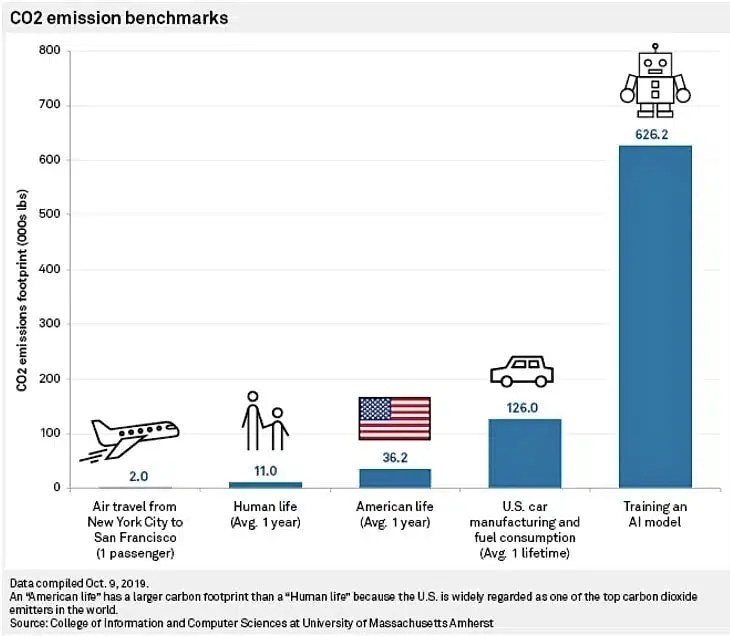
Zoom out a little more and the picture gets uglier. AI-related data centers are already using as much electricity as mid-sized cities. Estimates put global AI power demand on track to rival places like San Francisco or Boston within a few years. That’s millions of homes worth of electricity being burned so companies can automate writing, art and video at scale. AI doesn’t just steal jobs, it steals our resources.
Now stack dozens of these facilities across drought-prone states and you start to see why people are angry.
And they are angry.
Lately, I’ve seen organizers in Arizona, Pennsylvania and Georgia mobilize against new data center construction. Nobody wants these things in their communities. They strain power grids, drain water supplies and mostly benefit companies that don’t live there (don’t they always?). Luckily, these fights seem to be working. Projects are being delayed, while others are being stopped altogether. We can and will win against these tech oligarchs, but first, we need to be smart about our usage.
This is why it’s so frustrating to see articles about resistance, climate justice or helping nature paired with AI-written images. You can’t talk about fighting extraction while actively participating in it. You can’t warn about corporate overreach while relying on the most opaque, resource-hungry tech industry on the planet.
And it’s not just images. AI-written articles, AI-edited videos, AI voiceovers, all of it runs on the same infrastructure. Longer outputs mean more compute. Videos are especially brutal, far more than text or AI generated images. That one slick AI video you just posted (or liked) could represent the electricity use of a household for days. Yes, dayzz!
The worst part is how little transparency there is. AI companies won’t clearly say how much water or energy a specific model or request uses. Communities are asked to trust them, just like users are. Meanwhile the meters keep spinning.
Just to be clear, I’m not saying we need to go off-grid or stop using technology entirely, but we should start making conscious choices. Take your own photos. Use art made by real people. Scan a drawing, even a bad one. Use stock photos from photographers who actually went outside and did the work. Write things yourself or don’t write at all!
If you’re serious about resistance, about protecting nature, about fighting back against corporate power, your tools matter. Using AI by default, especially for images and media, actively undermines your message. People feel that contradiction, even if they don’t always have the numbers to explain it.
My name is Teekay and I’m obsessed with vibrant colors.
From multi-hued sneakers to colorful hoodies, I was never the type to dress in plain colors. Not my thing.
Bright and bold hues evoke positive emotions and uplift my mood. When I look at my yellow Tee or my orange fleece, I feel energized, chipper, optimistic, confident.
Colorful clothing holds cultural significance as well. For instance, if you observe traditional attire from Africa, Asia or South America, you’ll notice that vivid hues play a prominent role.
Indeed, from the intricate designs of ponchos in South America to the vibrant patterns of African wax prints, colorful clothing holds deep cultural significance and symbolism for many communities around the world.
Photo by Askar Abayev
Adorning myself in bright, bold hues is a means of self-expression for me. It’s also part of my cultural heritage.
Indeed, vibrant hues allow me to celebrate my individuality and express myself in a way that is both meaningful and visually stunning.
With that being said, as I grow older, I’m becoming increasingly aware that the colors I hold so dear have a considerable impact on the environment, hence the saying:
Ignorance is bliss.
But I’m not the type to go against my values. I’ve always had a moral code, and I’ve always followed it.
I don’t make any exceptions.
So How Does Colorful Clothing Hurt the Environment ?
Well, like most people, I never really thought about the process behind the dyeing of clothes. In fact, for the longest time I thought sewing threads were naturally colored ^^
Anyway, that said, let’s explore some facts about the textile industry:
Most of the water used to dye our clothes is loaded with harmful chemicals and dyes, and ends up dumped untreated into rivers and streams.
The chemicals in synthetic dyes obviously damage ecosystems. In fact, the heavy metals you find in textile dye such as lead, cadmium and mercury are toxic to both humans and animals.
This makes the textile industry the second-largest polluter of clean water globally, after (animal) agriculture.
As mentioned in my piece about the cost of flying, it takes about 2700 liters (713 gallons) of water to make one single cotton t-shirt. That’s enough drinking water for a person to live on for 2.5 years.
If the destruction of habitat and nature doesn’t concern you, know that textile workers are often exposed to dangerous chemicals, thus leading to serious health consequences like skin rashes, allergies and cancer.
These numbers highlight the urgent need for more sustainable, ethical and eco-friendly practices in the textile industry.
More Global Clothing Industry Statistics
Aside from water pollution and human rights violations, the fashion industry is responsible for 10% of annual global carbon emissions, more than all international flights and maritime shipping COMBINED.
Not only that, 87% of the fiber input used for clothing is incinerated or disposed of in a landfill (enraging, right?).
Last but not least in importance, every year, half a million tons of plastic microfibers are dumped into the ocean.
That’s as much as 50 billion plastic bottles per year !
How Can We Solve the Environmental Problems of Fast Fashion and Clothing Industry?
In short, minimalism.
I write about minimalism a lot on this blog. I often encourage my readers to learn more about it and to adopt a minimalistic lifestyle.
Minimalism offers many solutions to humans.
It can solve our environmental, social, financial and mental problems all at once.
Minimalism isn’t just about buying less, it’s about buying better and buying used as well.
My Next Step As a Minimalist
Conformism is intellectual death.
That’s my motto in life.
One of the reasons I left Social Media (and mass media) years ago was to protect my intellectual abilities and free thinking.
I don’t scroll, I don’t watch TV and I only read the news when I’m doing research. Heck, I don’t even listen to music anymore.
Staying away from all this stimulation and chaos allows me to look at things without bias. It keeps me sane and detached, which, in my humble opinion, is the best way to write without judgement.
Before all this, I couldn’t imagine giving up my love for colors. I would’ve convinced myself that it wasn’t that bad, that my actions have no impact, and that “everyone does it so why shouldn’t I ?”
My thinking was flawed.
You see, although it may not appear that purchasing fewer, higher-quality and ethical items will have a significant impact on the world, it factually does.
Individual actions make a difference.
So my next step as a minimalist is to refrain from buying overly colored clothes as much as I can. If I do, I’ll make sure they’re ethically sourced, naturally dyed and of course useful.
Where Can YOU Start Your Journey as a Conscientious Consumer ?
Sustainable brands use natural dyes and organic materials. You may have to pay a bit more than what you’re used to, but this time you’re supporting a bigger cause.
Doing so will also mean you won’t buy as many clothes as you did before, thus reducing your environmental footprint.
II. Shared Washers
We don’t own a washing machine (or dryer), here’s why:
When we had a washer at home, we washed our clothes several times a week. Doing so uses clean water, lots of clean water. In fact, one load uses up to 87 liters of water (23 gallons). That’s insane ! Now we wash our clothes once a week tops.
Owning a washing machine also requires for more washing machines to be made, which in turn requires more materials like steel, zinc, cement, plastic and more to be extracted from the earth. Metal extraction is destructive to the environment.
Convenience leads to more washing, and more washing means more waste generated, more energy used (electricity) and a heavier water and energy bill. No one wins.
Owning a washer also meant we had to purchase laundry detergents and fabric softeners, both of which are sold in plastic containers. More chemicals, more waste, more spending. Once again, no one wins.
Now look, I get it, owning a washer is great and fabric softeners smell amazing. In fact, owning a washer allows you to wash your clothes while you sleep. You can even leave them in there if you’re too “busy”. It’s convenient.
However, shared (or public) washers are just as cool.
For one, you don’t have to worry about maintaining them. You don’t have to transport them as you move. You don’t have to buy laundry detergents or fabric softeners.
Stressing about dirty laundry can be overwhelming for some, not owning a washer means you only have to worry about this chore once a week (at most). It takes roughly thirty minutes to get it over with, that’s it !
A study conducted in Sweden showed that greenhouse gas emissions for private laundries there were estimated to be 190 g CO2 eq./kg laundry (washed and dried).
If a shared laundry was used instead, the resulting emissions decreased by approximately 26%.
The greatest contribution to GHG emissions was the use of detergent (22–33% of total emissions), followed by capital goods (11–38% of total emissions).
I reckon every building, every residence and every neighborhood must offer shared washers (and dryers if need be).
By designing buildings with a shared laundry room, less floorspace is needed per apartment, which in practice could mean that less material is used per building or that a higher number of apartments per building are feasible. — Nilsson 2011
I’d extend that to other services as well. The Sharing Economy concept is a fascinating topic. I’m currently working on a piece on that so stay tuned.
III. Hand-washing
Another option, perhaps less realistic for many, is to hand-wash clothes with eco-friendly detergents and line-drying them.
Not only does this reduce your environmental impact, it also extends the lifespan of your clothes.
IV. Secondhand and Vintage Clothing
Aside from underwear and socks, which I refuse to buy used, everything I own is secondhand.
Buying secondhand items reduces the amount of waste that ends up in landfills and minimizes the carbon footprint associated with producing new items.
It’s a win-win, plus you can find more authentic pieces !
In addition to clothing, all my furniture, books, electronics, and household appliances are secondhand.
Many of these items can be found in good condition at thrift stores, garage sales and now mostly online.
Buying secondhand is a great way to save money, support local businesses and generate less waste.
Final Thoughts
To make a difference isn’t about others. It isn’t about societal standards either, it’s about our own, God-given conscience.
It feels good to know that I’m making a difference, even in a small way.
I won’t stop living, nor will I just throw away all my colorful and stylish items, but I will be more mindful of what I buy.
At the end of the day, life is all about respecting others, and to respect Mother Nature is to respect all life on earth.
This piece is a mere reminder, nothing more, nothing less. I hope it helps you find your own balance, and be more mindful. That’s all that matters.
Thanks for reading.
If you wish to read more from me and support my work, follow me and subscribe to my newsletter by clicking HERE.
I write about minimalism, slow living, my adventures as an explorer, environmental solutions and more.




 Teekay Rezeau-Merah