I’ve noticed a genuine interest from my readers in the “HOWs” of minimalism, but how about the “WHYs” and the “WHEREs” ?
Well, that’s what we’re here for today. What you’re about to read will bring things full circle.
Credit: Freepik
After reading and writing about minimalism for 5+ years, I realized that this philosophy is nothing new. In fact, throughout history, most cultures and religions have emphasized the importance of living a simple and minimalist life.
Want proof ? Read on.
Minimalism in ancient European Civilizations
In ancient Greece, Socrates famously espoused the idea that “the secret of happiness, you see, is not found in seeking more, but in developing the capacity to enjoy less.”
Socrates believed that living a simple life was key to achieving contentment and stressed the importance of focusing on the essentials. His philosophy also focused on avoiding excess and materialism.
Similarly, in ancient Rome, Seneca wrote extensively about the virtues of minimalism.
In fact, Seneca believed that focusing on the basics and refraining from excess granted human beings a sure sense of inner peace and tranquility, and he couldn’t be more right.
Not only that, Seneca also emphasized the importance of mindfulness, advocating for individuals to live in the present moment and appreciate the simple pleasures in life.
Minimalism in Eastern religions
The concept of minimalism is central to many teachings in Buddhism and Hinduism.
In fact, Buddhism teaches that “desire is the root of all suffering” and that inner peace can only be achieved by letting go of our attachment to material possessions.
Indeed, the Buddha himself renounced his belongings and lived as a monk, teaching his followers to let go of desires and attachments in order to achieve enlightenment.
The Buddhist practice of meditation is the perfect illustration of that. While Seneca didn’t insist on one particular practice to promote mindfulness and presence, his ideas perfectly match Buddhist philosophy on this point.
Similarly, in Hinduism, the concept of “Sannyasa” or “renunciation”, is a central theme.
Sannyasa involves renouncing material possessions and living simply and in pursuit of spiritual enlightenment.
But Sannyasa isn’t the only Hindu concept that highlights a certain form of minimalism.
“Aparigraha” or “non-possessiveness” also points up the importance of avoiding excess and materialism in favor of simplicity and contentment, which ultimately shows that minimalism is nothing new, and that it took center stage in century long beliefs and religious practices in the East as much as in the West.
Minimalism in Monotheistic religions
In Judaism, the concept of “Tzedakah” or charity, is an essential part of the religion.
Tzedakah involves giving to those in need and promoting social justice.
The art of giving: By giving to others, we learn to reduce our attachment to stuff. Not only that, giving means we learn to prioritize the needs of others over our own desires.
The world needs more of this practice.
How about in Christianity?
Well, one of Jesus’ (AS) most famous teachings says “it is easier for a camel to go through the eye of a needle than for someone who is rich to enter the kingdom of God.”
This idea highlights the importance of avoiding excess and materialism, and promotes selflessness and spiritual values.
Last but certainly not least, Islam.
Prophet Muhammad (PBUH) lived a humble and simple life. He owned the bare minimum, despite his influence, status and the wealth of his wife hazrat Khadija (RA).
Many of Prophet Muhammad’s (PUBH) teachings revolved around the above-mentioned values of charity, avoiding excess and emphasizing spiritual and ethical values over material possessions.
Case in point, the Islamic concept of “Zakat” involves giving a percentage of one’s wealth (once a year) to the less fortunate, promoting empathy, caringness and compassion for others.
The universality of minimalism is evident in its presence across different cultures and regions worldwide, and there’s more !
Minimalism in ancient South American culture
Often forgotten when talking about minimalism and anti-consumerism, South American cultures and civilizations had some equally impressive values to the ones mentioned above.
“When the rivers are all dried up, and the trees cut down, man will then realise that he will not be able to eat money.” — Native American proverb
For instance, if you look at the Inca civilization (present-day Peru, 13th to 16th century), living simply and in harmony with nature was paramount.
The Incas prioritized the concept of “Ayni,” which involved the reciprocal exchange of goods and services among members of the community, encouraging mutual aid and support.
Similarly, the Maya civilization (present-day Mexico and Central America, 2000 BC to the 16th century) practiced a simple and sustainable way of life.
The Maya were famous for their beliefs in the conservation of natural resources and living in harmony with the surrounding nature (I guess now you know where I get that from).
This was reflected in their agricultural practices, namely terrace farming and irrigation systems, which were brilliantly designed to maximize efficiency and minimize waste.
Quite the opposite of what we do today.
While the Incas and the Mayas are quite well-known, there’s another lesser-known civilization in the Nazca civilization.
Nazcas lived in a desert region (in modern day Peru) and relied on sustainable practices to survive.
For instance, they built underground aqueducts and water management systems to make sure they survived in their harsh environment, a group of genuises they were.
The Nazcas also produced simple but elegant pottery, textiles, and other crafts, demonstrating their appreciation for the beauty in simplicity.
Last but not least, Asian ancient cultures also provide numerous examples of minimalism and simplicity being valued and practiced way back.
For instance, in ancient China, one of the oldest civilizations in the world, Taoism highlights the importance of living a simple and natural life, in harmony with the flow of the universe this time.
This is commonly known as the concept of “Wu Wei.”
“He who knows he has enough is rich.” — Lao Tzu
But besides ancient China and India (through Buddhism and Hinduism), another gigantic civilization from the East has its own form of minimalism: Japan.
Indeed, the Japanese aesthetic of “wabi-sabi” is a great example of minimalism and simplicity.
Wabi-sabi celebrates the beauty of imperfection and transience, emphasizing the importance of finding joy and contentment in the simple things in life.
Final Word
“What has been will be again, what has been done will be done again; there is nothing new under the sun.”
As you can see, minimalism is inherently connected to wellness.
Avoiding excess and materialism while promoting charity and compassion for others are what make this philosophy so pure.
The common goal of achieving inner peace and contentment has long been sought, and it seems like doing so requires more simplicity and less consumerism.
I hope minimalism helps you live a more ethical, sustainable and fulfilling life.
Thanks for reading.
If you wish to read more from me and support my work, follow me and subscribe to my newsletter by clicking HERE.
I write about minimalism, health, slow living, my adventures as an explorer, environmental solutions and more.
This blogpost serves as a reminder that we don’t always need the media, political figures and “science” to tell us what to think.
I mean, we live in the age of misinformation and fake news anyway.
Everything is blown out of proportion, all the time, so I understand those who are skeptical about everything cause sometimes that’s the only way one can keep their sanity and free thinking.
We demonize people for the smallest mishaps, we cancel them, we go at each other’s throats online for no real reason..
Incivility is rampant, but that’s beside the point of this post.
What we need right now
Perhaps what we need right now is to be more understanding, to use sensible reasoning and think for ourselves.
What we need is to collectively take a step back from the ongoing noise and assess what we see and feel, not what we’re bombarded with by the media 24/7, 365.
So climate change, is it real ?
Well, first let’s drop in some facts:
👉 We’re in the midst of the worst drought in the Horn of Africa since records began 👉 We’re in the midst of the worst drought in China since records began 👉 We’re currently in the midst of the worst drought the USA has known in the past 1.200 years 👉 Europe is going through its worst drought in 500 years
Those are facts, not opinions.
Unfortunately, blistering heatwaves ran rampant in the continent where I’m currently based, Europe, in the past few months.
The same can be said about many other places on earth.
Given how things stand right now, everything leads me to believe that a catastrophe is around the corner.
If you look at the the Jialing River in Chongquing, a major tributary of the Yangtze (China), you realize that it’s partially dried up, following weeks of extreme heat.
The same can be said about rivers and lakes in France, rivers that I used to hang out at just last summer.
Besides, we’ve seen so many untamable wildfires this summer, too many to count: Spain, Portugal, France, Italy..
The same thing is happening in North Africa.
Pretty safe to say, biodiversity is crumbling all around the world.
So, what to do about it ?
Well, it all depends on the type of people we are.
We can either wait till we all die, or we could start making some serious changes to our respective lifestyles AND impose restrictions and sanction the biggest polluters.
Private Jets, Yachts, Golf courses, Olympic-size swimming pools, these privileges need to stop, at least for a little while, if we want our planet to survive.
You don’t have to be “republican” or “democrat” to see things for what they are, this has NOTHING to do with politics, it has everything to do with survival.
If you don’t want to believe reports from the media, it’s fine, I don’t either, so talk to people, talk to the elderly, talk to your friends.
I’m lucky enough to have friends all over the world, and not a single one of them tells me things are just like they used to be.
There are so many environmental disruptions all across the globe, so many droughts, from Iraq to Italy, to China, to Kenya.
Our planet is running out of clean water. People are literally DYING of hunger and thirst.
Industrialization and hyperconsumerism are a direct cause for that.
What to do ?
The collective will always prevail over individual changes
So what we need is to collectively give up on our old ways and start learning about sustainability, pollution
We have to start looking at the way we consume, what we buy and who we’re buying it from.
We don’t have to give up on living for things to work out, we just have to adapt, to change.
The solutions to our problems have more to do with mindfulness than they do with technology.
Of course technology has to step in to improve many things, but first, let’s cut out on all the unnecessary impulse buys, watch our consumption, learn how to live in harmony with each other and NATURE, push for a global change and promote sustainable habits.
Let’s be mindful of what we do and how we live, individually and collectively.
It really doesn’t take much more than that for things to go back to how they used to be.
The first question I wondered about was financial cost, and the answer was unsurprisingly straight forward: ICE cars are way cheaper than ECs.
The second question I asked myself, quite obviously, was about environmental cost (or impact), ’cause money ain’t the sole reason we do what we do and consume what we consume.
Things like biodiversity, social justice, air quality, disease prevention and health are far more important than money, which makes this topic well worth the debate.
Here are 3 questions worth considering when discussing the environmental impact of car-making:
What are the emissions from production (materials and lining) for both types of vehicle ?
What are the GHG emissions to be expected from both types of vehicle ?
What are the end of life/end of cycle GHG emissions for both types of vehicles ?
Before we get any further, there was a study by Yale circa 2019 that concluded that emissions for both types of cars are similar and very small to be worth looking further into.
Subsequently, Jarod Cory Kelly, principal energy systems analyst at Argonne National Lab, said making EVs generates more carbon than combustion engine cars, mainly due to the extraction and processing of minerals in EV batteries and the production of power cells.
Electric VS Internal Combustion Engine cars: emissions
A dozen studies show that conventional vehicle production emissions range between 2 to 17 metric tons of GHG (10 metric tons being the most common average I found)
They also show that a typical, medium-sized, conventional family car will create around 24 tons of CO2 during its life cycle.
The same studies indicate that average EC production emissions sit at around 10 metric tons per car as well, without the battery.
They also show that a typical EV will create around 18 tons of CO2 during its life cycle.
For EVs, 46% of their total carbon footprint is generated at the factory, before they’ve traveled a single mile.
For instance, and because of battery production, this whitepaper claims that we emit 15 to 70% more GHG to produce electric cars.
Battery size matters
Now, there’s also a huge difference when it comes to battery size: a Nissan leaf battery (and car) will only cause 15%more emissions to produce than a classic combustion engine (conventional car), whereas a Tesla battery could cost up to 70% more, according to Net Zero Watch.
In numbers
ICE cars produce 10 tons of CO2 to make, and emit 5.2 metric tons of CO2 per year (on the road).
ECs without the battery also produce 10 tons to make, but only emit 2.2 metric tons of CO2 per year.
Now, to make a 30 kWh lithium battery (Nissan Leaf), companies emit from 1 to 5 tons of CO2 into the atmosphere. To produce a 100 kWh (Tesla) battery, that number ranges between 6 and 17 tons of GHG.
If we base our reasoning on these numbers only, it takes roughly 2 years on the road before a small electric car starts producing less carbon than an ICE car.
If you change the battery in the meantime, you’re looking at around 3.2 years to offset your carbon emissions.
That only applies when talking about small ECs.
For a Tesla, however, you’re looking at roughly 5.53 years of driving before you break-even.
Note: estimates as to how big that carbon gap is when a car is first sold and where the “break-even” point comes can vary widely, depending on the assumptions, driving style, distances covered and the country in question.
For instance, if said electric car is being driven in a country like Norway, which generates almost all its electricity from renewable hydropower, the break-even point would come much MUCH sooner.
University of Liege researcher Damien Ernst said in 2019 that the typical EV would have to travel nearly 700,000 km before it emitted less CO2 than a comparable gasoline vehicle. He later revised his figures down.
Now, he estimates the break-even point could be between 67,000 km and 151,000 km.
Lithium, cobalt, nickeland aluminum
Lithium makes up for 5 to 7% of an EC battery, which isn’t as much as most people think.
Cobalt and nickel make up a bigger chunk, up to 20% for cobalt and up to 10% for nickel.
Lithium mining
One of the main problems with Lithium mining is that it’s a very water intensive process, which makes it environmentally consequential.
Lithium extraction uses a lot of water and is the cause for droughts in regions where it’s extracted.
“Lithium mining requires large volumes of groundwater to pump out brines from drilled wells. Mining activities in the Atacama are estimated to consume 65 percent of the area’s water, and they have in some cases contaminated streams and caused significant fall in groundwater”
The main difference between pollution caused by Lithium mining and CO2 pollution is that we, and our planet, can capture CO2 through forests, soils and oceans. The same can’t be said about the loss of water, a scarce element on earth.
Besides water consumption and pollution, evaporation and contamination, Lithium mining is also a cause for high GHG emissions, which comes as no surprise.
Large ECs with long range batteries (which you’d want in a car) could be responsible for up to 17 metric tons of CO2 emissions, so while governments may want to subsidize EC and EV manufacturers, I’m still unsure of the effectivity of this tactic for the environment.
Download this Fact Sheet (PDF) if you want to learn about Lithium, Lithium mining, regulations and laws.
Cobalt-producing nations like the Democratic Republic of the Congo, Zambia and Cuba are discovering that cobalt mining is trickier than they first thought.
Lung disease and heart failure have been linked to high levels of this element, while the mines that produce it are blamed for devastated landscapes, water pollution, contaminated crops and a loss of soil fertility.
The environmental impact extends through the life-cycle of the product from refineries, battery plants, consumers goods manufacturers, electronic recycling facilities and waste dumps.
Among the most affected are workers at poorly-regulated mines, as always.
Concerns in the Congo, which produces more than 60% of the world’s cobalt and where the mineral is often mined in tandem with nickel, copper or silver, are rising when it comes to child mining and child labor.
Obviously, ECs and EVs aren’t the only ones to blame, as most electronic devices use cobalt as well.
Nickel mining
Did you know that Nickel (Ni) is the most expensive material in EVs after Cobalt ?
Did you also know that Indonesia accounts for the largest supply of Nickel in the world ? As if Palm Oil wasn’t destructive enough for the island country.. (Indonesia counts for more than half of global palm oil supply btw)
Back to the Nickel (no Nickelback jokes, please ^^)
Reports by IDTechEx state that the demand for nickel from EV batteries is expected to increase ten-fold by 2030 compared to 2019.
One of the main problems surrounding nickel mining is that ores normally contain only a very small percentage of useful Ni, resulting in a large amount of waste material.
“Recently it has been announced that two nickel mining companies in Indonesia are planning to use deep-sea disposal for the raw material waste into the Coral Triangle as they ramp up operations,” the report states.
On the other side of the spectrum, back in 2017, the Philippines government suspended nearly half of its nickel mines citing environmental concerns.
So Nickel, like Cobalt and Lithium, is also highly destructive to the environment in ways that we can’t easily bypass, unlike CO2 emissions..
Recycling of batteries
The recycling of batteries is another issue, an important one, especially in the water scarcity debate.
In the EU, as few as 5% of lithium-ion batteries are recycled. This has an environmental cost.
Not only do the batteries carry a risk of giving off toxic gases if damaged, but core ingredients such as lithium and cobalt are finite and extraction can lead to water pollution and depletion, among other environmental consequences.
Francisco Carranza, former managing director at Nissan and current VP of sales and marketing at Automotive Cells Company, says the fundamental problem is that while the cost of fully recycling a battery is falling toward €1 per kilo, the value of the raw materials that can be reclaimed is only a third of that.
And what doesn’t make money often doesn’t make sense, business-wise.
That said, Nissan, like many other car manufacturers, has partnered with power management firm Eaton for its car batteries to be re-used for home energy storage, rather than be recycled.
Perhaps there’s reason to be optimistic, after all.
For instance, the Johan Cruyff Arena, Ajax Amsterdam’s home field, is home to the equivalent of 148 used Nissan Leaf batteries, which found a second life in this stadium.
The JCA is one of the most sustainable spots in Europe. Solar panels, super-green energy storage and onsite vehicle-to-grid charging can all be found in this beautiful piece of engineering.
The arena is a prime example of sustainability at scale. It’s currently the largest energy storage bank in a commercial building in Europe.
Where do electric vehicles get their electricity ?
Let’s put all of this to the side and discuss something that’s equally as important as battery components: energy.
Where do EVs get their energy from ?
It turns out that many regions in the world are still getting their electricity from COAL-powered plants.
In fact, 23% of electricity comes from coal-fired plants in the United States alone. Studies estimate that number to be around 22.9 percent in Europe.
How much of Europe’s energy comes from fossil fuels?
For the structure of gross available energy in 2020, 68.4 % of all energy in the EU was produced from coal, crude oil and natural gas.
Not so green huh ?
The verdict ?
I don’t have one.
But one thing is for sure, I’ll definitely stick to my beautiful 2005 Corolla for now.
Besides, I will always prefer higher CO2 emissions to water pollution, leading to water shortages and scarcity. Child labor and the massive environmental impacts mentioned above are also reasons why EVs ain’t my thing, now more than ever.
That said, by no means am I saying conventional cars don’t pollute. All I’m saying is, there’s no need to push for newer technologies just for the sake of newness. That’s the whole premise around consumerism, which is the core ideology of capitalism.
Also, and this is extremely important, our oceans, with around 38,000 gigatons of carbon, contain 16 times as much carbon as the terrestrial biosphere.
On the other hand, our CO2 emissions today sit at around 36.4 gigatons of CO2.
Our oceans are one of the most promising places to sequester carbon. They currently take up a third of the carbon emitted by human activity, roughly 2.9 billion metric tons each year, according to new estimates.
Now, let me ask you this: can you imagine how much CO2 we would intrap if our oceans were healthy ?
Imagine a world where industrial fishing is banned for good?
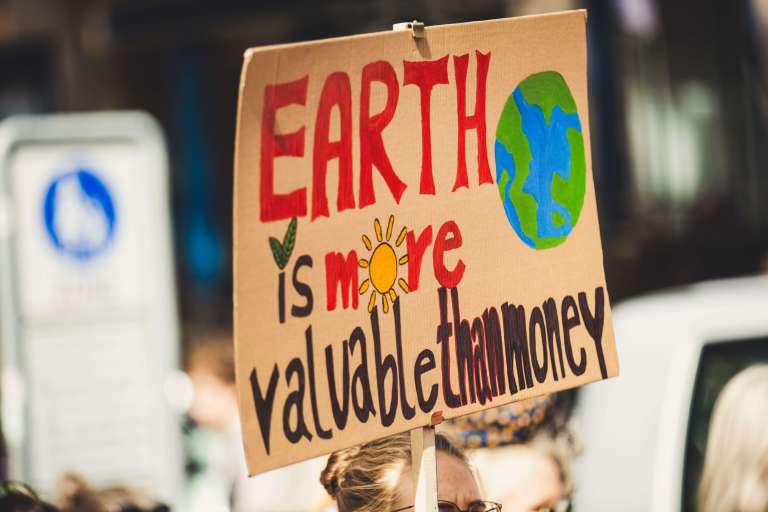
People often say that we need to “Save The Earth”. I personally don’t think the Earth needs saving, I think the Earth will be just fine without us. Instead, we need to save ourselves by abolishing all unnecessary exploitations.
The earth is a magical place, a gift that’ll keep on giving, but we need to start looking at things differently.
The solution to the current environmental crisis doesn’t necessarily lie in changing the way we travel.
We have to start looking at all industries, and go through them one by one.
The impacts of certain industries are often dismissed, it’s dangerous.
To save ourselves, we need to abolish unnecessary exploitations and consumerism. Simultaneously, we need to keep pushing research towards truly cleaner options.
Our beautiful planet can easily deal with GHG emissions, but it can hardly “regenerate” polluted water, water being the scarcest element on earth.
Last but not least, if you thought Russia controlling 5% of oil exports was a threat to global stability, wait until you find out who controls 90% of the critical rare earth elements needed for EVs and solar panels.
In sum
ICE Cars are here to stay and that’s okay, for now.
Perhaps newer technologies will come into place and replace the old ones, but let’s give credit where credit is due.
Cars are a blessing.
The demonization of ICE cars has risen sharply, it’s baffling and quite unwarranted. People who can’t afford EVs (or don’t want to switch) have been heavily criticized by mainstream media, so this piece is essentially here to establish some sort of balance.
It’s important to remember that cars, just like railroads, boats and airplanes have played a huge part in how humanity has developed in the past century.
Cars make our lives safer and more comfortable. They allow us to access places and resources that are viable and necessary to evolve as a species.
The debate around EVs vs ICE cars is a matter of choosing the lesser of two necessary evils, it’s sterile and borderline absurd.
As things stand economically, socially and historically, there is no clear winner. Besides, as I mentioned before, I reckon we’re barking at the wrong tree in the sustainability debate.
How about we tackle unnecessary industries like fast fashion, industrial fishing, factory farming, food retail first ?
Worth considering.
Let me know what you think in the comments below and tune in to the pod for similar conversations.
Watch this if you want to know more about the innovation of the engine.





 Teekay Rezeau-Merah