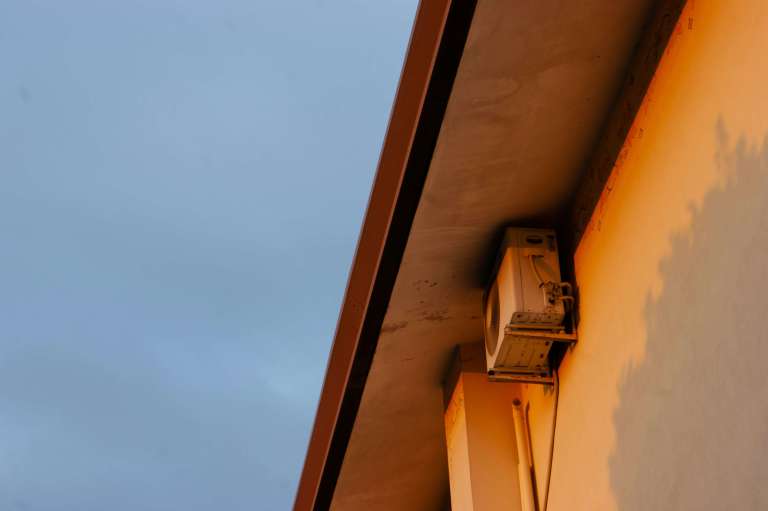
It’s the energy your building never needs.
A few years back I interviewed an architect for my podcast. He spent an hour on something that should be obvious and somehow isn’t anymore, a building can heat and cool itself just by facing the right way.
I haven’t stopped thinking about it since.
We build homes that ignore where the sun rises, block the wind, and wrap them in glass that lets the sun in all day with no way to let the heat back out. Then we spend fifty years paying to undo it. Air conditioning in summer and heating in winter have both become so normal we forgot they’re solving a problem the building created for itself.
That energy has to come from somewhere, coal, gas, nuclear. Nuclear seemed like the cleanest way to produce electricity until the heat started warming the rivers it depends on. In France, several plants had to cut output during heatwaves this year because the river water was too warm to cool the reactors properly. Grids buckle under demand spikes exactly when everyone switches their AC on at once. The machine we built to save us from bad design turns out to have its own limits too, and those limits are only going to show up more often as summers get worse.
None of this is abstract for the people paying for it. In Albi, a 36 year old named Pauline Paredes describes her own apartment as a kettle after weeks of 40 degree heat, and says flatly she has to be out of it before next summer. She’s one of hundreds of people a French outlet interviewed this year alone about heat pushing them out of the places they live.
A geographer in Lyon estimates around 100000 people already leave French cities every year for the outskirts and the countryside because of it, and expects that number to double as the heatwaves keep stacking up.
Winter runs the same script in reverse. More than five million French households live in fuel poverty, a third of the country couldn’t properly heat their home this past winter, and three out of four households are now rationing their heating just to keep the bill within reach. None of that is a footnote to a design conversation. It’s what happens when a building depends entirely on a machine, and the machine gets too expensive to run or the grid buckles at the exact moment everyone needs it most.
Passive solar design isn’t futuristic. It’s ancient. For most of human history people built with the climate instead of against it, thick walls, shaded courtyards, windows placed on purpose, trees that dropped their leaves right when you needed the sun back. None of that was decoration.
We gave that up the moment cheap energy got easier than good design.
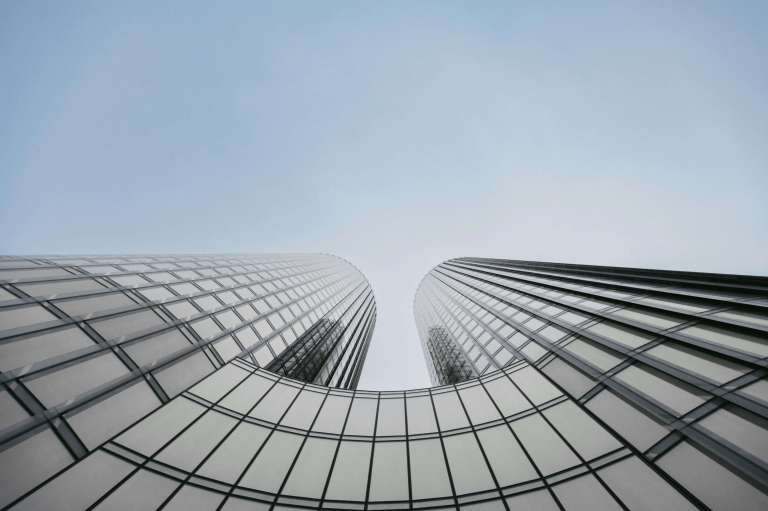
The shift has a start date. In 1952 the United Nations Secretariat went up in Manhattan as the first tower wrapped entirely in glass and cooled entirely by machine, followed a few years later by Lever House a few blocks down. Neither building was designed around the sun. Both were designed to look like the future, and cheap postwar energy is the only reason either one got away with it. Every glass tower built since has copied that template. Offices cooled that way now run about 60% higher in carbon emissions than ones that use natural or mechanical ventilation properly. We didn’t inherit bad buildings. We inherited a look, and we’re still paying the electric bill for it.
Every architect knows where the sun rises and sets. Yet, somehow most buildings are still designed like it doesn’t matter. In the northern hemisphere, your longest wall generally wants to face south. That one decision decides how much free heat you get in winter and how easily you can block it in summer, before a single brick goes down.
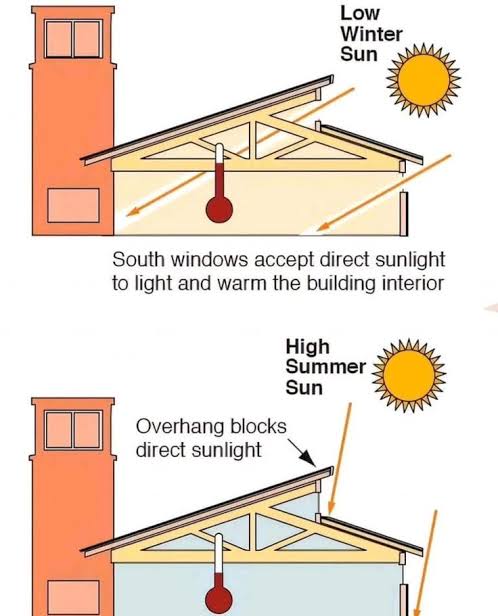
In winter the sun sits low. It travels under the roof overhang and warms the floor and the walls, which quietly hold onto that heat all day. Six months later the same window behaves completely differently. The summer sun sits high, the same overhang blocks it, the room stays bright without turning into an oven. Nothing moved. Nothing plugged in. The only technology was geometry.
Get the geometry wrong and inefficient turns into dangerous. London’s 20 Fenchurch Street tower, nicknamed the Walkie Talkie, curves its south face inward like a satellite dish. In 2013 that curve did exactly what a concave mirror does, it focused the sun into a single point on the street below. The hot spot passed 90 degrees Celsius. It melted panels on a parked Jaguar, warped a bike saddle, and set a doormat on fire outside a barbershop. The developers ended up bolting a permanent sunshade onto the building afterward, aluminum fins running from the third floor to the thirty fourth, a fix that cost millions of pounds because nobody modeled where the sun would actually land before they built it.
Cooling didn’t start with a compressor. It started with a window across from another window. Cross ventilation works on one idea, put openings on opposite sides of a space so air has somewhere to go. Wind comes in one side, pushes the stale heat out the other, and the building breathes on its own.
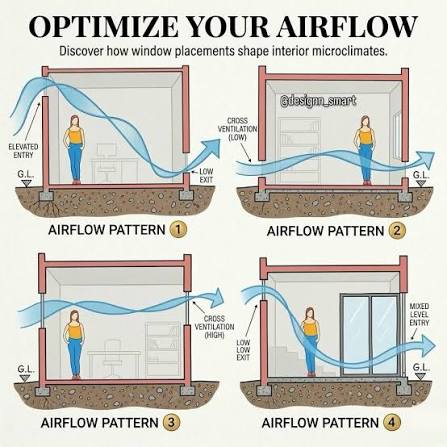
Older buildings understood this without needing to be told. Doors lined up with courtyards. Vents sat high to let hot air escape. Floor plans stayed narrow so every room caught moving air. A lot of modern apartments do the opposite, one glass wall and nowhere for heat to go. So we swap airflow for machinery and act surprised when cities burn through electricity every summer.
Thermal mass sounds technical. It’s actually closer to cooking. A cast iron pan stays hot long after it leaves the stove because it holds heat. Stone, brick, and concrete do the same job inside a building, soaking up warmth slowly, holding onto it for hours, letting it go once the temperature drops.
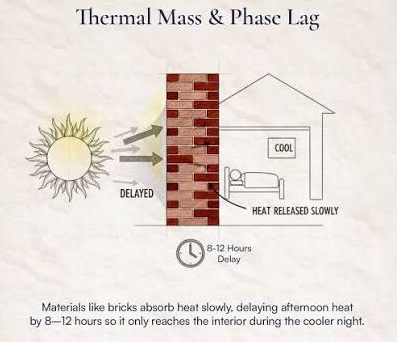
That’s why old stone houses stay cool through a scorching afternoon. The walls delay the heat instead of handing it straight to the room, then let it go outward once night air drops below the temperature of the stone, which is also why throwing every window open after dark was never superstition, just the last step of the same system.
A light building reacts to the weather. A heavy one negotiates with it. The difference is a few degrees you never had to pay for.
Somewhere along the way we split architecture from the landscape around it. That was the mistake. A mature deciduous tree, the kind that drops its leaves every winter, is one of the oldest climate technologies we have. In summer its leaves catch the sun before it reaches your roof. In winter those same leaves drop and let the light back in, right when you need it.
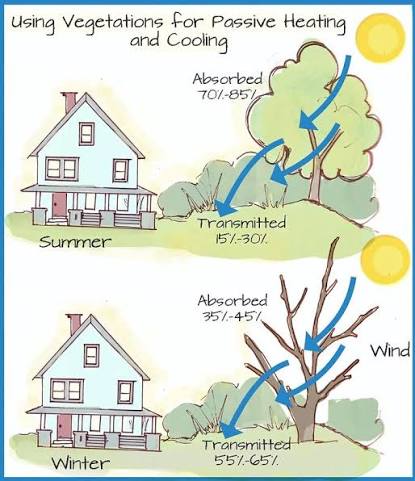
Compare that to a parking lot, which soaks up heat all day and radiates it back into the block long after dark. Trees do the opposite, they cool the air around them while they’re at it. During a heatwave, tree canopy runs eight to twelve degrees Celsius cooler than bare pavement, and a shaded sidewalk can feel up to 14 degrees cooler than one with nothing overhead. We keep shopping for smarter cooling systems while we cut down the oldest and most efficient ones.
None of this needs a backyard. A fifteen story block can face the right way and breathe on two sides just as easily as a bungalow, because the physics doesn’t care how many units are stacked on it. Sprawl is the real opposite of passive design, not density. Sprawl is what happens when a city spreads instead of stacks, and it only survives on a car in the driveway and a compressor on the wall.
People ask if insulation is the most important feature of an efficient building. Insulation matters, but it comes after the fundamentals. A well designed passive building stacks orientation, shading, ventilation, thermal mass, and insulation into one system where each part is quietly doing the others’ job too. Orientation catches the winter light. Overhangs block the summer sun. Trees add seasonal shade. Windows catch the wind. Walls bank the day’s heat. Insulation keeps all of it from leaking back out. None of this is new. It’s just been sitting there unused for about a century.
Climate change keeps exposing how badly we build. Our answer is always the same, a bigger unit, a stronger system, more electricity. We rarely ask if the building was ever designed with any of this in mind to begin with. Passive design offers something else, comfort you get from understanding a place instead of comfort you buy every month. Latitude, wind, trees, sunlight, seasons.
A building shouldn’t have to fight the place it’s standing in every single day, and for most of human history none of them did. Architecture was an extension of the land before it became a product line.
Pauline Paredes shouldn’t have to leave Albi to stop living in a kettle. The five million households rationing their own heat this winter shouldn’t have to choose between warmth and food. None of that is the weather’s fault alone. It’s the bill for a hundred years of buildings that were never asked to do their share of the work.
The most sustainable energy was never going to be the one we invent next. It was always the one we stopped needing the day we designed the building right the first time. We just built our way out of remembering that, one glass tower at a time.
Teekay