Why your passions matter more than your job

Protect your passion.

Ask someone what they do and they’ll usually answer with their job.

Ask them what they’re passionate about and many struggle to answer.

Somewhere along the way, many of us began confusing what we do for a living with who we are. We spend years building careers, yet often neglect the hobbies, projects and ideas that make us unique.

Work is important. It pays the bills, provides stability and gives many people a sense of purpose.

But your passions shape a different part of your life.

They shape who you become.

You don’t find your passion. You protect it.

People often talk about “finding their passion” as if it’s hidden somewhere, waiting to be discovered.

I don’t think that’s how it works.

Most passions begin as simple curiosities.

A book that sparks your interest.

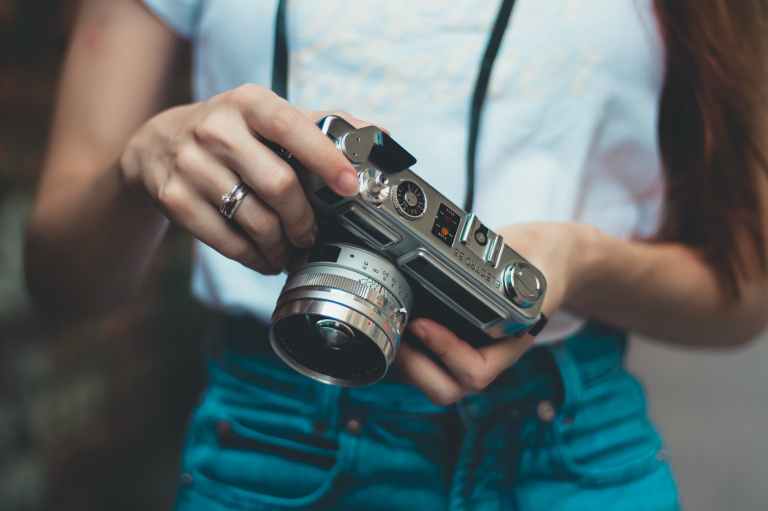
A camera you decide to pick up.

A language you start learning.

A notebook you begin filling with ideas.

The difference isn’t talent.

The difference is that some people keep making time for those interests long after the initial excitement fades.

Passions aren’t found.

They’re protected.

Creativity deserves a place in your life

For years, I’ve spent my free time writing, recording podcast episodes, building my van and exploring new places.

None of these projects began because they promised financial success.

I pursued them because I genuinely enjoyed them.

Ironically, the more time I invested in these creative pursuits, the more meaningful they became.

They taught me new skills, introduced me to incredible people and gave me experiences that no job ever could.

Looking back, I’m grateful I didn’t wait for permission or perfect conditions before starting.

Stop waiting for more time

One of the biggest mistakes we make is believing we’ll pursue our passions later.

When work becomes less demanding.

When we earn more money.

When life settles down.

The problem is that life rarely becomes less busy on its own.

If something matters to you, you have to make room for it now, even if it’s only thirty minutes a few evenings each week.

Small, consistent efforts are what turn interests into lifelong passions.

Keep learning

When was the last time you learned something completely new?

Not because your employer asked you to.

Not because it would look good on your résumé.

But simply because you were curious.

Learn a language.

Pick up an instrument.

Start writing.

Learn photography.

Build something with your hands.

Cook meals you’ve never made before.

The goal isn’t to become an expert.

The goal is to keep growing.

Curiosity is one of the greatest gifts we have, and it deserves to be nurtured throughout our lives.

Your job isn’t your identity

Most of us work.

Most of us care deeply about our families and our friends.

Those things matter.

But they’re also things millions of other people share.

What often makes someone memorable is what they choose to create, learn or contribute outside of work.

The novels they write.

The photographs they take.

The gardens they grow.

The businesses they build.

The music they compose.

The adventures they pursue.

Those are the things that reveal who we are.

Final thoughts

Your job may pay your bills, but your passions shape your life.

Protect them.

Make time for them.

Nurture them.

Years from now, you probably won’t remember every meeting you attended or every deadline you met.

But you’ll remember the things you created, the skills you learned and the moments when you allowed your curiosity to lead the way.

As Nelson Mandela once said:

“There is no passion to be found playing small, in settling for a life that is less than the one you are capable of living.”

Thanks for reading.

Teekay.

The age of Hip-Hop, from the streets to cultural dominance: A tribute

First of all, let me start by saying that hip-hop goes far beyond the musical aspect of the culture.

Actually, hip-hop IS culture, and culture always transcends music and the arts.

  • So, what is culture ?

Culture is the sum of all the universal elements that bring people together.

It’s when our individualities work together to bring about change and evolution.

  • What makes hip-hop a culture ?

Hip-hop embraces different artistic elements.

Overtime, it blended and transcended the artistic aspect of itself to become a means for seeing, celebrating, experiencing, understanding, confronting, and commenting on life and the world.

Hip-hop is also an emotion, a state of being and a frame of mind.

It’s the feeling you get from the MC, graffiti artist or DJ when they’re in their element.

It’s a long lasting feeling that lives within you, it’s ingrained in your thought process and your vision.

Hip-hop, in other words, is a way of living, a culture.

  • Where and when

The elements of hip-hop came together in the Bronx borough of New York City. It was the early 1970s and times were tougher than usual for the poorer parts of urban America.

From a whole lot of nothing and a whole lot of imagination, hip-hop was born.

  • Where did hip-hop get its name?

Hip-hop combines two slang terms:

The word “hip” has many plausible definitions and origins, none of which is actually official, so believe whichever one you prefer.

  1. Research and speculation by both amateur and professional etymologists suggest that “hip” is derived from an earlier form, “hep”. Many etymologists believe that the terms “hip”, “hep” and “hepcat” derive from the west African Wolof language word “hepicat”, which means “one who has his eyes open“.
  2. “Hip” also means “in the know” or “aware” (which isn’t too far off the definition above) and has been a part of African American vernacular since the late nineteenth century.
  3. “Hip” also means “very fashionable”.

“Hop”, on the other hand, represents the hopping or leaping movement exhibited by hip-hop performers.

  • The difference between rap and hip-hop

Put simply, rap is a method of delivery, it’s the action of speaking rhythmically.

Hip-hop is the whole cultural movement behind rap (music).

Hip-hop entails business-savviness, marketing, money management, philanthropy, entrepreneurship, advertising, content, graffiti, DJing, fashion and design, not just “music”.

  • Artists that shaped my frame of mind

Like many people my age (90s kids), I grew up listening to hip-hop on the radio and cassette tapes.

From KRS-One to Big L, Mos Def, Jay-Z, Pun, Wu Tang, Snoop, Ice Cube and Pac, these artists shaped my mindset and outlook on life.

Later came the likes of Eminem, 50 Cent and Ye, just to name a few.

Many (if not all) hip-hop artists come from very humble beginnings.

However, despite starting at the very bottom and with virtually all the obstacles one could face in modern society, these craftsmen honed their skills and built empires through hard work, talent and focus.

Their determination and fighting spirit are beyond admirable and I’m glad I had them to look up to as a kid.

  • Hip-hop is my culture

You’ve probably heard me say this on my podcast, but I’mma say it again: hip-hop is my culture.

And I ain’t talking about the music. Hip-hop is a lifestyle.

It’s the way we talk, the way we walk, the attitude and the flavors.

It’s how people carry themselves, how Knowledge Reigns Supreme Over Nearly Everyone (KRS-ONE), the power of storytelling and communities as well.

  • Let’s go deeper, though 

People in the 90s used to say hip-hop (and MCing) was a fad. 

Growing up in a (somewhat) conservative, immigrant family, rap music was always looked down upon.

They labeled it “gibberish”, “noise”.

My old man (and most people his age) told me this a hundred times.

They didn’t get it then and many still don’t get it now.

So let me explain hip-hop culture, once and for all, as simply as I can.

  • Explaining hip-hop culture

The first thing you gotta understand is that this culture has many themes, the most common ones being knowledge, righteousness, struggle, empowerment, violence and drugs.

The best songs in hip-hop are about everyday life, struggles and change.

Hip-hop artists, whether we’re talking about musicians, DJs or graffiti artists, take cues from their lives to create art pieces.

Violence and drugs must’ve caught your attention, so let me enlighten you with an interesting fact about the progressive side of hip-hop (which mainstream media won’t tell you):

Did you know that break dancing gained popularity when Afrika Bambaataa’s Zulu Nation began using break dance battles as a substitute for gang-on-gang violence?

Note: I don’t like this dude one bit, but credit where credit is due.

Anyway, hip-hop artists have always tried to provide answers to society’s rampant problems.

They tried to change mindsets and make people visualize the change they wanted in their lives and the world.

I consider hip-hop artists to be teachers, mentors, change-makers.

Some of them used their platform to spread violence and bad behavior, but we can’t let a few bad apples spoil the bunch.

The likes of RZA (artist turned philosopher, vegan), KRS (teacher, activist), Mos Def (activist, actor), Talib Kweli and Jay-Z have done more for our culture than artists of all other genres combined.

They elevate communities and give them hope.

They paved the way for future generations, gave us the blueprint.

These legends are the reason for so much positive change and wealth in the black and latino communities, something easily dismissed by the media and folks who know very little about hip-hop culture.

Hip-hop ain’t about breakdancing, fashionable clothing and dope beats anymore. It’s about business, wealth building and minority empowerment.

Last but not least, hip-hop is one of the cornerstones for so much black wealth and minority entrepreneurs.

It is the foundation of several self-made moguls and multi-million dollar businesses in minority communities.

Ye, Jay-Z, Dre, Diddy, Eminem, Birdman, Akon, 50 Cent, Rick Ross and the late Nipsey Hussle fall directly into the those categories.

  • Global influence

Hip-hop is one of the few genres that you can hear everywhere you go.

Africa, South America, Asia, Europe..it’s global !

What makes hip-hop such a powerful phenomenon is the way it changed the way people dress, what they consume and the way they carry themselves in everyday life.

I look at hip-hop as a powerful tool for change, a global positive influence.

Hip-hop empowers and guides, which is the very essence of this culture. It also ignites conversations and exposes our modern society for what it really is.

Police brutality, social inequality, racism, discrimination, poverty and power are all common topics in hip-hop songs and among hip-hop heads.

Many hip-hop artists are activists themselves. They often come together during tough times to support new systems, empower communities and give back.

Hip-hop is an enlightenment for those seeking knowledge. It’s an enlightenment for people yearning for positive change.

Hip-hop ain’t “urban” culture anymore.

Hip-hop is culture, PERIODT.

Seeing the likes of DR, Snoop, Fif and Em on stage at the Super Bowl LVI brought things full circle.

It’s been a long fight but hip-hop is now undeniably one of the most important music genres in history.

Smartphones are our generation’s cigarettes

Everybody lit up

Picture a dinner table in 1957.

The air is blue. Grandpa’s cigarette sits in the ashtray between the bread and the butter. Mom lit hers off the stove. The neighbor stopped by and lit up too, and nobody blinked, not even the pregnant woman at the end.

Nobody coughs. Nobody finds it strange. Everyone’s doing it.

Now picture your table tonight.

Same faces. Same blue glow. Only it comes from rectangles now, one per person.

That’s the trick. Smoke at least stung your eyes. A screen just takes your evening.

We laugh at the 50s. Doctors in the ads. “More doctors smoke Camels.” How did anyone fall for that?

The same way you did at 7:42 this morning, before you even got out of bed.

Cigarettes killed you fast enough to make the news. Phones are patient. Same years, different thief.

And make no mistake, this was engineered. Tobacco companies tuned the nicotine. Tech companies went to school on B.F. Skinner, who kept pigeons pecking by rewarding them at random. Slot machines run on the same idea. So does your phone, and the lever is right there on the screen. They even call it pull to refresh.

A cigarette burns down. A feed never does. Nobody ever stubbed out a feed.

When the public got nervous, both industries offered the same fix. In the 50s it was the filter tip. Today it’s screen time limits. A filter never made a cigarette healthy. It just made smokers feel better about the next one.

I’m not above this table. I’ve been the fifth rectangle at it.

And I’m no enemy of the screen. I met my wife on a dating app, the best thing one ever did for me. That’s the cruelty of it. The device that introduced us can still eat dinner with her while I’m sitting right there and nowhere at all.

I grew up in cyber cafes. Counter-Strike, Red Alert, the hum of old computers. The cafe charged by the hour, so when our money ran out the game did too. We stumbled out squinting, loud and hungry, and rode our bikes around town until somebody’s mom called us home.

The internet had a door and a meter back then. Now the cyber cafe lives in your pocket, and it has neither.

So who’s to blame? Big Tech built the lever. We keep pulling it. Blame only one side and the other walks free. Laws should force these companies to build less addictive products. But waiting on them to fix this is like waiting on a tobacco company to talk you out of smoking.

So here’s a dare, and it’s small. One dinner. Phones in a basket by the door.

Let the table be lit by something else. A candle. A lamp. Somebody’s face.

If that sounds impossible, you just got your diagnosis.

Then ask what you do with the evening you just got back.

Hike. Nothing in the woods has a refresh button.

Talk to someone with no schedule and no agenda. No agenda, no algorithm. Let the conversation run until it runs out.

Pick up something you’re bad at. A guitar, a language. Being bad at it is the point, because nobody optimized it to keep you.

Wasted life never gets a bad rep. It gets a push notification.

Teekay

Behaviors and traits that make healthy personalities

A list of healthy behaviors, traits and habits I’ve noticed in some of my favorite people in the world.

Those are traits I personally try to gravitate towards in order to build healthy relationships.

  • They avoid criticism at all costs 

Criticism shows a lack of understanding and empathy towards others. The less critical you are towards others, the better.

Slander is also a major sin in my religion.

Slander and backbiting are considered “destructive” major sins.

These two sins are forbidden by God because they sow enmity, evil and discord among people and lead to destruction.

Slander, like overt criticism, are a sign that you want to show superiority, which in turn shows a lack of confidence and is ultimately a sign of weakness.

People ain’t all that different, we just choose our differences, so please refrain from being cheaply critical and just accept others as they are.

  • OCEAN is the acronym

OCEAN are the “Big Five” personality traits developed in psychological trait theory. They’re a great way to assess oneself.

O for Openness. Being open to new things, new ideas, change and being curious are all great signs of a great personality.

For instance, if someone tells you about a positive thing in their life, try to dig deeper, be happy for them.

Showing real, genuine interest in what others tell you is a sign of goodness, and happiness.

C for Conscientiousness: be conscientious is one of the noblest traits.

Knowing how to act and react accordingly in difficult situations, being aware of your surroundings, treating others with respect are all signs of a conscientious person.

Don’t be so quick to judge and just let others the benefit of the doubt, learn how to trust.

E for Extroversion: try being extroverted, not in a “party-going” way, but rather in a “be curious about others, ask how they are” way.

Don’t interrupt when others talk to you, show genuine interest in their feelings and wellbeing and treat them with love.

A for Agreeableness: being agreeable should be the easiest thing when you’re surrounded by the right people. Your friends need to challenge you on certain things, but not on everything.

“A person with a high level of agreeableness in a personality test is usually warm, friendly, and tactful.” So be warm, make people feel at ease, heard.

N for Neuroticism (it’s not what you think): this trait is about people who are emotionally stable, who deal well with stress pretty well, who don’t worry much (know how to let go of grudges) and are generally very chill and laid-back.

The kind of person who avoids conflict and troubles at all costs, my type of people.

Let’s move on to some other traits healthy people have in common:

  • They don’t think about their needs only (considerate?)

One of my favorite thing about some people is their ability to put others before themselves.

I’ve had friends who were exactly that. They always serve others before they serve themselves, they’re the carers of the group, which usually brings the group together.

Carers are my personal favorite people !

Showing that you care about people other than yourself is such an attractive trait. It shows empathy and an acute sense of humanity. 

  • They avoid hijacking conversations

Everything isn’t always about you, let others be, express themselves.

Make them feel comfortable enough to open up to you. Avoid hijacking conversations with sentences like “this reminds me of something I went through”. NO. It’s not about u, it’s about them ! 

  • They own up to your failures and mistakes

Take responsibility.

It takes courage to take responsibility, to show that you understand your mistakes and that you’re willing to do better

Say that you blew it when you feel like you did. I know it shows vulnerability but that’s what healthy people say and do

  • They allow nuance in life

Things shouldn’t always be how YOU want them to be, focus on yourself and hope others do their best as well

  • They never shame, never blame, and don’t have an agenda

If you disagree with someone, do it in a civil and respectful manner. Things can’t always go your way and that’s ok, let it go, just make sure you do your best in every situation, and don’t beat yourself up when you can’t 

  • They have an acute sense of teamwork

Teamwork makes the dream work.

Always try to work things out with the person in front of you, personally and professionally.

  • They don’t mind sharing the negatives of their personal and professional endeavors

Talking about the negatives of your life allows a sense of intimacy to others, which is the opposite of control.

This intimacy exposes you and will eventually make you feel vulnerable, which is bound to get you out of your comfort zone and help you grow. Let yourself get into that new, unexplored zone

  • They’re patient

Impatience is a big red flag when it comes to narcissism.

Impatience show that you can’t slow down to care about someone other than yourself, and that you’re too spoiled to realize you can’t always have it your way.

Impatience manifests itself in different forms, some people throw tantrums while others will just shut themselves out. Learn how to deal with your emotions and be an open book.

Learning how to be patient is an important aspect of a good life

  • They listen

Take time to reflect and learn how listen. It’s no wonder God gave us 2 ears and only 1 mouth.

We learn more by listening and observing others, so try to be more present and listen. Active and intentional listening is the cornerstone of good communicators and healthy relationships.

Careful listeners are usually more open and compassionate.

  • They know other people aren’t just as good as their last good deed 

Avoid being harsh and too quick to judge.

Avoid holding grudges and let others prove you wrong.

If you’re interested in health in general, read this article about small changes that could completely change your life.

Thanks for reading.

Teekay

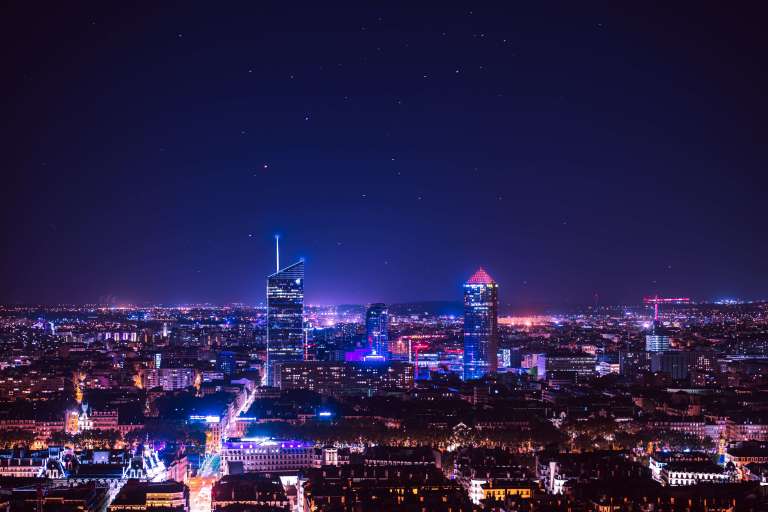
Life in Lyon, mostly pros and some cons

My Honest Experience After Three Years

Lyon was the city where I became an adult.

I moved there to study at university and stayed for three years. During those three years, I learned how to live on my own, manage money, make mistakes and figure out what kind of life I wanted.

Would I move back?

Probably not.

Would I recommend it?

Absolutely, to the right person.

Those two answers aren’t contradictory.

I’ve lived in several countries and cities since then, so I naturally compare Lyon with many other places. Looking back, I appreciate it much more today than I did while I was actually living there.

It’s not my favorite city in France.

It never felt like home.

But that’s okay.

Some cities aren’t meant to be your final destination. They’re meant to prepare you for whatever comes next.

Lyon did exactly that.

If you’re thinking about moving there, studying there or you’re simply curious about what everyday life is like, here’s my honest experience, the good, the bad and everything in between.

Big enough to keep you busy, small enough to breathe

One of the first things I appreciated about Lyon was its size.

It’s a proper city.

You’ll find concerts, museums, football matches, festivals, universities and pretty much everything you’d expect from one of France’s biggest urban areas.

Yet it never felt overwhelming.

I’ve spent time in cities where leaving the house already feels exhausting. Too many people. Too much traffic. Too much noise.

Lyon never gave me that feeling.

You can cross the city without turning it into an expedition. After a while, you start recognizing neighborhoods instead of feeling lost in them.

I think Lyon found a balance that many cities never do.

It’s large enough that you’ll rarely run out of things to do.

It’s small enough that everyday life still feels manageable.

Public transportation is one of Lyon’s biggest strengths

I’ve always believed that a good city is one where you don’t need to think about transportation.

Lyon is one of those cities.

The metro works.

The trams work.

The buses work.

The funicular still feels fun no matter how many times you take it.

Most days, I simply left my apartment and went wherever I needed without thinking twice about how I’d get there.

That’s probably the highest compliment I can give any transportation system.

I’ve lived in places where owning a car felt almost mandatory.

Lyon wasn’t one of them.

Even today, if someone asked me which French city impressed me most when it comes to public transportation, Lyon would easily make my shortlist.

Its location is almost unfair

If I had to choose Lyon’s biggest advantage, this would probably be it.

You’re close to almost everything.

The Alps.

Switzerland.

Italy.

Southern France.

Paris.

Whether you enjoy hiking, skiing or simply taking weekend trips, Lyon makes it ridiculously easy.

Some of my favorite memories from those three years weren’t actually in Lyon.

They were outside it.

I spent weekends hiking around Grenoble, exploring Annecy, discovering Aix-les-Bains and getting lost in places I’d never heard of before moving there.

Annecy quickly became one of my favorite places in France.

If you’ve never been, put it on your list.

Seriously.

Living in Lyon made all those trips possible.

Instead of spending every weekend in the same city, I could keep discovering somewhere new.

That suited me perfectly.

I’ve never been someone who enjoys staying in one place for too long.

Student life

Lyon has a reputation for being one of France’s best student cities.

From what I saw, it deserves it.

The universities attract students from all over France and abroad. There are always events happening, cafés full of students and plenty of nightlife if that’s your thing.

It wasn’t really mine.

I’ve never been much of a drinker.

While many of my classmates spent Thursday nights in bars, I was usually somewhere else.

Watching football.

Learning about investing.

Trying to earn money.

Or simply enjoying a quiet evening.

I had just left home, and my priorities were different.

I wanted to become independent.

I wanted to stop relying on my parents as quickly as possible.

So my experience of Lyon probably wasn’t the typical student experience.

That doesn’t mean the city lacked nightlife.

Quite the opposite.

It simply means I chose a different path.

And looking back, I wouldn’t change it.

The People

If there’s one thing I never fully connected with in Lyon, it was the people.

Before anyone gets offended, let me explain.

I’d lived in several countries across four continents by then (6 by now). Every place has its own personality, and every person experiences it differently. This is simply how I felt during my three years there.

Compared with other places I’d lived, people in Lyon often seemed more reserved. Conversations didn’t happen as naturally. Making friends took time.

That doesn’t mean people were cold.

In fact, once you got to know them, many were kind, loyal and welcoming.

The first step just felt a little harder.

Ironically, some of the friendliest interactions I had weren’t in the neighborhoods people usually recommend.

The neighborhoods everyone warned me about

Whenever Vénissieux or Les Minguettes came up, people usually had something negative to say.

Crime.

Poverty.

Avoid them.

That was the reputation.

Then I actually went there.

What I found were families doing their shopping, kids playing outside, neighbors talking to one another and people simply living their lives.

Were there problems?

Of course.

No one should pretend those neighborhoods don’t face real social and economic challenges.

But reducing entire communities to their crime statistics never sat right with me.

Those visits reminded me of something I’ve experienced in many countries.

Places are rarely as simple as their reputation.

Some of the wealthiest neighborhoods I’ve visited felt emotionally empty.

Some of the poorest felt surprisingly alive.

Lyon reinforced that lesson.

The city where I stopped eating meat

Most people associate Lyon with food.

It’s often called the gastronomic capital of France.

Ironically, it’s also where I stopped eating meat.

When I arrived in Lyon, I was still omnivorous. That said, I never really enjoyed meat.

I mostly ate it because everyone around me did.

Then I started having recurring digestive problems.

One day I simply thought:

Enough. Not because I knew it was the issue, simply because I stopped liking it.

To my surprise, many of my digestive problems disappeared.

At the time, I became pescatarian.

Years later, that decision eventually led me to veganism, but that’s another story for another day.

So whenever someone asks me about Lyon’s famous cuisine, I smile a little.

Most people remember Lyon because they discovered French food.

I remember it because I discovered I didn’t want to eat red meat anymore.

Funny how life works.

Cost of living

Lyon isn’t cheap.

Then again, compared with Paris, it almost feels affordable.

Housing was my biggest expense, just like it is for most people.

Finding an apartment wasn’t always easy either.

French administration loves paperwork.

Sometimes it feels like you need paperwork to prove you have paperwork.

If you’re moving from abroad, be prepared.

You’ll probably hear words like garant, dossier and justificatif more often than you’d like.

Once I got through all of that, everyday life became much easier.

Public transportation kept transportation costs low.

Walking was often faster than driving.

And because I wasn’t someone who spent every weekend partying, my student budget stretched surprisingly well.

My favorite places

Even years later, certain places immediately come back to me.

Fourvière

If you only visit one place in Lyon, make it Fourvière.

The basilica dominates the city, but honestly, I remember the view just as much as the building itself.

Standing up there, Lyon suddenly makes sense.

You can see how the city grew around the Rhône and the Saône.

It’s one of those places where you naturally slow down for a few minutes.

Vieux Lyon

Yes, it’s touristy.

Yes, you should still go.

I never got tired of wandering through its narrow streets.

Sometimes I’d intentionally take a different route just to see where I’d end up.

That’s usually the best way to explore old cities.

Parc de la Tête d’Or

I’ve always believed every city needs somewhere people can simply exist without spending money.

Parc de la Tête d’Or is that place.

You can walk.

Read.

Exercise.

Sit under a tree.

Or do absolutely nothing.

Cities need spaces like that.

Probably more than shopping malls.

Along the rivers

The Rhône and the Saône quietly became part of my routine.

Sometimes I’d walk for no particular reason.

Sometimes I’d stop and watch people cycling past.

Other times I’d just sit there.

Not every memorable place has to be spectacular.

Sometimes it’s enough that it makes you slow down.

Football

Anyone who knows me knew this section was coming.

Olympique Lyonnais was impossible to ignore while living there.

Watching matches at Gerland became part of my time in Lyon, I truly loved it.

Football has a way of connecting you to a city, even when you know you won’t stay forever.

What I didn’t love

As much as I appreciate Lyon today, I never felt a strong desire to stay.

Part of that had nothing to do with the city itself.

Even in my early twenties, I knew I wanted to keep exploring the world. Lyon was never meant to be my final destination. It was simply the next chapter.

The weather didn’t always help either.

If you enjoy long, sunny summers and mild winters, Lyon might disappoint you. Winters often felt gray, and snowy, and after a while I found myself craving the ocean.

That’s one of the reasons I eventually fell in love with southwest France.

I also never developed the emotional connection I later felt with other places.

Some cities grab you almost immediately.

Lyon never did that for me.

It earned my respect long before it earned my affection.

Looking back, those are two very different things.

Would I move back?

Probably not.

Not because there’s anything wrong with Lyon.

Simply because today I know what I’m looking for.

I need nature close by.

I prefer smaller cities.

I love being able to reach the ocean within minutes.

I enjoy quieter places where life feels a little slower.

Lyon doesn’t pretend to be that city, and I wouldn’t ask it to be.

That doesn’t make it worse.

It just makes it different.

So, who is Lyon actually for?

If you’re a student, I think Lyon is one of the best choices in France.

If you enjoy public transportation, you’ll probably love it.

If you like having concerts, museums, football matches and weekend trips all within easy reach, Lyon has a lot to offer.

If you enjoy hiking or skiing, its location alone is almost enough to convince you.

If you’re looking for your first experience living away from home, it’s a city where it’s relatively easy to become independent.

On the other hand, if your dream is living beside the sea, spending every weekend at the beach or escaping into nature within a few minutes, there are probably better places.

And if warm weather is essential to your happiness, Lyon’s winters may eventually wear you down.

Three years that changed me

When I moved to Lyon, I thought I was moving there to get a degree.

Looking back, I learned much more than what happened inside a classroom.

It’s where I learned how to live alone.

It’s where I started managing my own money.

It’s where I stopped eating meat after years of digestive problems and eventually began the journey that would later lead me to veganism.

It’s where I realized I cared more about freedom than status.

More about experiences than possessions.

More about discovering the world than settling in one place.

Lyon didn’t turn me into the person I am today.

But it helped shape that person.

For that, I’ll always be grateful.

Verdict

Would I recommend Lyon?

Yes.

Without hesitation.

Not because I think it’s the greatest city in France.

Not because it’s perfect.

No city is.

I’d recommend it because it’s a city that works.

It offers opportunities without the intensity of Paris.

It has excellent public transportation.

It’s beautiful without feeling like an open-air museum.

It’s surrounded by incredible places to discover.

And if you’re willing to make the effort, you can build a very good life there.

Would I choose to live there again?

No.

My life has taken me in a different direction.

But every time I think about Lyon, I remember the city where I became independent, where I challenged old habits, where I grew up, and where I quietly started building the life I live today.

Some cities become your home.

Others become part of your story.

For me, Lyon will always be the latter.

Thanks for reading.

Teekay

Update (2026): I lived in Lyon over a decade ago. While things like housing prices, bike infrastructure and vegan options have evolved since then, this article remains an honest account of what it was like to live there and the lessons I took away from those three years.

WATCH: Great movies that explore black excellence, systemic racism and social (in)justice

Compiled is a list of more than 50 GREAT movies about black excellence, social injustice, black struggle and systemic racism.

Most movies on this list are based on real events, some are fictional.

  • Marshall – Chadwick Boseman, 2017 (based on a true story)
  • Green book – Mahershala Ali, 2018 (based on a true story)
  • Just mercy – Michael B. Jordan, Jamie Foxx, 2019 (based on a true story)
  • Race (Jesse Owens) – Stephan James, 2015 (based on a true story)
  • BlacKkKlansman – John David Washington, 2018 (based on a true story)
  • Selma – David Oyelowo, 2014 (based on a true story)
  • One night in Miami – Leslie Odom Jr., 2020
  • Fresh – Sean Nelson, Samuel L. Jackson, 1994
  • Get on up – Chadwick Boseman, 2014 (based on a true story)
  • Ray – Jamie Foxx, 2004 (based on a true story)
  • The banker – Anthony Mackie, Samuel L. Jackson, 2019 (based on a true story)
  • American gangster – Denzel Washington, 2007
  • 42 (Jackie Robinson) – Chadwich Boseman, 2013 (based on a true story)
  • Malcolm X – Denzel Washington, 1992 (based on a true story)
  • Ali – Will Smith, 2001 (based on a true story)
  • From the rough – Taraji P. Henson, 2013 (based on a true story)
  • Harriet – Cynthia Erivo, 2019 (based on a true story)
  • Coach carter – Samuel L. Jackson, 2005 (based on a true story)
  • Juice – Tupac, 1992 (based on a true story)
  • Menace II Society – Tyrin Turner, 1993 (a true-to-life portrayal of the streets in South Central Los Angeles)
  • Mudbound – Jason Mitchell, 2017 (Inspired from real-life experiences)
  • Remember the Titans – Denzel Washington, 2000 (based on a true story)
  • The express (Ernie Davis) – Rob Brown, 2008 (based on a true story)
  • Freedom writers – Hilary Swank, April Lee Hernández (based on a true story)
  • The great debaters – Denzel Washington, 2007 (based on a true story)
  • The butler – Oprah Winfrey, Forest Whitaker, 2013 (based on a true story)
  • McFarland, USA – Kevin Costner, 2015 (based on a true story)
  • Boyz N’ the hood – Cuba Gooding Jr., Ice Cube, 1991 (Inspired from real-life experiences of the director, John Singleton)
  • Mississippi burning – Willem Dafoe, 1988 (based on a true story)
  • Concussion – Will Smith, 2015 (based on a true story)
  • Fruitvale station – Michael B. Jordan, 2013 (based on a true story)
  • Hidden Figures – Taraji P. Henson, 2016 (inspired by a real-life incident)
  • Do the right thing – Spike Lee, 1989 (inspired by a real-life incident)
  • The blind side – Sandra Bullock, 2009 (inspired by a real-life incident)
  • Poetic justice – Tupac, Janet Jackson, 1993
  • Dope – Shameik Moore, Zoë Kravitz, 2015
  • Sorry to bother you – Lakeith Stanfield, 2018
  • Driving Miss Daisy – Morgan Freeman, 1989
  • Lean on me – Morgan Freeman, 1989
  • Loving – Joel Edgerton, 2016
  • Fences – Viola Davis, Denzel Washington, 2016
  • Roman J israel Esq. – Denzel Washington, 2017
  • The harder they fall – Zazie Beetz, Idris Elba, Jonathan Majors, Regina King, 2021
  • 12 years a slave
  • Dear white people
  • The help
  • American history X
  • Get out
  • Black panther
  • Django
  • Queen and Slim
  • Barbershop
  • Friday
  • If Beale street could talk
  • The hate you give

Living in contrast 

Contrast is so important man !

Not just in photography, but in life in general.

Hear me out.

The fact that some days SUCK ASS is the reason why the good days are so cherished, don’t you think ?

I mean, it’s only normal for some days to suck, life on earth was never meant to be easy, it’s just a test.

Life is also all about change. We change, the world around us changes, nature is constantly changing. We evolve forward (and backwards), and the only constants in this life are time and love !

The contrast between our best and our worst days helps us magnify the good things that happen to us.

I think that’s beautiful !

As beautiful as our fading bad memories and our ability to forget.

Can you imagine a life where you’d remember all the bad things that’ve ever happened to you ? Bruh !

No man can handle that many memories, so be thankful for your ability to forget, it’s a true blessing !

Also, here’s a memory I never want to forget, from a trip to Kenya ❤

Trip to Kenya

I love Instagram

Instagram can and has helped so many youngsters make money, real money !

Instagram gave me a platform to express myself unlike any other platform since MySpace and Skyblog.

Although I’ve always loved blogging, Instagram gave “documenting” a whole new meaning: documenting through real life pictures.

I grew up in a family that wasn’t very artistic.

I barely have any pictures from my childhood. My parents had an old camera but only used it for special occasions.

As such, I was never really exposed to photography till my teen years.

But then shit CLICKED ! It clicked instantly !

When I got my first phone, I took pictures of everything ! I loved following my friends around with a camera at hand, I loved macro photography, printing photos and drawing over them (yeah, weird) etc.

I used to post lots of pictures on Hi5 and Skyblog. Captioning was also super fun for me back then !

Facebook also brought the best out of me. I got my first proper camera, a Nikon 7200D or something in 2010 and it was a game changer !

Instagram wasn’t around back then, but you could feel something was cooking in that sense, cause Facebook just wasn’t cutting it for photographers.

Fast forward a couple of years, I opened my IG and the rest is just wild !

At some point I was posting twice to three times a day !

Instant gratification is a crazy phenom’ dawg !

I just LOVED the feeling of sharing pictures of my travels with people. I loved the likes, the comments. I simply loved the fact something I created was appreciated by people I’ve never met in my life.

A creator’s high is addictive.

Instagram has evolved a lot throughout the years. The rise of stories and DMs was also a whole different ball game.

The ephemeral side of IG stories is what made them so special.

2016/2017 was the season in which I posted the most. I was posting 5 to 6 stories plus 1 to 2 posts A DAY ! I used to spend so many hours editing, coming up with captions and taking pictures.

It was a fun time I ain’t even gon’ front !

I enjoyed the heck out of it, but it was draining, and not just physically.

It’s mentally draining to be constantly seeking instant gratification and compliments, it fucks with your mental health HEAVY.

So I took a big break from it all in 2018.

At first it was supposed to be temporary, but then I just lost the need for validation. I learned how to enjoy life on the sidelines, how to be alone.

A friend of mine once summed up my mindset perfectly. He said “vivons bien, vivons cachés“, which roughly translates to “to lived happily requires one to keep things private”, or “secluded life is the happiest” (English proverb).

Thanks Luc !

Instagram is such a powerful tool if you know how to use it to your advantage. Don’t waste it !

Minimalist japan

The biggest lessons I’ve learned since becoming a minimalist

Minimalism gave me my time back

I used to spend 20 minutes on the dishes. Now it takes me about 5.

That gap made me reevaluate what time means to me and how much of it I wasted on essentially nonsense.

Minimalism makes you wonder. Do I enjoy spending all my free time cleaning and doing maintenance? Do I like spending so much time in stores? Do I enjoy working so many hours and/or side jobs to pay for stuff that’s mostly wants or impulse buys instead of needs?

The beauty of minimalism is that it doesn’t force you to do anything. It’s about the freedom to choose and the power that comes from making decisions based on awareness instead of being ruled by unconscious impulses and societal conditioning (hello, neuromarketing).

I don’t know why it took me so long to realize this, but when you own fewer dishes or clothes, nothing has room to pile up. If you want a clean plate or outfit, you have to keep them clean.

Speaking of which, here’s a short and perfect story on how to deal with laundry, by Matt D’Avella.

The same goes for everything else. I don’t dust anymore because there’s nothing sitting out to collect it. I have no trinkets and barely any furniture, so there’s nothing to clean around and nothing to worry about when I move.

Since becoming a minimalist, I also need less self-discipline. There’s no other option than to wash whatever is dirty, and there isn’t much to maintain in the first place.

All of it boils down to a simple idea: Minimizing means having less work to do. Less stuff equals less work equals less stress.

When my go-to isn’t buying more or asking someone else to fix it, I become more resourceful and creative with what I have.

Another thing is that the momentum from downsizing or organizing one area of your physical life carries over into others. You want to experience the thrill of accomplishment again and again. It also stopped me from ignoring my problems. Instead I started facing them and shrinking them.

Owning less also meant fewer decisions, which leads to less decision fatigue. When you don’t burn your decision-making power on non-essentials (like what to wear or which cup to use), you have more energy for the decisions that matter. A personal uniform could be the answer for some, not for me, yet.

Last but not least, minimalism promotes self-mastery. It teaches you to question everything.

Thanks for reading.

Teekay

Minimalism: removing things that remove you from your life

From 51 pairs of shoes to fewer than 40 clothing items in total

How many pairs of shoes do you own?

I used to own 51. That’s a lot of footprint before I’d taken a single step.

Today my entire wardrobe, shoes included, comes in under 40 items. My life didn’t shrink. It got bigger.

It started one morning. I woke up, looked around and realized I never wore most of my shoes. They no longer fit. Not my feet. My life.

Some designs were out of fashion, some matched nothing I owned anymore and some came from brands I’d boycotted.

I sold a few, because I needed the money and they were classics. The rest I gave away.

People call this minimalism. I never thought the word hit hard enough. It sounds like a look, white walls and a lone plant. But you can empty an apartment and refill it every season.

I wasn’t chasing a look. Everything I owned went on trial, and one question decided the verdict. What does this cost me and the planet? Whatever couldn’t plead its case left. That’s what I call essentialism.

So I own the essentials and nothing extra. When I need something, I buy it second hand or I buy it built to last. I repair what breaks and repurpose what can’t be fixed. Quality costs more up front and less over time, so frugal and eco-friendly end up on the same side.

I still own stuff. I’m not claiming a perfect score. I just make every piece earn its place.

Every purchase is a vote and so is every refusal. Buy less and the market shrinks. Buy better and it rewires. Some companies will close and others will learn to build things that last.

It worked before. In 1988 a coalition of environmental groups called for a boycott of the tuna companies. In April 1990 StarKist, the world’s largest canner, announced it would stop buying tuna caught along with dolphins. The industry followed. By November Congress had written the label into law. Buyers moved first and the law made it stick.

But markets answer to profit first. Every market runs on rules, and the only question is who writes them. So we also need laws. Ban planned obsolescence. Make repair the default. Buyers who change their habits are the ones with the leverage to demand them.

One person can’t do that alone, but one person can be the first of many. I believe in the power of the individual, and I know it multiplies when others follow.

It also helps to have the money to buy well, so that power isn’t spread evenly. I’m not selling a cure. I’m describing what I can control, and asking you to help me ask for the rest.

What I don’t spend on things goes to experiences and charity. Board games. Bowling with friends. Sports. Volunteering. Every week. Memories don’t need a closet.

I do still travel, but slowly. I pack light and stay long, because a flight can cost the planet more than a closet ever did. Travel isn’t the point, and I’m not selling it.

Owning less quieted my head too. Less stuff means less to maintain and less to worry about. I started out running from a stressful, expensive way of living. I found a calmer version of myself instead.

I’m not there yet. Excellence is a religious principle for me, and so is adding value to other people’s lives. Owning less leaves more time and money to give.

Turns out the best way to leave a smaller footprint is to own fewer shoes.

Teekay