Lantern by teekay

Note from a sleepless night

For the first time in a while, I genuinely can’t sleep  

My whole body hurts, in a good way 🙂

Legs super heavy, ankle kinda messed up, toes on my left foot hurt (got stepped on twice in football practice today), ribcage from that knock Friday, plus some hamstring and inner thigh pain.

What I wouldn’t give for a massage right now  

Anyway, I stopped making blog entries like this for a while. No one really wants to read this kinda thing anymore, amirite?

People would rather hear someone yap on video, I get it  

Still, I miss this

And I miss old school blogs in general  

Plus, reading just hits different, you build everything in your head and it feels way more personal and real

I’ve actually read way more this year than I have in the last five combined

I mean books

I’m a big reader overall, I just don’t read books like that, I go on Medium and read random blogs instead

I don’t really do personal stories though, which is probably why I don’t write these either, but I still think there’s a world for it

Even if there aren’t that many people left reading this kind of stuff

I miss Tumblr, I used to spend hours on there  

So many interesting people, so many stories  

And most of them just wrote like this, no structure, no formatting, just thoughts  

There’s comfort in being natural, it makes everything feel more intimate  

I’m rambling  

Pain’s keeping me up, so maybe I’ll just watch Better Call Saul, eat some peanut butter with a couple bananas and wait for the sun

Nights like this I usually don’t sleep until the next evening anyway

Peace and blessing

Small changes to improve life

An interconnected system that made me healthier and more aligned.

You can’t expect your body to function properly if everything you expose it to works against it.

What you touch, what you eat, what you breathe in, what you surround yourself with matters.

Most of these changes didn’t come from theory. They came from small moments of doubt. Something feels off, you look into it, you adjust, and then you don’t go back. Over time, those adjustments start forming a pattern.

  • Plastic was the starting point

Once I started paying attention, plastic was everywhere. Not just single-use items, but containers, cutting boards, utensils, bottles. Even when it’s thick and reusable, it still degrades over time. Microplastics are already present in food and water, so adding more exposure through daily habits made little sense. I removed plastic containers, replaced cutting boards, and shifted entirely to glass, wood, and metal for anything that comes into contact with food. I now store and consume food exclusively using stable, non-degrading materials.

  • Water isn’t neutral

Tap water is often treated as a given, but once you look into what it contains, it changes how you approach it. I invested in a proper filtration system and regret not having done so earlier. Before that, I went with a basic pitcher, the Brita type, then moved to something more advanced (and more expensive) to remove a wider range of contaminants. That said, I also started being more intentional with how I drink water. In the morning, I’ll often have water with cucumber and lemon, and I’ll leave cucumber slices in the bottle throughout the day. Given how much of the body is made up of water (60%, vs 73% for the brain), it doesn’t make sense to treat it casually.

  • Cookware and daily exposure

Cooking used to be about convenience. Non-stick pans, plastic utensils, quick cleaning. Once concerns around certain coatings and chemical residues became more visible, that convenience started to feel like a trade-off. I replaced everything with stainless steel cookware and switched plastic utensils for wood or metal. It requires more attention, but it removes a layer of uncertainty.

  • Eliminating plastic in hygiene products

The same pattern showed up in the bathroom. Most hygiene products come in plastic packaging, and beyond that, their composition raises lots of questions anyway. Shampoo, shower gels, toothpaste, it’s all part of the same system. Moving away from plastic bottles was supposed to be difficult, till it wasn’t. Toothpaste remained the hardest to replace due to cost and availability, though totally doable. Plus, you can make your own, if time allows.
As for shampoo, it’s been close to a decade since I’ve reduced it drastically, once a month on average, and even less in the summer when I’m regularly in the ocean or rivers. When I do use one, it’s always a natural, oil-based, plastic-free option. The rest gets washed with regular, natural soap.

  • Perfumes and what goes through the skin

I used to collect perfumes. At one point I had around thirty bottles. It was part of how I presented myself. Over time, I learned more about what actually goes into most fragrances. They’re not just alcohol and plant extracts. Many contain compounds that interfere with hormonal systems. Applying them directly on the skin, especially around the neck, didn’t make sense anymore. In fact, it became a health hasard. I still use what’s left of my collection, but only and exclusively on my clothes.

  • Body lotions and absorption

That same logic extended to body lotions. At first, plastic packaging was the issue. Then I realized the formulations themselves raised similar concerns. Long-lasting scents rely on chemical stabilizers that don’t just sit on the surface, they penetrate well into our body and weaken our nervous system. I replaced them with simpler alternatives like coconut oil, jojoba oil, and monoi stored in glass bottles. They do what’s needed without unnecessary complexity.

  • Sound, stimulation, and the nervous system

There’s also what we expose our brain to. I used to listen to music at maximum volume for hours every day. Looking back, it’s surprising there wasn’t more damage in my inner ear. More recently, I started questioning constant exposure to wireless ear devices as well. It’s not easy to step away from, but I’ve made adjustments. I use wired earphones more often, reduced how much I listen to anything overall, and capped the volume so it never exceeds 85 decibels on my phone. Silence has taken a bigger place too, especially through long walks.

  • Food as a baseline

Diet was one of the earliest shifts and it stayed consistent. Processed sugars and ultra-processed foods were removed and haven’t come back. The focus is on whole foods, fiber and stable energy rather than spikes. Fermented foods like homemade kefir became part of daily intake to support gut health. Supplements were added with specific purposes. Creatine for performance and recovery, cordyceps and lion’s mane for energy and cognitive support, vitamin D in winter, omega-3 for long-term brain health, turmeric for inflammation. Fruit is eaten whole rather than juiced to avoid unnecessary glucose spikes. Alongside this, I fast intermittently throughout the year, supporting deeper internal regulation. And of course , everything 100% plantbased and palm oil-free.

  • Sun exposure, corrected over time

Sun exposure is another area where I had to adjust. For a long time I approached it carelessly. I even used coconut oil thinking it would protect my skin, when in reality it was doing the opposite. I rarely burned, but that doesn’t mean there was no damage. Over time, I learned to be more controlled. Less direct exposure on the face, protection when needed, and no more chasing tans.

  • Living closer to nature

One of the biggest shifts didn’t come from removing something, but from changing the environment itself. Living closer to nature makes everything easier. Movement, silence, exposure to natural elements. Practices like grounding or earthing stop being abstract ideas and become part of daily life. Walking barefoot, touching the ground, spending time in natural surroundings. There’s a noticeable effect on stress levels, posture, and overall balance. Even something as simple as leaning against a tree or staying still outdoors changes how the body settles. Oh yeah, and tree hugging FTW!

  • Reconnecting with natural signals

Some changes are harder to explain in purely scientific terms, but still feel real in practice. Hair is one of them. There are older ideas about hair acting as a kind of antenna, a connection to the environment. Historically, cutting hair has sometimes been used not only for hygiene but also as a way to strip identity, control individuals, or disconnect them from something deeper, which is why you often see it done immediately in contexts like slavery or imprisonment. Whether or not that idea can be measured, I’ve noticed a difference since growing it out and stopping the use of chemical-heavy products. There’s a stronger sense of awareness and sensitivity, so keep your hair, guy, unless you’re balding, of course !

  • Positive thinking and internal dialogue

Not everything is physical. The way you think shapes how you experience all of this. I’ve always been confident, but intentional self-talk is something else entirely. It requires awareness, especially when you’ve been exposed to environments where things don’t always go well. I’ve been working on reinforcing more constructive internal patterns. At the same time, I’ve developed more understanding for people who lean toward pessimism. Most of the time it’s not a choice. It’s conditioning. Repeated negative experiences shape expectations, and those expectations shape perception. A lot of people judge that without understanding it, don’t be one of them.

  • Interconnectedness

At some point, all of this converges. What you eat, what you drink, what you wear, what you apply to your skin, what you listen to, where you spend your time, it all feeds into the same system. None of these changes exist in isolation. Each one reinforces the others. Once you start seeing that, it becomes difficult to go back to unconscious habits. So, approaching one’s environment and lifestyle as one interconnected system is the key to all this.

Across all these changes, the pattern is consistent. Remove what is unnecessary, reduce synthetic exposure, and replace it with simpler alternatives. When something can’t be avoided, create distance between it and the body. Over time, those small decisions compound, and life gets better.

Thanks for reading.

Teekay

Bedroom sleep by Teekay RM

How to sleep better

Small changes, big difference.

This was supposed to be a simple blogpost about a few changes I made to improve my health. Nothing deep, nothing structured. But once I started writing, one thing became obvious. Sleep wasn’t just one habit among others, it was the foundation behind them all. So instead of burying it in a longer piece, I pulled it out entirely. This is a focused breakdown of how I reshaped my sleep and nervous system.

Sleep isn’t just rest. It’s not just recovery. It’s something far more subtle, almost something we’ve forgotten how to experience properly. The french refer to sleep as “la petite mort”, or “the little death”. Nas, the legendary rapper also referred to it as “the cousin of death.” We all know something deep takes over when we’re asleep, we just don’t know how deep.

Whether you see that as spiritual, neurological, or both, one thing is certain. Sleep isn’t passive. It’s something you prepare for, something you enter, something you either respect or disrupt.

  • Heart rate is the real gatekeeper

Most people focus on how tired they feel, but that’s not what determines sleep quality. Heart rate does. If it’s elevated when you’re about to fall asleep, the night is compromised before it even starts. You might still pass out, but the depth, recovery and continuity won’t be the same. What’s interesting is how many things influence heart rate. Late meals, drinking too close to bed, blue light, mental stimulation, these are all factors. Sleep doesn’t start when you lie down, it starts hours before.

  • The four-hour rule

One of the most effective ways I found. Simple in theory but harder in practice: Stop eating and drinking about 4 hours before sleep.
When I stick to it, the difference is immediate. My heart rate drops more easily, I don’t wake up in the middle of the night to use the bathroom, and my sleep stays uninterrupted. It also extends my fasting window naturally, which supports recovery and deeper cellular processes during the night. I now aim to stop all intake at least 2 to 3 hours before bed, 4 feels long at times..

  • Warm extremities, faster sleep

Another overlooked factor is temperature distribution. If your hands and feet are cold, falling asleep becomes harder because the body struggles to shift into a resting state. I don’t like sleeping in socks, so I use different workarounds to keep my feet warm, like heating pads.

  • Deep pressure and a sense of safety

Sleep is also psychological. The nervous system needs to feel safe enough to let go. One thing that helped more than I expected is using heavier covers or even placing a pillow on top of my torso. That pressure creates a grounding effect. It reduces restlessness and makes it easier to drop into deeper sleep. It’s the same principle behind weighted blankets.

  • Spinal alignment in side positions

Posture doesn’t stop mattering once you’re asleep. I often fall asleep in a fetal position, and adding a pillow between my legs made a clear difference. It keeps my hips aligned, reduces strain on my lower back, and prevents tension from building overnight.

  • No pressure around the waist

I also became sensitive to anything compressing my stomach. Elastic bands started to feel intrusive once I paid attention. So now I have this black pair of very loose shorts with worn-out drawstrings that barely apply any tension. It’s the only piece I can tolerate consistently. Everything else feels restrictive.

  • Sleeping without layers

I didn’t always mind sleeping fully clothed. However, at some point I started waking up overheated and restless. So I adjusted gradually. First to go was the top, then the pants. My body regulates itself better without unnecessary layers.

  • Never sleep in plastic

For some mysterious reason, I used to think fleece was an ideal material. Light, warm, comfortable. But a friend pointed out that it’s just polyester. Plastic. That changed how I looked at it completely. Since then, I’ve moved away from synthetic fabrics in bed. I still own a few fleece items, but only as outer layers. Never directly on the skin and never in bed. So now I mostly sleep in cotton or nothing at all.

  • No charging by the bed

I always knew having devices charging right next to the bed wasn’t ideal, but convenience has a way of creeping back in. Thankfully, my wife reminded to reset that boundary, and I have. Since then, phones charge outside the bedroom. Simple.

  • Sleep as a system

Once all these pieces come together, you stop seeing sleep as a single action. It becomes a system. Timing, temperature, posture, materials, stimulation, all interacting at once. Change one variable and you might feel a difference. Change several, and the entire experience shifts. I don’t see sleep as something I “get” anymore. I see it as something I build, night after night.

Thanks for reading.

Teekay

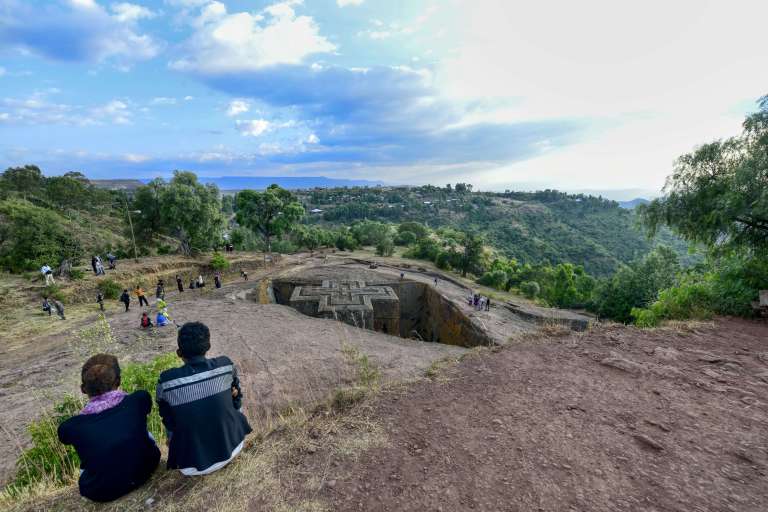
Lalibela by Teekay RM

A place without clocks

This isn’t fiction. It’s called the African Jerusalem.

People there don’t need clocks. The bees tell the time.

As my readers know, I’m vegan, so I don’t take from animals, not even honey. That hasn’t changed. But in the highlands around Lalibela, I noticed a different way of living with them, one rooted in respect and faith.

I spent four years of my teenage life in Ethiopia, then returned again at 22. Some places stay with you in a way that doesn’t fade, and for me, this is one of them.

Not far from Lalibela, in rural areas often referred to locally as Gueorgis, beekeeping isn’t just a livelihood. It’s something older, something spiritual. Among Ethiopian Orthodox Christian communities, bees are not seen as simple insects. They’re often regarded as pure creatures, sometimes described as reflecting the discipline and harmony of angels. Not because they’re divine, but because they’re part of a creation that follows a precise order, one that humans are meant to observe and respect.

That idea of order shows up everywhere, especially in how people relate to time.

  • The concept of time

There’s a belief I heard more than once while I was there. The bees give the time three times a day. In the morning around what we would call 10, then at midday, and again in the afternoon around 3. These are the moments when their activity peaks, when they leave in visible waves to gather nectar. It’s not a clock in the modern sense, but it becomes one in daily life.

And in many of these rural areas, that matters more than any watch.

Because the reality is that in remote parts of Ethiopia, especially around Lalibela, people have historically lived without precise, mechanical timekeeping. Time is read through the sun, through patterns. Morning begins when the light settles a certain way. Midday is when the sun stands above you. Evening arrives when shadows stretch and the air cools.

People don’t meet at exact hours. They meet in moments. And everyone understands those moments.

There’s a cliché you hear often about Africans being fashionably “late,” about Ethiopians not caring about time. I don’t take that at face value. Without claiming it as a proven explanation, I think it says more about the observer than the people being described.

If your entire system is built around minutes and precision, then anything outside of that looks like disorder. But what if it’s just a different structure?

For instance, in Islamic cultures, time is extremely precise. Daily prayers are tied to exact solar positions. Fasting begins and ends at defined moments. The lunar calendar governs entire cycles of life. Time there is something to be measured carefully and adhered to strictly.

In contrast, in many rural societies, time is lived before it’s measured. It flows with what God has set in motion, rather than being cut into exact units. So what looks like “lateness” might simply be life unfolding without the pressure of the clock.

And Ethiopia takes that even further in a way most people don’t even realize.

It doesn’t just live time differently. It counts it differently.

There’s what we call international time, and then there’s Ethiopian time. In Ethiopia, the day starts at what we would call 6 AM, roughly sunrise. That’s hour one. So what we call 7am becomes 1 o’clock. Noon becomes 6. What we call 6 PM becomes 12. It’s not confusion. It’s consistency with the sun. The first hour begins when light begins.

It’s a system that actually makes a lot of sense. It aligns the clock with lived reality rather than abstract convention.

The calendar follows the same logic.

Ethiopian calendar has 13 months, not 12. Twelve months of 30 days, and a thirteenth month of 5 days, or 6 in a leap year. That last month, Pagume if my memory hasn’t failed me, is short, almost like a pause between cycles.

Thus, the new year doesn’t begin on January 1st. It begins around September 11th. Right after the heavy rainy season, when the land resets, when the skies clear, when life begins again. It’s agricultural, but also spiritual. A renewal that actually follows the environment people live in.

And because of how this calendar was preserved, based on older Christian calculations of the Annunciation, Ethiopia is about 7 to 8 years “behind” the Gregorian calendar. So while much of the world is in 2026, Ethiopia is in 2018.

It’s not that one is right and the other is wrong. It’s that one remained rooted in its own continuity, and I love and salute that.

  • Beekeeping in the African Jerusalem

That continuity matters when you look at places like Lalibela, often called the African Jerusalem. Tied to Gebre Mesqel Lalibela, whose name is understood to mean “the bees recognize his greatness/sovereignty”, it reflects one of the oldest continuous Christian traditions in the world. Christianity has been practiced in Ethiopia since at least the 4th century, long before much of Europe fully adopted it.

So when people bring honey to churches, when priests bless bees and beekeepers, it’s not symbolic in a modern sense. It’s continuity across centuries.

And that continuity is visible in movement too.

During honey harvesting seasons, some people from extremely remote villages set out for the markets of Lalibela, carrying honey in hand-crafted clay jars to sustain their families. They walk for days, not hours, days!

They move across the highlands, guided by the sun, by memory, by instinct. No maps, no schedules. Just direction.

Along the way, they stop at churches. Some of them centuries old, carved into rock. They offer part of their honey. Priests receive it, bless it, sometimes bless the bees themselves. It’s not commerce. It’s passage.

When night falls, they stop.

No tents. No inflatable beds. No modern equipment. They sleep outside, on the ground, with whatever they carry. Then at sunrise, they continue. Dozens of kilometers, step after step, until they reach the central market.

And this still happens today.

Part of what makes this possible is the geography of the Ethiopian highlands, historically known as Abyssinia. Compared to neighboring regions in Kenya or Tanzania, which are home to large populations of dangerous wildlife, the high plateaus around Lalibela are relatively safer. Fewer large predators, different ecosystems. It doesn’t mean there’s no risk, but it makes long-distance walking without protection far more viable.

The beehives themselves are adapted to this environment. Made from hollowed logs, woven fibers, and natural seals, they protect the bees from temperature swings and pests, and can survive in remote areas with minimal attention. Over generations, this system has allowed Ethiopian beekeeping to continue for at least 1500 years, deeply tied to the rhythms of the land.

The climate shapes everything too. Much of Ethiopia doesn’t follow four seasons, but cycles of rain and dryness that vary by altitude. Life organizes itself around what is given, and when it’s given, whether for people or for bees. In this context, priests play a role. Honey and candles are brought to churches, blessed, and prayers are offered for people and their bees.

Provision ultimately comes from God, and humans participate within limits they cannot control.

Even so, tension remains. People treat the bees with care and respect, but taking honey is still taking. Even when done carefully, it remains a form of exploitation. It may be necessary, it may be balanced, but it must also be acknowledged.

What stayed with me after all these years and despite how much I traveled was the alignment. A place where time is not just counted differently, but felt differently. Where a day doesn’t begin at midnight because a clock says so, but when light actually appears. Where a year resets not in the middle of winter, but after the rains have passed. Where journeys are measured in effort, not in minutes.

In a place like Lalibela, you start to question what we consider “normal.”

Maybe precision isn’t always clarity.

Maybe being “on time” isn’t always being in sync.

And maybe there are ways of living, still existing today, that haven’t forgotten that time was never meant to be owned, only followed.

Thanks for reading.

Teekay

Minimalism by Teekay RM

The day I let everything go

Forty bags in one day.

Toddlers throw things away before we teach them to keep them. Psychologists say it’s how they test limits and watch how adults respond.

But maybe there’s something simpler underneath. What if it’s just our nature? What if we aren’t made to hold on so tightly? Maybe accumulation isn’t what we’re wired for?

I remember the moment clearly. I looked around my old place at everything I owned, and it hit me all at once. Too much. Not just cluttered, overwhelming. It made me anxious just standing there. Every object felt like it was pressing in on me.

That’s when it clicked. Not later, not gradually. Right there.

I didn’t ease into minimalism. I snapped into it. That same day, I gave away around forty bags of clothes, shoes and random things I’d been holding onto for years! No slow process, no back and forth. Just done.

The van came later, and while it didn’t start the shift, it definitely amplified it. When everything you own has to fit into a small space, there’s no room for hesitation. You see things clearly, fast.

After that, I started to understand what had been bothering me. Every object I owned was asking something from me. Care, attention, energy. Shoes, clothes, gadgets, books, even the way I ate and what I wore, all of it took a piece. I hadn’t seen it before, then suddenly I couldn’t unsee it anymore. Everything I kept added pressure, stress.

We grow up hearing that more is better. Keep, buy, own. Security becomes something you can hold. Status becomes something you can show. Identity gets tied to what you wear and what you display. It works, that’s the problem. You follow it without thinking, and slowly you drift. The weight isn’t just objects. It’s habits, routines, expectations, distractions. The more you carry, the harder it is to notice yourself.

Minimalism didn’t feel like loss. It felt like breathing again. The less I had, the more I could see what mattered. I started noticing how much energy I’d been giving to things that gave nothing back. How little space I’d left for thinking, for feeling, for just being. The clutter in my space started to mirror the clutter in my head, and I began clearing both.

And it’s not just physical. Life fills up with noise just as easily. Social media, notifications, obligations, habits that don’t fit. It all accumulates. The weight isn’t just what you own, it’s what you let in. What you absorb, what you feel responsible for. Minimalism became less about things and more about attention. Choosing what deserves a place in my life.

Sometimes I watch a toddler drop a toy and move on without a second thought, and it feels familiar. That ease. That lack of hesitation. They don’t think about cost or judgment. They just let go. There’s something honest in that.

I’ve felt it in my own life. Each time I let something go, space opens. My thoughts get quieter. Focus comes back. Energy returns. Underneath all the noise and habits, there’s something steady that was always there. I just couldn’t hear it before.

Peace isn’t in having more. It’s in needing less. In not being weighed down by things, habits, or the constant pull for more. We’re meant to move lighter, to drop what we don’t need and keep what matters. Toddlers know it, and we forgot.

Minimalism isn’t about aesthetics or rules. It’s a return to attention to self.

Less, so you can carry yourself fully. Less, so you can notice life as it is. Less, so you can remember who you are without all the extra weight.

Thanks for reading.

Teekay

Duality by Teekay RM

Immigrant kids think in parallel

We belong here, but we carry somewhere else at the same time.

I didn’t grow up in one place, I grew up across countries, cultures, across versions of life that don’t always overlap. Nothing ever felt fully singular;

Not home
Not language
Not even memory

There’s always another layer running underneath.

A joke that only lands in one country
A smell that brings you back somewhere no one around you knows
A version of you that only exists in a different language

Sometimes it hits you mid-thought. You’re here, but part of you is somewhere else entirely.

Maybe you didn’t move as much, but if you grew up between cultures, you know this feeling.

Because we do learn the world around us
We move through it like anyone else
We understand its rules, its references, its rhythm.

But we also carry something quieter, a parallel world most people don’t see or know about.

It lives in memories that don’t translate
In inside jokes that fall flat outside the circle
In moments that shaped you, but have no place where you are.

And then there’s language.

Some of us speak our parents’ language, some don’t. Some are fluent, some are still finding their way.

Either way, it stays with you

Because language isn’t just words, it’s a way of thinking. You don’t just switch vocabulary, you shift perspective.

Sometimes you even feel it in yourself. Not like you’re becoming someone else, just.. a different version of the same person, expanded.

Every culture has its codes: What’s said, what’s not. What’s allowed, what’s felt but never expressed..

And if you understand more than one, you start to see the world differently.

Then comes the next layer, religion.

Growing up with beliefs and traditions that don’t match the world around you

Again, different rhythms, different priorities and a different way of making sense of life altogther.

You learn what everyone else knows, but you also carry what they don’t: Names, stories, references that exist outside the mainstream.

It’s not always visible, but it shapes how you move.

Living through all of this does something to you. It doesn’t just make you adaptable, it makes you more aware.

You understand what it means to be misunderstood
To feel slightly out of place
To not fully belong

Some embrace it, others struggle with it.

But when you’ve felt that, you don’t want others to feel it too.

Not everyone reflects on it, but those who do soften.

They listen more
They notice more
They hold space differently

Because they’ve lived the distance.

Immigrant kids blend it, and stand out.

We connect things that aren’t supposed to touch
We carry perspectives that don’t usually meet.

We’re rarely the ones drawing lines because we know what it feels like to stand outside them.

Being an immigrant isn’t easy

It comes with friction
With weight
Sometimes with rejection

But it builds something solid

Depth
Awareness
Resilience

You learn to see more
To feel more
To understand more

You don’t just move between worlds

You connect them.

We don’t need to split ourselves to fit in, we don’t need to shrink parts of us to be understood.

We carry multiple worlds
Multiple languages
Multiple ways of being

That’s our wealth.

Let us be.

Thanks for reading.

Teekay

Winter by Tee

Winter knows something we forgot

You don’t hate winter, you hate how we live through it.

I’m such a winter person. I resisted that idea for years because I don’t particularly enjoy being cold and I absolutely hate humidity, but I’m done arguing with it now.

Winter is my favorite season, the one that makes me feel most alive. Fall comes close behind. Maybe I’m really a fall-first person who only settles once winter arrives. Fall feels like a threshold, a kind of preparation, while winter is the place it all leads to.

Most people say they hate winter, but I don’t even think that’s true. I think they hate winter under capitalism, which is a very different thing.

Winter isn’t simply December 21st to March 20th like we’re taught in school. December 21st is the winter solstice, the shortest day of the year, the deepest point of darkness. In many ways, that’s peak winter. It’s both the heart of it and the beginning of its slow release.

If you look at older seasonal systems, especially the Celtic calendar, winter is often understood differently. It begins around early November, with Samhain, and transitions toward spring around early February, with Imbolc. I’ve always intuitively aligned with this rhythm, a rhythm that feels more real in the body.

Winter always makes me nostalgic about my childhood. Where you grow up shapes your relationship to it. Below the equator, winter falls during what we call summer months. It’s shorter, less harsh. It’s still winter, but it doesn’t carry the same weight. Above the equator, winter has a presence. It changes everything.

Winter in New York, for example, is unmatched. But to understand it, you have to start with fall. Fall is special in a way that’s hard to replicate. The air sharpens, the leaves start falling, the temperature drops just enough to wake you up. School starts again. People return from summer scatteredness with a sense of purpose. There’s motivation, a quiet hope that something new can begin before the year closes.

Then come the holidays. I don’t celebrate them myself, but I can’t deny the atmosphere. Halloween, with kids everywhere. Thanksgiving, massive in New York. Then the Christmas season, with its films, its smells, its food. Cinnamon, baked goods, warmth. Fall is about getting cozy. It’s about preparing, consciously or not, for winter.

And then winter arrives.

One of my favorite childhood memories is hearing on the radio that a blizzard had shut everything down. Schools closed for days. Travel discouraged. The world paused. I remember the feeling of going back to bed, diving under the blanket, watching the snow fall outside. There was a kind of collective stillness. Everyone was home at the same time, in the middle of the week, which almost never happened.

Winter meant snowball fights with family and friends. Building snowmen. Coming back inside after hours in the cold to drink something hot, cinnamon-heavy or just a simple hot chocolate. Winter also meant shorter days, which I’ve always loved. There’s something honest about darkness arriving early. It forces you inward, and you simply sleep better. At least I do.

Now that I live in a coastal town, winter has taken on a different form. The place empties out. It becomes a ghost town. Only a few locals remain. I can walk through the streets, along the beach, into the forests, and not see anyone. Not hear anyone. Just space, and peace.

Fall here is also the perfect time for mushroom picking. There’s something deeply satisfying about finding your own food, bringing it home, cooking it. I don’t do it as often as I used to, but when I do, it reconnects me to something older than all of this.

Winter also brings unpredictability. Storms, floods, strong winds, snow.

I’ve always been fascinated by storms. There’s something humbling about them. They remind you how small you are without humiliating you. Just placing you back in proportion.

And this is where my relationship with winter becomes more than just aesthetic.

Winter, to me, is supposed to be a time of slowing down. A form of hibernation. Not complete inactivity, but a reduction. A softening. A withdrawal from constant output.

But winter under capitalism is the opposite of that.

It’s when everything accelerates. Black Friday. Christmas consumption. New Year’s, January sales. Valentine’s Day. It becomes a concentrated period of economic extraction. A time where people are pushed to spend more, move more, produce more, exactly when their bodies are asking for less.

I don’t adhere to that. I reject it.

Because biologically, intuitively, winter asks something else from us. Even illness patterns reflect that. People don’t just get sick because of viruses. They get sick because they keep pushing at summer pace in a winter body. They ignore the signal to slow down.

Historically, people understood this. They worked through the year, harvested their crops, prepared for winter. Around the end of October, they gathered, celebrated the end of harvest. And then life shifted. Maintenance replaced expansion. Survival replaced growth.

Nature does the same. Animals retreat. Bears hibernate. Bees cluster. Even plants withdraw into themselves. Winter is not death. It’s conservation.

I sometimes imagine a different life. A cabin. A cycle where summer is for harvesting, fall for preparing, winter for resting. Wood gathered. Food stored. Time spent simply maintaining what’s already there.

Life, at its core, is that simple. But systems built on constant expansion don’t allow simplicity to survive.

Winter, for me, is also about people. Not crowds, but closeness. Seeing friends, family. Sitting together, drinking tea, sharing time without urgency. There’s a different quality to connection in winter. It’s slower, deeper.

Even sports feel different. The air, the light, the coziness of it all. Everything sharpens.

And if I’m honest, part of why I love winter is personal. I’m introverted. I need that inward space. But it’s also something else. A fatigue with what humanity has become. The constant noise, the endless movement, the destruction of everything around us.

Winter feels like a counterforce.

It slows us down whether we like it or not. A storm doesn’t ask for permission. A blizzard doesn’t negotiate. When it hits, everything stops. And in that moment, we’re all equal. No one is above it.

There’s something powerful in that.

To me, winter restores balance. It interrupts the illusion that we can operate at maximum intensity all year long. The shortening of days, the stretching of nights, the way time itself feels heavier, slower, none of that is accidental. It’s a form of design.

Fighting that rhythm has consequences. You see it in people who try to live winter like summer. They burn out. They get anxious. They get sick.

I haven’t had a cold in years. That’s not just because I’m active or because of my diet, though those matter. It’s because I try, as much as possible, to align with that rhythm. To accept that winter is not the time to push.

Winter is about gathering. With nature, with people, with yourself. It’s not about peak productivity. It’s not about consumption. It’s not about proving anything.

It’s about remembering.

And maybe that’s why I love it so much. Because despite everything, despite the systems we’ve built to override it, winter still imposes itself. It reminds us, quietly or violently, that we are not in control of everything.

That there is a rhythm beyond us.

And that we’d probably be better off listening to it.

Thanks for reading.

Teekay.

Raven

Neighbors of Lacanau Océan

Small worlds at the edge of the ocean.

Living near the ocean and surrounded by forest comes with a quiet gift: the constant presence of small, living worlds brushing past my own.

In 2024, my wife and I moved to Lacanau Océan almost by accident and immediately fell in love with the area, especially during the off season, when silence settles in. Beyond the calm and the sense of space, what stays with me most is the wildlife I encounter on my daily walks near the ocean and through the forest.

Below is a little gallery of animals I come across regularly, depending on the season. I’m probably forgetting some.

A list of land animals

  1. Wild boars
  2. Roe deer
  3. Rabbits
  4. Hedgehogs
  5. Red foxes
  6. Bats
  7. Red squirrels
  8. Frogs
  9. Moles
  10. Butterflies
  11. Dragonflies
  12. Snails
  13. Lizards
  14. Ducks
  15. Cats of course
  16. and dogs

And then a bunch of birds too

  1. Kentish plover (the funniest birds itw)
  2. Ravens (my faves)
  3. Blackbirds
  4. White storks (lucky if you see them, but they’re around)
  5. Tawny owls (the shy ones)
  6. Common buzzards
  7. Common kestrels
  8. Eurasian magpie
  9. Eurasian siskin
  10. Seagulls
  11. Cranes

Pretty awesome, right?

Thank you for stopping by.

Teekay

Beaver

The intelligence of slow water

And how unlikely engineers are fixing what we broke.

Somewhere between dams, drains and forgotten beaver ponds, we taught water to behave unnaturally.

For centuries, rivers weren’t linear channels cutting through land. They were living systems with multiple rhythms. They had (some still do) a normal bed, a medium bed and a larger floodplain. During certain periods, rivers would overflow into nearby fields and forests, depositing sediments, organic matter and nutrients. They would slow down, spread out, feed themselves and recharge the surrounding soils before returning to their usual course. Water lingered. Land absorbed it like a sponge. Life depended on that slowness.

Modern (human) engineering broke this balance. To protect infrastructure, agriculture and urban areas, rivers were straightened, dredged and confined between embankments. Their wider beds were erased. This caused for river channels to deepen because the straighter a river is, the faster it goes, and the faster it goes, the more it digs under itself, thus lowering its bed. This phenom’ had two immediate consequences. First, rivers stopped feeding themselves. Cut off from floodplains, they no longer collect organic matter, sediments and nutrients that once sustained aquatic ecosystems. Second, and more critically, they stopped feeding the land around them. The earth lost its role as a sponge.

When soils are regularly rehydrated by slow, spreading water, they remain loose, alive and porous. Microorganisms thrive. Roots penetrate deeply. Organic matter accumulates.

When this process is interrupted, soils dry out and compact. They become stiff and tight. Rain no longer infiltrates. It slides across the surface, picking up speed, eroding topsoil and rushing straight into rivers, then quickly into the ocean. Water is no longer stored in landscapes but evacuated as quickly as possible. What we call floods and droughts are often two sides of the same engineered mistake.

This acceleration of water is a massive stress on the planet. Freshwater ecosystems collapse. Groundwater reserves fail to recharge. Agricultural soils lose fertility. Coastal zones receive sudden, polluted surges of freshwater and sediments. The problem is not a lack of rain but a lack of time. Water is not allowed to stay.

Nature, left to itself, mirrors its creator’s perfection. So naturally, solutions do exist, and one of the most powerful allies in restoring hydrological balance is none other than the beaver.

Often dismissed as a nuisance or a pest, the beaver is in fact a master engineer, working in harmony with natural laws rather than against them. By building “dams”, beavers slow water down. They raise river levels back toward their natural height. They reconnect streams with floodplains. They recreate the layered beds that humans spent centuries destroying, and still are.

Beaver dams create chains of small wetlands and ponds, true oases across landscapes. These wetlands filter water by trapping sediments and pollutants. They store water during wet periods and release it slowly during dry ones, reducing both floods and droughts. They soften the surrounding soils, allowing water to infiltrate deeply and recharge aquifers. Land regains its sponge-like function.

The ecological benefits are extraordinary. Beaver wetlands provide habitat for fish, amphibians, aquatic insects, birds and mammals. Frogs, salamanders, dragonflies, trout, ducks and herons all thrive in these environments. Biodiversity increases not despite the dams but because of them. Even forests benefit, as higher groundwater levels support healthier trees and reduce vulnerability to fires.

Beavers don’t build for profit, efficiency or short-term control. They build for stability. Their work reverses, piece by piece, the damage caused by rigid, fast and extractive water management systems, built by us.

Where humans forced rivers to behave like drains, beavers restore them as living systems.

Reintroducing and protecting beavers is not a romantic gesture or a return to some imagined past. It’s a practical, science-backed response to centuries of bad engineering. Beavers show that the solution to water crises is not always more concrete, deeper channels or faster flows. Sometimes, the solution is to slow down, raise water back into the land and let ecosystems do what they have always done best.

If we’re serious about restoring soils, securing water and easing the planetary stress we created, we should stop fighting nature’s intelligence and start learning from it.

In that lesson, the beaver is the blueprint.

Food for thought.

Thank you for stopping by.

Teekay

Sprinter track runner teekay rezeau-merah

Why I misunderstood sprinting for so long and why most people still do

Insights from a former student-athlete.

I started sprinting in 2004. I made my high school teams, then college teams and for a long time I thought I understood speed. I trained hard, I listened to my coaches, I did what was asked.

I hit my ceiling at some point, then one thing led to another till I completely stopped running. I went into boxing in the meantime, then bodybuilding, and slowly but surely stopped training altogether. I played football here and there, surfed for a brief moment, but it wasn’t sustained. Hiking became my favorite thing. Great for cardio, makes me happy and snappy. I felt right where I belonged.

In 2025, after years of just living and many injuries later, I came back to sprinting as grownup. But this time, I noticed something uncomfortable that became obvious. For most of my early career as a sprinter, I was running fast without truly understanding why or how.

That realization is frustrating because it feels like wasted time, and wasted potential.

In hindsight, I now feel like I never went beyond 80% of my capacity. It wasn’t because of my coaches, I simply didn’t understand what my sport was all about, so today, I want to make sure whoever reads this does, because sprinting culture rarely helps.

  • What sprinting isn’t

Speed is constantly explained using endurance logic. Even the gadgets we use, however technical, aren’t really designed for sprinters. Not at the highest level anyway.

Sprinting, for the longest time, was explained through running more, working harder, suffering more than the competition. That mindset, aka hustle-porn, comes from the fact that long distance running dominates the athletics scene. Endurance events shape how people think training works, even when it doesn’t apply to their sport.

One of the first myths I believed (and most people believe) is that sprinters run a lot. We don’t, at all. I used to, but not anymore. I always assumed volume built speed. Matter of fact, many coaches still believe that, and end up frying their runners.

  • What sprinting actually is

Research has shown that elite sprinters accumulate very little true sprinting volume. Max velocity running is neurologically brutal. You can’t repeat it endlessly without dulling the signal from the brain to the muscles. When the central nervous system is tired, coordination goes first, technique collapses, ground contact times increase and speed vanishes. Running more just teaches you how to run slower. That was the first realization I made when I went back into it. Never again!

Next, I believed gym work was mandatory and that strength automatically meant speed. Lift heavy, get powerful, get fast. Not true! Sprinting happens in time windows so short that slow strength barely matters. What matters is how fast you can apply force and how well you recycle it through tendons and stiffness. I’ve seen athletes with modest lifts run incredibly fast and others with impressive numbers never move well on the track. Strength only matters if it transfers.

Another point, for years I misunderstood elasticity. I thought plyometrics were optional extras or warm up games. Coming back to sprinting made it obvious that elasticity is the bridge between strength and speed. I’m not saying I never heard this beofre, I’m saying I wasn’t mature (or smart) enouigh to understand it.

Tendons storing and releasing energy, joints staying stiff at the right moments, rhythm staying intact under high speed. Bounds, hops, wickets and short accelerations teach the nervous system timing. They turn power into something usable. Without elasticity, power stays trapped.

Speaking of stiffness, it is the mother of all improvement in sprinting, another aspect we hardly talk about, or train.

Body composition myths confused me too. Being muscular doesn’t make you slow. Being lean doesn’t not make you fast. Non functional mass is the issue. Muscle that can’t be expressed within sprint specific contact times is dead weight. Leanness that compromises force output is just as useless. Speed only cares about force, timing and coordination.

Drills were another blind spot. I used to see them as filler. Now I see them as low cost technical rehearsal. Drills allow you to practice posture, front side mechanics and rhythm without frying the nervous system. When speed is high, there is no thinking. The body falls back on patterns. Drills build those patterns.

Last but not least, the biggest lesson I learned in all these years is how important rest is, and I don’t just mean sleep, which is the obvious one. When I was younger, stopping early felt lazy, like I wasn’t hustling enough. Now I know it’s intelligent, the right thing to do even. Speed doesn’t improve inside fatigue, it improves when the nervous system is fresh enough to adapt. That’s why we take long breaks between sprints, to rest the nervous system. Adding sets instead of reps, ending sessions before speed drops, spacing high intensity days and protecting sleep are not soft choices, they’re performance choices.

Looking back, it wish I understood all these things earlier. But sprinting is misunderstood because endurance logic dominates sports in general. Distance runners train more and win more medals overall, so their methods are treated as universal. Well, science and elite experiences say they’re not. Speed lives in a different world.

Sprinting rewards intelligence. The faster you want to be, the smarter you have to train.

Cheers!

Tee