On the plants, poisons and people who turn the jungle into a pharmacy, a grocery store and a home
I didn’t realize how little I knew about the forest until our guide started pointing things out.
Our trek through Taman Negara, near Kuala Tahan, covered around 8 kilometers. We started at 10 in the morning and got back around 5pm, with a break at Teras Waterfall before the boat ride back to town.
The trail demanded attention from beginning to end. Mud, wet rocks, exposed roots and shallow streams meant every step had to be placed carefully, and in several spots ropes were fixed to the hillside to help hikers climb or descend slippery slopes. Waterproof hiking shoes with good grip aren’t optional here. They’re the difference between enjoying the trek and spending the day sliding through the mud, if not something worse.
But the distance and the terrain weren’t what made the hike memorable. It was realizing that most ordinary-looking plants are much more than they let on. By the end of the day, I wasn’t seeing trees and bushes anymore. I was seeing functions.
Our guide walked us through plant after plant, and one stuck with me more than the rest. It was used to treat snake bites. When cut open, it’s applied directly to the wound. According to the guide, the inside of the plant would turn yellow as it absorbed the venom, and fresh pieces were applied until the inside stayed white, which is believed to mean no venom is left. Whether or not modern medicine backs that up, it’s a testament to thousands of years of people experimenting with what grows around them.
Other plants did other jobs. One relieved asthma. Another became shampoo, soap and mosquito repellent all at once. I didn’t catch its name, but all it took was rubbing a few leaves together with water before a rich, citrus-scented foam appeared in the guide’s hands. It smelled better than most commercial soaps I’ve used.
The forest also supplies drinking water. Those thick vines made famous by Tarzan actually hold water inside them, and so does bamboo. In a place where rivers aren’t always close, knowing which plants can quench your thirst can matter more than you’d think.
One of my favorite discoveries was the stingless bees. They build their nests inside hollow tree trunks, with only a narrow wax entrance reaching outside. The honey stays protected deep in the wood, out of reach of most predators. Seeing a colony hidden inside a living tree was something I’d never come across before.
There were still plenty of reminders that we were sharing the forest with wild animals. At several points, the guide stopped because he could smell them before seeing them. The scent, he said, likely came from monkeys or maybe elephants that had recently passed through. We also found deep claw marks running up the side of a tree, almost certainly left by a sun bear climbing toward a hollow trunk where bees had built their nest. As if that wasn’t enough, he showed us a recent photo of a local man who had survived a panther attack, a humbling reminder that this rainforest still belongs to its wildlife as much as its visitors.
After hours of humidity and sweat, reaching Teras Waterfall felt like a reward. The cold water washed away the heat before we made our way back to the river and boarded the boat home.
The boat dropped us off for the last stop of the day, and we walked up a slippery, muddy slope to reach the Batek camp. Right at the entrance sat a pile of freshly cut bamboo, maybe for a new hut. The camp itself had several huts, built entirely from bamboo with roofs made from local palm leaves, arranged around a central fire pit. One small hut off to the side served as the “shop” where they sell crafts to visitors. Off by one of the huts, a group of unmarried men sat together, just talking among themselves, in no hurry to be anywhere.
The Batek are one of the Indigenous peoples of Peninsular Malaysia and have lived in these forests for thousands of years. Physically, they reminded me of Papuan people, though generally taller. Their entire population today is only around 2000 people.
The camp felt almost entirely integrated into the forest. The only domestic animals I noticed were three chickens running around near the huts, apparently kept for special occasions rather than everyday meals, a small sign of how much even their world has started trading with ours.
One man showed us how they start a fire using nothing but what the forest provides. He worked in near silence, and it was over in maybe 20 seconds. The second he finished, he just sat back, calm, like he’d done it ten thousand times before, which he probably had.
Then came the blowpipes, and this is where hunting in the forest really came alive for me. The Batek still use these to hunt monkeys, squirrels and birds high in the canopy, and I was surprised by how sophisticated the weapon actually is. It’s made from bamboo, while the darts are carved from what they call water palm trees. Behind each dart sits a small piece of plant fiber that seals the tube, so the hunter’s breath pushes the dart forward with real force. At the mouthpiece is a black bulb that creates an airtight seal and makes the shot more efficient. The man demonstrating it was quiet, maybe shy, maybe just naturally calm. At one point he said something to me directly, but I didn’t catch it. Even Bahasa isn’t really their first language, let alone English.
I got to try it myself. Standing about 15 meters from the target, I took a deep breath and blew as hard as I could. The dart landed dead center, which I wasn’t expecting at all.
The darts get even more interesting once you learn how they’re prepared. Their tips are coated with poison collected from a tree. The bark is cut until a white sap starts to bleed out, then the dart is coated with the latex and left to dry. Rather than killing instantly, the poison weakens the animal over the next 15 minutes or so, and hunters simply follow their prey until it collapses.
Back at the village, the hunter presents the animal to the village leader, who carves another ring into the weapon. Over time, the blowpipe stops being just a tool and becomes a record of experience.
They told us how they live too. Unmarried men traditionally live together until they marry, often young. They don’t follow an organized religion but believe the forest is inhabited by spirits.
When someone dies, the body is placed high in a tree and the family leaves the camp to settle elsewhere.
The Batek have traditionally been nomadic, moving every few months, sometimes because food gets scarce, sometimes because predators like leopards make an area unsafe, sometimes because the death of a family member means it’s time to leave. Their movements follow the rhythms of the forest rather than property lines or borders.
Today they also host small groups of visitors and sell handmade crafts, among them miniature blowpipes and hunting sets, to supplement their income. It struck me that they’ve probably never had to think about whether those objects might get stopped by airport customs. In their world, they’re everyday tools. In ours, they’re something else entirely.
I was the last one to leave the camp, and for a moment I just stood there taking it in. These people would spend that night around the same fire pit, and the next night, and the one after that.
The view from the camp looked out over the river and the rainforest, and it hit me that this might be the oldest rainforest in the world, older than the Amazon, and these people have been living in it, exactly like this, the whole time.
Looking back, what stayed with me wasn’t any single plant or demonstration. It was realizing that the rainforest isn’t simply a collection of species. It’s a pharmacy, a grocery store, a hardware store, a source of clean water, a place of worship and a home, all at once. Without someone to interpret it, I would’ve spent seven hours walking through an endless sea of green. With a guide, I found out that almost every tree, vine and leaf had a story to tell.
This trip was a gift for my wife’s birthday. In the end, it turned into a gift for both of us, one more memory we’ll carry for a long time.
On the American War, working with nature and the remarkable ingenuity of the Vietnamese resistance
Of the three things I wanted to see around Saigon (Ho Chi Minh City), Cu Chi was the one I almost didn’t care about.
It was last on my list. It ended up being first in my mind.
I thought I knew the American War in Vietnam fairly well.
Turns out, I barely knew anything.
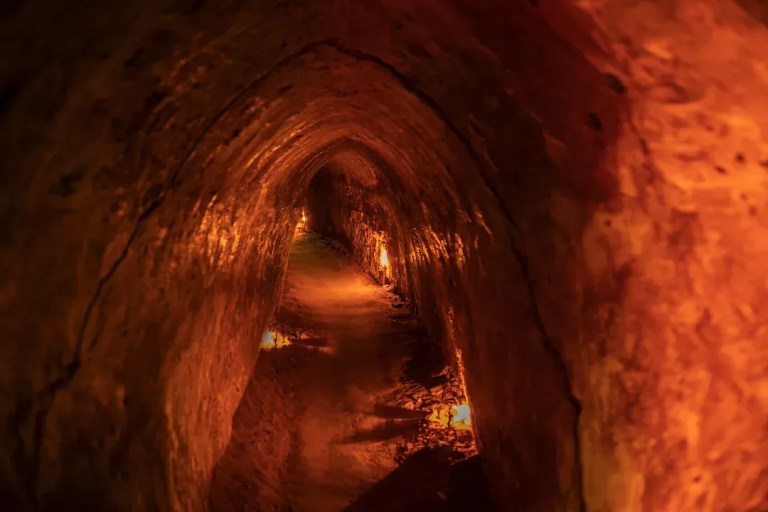
Cu Chi is a district outside Saigon where Vietnamese forces and civilians built a vast underground network during the American War. At its height, the tunnel system stretched for hundreds of kilometers beneath the jungle, allowing soldiers and civilians to live, move, fight and hide underground while American forces tried to destroy them from above.
Before I go any further, a special shoutout to our guide, Dragonking. Without his explanations, I would’ve walked away thinking I’d visited a fascinating historical site. Instead, I left with an entirely different way of looking at war, nature and human ingenuity.
The first thing he explained completely changed the way I looked at the tunnels.
Most people imagine that someone simply decided to dig more than 250 kilometers of tunnels beneath the jungle.
That’s not how it happened.
When American bombs carved enormous craters into the earth, the Vietnamese didn’t waste time filling them back in.
They used them.
A bomb crater became a bunker, built in a single night, without electricity, without machinery, without floodlights. The crater became the room. Trees, bamboo and clay hid it from above. Once the bunker was finished, they dug a tunnel to the next crater, then the next, then the next. Little by little, hundreds of isolated shelters became one of the most extraordinary underground networks ever built.
I kept waiting for Dragonking to move on to the next fact, the next date, the next number. He didn’t. He kept circling back to that same crater, that same night, as if the story wasn’t really about tunnels at all.
It wasn’t.
Along this trip, I realized I wasn’t learning about tunnels. I was learning about a completely different relationship with the world.
The deeper he went into the explanations, the more I noticed the same pattern repeating itself, over and over, in everything he described. Nothing existed on its own. Everything worked together.
The clay hid the entrances. The bamboo became pipes, supports and traps. The trees concealed the bunkers. Termite mounds inspired ventilation shafts that disappeared into the landscape. Some exits near the Saigon River even benefited from the natural movement of the tides to help circulate fresh air.
Smoke from cooking, something that could reveal an entire position, wasn’t simply vented into the air. It traveled through long underground channels before escaping so gradually that it blended into the morning mist rising through the forest.
None of it was borrowed and none of it was forced. Every part of the jungle already had a use, and they just had to notice it. Standing there, I couldn’t think of it as people surviving despite their surroundings. They were becoming part of them.
The tunnels themselves followed exactly the same philosophy. They weren’t designed to be comfortable. They were designed to favor the people who knew them.
Three underground levels housed kitchens, meeting rooms, hospitals, workshops, sleeping quarters and armories. Above them lay a maze of narrow passages, hidden doors and deadly traps. Punji stake pits, swinging spike traps and concealed trapdoors meant that even if an American soldier managed to enter, he had no idea where he was, where he was going or what waited around the next corner.
The jungle wasn’t protecting the tunnels. The tunnels were an extension of the jungle.
Then came the underground workshops, and this part genuinely left me speechless. When American bombs, artillery shells or rockets failed to explode, the Vietnamese collected them. They emptied the explosives to manufacture land mines. They cut up the steel to make traps. The enemy’s weapons became the tools of their own resistance.
Again, the same idea. Nothing was wasted. Everything was transformed.
By then, I stopped seeing individual examples. I started seeing a philosophy.
One side arrived with industrial warfare. Bombers. Napalm. Heavy machinery. The belief that overwhelming force could solve everything.
The other answered with clay, with bamboo, with rivers, with trees, with insects, with patience, with an intimate knowledge of the land they called home.
That’s probably why Cu Chi affected me so much. It wasn’t simply a story about winning a war. It was a story about understanding your environment so deeply that it becomes part of you.
Modern warfare usually leaves behind dead forests, poisoned rivers and landscapes stripped of life. Cu Chi tells another story. It reminds us that our greatest strength has never been our ability to dominate nature. It’s been our ability to work with it.
The Vietnamese didn’t separate themselves from the forest. They became an extension of it.
None of that erases what freedom cost here. No one should ever romanticize war, and nothing about those tunnels was easy or bloodless. But standing in them, one thing became impossible to ignore. The Vietnamese didn’t defeat a superpower by having more. They won by understanding something their enemy never truly could.
On the ego that turned exploration into consumption.
People often ask why I spend weeks in one place when I could be crossing several countries off my list instead. I suppose I’ve never understood how moving more is supposed to mean seeing more.
I don’t travel to collect countries.
I travel to disappear into one.
Backpackers don’t stay anywhere anymore.
They arrive. They sleep. They photograph. They publish. They leave.
Then they repeat the process somewhere else until the trip ends and they return home exhausted, convinced they’ve seen the world because they were physically present in it.
They haven’t.
They’ve consumed it.
That’s what backpacking has become.
Not exploration.
Consumption.
Call me a gatekeeper if you want, but I don’t think making travel accessible to everyone was a good thing.
Some things deserve to remain difficult.
Difficulty isn’t just an obstacle.
It’s a filter.
Backpacking once demanded uncertainty. You hitchhiked because there wasn’t another option. You camped because you couldn’t afford hotels. You got lost because Google Maps didn’t exist. You depended on strangers because there was nobody else.
You didn’t stay three weeks because slow travel was fashionable.
You stayed because leaving wasn’t simple.
That difficulty selected people.
Not better people.
People with different motivations.
People who wanted to understand rather than display.
Then technology removed almost every barrier.
Flights became cheap.
Hostels multiplied.
Google Maps eliminated uncertainty.
Translation apps eliminated effort.
Social media eliminated the need to tell stories because photographs could pretend to tell them for you.
The filter disappeared.
The culture changed.
Today, travel isn’t sold as curiosity.
It’s sold as identity.
The tourism industry doesn’t ask what a country might teach you.
It asks who you’ll become once other people know you’ve been there.
Travel has become one of the cheapest ways to manufacture an identity.
You don’t need to become interesting.
You just need to stand somewhere interesting.
That’s why so many people return with bigger egos instead of broader minds.
Ask them what they learned.
Most will tell you what they saw.
Ask them about the people.
They’ll tell you about the monuments.
Ask them about the language.
They’ll proudly repeat the three words they learned after spending 90 days crossing six countries.
They’re collecting locations, not understanding and certainly not growth.
Tourism has become another branch of consumerism.
Countries are products.
Experiences are products.
Cultures are products.
Even people become products.
Everything exists to be consumed, photographed and replaced by the next destination.
The strangest part is how proud we are of this.
“I’ve been to 25 countries.“
Why is that impressive?
Wouldn’t it be more impressive to deeply understand one?
To speak its language.
To know its neighborhoods instead of its viewpoints.
To have friends instead of recommendations.
To return home with your certainties broken instead of your passport filled.
Movement has become confused with growth.
They’re not the same thing.
Most people don’t travel to become different.
They travel to confirm the person they already believe themselves to be.
Travel becomes evidence.
Proof that they’re adventurous.
Proof of their supposed open-mindedness, despite the racist behavior they display toward locals.
Proof that they’re successful.
It’s ego disguised as curiosity.
The environmental hypocrisy follows naturally.
People cry in front of ancient forests before buying products linked to deforestation.
They snorkel around coral reefs while financing industries that destroy them.
They admire wild animals, then return home and continue consuming the system driving those animals toward extinction.
Nature isn’t changing them.
It’s entertaining them.
People tell me tourism creates conservation.
I think that’s backwards.
Conservation is usually the bill we pay after treating the natural world like a warehouse.
The less we consume, the less there is to rescue.
The same thing happens with culture.
We’re constantly told cultural exchange is inherently beautiful.
Sometimes it is.
Sometimes it spreads destructive habits faster than wisdom.
The world is becoming culturally flatter.
Walk through enough cities and they begin to blur together.
The same cafés.
The same apartment blocks.
The same shopping streets.
The same influencers taking the same photographs.
We’ve mistaken imitation for development.
We’ve decided that progress means looking like whoever industrialized first.
Traditional architecture disappears because concrete and glass looks richer.
Buildings that evolved over centuries to suit local climates are demolished so cities can resemble places they were never meant to resemble.
I don’t call that progress.
I call it forgetting.
A yurt isn’t inferior because it doesn’t resemble a skyscraper.
An earth house isn’t backward because it isn’t made of concrete.
Architecture should answer the climate before it answers fashion.
A society should adapt to its environment before adapting to global trends.
That’s my definition of progress.
Better adaptation.
Not better imitation.
The same principle applies everywhere.
The easier photography became, the less people learned photography.
The easier publishing became, the less people learned to write.
The easier backpacking became, the more it became tourism.
Convenience doesn’t simply allow more people to participate.
It changes why they participate.
And once the reason changes, the activity changes with it.
That’s what happened to travel.
The greatest journeys aren’t measured by distance.
They’re measured by transformation.
You should come home questioning yourself more than the people you visited.
If all you brought back were photographs, opinions and a stronger sense of your own importance, then you didn’t really travel.
You consumed another place.
The tragedy isn’t that the world became accessible.
The tragedy is that accessibility turned one of humanity’s greatest opportunities for humility into another marketplace for ego.
On consideration, public space and the small things we do to make life easier for one another
I’ve always been annoyed by bad manners because I was raised to understand that other people exist.
You wait your turn. You let people off the train before getting on. You say please and thank you. You cover your mouth when you cough. You don’t make an entire bus listen to your phone conversation.
None of this is complicated.
And yet, every time I use public transportation, walk through a crowded city or deal with a stranger, I find myself wondering what happened to basic manners.
I’m not talking about old-fashioned etiquette. I couldn’t care less which fork you use at dinner or whether you know which glass is supposed to hold which wine.
I’m talking about something much simpler.
Consideration.
You don’t have to like people. You simply have to remember that they exist.
Public space isn’t your living room
Few things irritate me more than people standing directly in front of the doors of a subway, tram or train while everyone inside is trying to get off.
The doors open. People are trying to leave. And there they are, standing directly in the way, already preparing to get on.
Why?
Just wait, let people get off, then get on.
The same applies to queues.
There’s a reason we queue. Everyone waits their turn and eventually gets served. Cutting the line is essentially saying that your time matters more than everyone who arrived before you. It’s disrespectful!
Then there are the people who seem to believe public transportation is an extension of their living room.
Videos playing loudly. Music without headphones. Loud phone conversations. Shouting across the carriage. Bags occupying seats while people are standing.
A crowded bus or train is a shared space. Nobody else should be forced to participate in your private life simply because you happen to be sitting next to them.
The same goes for assigned seats. If your ticket says 14A, that’s your seat. It shouldn’t be controversial.
These things sound trivial, but that’s precisely the point. Living among other people requires thousands of tiny acts of awareness that take almost no effort.
Some things should stay private
Then there’s basic hygiene.
Cover your mouth when you cough or sneeze. Cover it when you yawn.
If you’re sick, blow your nose rather than sitting beside strangers on a crowded bus and sniffing continuously for an hour. Also, wear a mask, it costs nothing and protects those around you.
And please, for the love of everything, don’t spend your commute picking your nose, scratching yourself or inspecting parts of your body that don’t need to become public entertainment.
There are things may be normal for some to do in private, but they don’t need to be performed in front of strangers.
Good manners are about understanding where you are and how your behavior affects the people around you.
Food is another example.
You might love the smell of whatever you’re eating. The person sitting beside you might want to vomit.
Not everyone likes the smell of fish, heavily spiced food or whatever else you’ve brought into a sealed bus or train. In an open-air setting, eat whatever you want. In a packed carriage, perhaps consider that everyone else has to smell it too.
And then there are smokers.
Someone goes outside, smokes a cigarette and gets back onto a crowded bus as though the smell disappeared when the cigarette did.
It didn’t.
It’s still in their clothes, their hair, their hands and their breath. Sit beside someone who has just smoked in a confined space and you know exactly what I’m talking about. They stink.
People often don’t realize how much they smell because they’re accustomed to their own smell.
The rest of us aren’t.
Please and thank you
Perhaps what bothers me most is how little effort some people seem willing to put into ordinary human interactions.
Someone holds a door open for you.
Say thank you.
Someone gives you directions.
Say thank you.
Someone does something for you that they didn’t have to do.
Say thank you.
And hold the door for the person behind you while you’re at it. You don’t need to make a performance of it. Just don’t let it slam into their face when they’re two steps behind you.
These words and gestures cost almost nothing.
The same applies to asking for help.
I’ve lost count of the number of times I’ve asked a public employee a perfectly reasonable question and received an immediate “no”, without any attempt to find an answer or suggest an alternative.
Sometimes the answer isn’t actually no. They simply can’t be bothered.
I’ve experienced the same thing when asking whether something is vegan in restaurants and dessert shops. Someone will immediately tell me there is nothing vegan, only for me to look at the menu and discover several things that happen to be vegan.
That’s not necessarily hostility. Sometimes it’s just laziness.
If you don’t know, say you don’t know.
If you can find out, find out.
If something genuinely isn’t possible, explain it.
You don’t need to solve everyone’s problems. But if your job is to help people, making the smallest reasonable effort shouldn’t be considered extraordinary.
We have to teach this
This is where I think parents have an enormous responsibility.
Children aren’t born knowing how to queue. They’re not born knowing that they should wait for people to get off a train before boarding. They don’t automatically understand that screaming in a restaurant for an hour affects everyone around them.
They learn these things.
And they learn them from the adults.
Children will be children. They’ll cry, shout, get excited and misbehave. That’s normal.
But there’s a difference between having a child who occasionally makes noise and deciding that everyone else in a restaurant, train or airplane simply has to endure it indefinitely.
The same is true of boundaries.
Children need to learn that other people’s belongings are not theirs. Other people’s bodies are not theirs. Other people’s conversations are not theirs.
And adults need to remember the same things.
Not everything is your business
Some people seem physically incapable of encountering another person’s life without offering an opinion.
What you’re eating.
What you’re wearing.
WHat you’re doing.
Not every thought needs to become a comment.
Not every disagreement requires intervention.
Not every personal decision needs your approval.
Sometimes minding your own business is simply good manners.
The same principle applies to public displays of affection.
Holding hands doesn’t bother me. Neither does a hug or a quick kiss.
But there is a point where affection becomes something more intimate and everyone around you is turned into an unwilling audience.
I don’t care that you’re in love. Good for you.
I just didn’t buy a ticket to your private life.
The disappearing social contract
What bothers me about all of this is not that people are imperfect.
Of course they’re imperfect.
It’s that so many of these behaviors seem to come from the same assumption: I do whatever I want, and everyone else can deal with it.
But shared spaces don’t work that way.
Your freedom doesn’t give you the right to make everyone around you uncomfortable.
You can listen to music. Use headphones.
You can talk to your friend. Keep your voice down.
You can eat. Think about where you’re eating.
You can raise your children however you choose, long as you teach them that other people exist.
You can have an opinion. You don’t have to share it.
You can disagree with someone. You don’t have to disrespect them.
You can refuse to help. You can still do it politely.
Don’t make other people’s lives unnecessarily worse.
That should be an incredibly low bar.
And yet apparently it’s becoming one.
Maybe what we’ve lost isn’t etiquette.
Maybe we’ve become so absorbed in ourselves that we’ve forgotten to notice the people around us.
Good manners aren’t about being proper.
They’re about being considerate.
And perhaps the simplest definition is still the best one: Good manners are what happen when you remember that other people exist.
I’ve lived in enough countries that staying anywhere probably seems unexpected. If I met someone who had spent years moving across continents only to settle in one place, I’d ask the same thing.
But I think they’re asking the wrong question.
The real question isn’t why I chose France.
It’s how a foreign country slowly became my country.
Not legally.
Humanly.
People often say a place “feels like home.”
I’ve never liked that expression because it tells us nothing.
Home isn’t something you feel the day you arrive. It’s something you build so gradually that, one day, you realize you’ve stopped looking elsewhere.
That wasn’t immediate.
When I first moved to France, I came to study. Like every newcomer, I was an outsider trying to understand unfamiliar customs, another language, a different way of living. I had no idea that the people I met during my first days in business school would still be among my closest friends a decade later. I didn’t know the colleagues I’d work alongside, the associations I’d join or the teammates I’d train with would become part of my life in ways I couldn’t have imagined.
France didn’t simply welcome me.
It became a part of me.
I learned its language until it became almost as natural as my own. I immersed myself in its history, geography and culture, not because I had to, but because I wanted to understand the place I was living in.
I studied here, worked here, volunteered here and explored it far beyond what any tourist ever would.
I’ve lived in Lyon, in the east, and on the Atlantic coast, completely west. Two places that could hardly be more different, and I’ve traveled through more than a dozen cities, each adding another layer to my understanding of the country.
Somewhere along the way, I stopped being a visitor.
Not because I received a document.
Because I became invested.
What I love most about France.
It isn’t the monuments, though they’re amazing.
Tourists remember monuments.
Residents remember people.
When I think about France, I don’t picture the Eiffel Tower or postcard villages.
I picture birthdays.
Barbecues that stretched long after sunset.
Entire afternoons at the beach.
Summer days by the lake, in the mountains.
New Year’s Eve celebrations with friends who’ve become family.
Late-night conversations that somehow always lasted longer than expected.
Afterworks that turned into debates about everything and nothing.
Association events where strangers became lifelong friends.
I don’t think about France as a collection of places.
I think of it as a collection of people.
Today, almost every part of the country reminds me of someone I love.
Friends in Bordeaux, Lacanau, Lyon, Paris, Strasbourg, Poitiers, and much more.
Family in Angers, Laval, Rochefort, Nice.
Those cities are no longer dots on a map.
They’re invitations.
They’re stories.
They’re people waiting for me.
That’s something I never expected when I first arrived.
France also gave me something I struggled to find elsewhere.
Depth.
I’ve lived in countries where people were incredibly friendly yet relationships rarely moved beyond the surface. Australia is a good example. People were kind, generous and always willing to help, but I never found the deep friendships I was searching for. It simply wasn’t a social culture that suited me.
In France, friendships often take longer to build.
But once they exist, they become remarkably strong.
People invite you into their homes.
Into their families.
Into their lives.
They challenge your ideas, celebrate your successes and stay beside you during difficult times.
That’s the kind of friendship I’ve always valued.
Another reason I stayed is nature.
Anyone who’s read my work knows how deeply I care about the natural world.
After traveling through many countries, I became increasingly aware of how differently societies treat their environment. I’ve seen breathtaking landscapes buried under litter, rivers treated as dumping grounds and forests disappearing with barely a second thought.
France isn’t perfect.
No country is.
But I’ve always felt that people here still recognize that nature deserves protection. National parks, coastal paths, forests, mountains, local environmental groups and countless volunteers reflect a culture that, despite its contradictions, still understands that these places matter.
That matters to me.
Because I don’t just enjoy beautiful landscapes.
I feel responsible for them.
The day you begin worrying about a country’s forests, rivers and coastline as if they were your own, something has changed.
The greatest gift.
The greatest gift France gave me wasn’t professional, cultural or even philosophical.
It was personal.
It’s where I met the woman who changed my life.
Through her, I didn’t just find a partner.
I found another family.
After years of moving from place to place, having a family here changed everything.
Belonging.
People sometimes think belonging comes from your environment.
I don’t.
I think belonging comes from participation.
From showing up.
From learning the language instead of expecting everyone else to speak yours.
From contributing to your community.
From joining local associations.
From building friendships that survive distance and time.
From caring about the country’s future even when you’re frustrated by its present.
France has many flaws.
I hope it becomes safer for women and vulnerable people.
I hope its social model regains the strength that has weakened over the past decade.
I criticize those things precisely because I care.
Indifference belongs to tourists, responsibility belongs to those who intend to stay.
Maybe one day I’ll officially become French.
If that happens, a passport won’t suddenly make me belong.
It will simply recognize something that has been growing for years.
People often ask why I chose France.
The truth is more complicated.
I chose France.
But France chose me too.
Not through luck.
Through thousands of ordinary moments.
Conversations.
Shared meals.
Volunteer projects.
Family gatherings.
Train rides across the country.
Days by the ocean.
Years spent building a life alongside people who slowly became part of it.
I wasn’t looking for the perfect country.
I was looking for the place where my actions mattered more than my passport.
After all these years, when I think about France, I don’t see a map.
I see faces.
And I can’t think of a better definition of belonging than that.
Earlier one afternoon, I saw a couple doing something so common that most people probably don’t notice it anymore. The man was standing in the heat, waiting for his girlfriend to cross a street so he could film her.
There was nothing happening on the street. No traffic to avoid. No particular reason for them to stop.
He was simply waiting for the shot.
She crossed.
He filmed.
Then they moved on.
They weren’t visiting Penang.
They were documenting themselves visiting Penang.
Several hours later, I saw something considerably darker.
A family. A father, a mother and their young daughter.
It was nighttime and they were walking along a quiet street. Nearby was a building with attractive illuminated signs, the kind of aesthetic social media loves.
The mother wanted a picture.
She gave her phone to her husband and crossed the road by herself.
Their six-year-old daughter had been playing a video game on her own phone. When she saw her mother getting ready for the photograph, she naturally wanted to join her.
She wanted a picture with her mother.
Her mother didn’t want her there.
She told the daughter to stay away so her husband could photograph her alone in front of the building.
The father then grabbed his little girl’s arm and moved her behind him, keeping her out of the frame while he photographed his wife.
The girl looked crushed.
And almost immediately, she went back to staring at her screen.
There is something profoundly unsettling about that.
A little girl of about six saw her mother posing for a photo and wanted to be part of it. She wasn’t demanding anything unreasonable. She wasn’t ruining an important moment.
She simply wanted to be beside her mom. Her mother rejected her because she wanted the photograph to be about herself.
The photograph mattered more than the child.
When a child learns that their presence is inconvenient whenever it interferes with a parent’s image, the trauma can stay with them far longer than the parent realizes.
And for what?
A photograph in front of a building.
A photograph that will probably be forgotten within days.
A photograph that exists primarily to tell other people, “Look where I am”.
This is where our obsession with photography becomes darker than simply taking too many pictures.
We’ve started treating other human beings as props.
And this isn’t limited to excluding children from the frame. Sometimes parents do the opposite and deliberately make their children part of the image they’re constructing.
There are mothers who use their own children to photograph them in deliberately provocative poses, sometimes barely dressed.
Imagine being a child and being repeatedly asked to photograph your half-naked mother so she can post a thirst trap.
Or being asked to photograph your father posing with two or three women, seemingly drunk?
The child isn’t simply witnessing the parent’s self-presentation, they’re being recruited into it.
They become the camera operator for an adult’s performance.
And smartphones have made this kind of behaviour incredibly easy.
The camera isn’t merely documenting our lives anymore.
It’s becoming a tool for constructing an image of ourselves, and for making the people around us participate in that construction.
Our partners become supporting actors.
Our children become props.
Strangers become scenery.
And sometimes they become targets.
I was once standing in a queue at a 7-Eleven when a woman took out her phone and secretly photographed an obese person standing in front of her.
She didn’t ask.
She took the photograph, sent it to someone and recorded a voice message.
I have no idea what she said. I don’t need to.
The act itself was enough.
A complete stranger had been reduced to an image that could be passed around for someone else’s amusement.
My wife and I regularly catch people secretly photographing us too.
Not occasionally.
Almost daily.
They point their phones at us, sometimes discreetly and sometimes not very discreetly, trying to take photographs without our consent.
We’re something interesting to capture.
An unusual haircut.
A foreign couple.
A curiosity.
The smartphone has made almost anyone photographable without their knowledge.
You don’t need permission.
You just need a camera.
And because everyone has one, we’ve become increasingly comfortable photographing things we have no right to photograph.
People’s bodies.
People’s children.
People’s private moments.
Strangers who happen to look different.
The camera turns the person into an object.
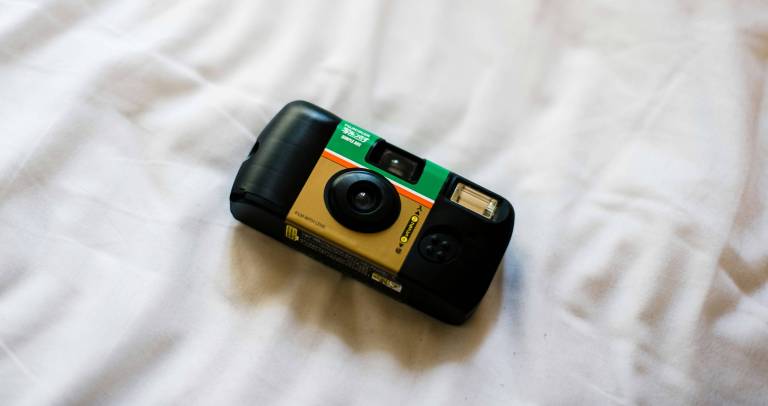
There was a time when taking a photograph required a decision.
You had a camera.
You had a limited number of exposures.
You saw something.
You decided it was worth capturing.
You took the photograph.
Then you put the camera away and returned to the experience.
The photograph was secondary.
Life came first.
Today, the order has been reversed.
We arrange the experience around the photograph.
We pose.
We retake.
We edit.
We publish.
We wait for reactions.
The photograph is no longer necessarily a record of what happened.
The photograph becomes what happened.
And social media makes the transformation even more obvious.
Look where I am.
Look what I’m doing.
Look how beautiful my life is.
Look how adventurous I am.
Look how happy I am.
Look at the places I’ve been.
Look at the people I’m with.
Look at me.
The landscape becomes a backdrop.
The experience becomes content.
The self becomes the protagonist.
A beautiful building is no longer simply a beautiful building, it’s somewhere to stand in front of.
A beach isn’t simply somewhere to swim, it’s somewhere to photograph yourself.
A foreign city isn’t simply somewhere to wander around, it’s an opportunity to manufacture evidence of an interesting life.
Sometimes people spend more time arranging the photograph than experiencing the thing they supposedly came to experience.
Perhaps this is why modern photography can feel so empty despite the sheer number of photographs we produce.
We’ve never taken so many pictures, yet individual photographs have arguably never meant less.
Our phones contain thousands of them.
Most will never be looked at again.
They’re produced, posted and forgotten.
The photograph that was supposed to preserve the memory has itself become disposable.
And there is something deeply paradoxical about that.
We photograph our lives constantly because we don’t want to forget them.
But by constantly interrupting our lives to photograph them, we’re less present for the very experiences we’re trying to preserve.
We stop looking at the sunset because we’re looking at the screen.
We stop experiencing the walk naturally because someone needs to film it.
We turn an experience into evidence that the experience happened.
And then we call it living.
I don’t think photography itself is the problem.
A photograph can preserve a face after the person is gone. It can preserve a place that no longer exists. It can remind you of a life you once lived.
Photography can be an act of attention.
But there is a fundamental difference between photographing something because you are experiencing it and manufacturing an experience because you want to photograph it.
One begins with life.
The other begins with the image.
Perhaps we need to recover that distinction.
Not everything needs to be photographed.
Not everything needs to be shared.
Not every beautiful moment needs an audience.
And not every moment needs to survive as an image.
Some moments can simply disappear.
The conversation that lasted all night.
The walk where you got completely lost.
The ridiculous thing someone said that made everyone laugh.
The strange little street you stumbled upon.
These moments don’t need proof.
They happened.
It’s enough.
We used to take photographs to remember our lives.
Perhaps we should be careful that we don’t end up living our lives just to have something to photograph.
Cost of living, weather, walkability, safety, let’s unpack everything.
I first came to Malaysia more than ten years ago, on a family trip to Kuala Lumpur, Penang and the Perhentian Islands. It was the last time my family traveled together like that. I came back alone a few months later, younger, rebuilding after two rough years, right around when my anxiety and panic attacks started.
Ten years later I’m back for the third time: a month in Kuala Lumpur, more time in Penang. I still really like this place. Here’s why, and why I still wouldn’t move here.
Cost of living in Kuala Lumpur
Cheap Food, Expensive Rent.
KL makes everyday life easy. It’s safe, affordable without feeling cheap, and English gets you through almost anything.
Food is where that shows most. A meal at a hawker centre or food court easily comes in under 20myr; 25myr gets you a genuinely good casual meal. You’re not sacrificing quality to save money. KL also has luxury restaurants and high-end malls if you want to spend more. The city runs at both ends.
Rent doesn’t follow the same logic. As a foreigner, budget around 3000myr/month for a decent studio with a kitchenette, more or less depending on neighborhood, building and negotiation (in-person deals beat arranging things from abroad).
That’s the real surprise of KL’s cost of living: you can eat for 10myr and cross the city for pocket change, but your apartment still runs several thousand ringgit a month, because KL’s housing market behaves like the international city it is.
Getting around without a car
The rail network (LRT, MRT, monorail, buses, feeder buses) covers most of the city. For a foreigner staying a month or more, the Rapid Bulanan pass is worth knowing: 170myr (not 150 as advertised) for 30 days of unlimited travel across RapidKL’s network. I bought one and used it every day, though I could have gotten by without it.
150myr isn’t cheap, but it’s one less thing to think about. Shorter Rapid Kembara passes exist for visitors too.
So no, you don’t need a car in KL. The problem is the city wasn’t really built for people who don’t have one.
You can also use Grab, which is relatively cheap, but not the best option for the environement.
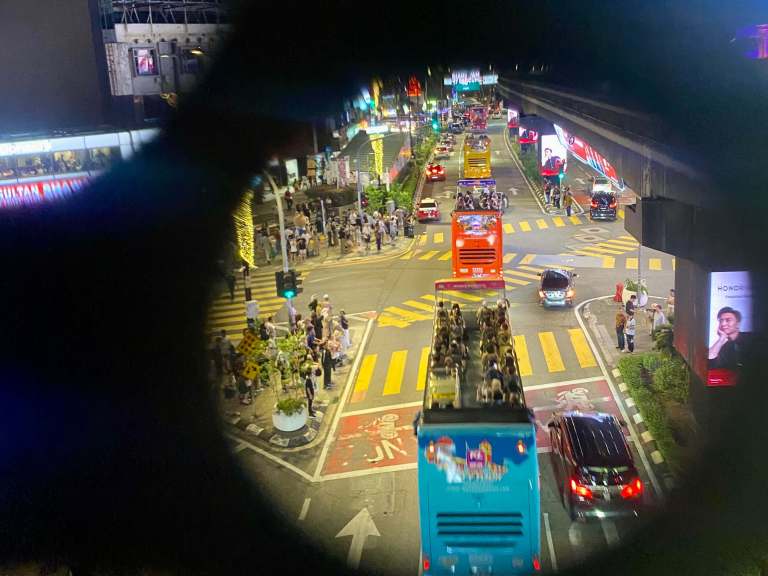
Is Kuala Lumpur walkable? Not really
This is my biggest complaint. Around KLCC and the newer developments, pedestrian infrastructure is genuinely good. Then the sidewalk just disappears. You cross a road and you’re suddenly walking beside six lanes of traffic with no clear way across.
A 15-minute walk on Google Maps can feel much longer at 32C and full humidity, next to traffic, with no shade.
So people take Grab, or drive, and the cycle feeds itself. Poor walkability pushes people into cars, more cars mean more congestion and heat, and the city gets even less pleasant to walk in.
KL has invested heavily in public transport, which is great, but it’s not the same as good urban mobility. You still have to get from your door to the station, and from the station to wherever you’re going. What this city needs is continuous sidewalks, real crossings, cycling infrastructure and shade. This city definitely needs shade!
Weather and humidity in Kuala Lumpur
Heat doesn’t bother me. Humidity does, and KL has plenty of it, the kind that wraps you in a warm wet towel after five minutes outside. Then you walk into a mall and you’re freezing, because electricity is cheap here and air conditioning runs generously everywhere: offices, malls, restaurants, hotels.
Step back outside and you’re sweating again within minutes.
The city cools its indoors to compensate for outdoor heat it can’t control, then adds more heat back into the air through cars and AC units running constantly.
Noise
KL is alive, and rarely quiet. Cars, motorcycles, construction, modified exhausts, air conditioners, honking. It’s less that any one sound is unbearable and more that there are so many of them your brain never fully switches off.
If you’re used to the quiet of certain places, KL isn’t for you.
Malaysia’s multiculturalism
This is what I love most about Malaysia beyond the food. It’s a predominantly Muslim country, but Chinese, Indian and other communities have been part of Malaysian society for generations, and the religious diversity is something you see everywhere. I’ve prayed in mosques with Taoist temples visible from the windows, walked through Little India surrounded by Hindu temples, and seen Chinese churches standing beside other places of worship. It’s not something you have to seek out. It’s simply part of everyday life. This is far from the norm in most countries around the world.
Malaysia has religious and ethnic tensions, like anywhere, and it would be naive to pretend otherwise. But the everyday coexistence, people working, eating and running businesses together across lines that are treated as much more divisive elsewhere is genuinely refreshing.
Women are also highly visible in economic life here. Managers, entrepreneurs, shop owners, decision-makers. Malaysia has a solid reputation as a safe destination for women traveling alone, and ironically, the worst safety stories I’ve heard came from expat circles.
Remote work in Kuala Lumpur
KL is amazing for remote work.
The internet is fast, reliable and widely available, and mobile data is cheap enough that staying connected isn’t something you really have to think about. Wifi is everywhere you’d expect it to be, from apartments and hotels to cafés and shopping malls.
When we landed at KLIA, we bought a CelcomDigi tourist SIM for 60myr. It gave us 30 days of unlimited internet in Malaysia plus 3GB that could be used elsewhere in Southeast Asia, which came in very handy when we went to Vietnam. Also, we paid exactly the same at the airport as we would’ve paid online or at an agency in town.
No contract, no expensive roaming and no worrying about getting connected when you land.
Then there’s the café culture. KL has no shortage of neighbourhood cafés, minimalist coffee shops and places where people can sit with a laptop for a few hours. You can work, get good coffee, eat something decent and stay connected without anyone bothering you.
The city also has a growing technology sector and is becoming an increasingly important regional hub for tech and data centres. So there’s a good fit between the infrastructure and the kind of work many remote workers actually do.
Car culture
Malaysia’s custom car scene is genuinely amazing, especially if you’re coming from Europe. Japanese and local cars, lowered, rebuilt, repainted, personalized. It’s not about owning something expensive, it’s about making the car yours, and there’s real creativity in it. Didn’t expect to love this part as much as I do.
KLIA and getting out of Kuala Lumpur
KL is a fantastic base for exploring Southeast Asia. KLIA reaches Singapore, Indonesia, Thailand, Vietnam, the Philippines, Cambodia, Laos and Myanmar easily. From KL Sentral, the airport coach is 15myr one way (as of August 2026); the KLIA Ekspres train is more expensive, still affordable and faster.
The bus takes 45 minutes to an hour depending on traffic. So convenient!
Vegan food in Kuala Lumpur
Malaysia is one of the easier places I’ve traveled as a vegan, mostly because vegetarian food is deeply embedded in several religious traditions here (Taoist, Hindu, and others), so vegetarian restaurants are everywhere.
The catch: vegetarian doesn’t mean vegan. Fish sauce, oyster sauce and other animal products turn up in dishes labelled vegetarian, so you have to ask.
Our favorite joint is definitely RightSide! Burgers, lobster rolls, tacos, milkshakes, matcha, ice cream, all vegan.
Try Vegelicious JR in Midvaley as well, it’s insanely good.
The plastic problem
Bottled water, plastic bags, cups, straws, takeaway containers, everything wrapped in something. Order one drink and you can walk away holding a cup, a bag, a straw and a separate wrapper.
Plastic is cheap, convenient, and works in this climate. Straws, for instance, often exist so you don’t put your mouth directly on a shared can, not just out of carelessness. But a country with this much modern infrastructure could do far more to normalize refill stations, household filtration and reusable containers. They’re there, but nowhere near widespread enough.
For anyone who thinks about waste, it’s hard to ignore.
Why I wouldn’t live in Kuala Lumpur
The weather would wear on me. The noise would wear on me. The plastic would drive me up the wall. And the lack of walkability would frustrate me more with every year. I want to walk out of my front door and just go, not along a six-lane highway, not 20 minutes to the nearest crossing. I want quiet, trees, nature, and an easy way out of the city. KL doesn’t offer any of that, unfortunately. Neither do most cities of this size.
Is Kuala Lumpur worth living in?
KL has almost everything. It’s modern, safe, multicultural, well connected and tech-forward. It’s also not finished figuring itself out, and I like that about it.
Would I live here permanently? I love my life in France, but even without that, KL wouldn’t be at the top of my list. The walkability, the noise, the plastic pollution, the air, the heat, none of them are dealbreakers on their own. Together, though, they add up to the one thing I won’t compromise on: my health.”
Would I come back? I already have, three times, and I doubt this is the last.
France has barely extinguished one of its largest wildfires in decades. An area roughly the size of Hong Kong has burned, and we’re only halfway through the summer. But another heatwave is already here.
People ask how this keeps happening.
I think we’re asking the wrong question.
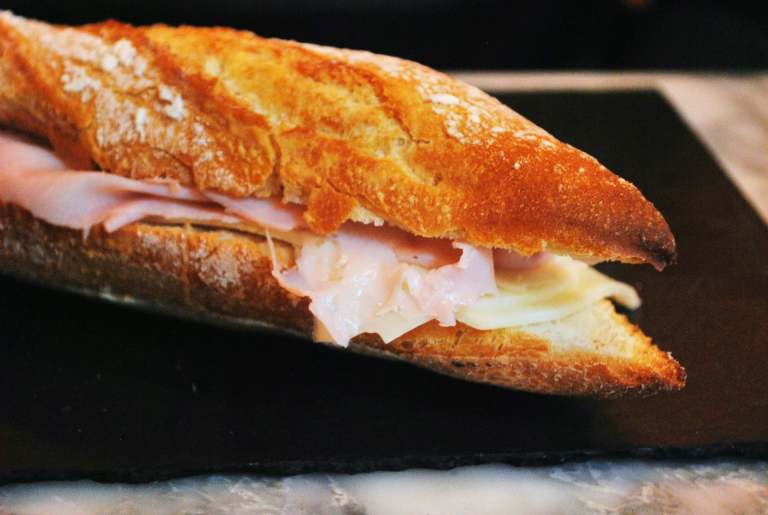
Every wildfire begins with a sandwich.
Not because a ham sandwich can physically ignite a forest, but because it represents the countless ordinary decisions that build the world in which forests burn.
The sandwich.
The cigarette.
The dairy ice cream we hand to our children without a second thought.
The Shein order arriving tomorrow.
The new backpack and notebooks bought every September even though last year’s are still perfectly usable.
Each decision appears harmless. Each is too small to matter. That is exactly how systems survive. It’s recreated every morning when we choose convenience over necessity, novelty over sufficiency, habit over reflection.
Every purchase is a vote. Not because one purchase changes the world overnight, but because billions of purchases, repeated every day, determine which industries grow, which disappear, and what kind of civilization we continue to finance.
One Amazon order won’t send a billionaire and his friends into space. One dairy ice cream won’t destroy a forest. One unnecessary notebook won’t fill a landfill.
But none of those things happens only once. They happen millions of times, every single day. Eventually those “insignificant” decisions become greenhouse gases, deforestation, polluted rivers, shrinking biodiversity, exhausted soils, expanding infrastructure and ecosystems pushed beyond their limits.
Then comes the heat. Then the drought. Then the spark.
And suddenly everyone becomes an environmentalist.
Hundreds of volunteers leave their homes to protect forests from the flames. They carry water, clear vegetation, do everything they can to stop the fire from reaching nearby villages. Most people see humanity at its finest.
I see humanity desperately trying to repair yesterday while continuing to finance it this morning.
The same people who volunteer their time and energy to protect the forest are then handed tables full of ham and butter sandwiches, soft drinks, sometimes cigarettes.
Volunteering is great. These people are giving their time to protect their homes, their communities, the forest around them. That matters. What bothers me is how easily we separate the emergency from everything that preceded it. We celebrate the person who runs toward the flames while treating the quieter forms of prevention as optional, eccentric, even ridiculous.
Those choices rarely earn applause because they happen long before the crisis, when there is no fire to fight and nobody watching. Yet they may matter far more than the dramatic moments that make the evening news.
We have confused loving the way nature makes us feel with caring about nature itself.
We hike through forests while eating products that contribute to the destruction of ecosystems. We photograph mountains while wrapped in disposable consumption. We defend a burning forest while continuing to finance the industries that place increasing pressure on forests around the world. We rush to fight the fire while throwing fuel onto it for the rest of the year. Economic fuel. Cultural fuel. Political fuel.
None of this means every choice weighs the same. A handful of industries and a handful of governments make decisions that outweigh what any individual could do in a lifetime, and no amount of reused notebooks cancels out a pipeline. But that asymmetry is not an excuse. It’s the reason our purchases are also our politics. Every dollar we hand to an industry is a small vote for its continued expansion, and the industries we’re describing don’t grow without millions of us feeding them first.
People often ask who is responsible for ecological collapse. The government? Corporations? Consumers? The uncomfortable answer is that there isn’t a single culprit. There is a chain, a chain in which every link seems too small to matter until the whole thing snaps.
That’s the butterfly effect.
A civilization is not destroyed by one catastrophic decision. It’ss destroyed by millions of ordinary ones.
Being single is not a problem. Waiting around for your life to begin because you’re single is.
We live in a society that puts a lot of pressure on single people, especially women. The moment you’re single for long enough, people start treating it like a condition. They want to know why you’re still single, whether you’re dating anyone and when you’re finally going to settle down.
And when they tell you to “have fun,” they usually mean drink poison or sleep with strangers. In short, hedonism as sold by Hollywood.
I think there’s much better advice to give a single person.
You have a life to live!
Being single isn’t a situation that needs to be fixed. You don’t need to spend years wondering when you’re going to meet someone, why you haven’t yet or comparing your life to people who are already married.
I understand the feeling.
I wanted companionship too.
There were times when being single felt empty. We all want to be held. We all want someone to come home to. There’s nothing wrong with wanting that.
But wanting something and waiting for it are two very different things.
I wasn’t going to sit around waiting for someone to arrive and make my life feel complete. I had a life to live in the meantime, so I lived it.
I built a career. I spent time with my friends. I became the third wheel, and sometimes the fifth wheel. I made memories. I learned things. I spent time with couples and saw how relationships worked from the inside, especially when one of them was already a close friend.
You learn a lot that way.
You see how people communicate, disagree, compromise, show affection and deal with responsibility. I learned a lot from it, even if not enough, because I don’t think you can ever learn enough about relationships.
But none of that was a strategy for finding a wife.
That distinction matters.
And when I eventually met my wife, I wasn’t looking for someone to give me a life or make me happy. I was happy, and she was happy before we met. We simply complemented each other, shared what we already had and grew together from there.
That’s how it should be.
Marriage is amazing. I genuinely believe that. I wouldn’t trade my marriage for my single life.
But marriage was not the goal of my single life.
Living well was.
Marriage changes how you live
As a married man, I have responsibilities towards another person that I didn’t have when I was single. My wife’s wellbeing is no longer just something I care about. It is something I’m responsible for. If she needs me, I show up, even when it’s inconvenient, even when I have other things I’d rather be doing.
When I was single, I was responsible for myself. Just myself. I could make my own plans, spend my own money and do whatever I wanted with my time.
That’s why I think marriage is such an important step into adulthood, and in my case manhood. You don’t stop living for yourself. You stop living just for yourself.
Someone else’s wellbeing, safety and happiness become part of your responsibility. You become someone they can rely on, not just a companion and lover.
Single life can be lonely
It can be, and it is no matter what you do. That’s the truth.
There were times when I felt that loneliness too, even when I was seemingly on top of the world. But I had my friends and I had my family. My family in particular mattered enormously to me. When I was down and didn’t feel like talking to my friends, I could talk to them instead. Sometimes just hearing their voices was enough to make me feel better.
The desire for companionship is natural. You can be loved and still be lonely.
You can have a wonderful life and still want someone beside you.
But you can also want marriage without making marriage the purpose of your life.
Those things aren’t contradictory.
I didn’t get married when I wanted to, really not.
I got married when it was right.
We don’t get much say in when the right person enters our lives, but we do get a say in what we do with our lives before that happens.
So if you’re single, stop waiting.
Live life on your own terms. Make it yours. And if someone eventually comes along and you decide to share it with them, that’s wonderful.
But don’t spend your life waiting for that day.
You only get one life. Don’t put it on hold for a life you haven’t even started yet.
Schools are closing or changing schedules. Trains are slowing down. Workers are being told to adapt. Older people are urged to stay indoors. Animals are dying in barns. Rivers are warming. Nuclear power stations are struggling to cool their reactors and being closed down. Farmers are watching the sky, hoping for rain that never comes. Cities are discovering, once again, that concrete, asphalt and glass are not neutral materials. They trap heat.
Every heatwave ends the same way.
“We need to adapt.”
Of course we do. Nobody serious argues otherwise. When temperatures reach 40°C, we need shade, cool public spaces, drinking fountains, schools that do not become ovens, hospitals that can keep functioning and cooling in strategic public buildings, especially for older people, children, sick people, outdoor workers and anyone trapped in poorly designed housing.
But adaptation cannot become the polite word for surrender.
The real question is not how we survive longer heatwaves.
The real question is why we continue to organize society in ways that make them worse.
Unfortunately, that’s the conversation many people would rather avoid.
The climate crisis is not a natural disaster in the way an earthquake is. Scientists warned us for decades. Communities raised the alarm. The solutions have been available for years. Yet, governments protected fossil fuel interests. Oil and gas companies expanded production. Executives collected billions. Politicians delayed, negotiated, softened regulations, greenwashed and lied.
This was not inevitable.
It was a political and economic choice.
Now, the same system that chose fire is trying to sell us fans, bottled water, air conditioners, climate insurance, private pools, green capitalism and survival kits.
The house is burning, and someone has opened a shop in the living room.
Heat Is Only the Symptom
The mistake is thinking this is only about high temperatures.
A heatwave is a stress test for almost everything that keeps society running.
It pushes the human body beyond its limits. It kills directly, especially when nights remain hot and people cannot recover. It damages sleep, concentration, heart health and kidney function. It turns classrooms into places where children struggle to learn and workplaces into places where people struggle to work.
It pushes infrastructure to its limits. Railway tracks expand. Roads soften. Electricity grids strain under rising demand. Hospitals become overloaded.
The irony is that ACs draw more power precisely when energy systems are already under pressure. Nuclear plants need cool water, yet rivers become warmer and shallower. The same heat that increases electricity demand can make electricity harder to produce.
It pushes agriculture as well. Cows produce less milk. Chickens die in industrial sheds. Crops dry out and/or suffer damage that only becomes visible weeks or months later. Soil loses moisture. Water restrictions arrive. Harvests shrink. Food prices rise.
Then everyone acts surprised that groceries become more expensive.
The damage does not end when the thermometer falls.
That’s why surviving the next heatwave is not enough.
The Food System Nobody Wants to Discuss
Climate conversations usually focus on transport.
And transport matters. Flying less matters. Driving less whenever possible matters. The World Cup spread across North America is a perfect example of climate absurdity, an event marketed as global unity while sending teams, fans, journalists and sponsors across an entire continent for entertainment.
But another major part of the crisis rarely receives the same attention because it sits on our plates.
Animal agriculture is one of the least efficient uses of land, water, energy and living ecosystems on Earth.
Livestock occupies roughly three quarters to more than four fifths of global agricultural land, depending on how it is measured, once grazing land and crops grown for animal feed are included. Yet, animal products provide only a minority of the world’s calories and protein. One widely cited Science study found that meat, dairy, eggs and aquaculture use about 83% of farmland while supplying just 18% of calories and 37% of protein.
Read that again.
Most of the farmland.
A fraction of the food.
That is not efficiency.
It is ideology disguised as agriculture.
The system produces far more than meat, milk and eggs. It produces methane, deforestation, polluted rivers, antibiotic resistance, dead zones in coastal waters and immense pressure on land and water.
It also produces immense suffering.
During heatwaves, pigs, chickens and cows cannot simply adapt because consumers expect cheap animal products. Ventilation systems fail. Cooling systems are inadequate or absent. Transport trucks become ovens. Poultry dies by the hundreds of thousands. Dairy cows suffer severe heat stress and milk production falls.
Then the industry presents itself as another victim of climate change while helping drive the crisis in the first place.
This is not about blaming someone trying to feed their family on a tight budget.
The ocean may be the most neglected part of the climate conversation.
We rightly describe forests as the lungs of the planet. They deserve that attention. But the ocean is far more essential to life on Earth. It has absorbed more than 90% of the excess heat trapped by greenhouse gases. It takes in a large share of the carbon dioxide we emit. It produces roughly half of the oxygen we breathe, largely through microscopic phytoplankton.
The ocean is not scenery.
It’s not a backdrop for holidays.
It is one of the reasons this planet is still habitable.
There is something profoundly irrational about destroying marine ecosystems while wondering why the planet keeps overheating.
Industrial fishing is not simply the act of catching fish. It tears apart ecosystems. It removes key species from food webs, kills countless non-target animals and drags heavy nets across the seabed, destroying habitats that took decades, centuries or even millennia to develop.
Yet this rarely appears in mainstream climate debates.
We are told to fly less, and rightly so.
We are told to drive less, and rightly so.
We are only beginning to hear serious discussion about livestock.
But fishing is still treated as though fish simply appear on supermarket shelves and the ocean can absorb endless extraction without consequence.
It cannot.
If the ocean regulates climate, absorbs carbon dioxide, produces oxygen and stores enormous amounts of heat, protecting marine ecosystems is climate policy.
Eating less fish, or choosing not to eat it at all, is not only an ethical position. It is a climate position.
For those who continue to eat seafood, there is at least an important distinction to make between small-scale fisheries and industrial fleets that empty entire ecosystems.
The ocean is one of Earth’s greatest cooling systems. Protect it at all costs.
Why Air Conditioning Can’t Be the Plan
Air conditioning has an important role.
During extreme heat, it saves lives. Hospitals, schools, care homes, public libraries, emergency shelters and social housing all need effective cooling strategies. No one should die inside an apartment built for a climate that no longer exists.
But air conditioning can’t become our primary response.
Every unit cools an indoor space by releasing heat outdoors. Across an entire city, that extra heat makes streets even hotter, particularly after sunset. Air conditioners also increase electricity demand during the hottest periods of the year. Where electricity still depends on fossil fuels, emissions rise. Even cleaner grids face greater strain as peak demand grows.
Singapore illustrates both the benefits and the limits of this approach.
The city has become highly dependent on cooling. Buildings require constant air conditioning. Those systems release heat into the streets. Outdoor spaces become less comfortable, encouraging people to remain indoors, which increases demand for cooling still further.
The cycle reinforces itself.
That’s not resilience, it’s technological dependence.
We don’t need cities filled with cooled rooms.
We need cities that stay cool in the first place.
We Forgot How to Build for Nature
The most effective cooling technology has existed for millions of years.
Trees.
Not decorative saplings planted in tiny squares of concrete, but mature urban forests and healthy green canopies.
Anyone who has walked barefoot from hot pavement onto shaded grass already understands this without reading a scientific paper.
So why, every time France approaches 40°C, do we talk about buying more air conditioners before planting more trees?
Why do we pave over soil, remove mature trees, expand shopping centres, build vast parking lots and approve developments that trap heat, only to claim that more machines are the answer?
They store water, protect biodiversity, stabilise soils, reduce erosion, create humidity and lower temperatures. They make landscapes more resilient long before a heatwave arrives.
Yet even forests are increasingly treated as another industrial resource.
Living ecosystems become timber reserves. Old-growth forests become biomass. Trees are cut down, burned for energy and labelled renewable, while complex ecosystems that took centuries to develop are reduced to units of production.
The same logic appears again and again.
If something can be extracted, it is.
If something can be sold, it is.
The living world is valued less for keeping us alive than for generating another stream of profit.
Water Is Becoming Political
Water is becoming one of the defining political issues of this century.
Yet we still manage it as though nothing has changed.
During droughts, ordinary people are told to take shorter showers. Farmers are asked to reduce irrigation. Small growers are criticised for watering their crops.
Meanwhile, luxury uses fight for exemptions.
Golf courses have become symbols of this contradiction because they expose the politics behind water allocation. While vegetables struggle and ecosystems dry out, perfectly green fairways are often defended. Leisure for the comfortable can receive more protection than food production or ecosystem survival.
Mega-basins reveal the same mindset.
On paper, the idea sounds simple. Capture water in winter and use it during summer.
Reality is more complicated.
Many of these reservoirs are open to the air, increasing evaporation as temperatures rise. They can concentrate control of water in the hands of a limited number of large farms. They often allow water-intensive agricultural models to continue instead of encouraging the transition toward crops and farming systems adapted to the climate that is already arriving.
The question is not whether storing water can ever make sense.
The question is who controls it, who benefits from it and whether it helps transform agriculture or merely postpones change.
A society preparing for the future would treat every drop of freshwater as precious.
Rainwater would be collected wherever possible.
Wastewater would be safely reused.
Leaking infrastructure would be repaired.
Soils would be restored so they can retain moisture.
Cities would remove unnecessary concrete and allow water to return to the ground.
Farmers would receive support to transition toward more resilient practices.
Luxury water use would never be treated as equivalent to drinking water, food production or healthy ecosystems.
The Logic Behind the Crisis
The deeper problem is that our economic system rarely asks what keeps life alive.
It asks what can be sold.
That’s why so many climate conversations end in absurdity.
We’re told to separate our recycling while billionaires fly private jets.
We’re reminded to save water while enormous data centres consume vast amounts of electricity and freshwater to cool servers powering artificial intelligence, advertising and endless digital consumption.
We debate plastic straws while militaries burn enormous quantities of fuel, flatten cities, destroy farms, poison soil and create another wave of emissions through reconstruction.
The priorities are impossible to ignore once you see them.
The Climate Cost of War
War remains one of the largest blind spots in climate politics.
The climate impact of the war on Gaza has been estimated in the tens of millions of tonnes of carbon dioxide equivalent once direct military activity and reconstruction are included.
The opening weeks of the US-Israel war on Iran were estimated to produce several million tonnes of emissions.
Lebanon has accused Israel of ecocide following the destruction of forests, farmland and ecosystems in the south.
Yet military emissions are still treated as though they exist outside the atmosphere.
As though bombs leave no carbon footprint.
As though fighter jets fly on moral complexity.
As though hospitals, schools, roads, farms and homes rebuild themselves without steel, cement, machinery and energy.
We can’t keep pretending these emissions don’t count simply because they’re politically inconvenient.
The pattern is difficult to ignore.
Capitalism drives extraction.
Extraction fuels empire.
Empire produces war.
War destroys societies.
Destruction demands reconstruction.
Reconstruction creates more emissions.
Then we’re told that buying a bamboo toothbrush is the meaningful response.
It is not.
Personal Responsibility Matters, but It Is Not Equal
None of this means personal choices are meaningless.
They matter because they reduce demand for destructive industries, help shift culture and make political demands more credible.
But responsibility is not shared equally.
A working family struggling to pay rent is not comparable to a billionaire with private aircraft, multiple homes, yachts and investments in fossil fuels.
Someone eating the foods they were encouraged to consume from childhood is not comparable to multinational agribusinesses lobbying to protect industrial livestock.
A commuter driving because public transport is inadequate is not comparable to governments that refuse to invest in reliable trains, cycling infrastructure and walkable cities.
The message can’t be that ordinary people are the problem.
The message is that we live inside a system designed to make destructive choices easy, profitable and normal while making better choices more expensive, less accessible or socially unusual.
Recognising that distinction is not about avoiding responsibility.
It is the first step toward directing responsibility where it belongs.
What We Can Do
None of this means waiting for someone else to act.
Some of the simplest changes are still among the most effective.
Eat less meat, or stop eating it.
Eat less fish, or stop eating it. If you choose to keep eating fish, understand the difference between small-scale fisheries and industrial fleets that empty entire ecosystems.
Buy fewer clothes. Buy second hand. Repair what you own. Stop treating fashion as a weekly identity update.
Do the same with appliances. Borrow, share, repair and buy used whenever possible.
Build a culture where tools, equipment, transport and household goods are shared instead of endlessly duplicated.
Fly less.
Drive less whenever practical.
Support political parties and movements that take climate change, biodiversity, animal welfare, water management, public services and peace seriously. Voting alone will not solve the crisis, but electing governments that deny climate science, protect fossil fuel interests and normalise war will accelerate it.
Above all, reject fake solutions.
A city with air conditioning but no trees is not prepared.
A country with mega-basins but dying soils is not prepared.
A food system built on industrial animal suffering is not prepared.
A sporting culture that flies millions of people across continents for profit is not prepared.
A digital economy that consumes ever more electricity and water in pursuit of endless growth is not prepared.
A world that treats war as ordinary is not prepared.
France is not ready for what’s coming, and that pains me.
Europe and America aren’t ready either.
The Crisis Behind the Crisis
The tragedy is that even by the narrow standards of economic growth, this system is failing.
Heat kills workers.
It reduces productivity.
It damages harvests.
It weakens infrastructure.
It raises healthcare costs.
It disrupts schools.
It destabilises insurance.
It pushes food prices higher.
It forces governments to spend billions (of our money) responding to disasters they chose not to prevent.
Even someone who cares nothing for animals, forests, rivers, oceans or social justice should recognise one simple reality.
This model is becoming too expensive to sustain itself.
The climate crisis is not only an ecological crisis.
It is a crisis of imagination.
We keep trying to preserve the lifestyle that created the emergency, then call that realism.
But there is nothing realistic about filling unliveable cities with more air conditioners while cutting down trees.
There is nothing realistic about building reservoirs while refusing to transform agriculture.
There is nothing realistic about defending industrial livestock, industrial fishing, fossil fuels, permanent war and luxury consumption while asking ordinary people to adapt.
Realism begins by accepting that an economy built on endless extraction can’t produce a liveable planet.
We don’t need a parasasol over the apocalypse.
We need accountability.
We need to recognise that climate is not a separate issue. It runs through everything.
Our cities.
Our countryside.
Our food.
Our transport.
Our water.
Our forests.
Our oceans.
Our economies.
Our wars.
Not because that sounds radical.
Because the moderate path has become the one driving the crisis.
The planet is not burning because we failed to understand what was happening.
It’s burning because those with the power to change course chose not to.
That choice can still be reversed.
But only if we stop confusing adaptation with acceptance and start confronting the system that keeps choosing fire.