Digital marketing consultant and copywriter

How I Became a Digital Marketing Consultant

15 years in the making.

I don’t usually write about work here.

But today I’m making an exception. Partly because I like my job, mostly because people don’t really get what I do, so I basically wrote this to send them back to when they ask. Ha!

My journey towards digital marketing

Back in 2011, I landed my very first internship at The Lad Bible, the UK media giant that built its brand on viral and shareable content before TikTok was a thing. It was my first experience with digital content at scale.

By 2014 I was working in PR at the African Union Commission in Addis Ababa. A year later, I moved to Buenos Aires and joined Mundo Lingo, helping with event marketing for their international language exchange meetups. Mundo Lingo was (is?) an event program that held gatherings for hundreds of strangers, usually in pubs or “boliches” and gave them sticker flags to stick to their shirts. The flags showed where the person is from, which languages they spoke and which languages they wanted to improve. My job was to help those events grow and thrive.

In 2016, I chose to focus on the digital side of marketing and complemented my MBA with a second Master’s in Digital Marketing and E-Business in Bordeaux. In 2017, that path took me to Barcelona, where I interned in event marketing and social media management.

By 2018, I was back in France, working as a digital marketer in a startup in Bordeaux, and later as a traffic manager in France’s biggest online retailer, Cdiscount. Each role taught me something new about how audiences behave, how campaigns succeed or fail, and how strategy ties everything together.

Finally, in 2019, I took the leap and created my own business. I started as a digital marketing consultant and social media manager, and eventually carved out a niche as a Meta Ads specialist. This endeavor allowed me the freedom to shape my work around both my skills and my life.

Realizing what marketing really is

Here is something I discovered along the way. Most people know marketing exists, but very few understand its power.

They don’t see how it influences their decisions every single day. Sometimes in an obvious manner, but most times in subtle ways.

That is what pulled me in. Marketing is not just about selling. Done right, it’s about understanding people and connecting with them in ways that feel real.

What I actually do

If I had to strip it down, my job has two main parts:

  1. Marketing strategy, the why
  2. Marketing plan, the how

It’s like building a house. The strategy is the blueprint. The plan is the hammer, nails and step by step work of putting it all together.

Most of my clients usually have their “why”, so they bring me in to put the “how” in place.

The hats I’ve worn so far

Digital marketing covers a lot of ground, so over the years I’ve worked in:

  • Social media marketing
  • SEO and copywriting
  • PPC advertising
  • Event marketing
  • Content marketing
  • PR
  • Direct marketing

Here is what that actually looks like.

Social Media Marketing: I create content calendars, mix promotional posts with user generated content (UGC) like reviews or photos, and keep things engaging across platforms.

Copywriting and SEO: I write blog posts, optimize websites and landing pages, run keyword research and help content get found by the right people.

PPC and Meta Ads: This is my specialty. I have managed campaigns in difficult industries like health, crypto and finance. The results have been high conversions, low costs and strong traffic. The trick is constant adaptation. Algorithms change all the time. What worked last month might be useless today.

Why I stick around

Do I love every single part of it? Not always. But here is why I stay.

I can work remotely.
I have flexibility and rarely more than one meeting a week.
I get to choose ethical clients and projects I believe in.
I learn about new industries all the time.
I have independence, creativity and variety.

I don’t know if I will do this forever. Change will come eventually. But right now it works, and sometimes that’s enough.

Lessons learned along the way

If you’re thinking about a career in marketing or copywriting, here are three lessons I’ve learned so far:

  1. Experiment early and often. I would never have landed in copywriting if I had not first tried PR, events, social media, and ads. Each experience gave me skills I use today.
  2. Adaptation beats perfection. Marketing changes constantly. Strategies that worked yesterday might be outdated tomorrow. Staying curious and flexible is far more valuable than chasing a perfect plan.
  3. Choose work that aligns with your values. Learn how to say no, only the right clients and projects make this job fulfilling. Fulfillment gives you the energy to keep going long term.

There you have it! Welcome to my world.

Till next time,

Teekay

Will AI cause the death of humanity?

The hefty cost of convenience in an artificial world

AI tools have made an already bad situation worse.

Every time you touch an AI tool, whether you’re making images or words, you’re feeding a machine that drinks real water and eats real power. Not in theory. Literally. There’s no harmless cloud floating above us. There are data centers on the ground, towers pulling heat out, plants burning fuel, all so content can come out faster while the bill gets paid somewhere else.

Think of it this way. One text request to a large AI model uses roughly the same amount of water as a few mouthfuls from a soda can. That sounds small until you remember these systems handle billions of requests a day! At that scale, we’re not talking about sips. We’re talking about entire truckloads of bottled drinks being poured straight down the drain, every single day, just to keep servers cool.

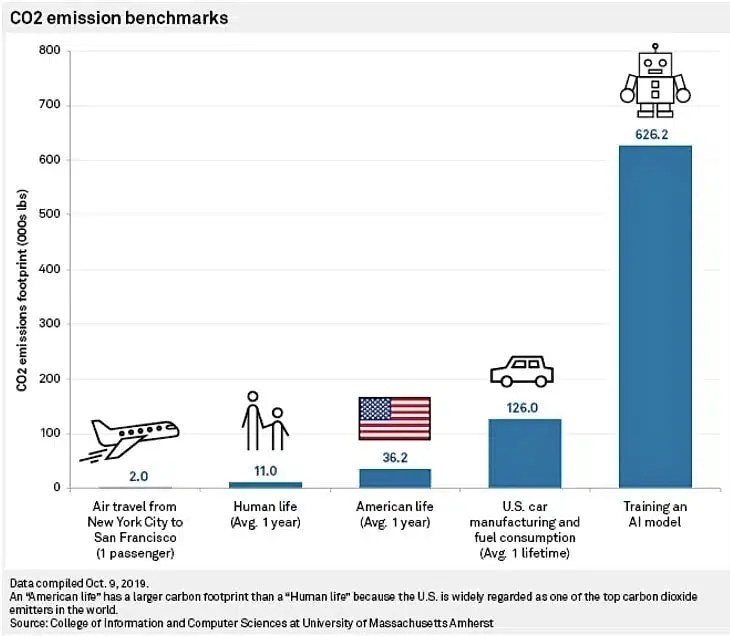
The estimated CO2 emissions from training common NLP models, compared to familiar consumption (University of Massachusetts, 2019)

Generating a single AI image uses several times more energy than a text request. One article with five or six AI images might be using the equivalent electricity of leaving a laptop running for hours. Multiply that by thousands of articles, social posts, newsletters and ads, and suddenly it’s not trivial at all.

Zoom out a little more and the picture gets uglier. AI-related data centers are already using as much electricity as mid-sized cities. Estimates put global AI power demand on track to rival places like San Francisco or Boston within a few years. That’s millions of homes worth of electricity being burned so companies can automate writing, art and video at scale. AI doesn’t just steal jobs, it steals our resources.

Now stack dozens of these facilities across drought-prone states and you start to see why people are angry.

And they are angry.

Lately, I’ve seen organizers in Arizona, Pennsylvania and Georgia mobilize against new data center construction. Nobody wants these things in their communities. They strain power grids, drain water supplies and mostly benefit companies that don’t live there (don’t they always?). Luckily, these fights seem to be working. Projects are being delayed, while others are being stopped altogether. We can and will win against these tech oligarchs, but first, we need to be smart about our usage.

This is why it’s so frustrating to see articles about resistance, climate justice or helping nature paired with AI-written images. You can’t talk about fighting extraction while actively participating in it. You can’t warn about corporate overreach while relying on the most opaque, resource-hungry tech industry on the planet.

And it’s not just images. AI-written articles, AI-edited videos, AI voiceovers, all of it runs on the same infrastructure. Longer outputs mean more compute. Videos are especially brutal, far more than text or AI generated images. That one slick AI video you just posted (or liked) could represent the electricity use of a household for days. Yes, dayzz!

The worst part is how little transparency there is. AI companies won’t clearly say how much water or energy a specific model or request uses. Communities are asked to trust them, just like users are. Meanwhile the meters keep spinning.

Just to be clear, I’m not saying we need to go off-grid or stop using technology entirely, but we should start making conscious choices. Take your own photos. Use art made by real people. Scan a drawing, even a bad one. Use stock photos from photographers who actually went outside and did the work. Write things yourself or don’t write at all!

If you’re serious about resistance, about protecting nature, about fighting back against corporate power, your tools matter. Using AI by default, especially for images and media, actively undermines your message. People feel that contradiction, even if they don’t always have the numbers to explain it.

Food for thought.

Thank you for stopping by.

Teekay.

water magic

Water speaks in ways we ignore

A memory, a teacher, a traveler from space.

Once upon a time, exactly 4.5 billion years ago, Earth was a violent place.

There were no oceans. No rivers, no rain, no life. Just a molten ball of fire and gas, spinning restlessly in space.

And then it came. Not as a storm or a miracle, but as dust, rock, and ice, hurtling through space and crashing into this young planet during what scientists now call the Late Heavy Bombardment.

Over millions of years, icy asteroids and meteorites may have delivered what Earth itself couldn’t produce on its own: water. Drop by drop, this alien substance transformed our planet, cooling its surface, filling its craters, and laying the foundation for every living thing that would ever exist.

In other words, the water in your glass, in your blood, in your tears, may not be from Earth.

This is a common theory among scientists, but how do they back it up?

Well, simply put, traces of deuterium (a form of hydrogen) in Earth’s water match those found in carbon-rich meteorites, not in Earth’s original atmosphere. In other words, water could well be extraterrestrial and we’re walking oceans, born of stardust and comets.

Pretty cool.

“A water molecule is made up of one atom of oxygen and two of hydrogen. Hydrogen was created in the Big Bang, and oxygen in the cores of stars more massive than the Sun. Enormous amounts of water, in gaseous form, exist in the vast stellar nurseries of our galaxy.” – NASA

All that being said, new discoveries have challenged that theory. Science doesn’t care about romance and poetry..

But that’s only the beginning of the story.

Water is alive in ways we’re still discovering

Science has always viewed water as simple H₂O. But the more we look, the more mysterious it becomes.

Water doesn’t just hydrate, it reacts. It listens, and it may even remember!

Case in point, when scientists drill into glaciers in Antarctica or Greenland, they’re not just pulling out ice. They’re pulling out history. Inside those frozen cores are bubbles of ancient air, particles of volcanoes and wildfires, records of rainfall, drought, and dust storms, all preserved in perfect detail. These layers tell us the climate story of Earth going back hundreds of thousands of years.

So yeah, water stores information. It has a memory. It IS a memory, not metaphorically but quite literally.

But what if water also stores something more subtle?

Can water feel ? Like, does it have feelings?

The late Dr. Masaru Emoto, a Japanese researcher, believed it did. In his famous (and controversial) experiments, he exposed water to different words, prayers, music, and intentions, then froze it and photographed the crystals that formed.

On one hand, water blessed with words like “love” or “gratitude” formed stunning, symmetrical snowflake-like shapes. On the other, water exposed to hate, anger, or pollution formed distorted, chaotic patterns.

His work was dismissed by many in the scientific community, as they do. But for others, it cracked open a door. A possibility that consciousness and water might be connected in ways we don’t yet understand.

The mystery of memory in water

In 2009, Luc Montagnier, the Nobel Prize–winning virologist who co-discovered HIV, published a paper suggesting that highly diluted DNA in water emits electromagnetic signals, and that water retains this information even when the DNA is gone.

Another researcher and Swiss chemist, Louis Rey, studied water’s “memory” through thermoluminescence and noticed changes depending on what the water had previously been exposed to.

These findings are controversial, but they echo something ancient cultures have always known:

That water is not just a substance, it’s a carrier. A messenger. A mirror.

Water in religion & spirituality

Across every tradition and belief system, water is sacred.

• In Islam, it is said in the Qur’an: “We made from water every living thing” (21:30). Before drinking or washing, Muslims say “Bismillah”, or In the name of God, inviting His name to bless the water. Then there is the water of Zamzam, a sacred well in Mecca, believed to have sprung miraculously for Hagar and her son Ishmael in the desert. This water is revered for its purity and spiritual significance, and pilgrims often drink it during Hajj and Umrah, and take it home as a cherished gift.

• In Christianity, water baptizes, purifies, rebirths.

• In Buddhism and Taoism, water is a symbol of humility and transformation. It yields but wears down mountains.

• And Bruce Lee, blending martial arts with Eastern philosophy, famously said:

“Be like water, my friend.”

Meaning: stay flexible, formless, adaptive, like the element that takes the shape of whatever holds it, and yet remains itself.

Water teaches us to flow, to remember, and to release.

Our bodies remember too

Our body is made up of about 60% water. Our brain? Closer to 75%.

We are, quite literally, a walking river. Every cell depends on water, not just to survive, but to communicate, to regenerate, to feel.

Our emotions, hormones, sleep, focus, creativity, they all ride on the flow of water inside us.

And yet, for something so vital, we’ve forgotten how rare it is.

Water is scarce and under threat

Earth may be covered in water, but only 0.007% of it is drinkable and accessible. The rest is locked away in oceans, glaciers, or underground.

Meanwhile, pollution, overconsumption, and climate change are drying up and polluting a resource that our very existence relies on. Every environmental campaign is focused on the pollution of air (which causes 7 million deaths a year), which is great, but most campaigns don’t even touch on the irreversible pollution of water (mostly due to the fashion industry and animal breeding). Why? The air is much easier to clean than our fresh water streams. and yet..

Meanwhile, pollution, overconsumption, and climate change are depleting and contaminating a resource essential to our very survival: water. Most environmental campaigns rightly focus on air pollution, which causes 7 million deaths each year btw, but rarely address the irreversible pollution of our freshwater sources, much of it driven by the fashion industry and industrial animal farming. Why? I mean if anything, air is far easier to clean than our streams, rivers, and aquifers..

• The fashion industry produces 20% of global industrial water pollution. Dyes and synthetic materials poison rivers from Asia to South America.

• The meat industry is one of the biggest consumers and polluters of water. One single beef burger requires over 2,000 liters of water to produce. But that’s not it: Waste from livestock contaminates rivers and groundwater. Read about the Green Tide, aka Killer Slime or green algae, a magic seaweed that can kill you in SECONDS, another scandal brushed under the rug because a certain lobby is too powerful to let it be mediatized.

Food production accounts for over a quarter (26%) of global greenhouse gas emissions. 18% of those are due to livestock production. – Stanford

Plastic and pesticides enter our lakes and oceans at alarming rates. Microplastics have now been found in rainwater and even in unborn babies.

By 2030, the United Nations warns that 40% of people could face severe water scarcity if we don’t act.

Water is strong. It’s self-purifying, patient, ancient. But even it has limits.

A call to return to reverence

We live in a world where water comes from a tap, which is why we forget how sacred it is. We wear clothes made in countries we’ll never visit, eat food raised on land we’ll never see, throw away plastics that outlive us by centuries, and we don’t see the water trails behind them.

But now we know better.

We know that water is more than H₂O. It holds the blueprint of life and the story of our planet. It listens. It reflects us.

So what can we do?

• Plant trees.

• Eat more plants and less dead flesh.

• Repair our clothes.

• Use less plastic and ban single use plastics.

• Speak blessings into our glass.

• Treat water like the rare, cosmic treasure that it is.

Because every drop of water you drink has seen stars. It’s been ice. It’s been vapor. It’s fallen as rain, flowed through rivers, and run through the veins of everything that has ever lived.

And maybe, just maybe, when you speak to it, it remembers you too.

Thanks for reading.

Tee.
Atlantic, by Teekay Rezeau-Merah

Life is a beautiful mystery

People are oddly mesmerizing.

Sometimes I catch glimpses of conversations, some are deep, others shallow. Both fascinate me. How humans think and function, how they make their own choices, and sometimes, how they lie to themselves.

I like watching people walk together. I can’t help but think of our ancestors, how they moved in groups, hunter-gatherers, until wheat domesticated us (not the other way around). I wish we could go back.

It’s funny how a child’s walking style often matches a parent’s gait, or how the way someone sits says so much about them.

I get stuck watching clothes spin in the dryer. I don’t wear a lot of black (or any, really), so it’s like a rainbow in there. It always reminds me of this Senegalese myth from Ashura Day, where a rainbow means the Prophet’s (PBUH) daughter is doing her laundry. It’s funny, in a sweet way.

Oral traditions must be protected at all costs.

I love the bees and butterflies that hang around when we’re outside. It’s so peaceful.

Fire is mesmerizing. I’ve always been fascinated by it, so much so that, when I was little, one of my experiments went wrong and set my bedroom on fire. Oops! I love bonfires, fireplaces, candles. I used to burn incense just to watch the smoke. I’m also strangely drawn to steam, idk why.

Most people hate spiders. I love them. They really are special, nature’s elite.

Growing things makes no sense. How can a seed feed me with the most beautiful fruit or vegetable in no time? Just soil, water and sun? Endless abundance. Nature is incredible.

The world is full of magic. The stars, clouds, moving patterns, waves, the wind.

Pain is strange. It’s an immediate physical response, but if you think about it, step outside of it, it becomes something else. Just neuroreceptors sending signals. The whole process is wild. I dread pain. It reminds me of death, like it’s the final step before we go.

Skin is interesting. It’s the largest organ we have, yet we treat it like it’s nothing. I’m always amazed when it heals itself, like how? When I was a baby, I had second-degree burns on my face and third-degree burns on my chest. I went blind for a few days. I think about miracles a lot. We abuse our skin constantly, yet it keeps repairing itself.

Languages are mesmerizing. I think about them often. I compare languages in my head and try to understand those who invented them. Again, I think about our ancestors. How did they communicate? What was their humor like? What did they find funny? Did they understand death quickly? How did they distinguish little death (sleep) from big death?

I love the expression “life as we know it”. It plays in my head quite often. My personalities are different in different languages, I think most polyglots can relate.

Life is a beautiful mystery. One day you’re here…

Anyway, thank you for stopping by.

Peace!

Teekay

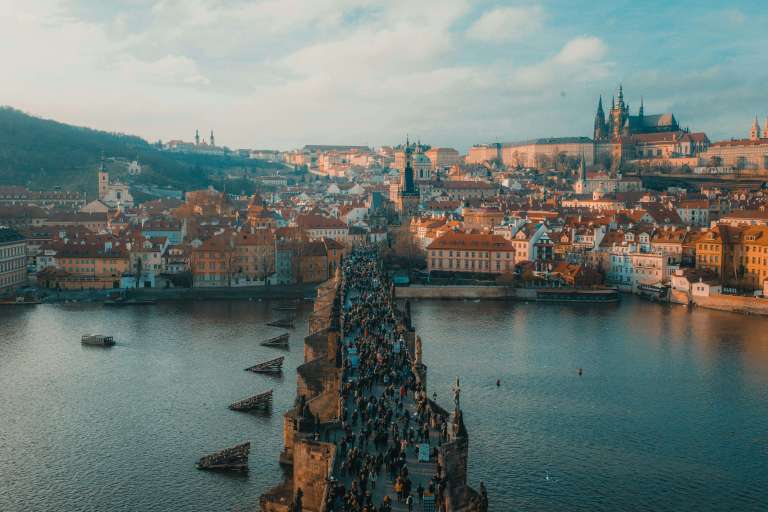
European cities

Realizations after 9 years of living and traveling in Europe

Suddenly, the world feels so small.

It’s funny how easily we take things for granted once we’ve lived them.

I hadn’t set foot in continental Europe until I was 17. I was never particularly fascinated by it, but I was curious, mainly because I’ve always been a football head (aka soccer). My understanding of Europe came almost entirely through football. It’s surprising how much you can learn about a place through the way it presents itself to the world.

For me, football was Europe’s Hollywood.

Sure, I’d read books by European thinkers like Rousseau, Voltaire, Dostoevsky, Adam Smith (dad’s an economist), Marx (capitalism’s greatest critic), Montesquieu and plenty of Greek philosophers, but most of them weren’t contemporary thinkers. They wrote about their own times, their realities. Football, on the other hand, made Europe feel present, dynamic, real. It gave me a window into the continent’s character.

For instance, I knew about the English and their pub culture way before I had set foot in England. I already knew they loved to drink before games, loved to sing in the stands and viewed the sport almost like a religion.

The Dutch, with their total football philosophy, played the game differently. Organized, intelligent, team-oriented, their football reflects a society that values structure and versatility.

The Germans famously love their beer. Bayern Munich holds a photoshoot every year to promote Oktoberfest, which I only knew about thanks to their events.

The Turks are loud and proud. Fireworks in the stands, packed stadiums on a weekday, and fans who treat football like life or death, it perfectly depicts their character.

The Spanish, on the other hand, are just as proud, but more divided. The Basques, Catalans and Andalusians all bring their own flair to the game. They also have their own holidays, like San Jordi (Catalan Valentine’s day), and you learn about those through football too.

The Italians are perhaps the only ones who proudly exposed the ugly face of their society through the beautiful game: their racism toward Black players, their theatrics and machismo are ever present on the pitch and off of it. Their passion is unmatched and unapologetic, but so is their cheating. Not great, thank God people outside of football are different.

Anyway, last but not least, the French. It was already striking to me how different people within the country were. France is so diverse, which I already knew then, but which became even clearer the second I set foot here.

I’ve been to more than 20 European countries since moving here, and visited over 100 cities in Europe. I’ve made lifelong friends who became family. I studied, partied and worked with them. Better yet, I ended falling in love with a European, who then became my wife and lifelong partner. Who would’ve thought?

And yet, I take it all for granted now.

I love living in Europe, and there is nowhere else I’d rather be, but traveling around Europe doesn’t excite me as much as it used to. It feels like I’ve seen it all, which, of course, isn’t true.

It’s strange how easy it is to feel indifferent to things you once dreamed of.

Gratitude, I’ve learned, isn’t just a feeling. It’s an action. A choice.

Our next trip in Europe will be to the Balkans, and Greece. Albania, Montenegro and Bosnia are on our list. I hear the culture there is very different to Western Europe, which is super exciting!

Thank you for stopping by.

Peace!

Teekay

Pollinating bee

Reasons why we don’t eat honey

Besides the fact that we don’t “need” to.

Honey comes from bees. Bees are tiny creatures who play a huge role in keeping our planet alive and healthy, I’ll explain how.

Bees are born in beehives, where they grow up, work together, and take care of each other. While most people think bees are just busy flying around, they’re not! They actually have specific “jobs”, or tasks if you will. In fact, each bee has a specific role: some clean the hive, some feed the baby bees, and others go out to find food. Basically, they’re like us, except more advanced, because they don’t pollute, fight over nonsense and hate each other for no reason.

Bees are also pollinators.

When bees buzz from one flower to the next, they’re doing something extremely important known as pollination. Here’s how it works: As bees collect nectar for making honey, they carry pollen from flower to flower. This simple act helps plants grow fruits, veggies, seeds, and even more flowers. Without bees doing their thing, a lot of the food we rely on wouldn’t exist.

Let that sink in for a second.

Case in point, 75% of the food we eat depends on pollinators like bees (WEF). 75 freakin’ percent! Apples, strawberries, cucumbers, almonds, and even coffee all need pollination. So, losing bees would mean most of these foods would disappear, or become extremely rare and expensive.

Besides, pollinators also help plants that grow in the wild. These plants give food and shelter to animals and help keep the air clean. So, pollinators help whole ecosystems survive, not just farms and gardens.

While bees are the most famous pollinators, they’re not the only ones. Butterflies, hummingbirds, bats, moths, beetles, and even some types of ants and wasps also help pollinate plants. However, bees are the most effective because they focus their energy on flowers and carry lots of pollen.

This year (2025), we’ve had the worst honeybee loss in recorded history in the US. In fact, 80% of honeybees died suddenly. We still “don’t know” why (pesticides, it’s pesticides).

So, why don’t we eat honey? Simple: bees make honey to feed themselves and keep their hive alive, especially through the winter. When humans harvest honey, they’re taking away the bees’ own food (and heat) source. To make up for it, beekeepers sometimes replace the honey with sugar water, but that doesn’t give bees the nutrients they need to stay healthy. In fact, just like in humans, too much sugar can weaken their immune systems and make them more vulnerable to disease.

Worse still, to harvest honey, beekeepers often use smoke or chemical fumes to force bees out of their hives. This disorients them, causing stress, panic, and confusion, sometimes even leading them to get lost or die as they flee.

Even though it might not seem harmful at first, stealing honey puts a lot of pressure on bee colonies. It is in fact one of the reasons we’ve seen millions of bees die in recent years.

This is why many vegans consider honey as part of animal exploitation. The more we take from bees and damage their homes, the fewer bees we have, which in turn puts entire ecosystems, and our own food systems, at risk. In numbers, honeybees pollinate a worth of 15 billion dollars of crops in the US only, yearly.

If bees disappear, many plants won’t be pollinated. This means fewer fruits, vegetables, and nuts. Animal species that eat these plants will struggle, and so will the animals that eat them. It’s a chain reaction that could cause entire ecosystems to collapse. Eventually, the extermination of bees would entail food shortages even for us, humans, and thus our death as well.

Humans have long seen themselves as sitting at the top of the pyramid, a concept known as speciesism, but in reality, we’re just one part of a vast, interconnected family of living, sentient beings.

Fascinating facts about bees

Here’s where things get interesting: Plants, being rooted in the ground, carry a small negative electric charge. Interestingly, this charge increases the higher up the plant you go, creating an electric field around the flower itself.

Bees, in contrast, acquire a positive charge during flight due to friction with the air, which causes them to lose electrons. So, as a bee approaches a flower, the opposing electric fields of the bee and the plant begin to interact. This interaction subtly changes the flower’s natural vibrations or signals, imperceptible to humans, but detectable to bees.

When the bee lands on the flower, the positive charge from the bee and the negative charge of the flower neutralize each other almost instantly. This leads to two remarkable outcomes:

  1. The negatively charged pollen from the flower is attracted to and effectively “jumps” onto the positively charged bee;
  2. The flower’s electric field is altered, signaling to other approaching bees that it has already been visited. This change communicates that the flower likely has no nectar left, prompting bees to move on and return later. Mindblowing!

So, flowers use electric fields not just to attract pollinators, but also to communicate whether they still have nectar. They have their own language of electricity, completely imperceptible to us.

Other interesting facts about bees: They can also recognize human faces, communicate with each other through a little dance, and even show signs of emotion. Scientists also suggest bees can count and they might even dream.

What can we do to protect the bees and our soils?

  • Ban pesticides.
  • Plant flowers that bees love, like lavender, sunflowers and wildflowers.
  • Replace honey with the million other alternatives in existence: maple syrup, agave nectar, date syrup, molasses, and even fruit-based syrups work great. Why participate in the extinction of a whole species (and many other would follow suite) when you can avoid it?

Bees may be small, but they are mighty. Taking care of them is not just about saving one species, it’s about saving the world we all share.

Thank you for stopping by. This post was inspired by a conversation with my wife ❤

Peace!

Teekay

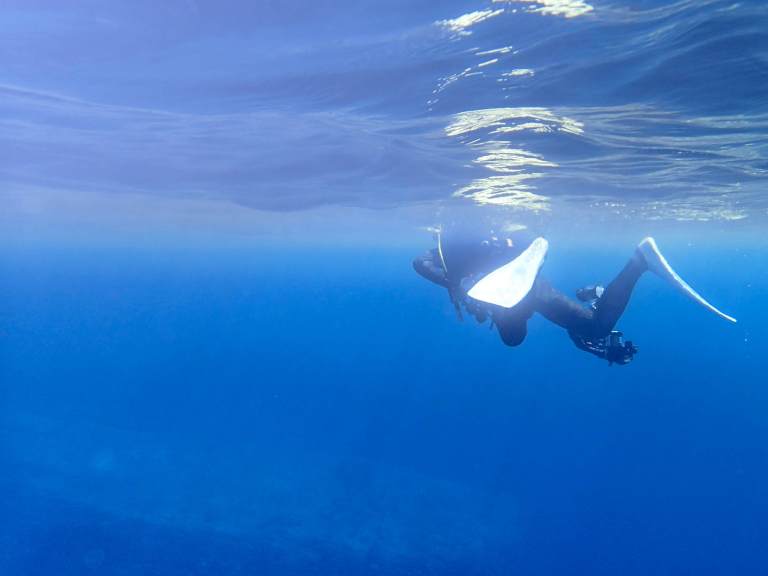
Teekay scuba diving

How I got into scuba diving despite the odds

It’s been bumpy.

In September 2024, after touring Europe for 9 months, I realized I needed a new challenge. I had no routine back then, but I was itching for something that would push me out of my comfort zone. I hesitated between picking up rollerblading again, something familiar and nostalgic, or diving into something completely new.

As someone captivated by the ocean and its many mysteries, I started thinking why not do something with that? That’s how I got into scuba diving.

Now, I knew absolutely nothing about scuba diving. I’d snorkeled a million times before, sure, but as I quickly learned, scuba is a different beast altogether.

There was one small problem, though: I was only going to be around for a couple of weeks before heading off on a another road trip through Belgium, the Netherlands, Germany, and Luxembourg, before eventually visiting friends in Strasbourg and Romans. Not exactly the ideal time to start something new.

Still, I called the local dive club and got through to P. I think he’s the president, though I’m not entirely sure. What I do know is that he’s an experienced instructor and sounded like a genuinely nice guy. I told him I’d have to disappear for a couple of months after my first session, and he just said, “No problem. We’ll pick it up from there when you’re back in December.” That put me at ease.

Before leaving, I squeezed in my first-ever scuba dive in the pool, and let’s just say it didn’t go smoothly.

At barely two meters deep, the pressure was too much for my ears. We had to resurface twice before I could finally stay down. I was tense, bloated, and extremely uncomfortable, definitely not my finest hour. I left with more doubts than confidence. But I had two months to reflect, refocus, and maybe strengthen my Eustachian tube.

When I came back in December, I jumped right back in. The group had changed, most of the other “newbies” weren’t so new anymore, and they all seemed to know each other pretty well. I didn’t mind. P was there and made sure I was comfortable. Besides, I’ve always been a bit of an outsider anyway.

So, the second session? A total game changer. Thanks to the dryland workouts P had recommended, I was way more relaxed, and my ears cooperated this time. I actually enjoyed myself. It was the confidence boost I needed.

But not so fast.

Session three was a swim session. And here’s something I may have mentioned on this blog before: I’ve always wanted to learn how to swim properly, but never got around to it. Growing up by the sea, I swam “freestyle” almost every summer. My dad first threw me in the water at age 5. He’s always been a strong swimmer but me? Not so much. Or not at all!

So during that swim session, the lack of technique finally caught up with me. Everyone else swam like they knew what they were doing. I felt like I was flailing.

When I remember the most from that session was that the instructor on duty that day wasn’t exactly kind about it. However, another one quietly pulled me aside, explained what I was doing wrong, and gave me tips on how to improve. That five-minute exchange was all I needed.

Then came the sting.

At the end of the session, I overheard some instructors talking to P, my “supervisor.” Let’s just say that they were extremely harsh. I knew that I wasn’t ready, that I could barely float, that I couldn’t swim, but the stuff and the way they said it was just mean. But in hindsight, that moment made me push through to prove them wrong. I had no doubt that I would improve. Talk is cheap.

Right after that incident, I started taking proper swimming lessons outside of scuba. I practiced every chance I got. Little by little, things started clicking.

Weeks went by. My scuba technique improved. I got more confident in the water. I stopped feeling like I was just surviving and started actually enjoying it.

And just this past weekend, I went on my first dive in nature.

It was amazing.

Sure, I lost my weight belt (50 bucks gone in a splash) but I didn’t care. The dive itself was beautiful. I was paired with G, a quiet guy who knows his stuff. Not a chatterbox, but full of good advice. I also really like E, another club member. Super chill and probably the nicest guy there, even though I don’t see him often.

Now summer is right around the corner. In a few weeks, we have a diving weekend coming up, and I can’t wait. I’m close to getting my first-level certification. It’s been tough, my technique was abysmal when I started, but I’ve grown a lot. I’m feeling more comfortable, more daring.

My instructors helped me a lot. But I’m also proud of the work I put in. I earned this progress.

Will I continue next year? I think so. I want to see where this journey goes.

We’ll see what happens once the season ends.

Thanks for reading!

Teekay

cabin in the woods

Living without electricity isn’t as hard as you think

Millions of people do it, no bid deal.

Living without a connection to the grid, and mainly the electric grid is a significant lifestyle change.

As a lifelong explorer and survival enthusiast, I’ve always hoped for the best but prepped for the worst.

Live off the grid by Teekay Rezeau-Merah
Off-grid living, photo by Alex Bierwagen

In most Western countries, fundamental commodities such as electricity, running water, well-maintained roads, and a wide range of goods and services are conveniently accessible. However, life is quite different in other parts of the world.

  • Travel with me

For instance, when my family and I relocated to Mozambique in 1996, basic provisions like sugar and cooking oil were exceptionally scarce. Similarly, when we moved to Ethiopia in 2004, dairy products and sugar were also in short supply.

Not only that, but during our time in Cape Town (South Africa), Maputo (Mozambique), Algiers (Algeria), Addis Ababa (Ethiopia), and (very briefly) Cairo (Egypt), water scarcity was a prevalent issue, particularly during the summer months.

In fact, we used to get up at 4 AM to fill up our water tanks and jugs.

Unfortunately, water shortages are still widely common, and some fierce battles for control over water have already begun.

  • Water wars
water scarcity by Teekay Rezeau-Merah
Water battles, Image by Freepik

Take the above-mentioned region of East/North Africa for instance. The Nile River is at the heart of an ongoing battle for water.

Indeed, Ethiopia, Egypt, and Burundi are all entangled in a high-stakes discussion that could reshape their destinies.

Long story short, Ethiopia’s audacious endeavor, the Grand Ethiopian Renaissance Dam (GERD), an engineering marvel rising on the mighty Blue Nile has cause a lot of discussion and anger in that region, rightfully so.

Such an endeavor endangers both Egypt and Burundi, who fear the ripple effects of such a grand project.

  • An electricity-free lifestyle
oil lamps and candles by Teekay Rezeau-Merah
Oil lamp by Photo by Bernard Tuck

Now, in a perplexing paradox, frequent power outages were extremely common in Ethiopia, and I mean several-times-a-week common, even though Ethiopia possesses ample electricity to meet its population’s needs.

Surprisingly, this occurs because the local government chooses to export their energy to neighboring nations, leaving their own citizens in the dark.

I spent over four years (teenage years) in Ethiopia, over four years of persistent power cuts, so I learned a thing or two about adaptability and ingenious hacks to beat the system.

  1. First of all, I hate artificial (street) lights. One of the things I miss the most about Africa is the tranquil stillness of the night. I always found the incessant intrusion of artificial lights aggressive. 
    With that being said, I love candles and oil lamps with all my heart. They embody a charm that captivates me entirely. Indeed, candles and oil lamps are a gentle alternative to artificial light, as they gracefully replace it without imposing their presence. Their warm glow is synonymous with coziness, while their soft illumination remains pleasing and comforting to the eyes. Perfection!
  2. Many of us rely on electric utensils and stoves for cooking, not in Africa (not back then at least). 
    My family always opted for non-electric cooking methods like gas or an outdoor wood-burning stove. Dutch Ovens are also pretty awesome if you want to cook bread and pizzas. No power, no problem.
  3. Food storage: This is a big one. “How did you survive without a fridge?”. First of all, we did have a fridge, it was just turned off most of the time. Since we never had an underground cellar storage (that would’ve saved us the hassle), we had to relearn about ancient cooling techniques, like pot-in-pot coolers (or clay pot coolers). 
    Here’s how they work: First, you’ll need two terra-cotta pots. Place one (the smaller one) inside the other, allowing for an approximate 3 cm (1.2 in) to 4 cm (1.6 in) gap between them. Fill the gap with sand, then saturate it with water.
    Finally, place your fruits and veggies inside the small pot and cover everything with a wet towel.
    As the water slowly evaporates from the cooler, heat is taken from the clay pots, keeping the temperature of the food cool inside. 
    But that’s not the only way to store food, you can also learn about preservation techniques like canning, pickling, and drying.
  4. Heating and cooling: Africa isn’t as hot as they say in movies, it actually gets pretty chilly over there, depending on where you are.
    Fun fact: You can ski in Africa. In fact, there’s so much snow in Algeria, Morocco, and South Africa that they have their own ski resorts, with approximately 40 kilometers (25 miles) of ski slopes. 
    Anyway, one of the most efficient techniques to regulate indoor temperatures is known as “passive solar design. Passive solar homes use natural ventilation and insulation techniques to regulate the temperature indoors.
    However, in colder climates, wood-burning stoves and passive heating methods like thermal mass and efficient insulation are common. 
    In hotter climates, shading and natural ventilation were our go-to, with evaporative techniques coming in handy (with battery-powered fans).
  5. Water supply: As stated above, we had tankers (or water tanks) in all of our homes. Our water tanks were always placed above the house, allowing for gravity to do the rest.
    However, in total transparency, we still relied on an electric current (and water pump) to get the water up there. We used it once to twice a week. 
    Other methods we used were conventional water wells, hand pumps, and rainwater collection systems. I used to LUHV elaborating and kidgineering rainwater collection systems around the house!
  6. Communication: Well, most of what I’m telling you here went down between 96 and 2010, so iPhones were pretty much nonexistent (for the most part). 
    However, I did have an MP3, then the first iPod, on which I watched hundreds of movies and my favorite bootlegged series. I used to charge my electronics at school or on our drive home.
    We also relied on our landline a lot back then.
  7. Speaking of entertainment, the reason I spent so much time kidgineering and playing outside was that I had no other choice. Video games were a big no-no till I was 15 or 16, so reading, playing board games, puzzles, biking, and pursuing outdoor hobbies was all I did.
    I also read the newspapers. No, this wasn’t the ‘70s ^^
  8. Hygiene: Have you ever washed your clothes by hand? And I mean ALL your clothes, not just a pair of socks? Well, I have, and most people still do. It’s no big deal, it’s pretty fun actually.
  9. Human-powered appliances: My grandma (who obviously didn’t live with us) had the best appliance ever made: A hand-cranked coffee grinder. 
    I loved that thing!
    I genuinely believe we need more of this stuff today. It makes life so much more fun. 
    On a personal level, I’ll always favor an old-school kettle or manual food mill & grinder over new, electric ones. Also, I never owned a microwave.
  • Final Thoughts

Technology is convenient when used properly and I believe electricity is a blessing to humanity.

However, we ought to reduce our reliance on modern tech and learn how to live simply. As you can see, living without one of the most important inventions known to man, electricity, is doable, though it requires careful planning, resourcefulness, and adaptation to alternative methods. Assessing one’s specific needs and resources is paramount for such an endeavor, but it’s manageable and within everyone’s reach.

Self-reliance is the future.

Thanks for reading.

Peace.

Teekay.

WATCH: 31 Documentaries that will change your perception of food (with trailers)

You are what you eat.

An Updated Guide to Must-Watch Documentaries on Health, the Environment, and Animal Welfare

A few years ago, I compiled a list of powerful documentaries that opened eyes and sparked conversations about the connections between our diets, personal health, the planet, and animal welfare. Since then, new documentaries have emerged, offering fresh perspectives and deeper insights into these critical topics.

This updated list features 31 must-watch documentaries that will inspire you to rethink your choices, understand the broader impact of what’s on your plate, and consider the powerful role food plays in shaping our world.

Whether you’re passionate about health, sustainability, or ethics, these films are a compelling call to action, and a perfect way to kickstart meaningful change.

You Are What You Eat: The Twin Experiment (2024)
A twin-focused dietary experiment exploring the effects of different eating habits on health.
Notable Figures: None known.

Earthlings (2005)
A groundbreaking documentary examining humanity’s reliance on animals for food, clothing, and entertainment.
Notable Figures: Narrated by Joaquin Phoenix.

Dominion (2018)
Exposing the darker side of animal agriculture through hidden-camera footage.
Notable Figures: Narrated by Joaquin Phoenix, Rooney Mara, and Sia.

Forks Over Knives (2011)
A case for adopting a plant-based diet to combat chronic diseases.
Notable Figures: Dr. T. Colin Campbell, Dr. Caldwell Esselstyn.

What the Health (2017)
Investigating the link between diet, disease, and corporate influence in health organizations.
Notable Figures: Kip Andersen, Keegan Kuhn.

Cowspiracy: The Sustainability Secret (2014)
Revealing the environmental impact of animal agriculture.
Notable Figures: Directed by Kip Andersen.

Seaspiracy (2022)
A critique of the fishing industry’s devastating impact on marine ecosystems.
Notable Figures: Directed by Ali Tabrizi and Kip Andersen

Christpiracy (2024)
Examining the intersection of religion and ethical food choices.
Notable Figures: Directed by Kip Andersen and Kameron Waters.

The Game Changers (2018)
Debunking myths about plant-based diets and athletic performance.
Notable Figures: Produced by James Cameron, Arnold Schwarzenegger.

I Could Never Go Vegan (2024)
Addressing common excuses and challenges against veganism.
Notable Figures: None known.

Vegucated (2011)
Following three people as they attempt to adopt a vegan lifestyle.
Notable Figures: Directed by Marisa Miller Wolfson.

Milked (2021)
A deep dive into the dairy industry and its global implications.
Notable Figures: Created by Chris Huriwai.

Pignorant (2024)
Exploring the psychology behind ignoring the ethics of animal consumption.
Notable Figures: Created Joey Carbstrong.

Eating Animals (2018)
An exposé of industrial farming and its impact on food systems.
Notable Figures: Based on Jonathan Safran Foer’s book, narrated by Natalie Portman

Carnage: Swallowing the Past (2017)
A satirical take on a future where veganism is the norm and meat-eating is taboo.
Notable Figures: Directed by Simon Amstell.

The Smell of Money (2022)
Investigating the environmental racism tied to industrial pig farming.
Notable Figures: Guess appearance: Cory Booker

The End of Meat (2017)
Imagining a world where meat consumption has ended.
Notable Figures: Directed by Marc Pierschel.

The Invisible Vegan (2019)
A focus on the often-overlooked contributions of Black communities to veganism.
Notable Figures: Directed by Jasmine Leyva, guest appearance by John Salley

Mission Blue (2014)
Chronicling Dr. Sylvia Earle’s mission to protect ocean habitats.
Notable Figures: Featuring Sylvia Earle.

Eating Our Way to Extinction
Exploring how our diets are destroying ecosystems and biodiversity.
Notable Figures: Narrated by Kate Winslet.

Eating You Alive (2018)
Highlighting the health benefits of a whole-food, plant-based diet.
Notable Figures: Featuring Samuel L. Jackson, James Cameron.

H.O.P.E. What You Eat Matters (2018)
Demonstrating the health, environmental, and ethical reasons for eating consciously.
Notable Figures: Guests;  Jane Goodall, Vandana Shiva

Food Choices (2016)
A comprehensive look at how dietary choices impact health and the planet.
Notable Figures: Directed by Michal Siewierski.

Peaceable Kingdom: The Journey Home (2009)
Farmers recount their journeys from animal agriculture to veganism.
Notable Figures: Directed by Jenny Stein.

Simply Raw: Reversing Diabetes in 30 Days (2009)
Following individuals reversing diabetes through a raw vegan diet.
Notable Figures: Featuring Gabriel Cousens.

The Cove (2009)
Unveiling the horrors of dolphin hunting in Japan.
Notable Figures: Featuring Ric O’Barry.

Speciesism: The Movie (2013)
Challenging societal norms about animal exploitation.
Notable Figures: Directed by Mark Devries.

73 Cows (2018)
The journey of a farmer transitioning from cattle farming to sustainable living.
Notable Figures: Directed by Alex Lockwood.

Live and Let Live (2013)
Examining ethical veganism and its implications.
Notable Figures: Directed by Marc Pierschel.

Land of Hope and Glory (2017)
An exposé on UK factory farming practices.
Notable Figures: Directed by Ed Winters.

Rowdy Girl (2023)
A former cattle rancher turns her farm into an animal sanctuary.
Notable Figures: Featuring Renee King-Sonnen.

Why We Love Nature but Keep Destroying It

How can we do better, collectively?

My self-professed love for nature is no secret to my readers.

Being close to nature is and has always been my thing.

Nature is wondrous, full of beauty and peace.

Hiking photo by Teekay Rezeau-Merah
Hiking photo by author Teekay Rezeau-Merah

The reason I became a vegan minimalist was mainly to protect it and its inhabitants.

But doing so opened my eyes on a fascinating paradox, especially in the vegan and vanlife communities; a paradox I ponder upon on a daily basis.

Spending more time in the great outdoors allowed me to come to a poignant realization: The very nature that we, avid nature enthusiasts and animal lovers, hold dear to our hearts, is the very same nature we often unwittingly damage with our bad habits.

How can we enjoy something so much while simultaneously participate in its destruction?

Teekay @teekayrezeaumerah
Please don’t leave toilet paper in nature (photo by author)

Well, here’s where my thinking is at the moment.

  • Reasoning

First of all, I want to make something clear: As pragmatic as I can be, my personal belief is that human beings are born good.

However, human beings are also amazing at compartmentalizing.

meaning of compatmentalize by Teekay Rezeau-Merah
Screenshot by author

A fitting illustration of my point is that of individuals who profess to be staunch advocates for human rights, yet they contradictorily sport Nike shoes, H&M dresses and Zara pants.

Note: If you don’t know what I’m hinting at, read this.

The same can be said about vegans who consume palm oil, or vanlifers who consume animal products (that destroy the very nature we want to be surrounded by).

Now look, I always say life is all about balance, and I believe it is, but sometimes — often times — rocking something ethically sourced won’t hurt you in any way, shape or form. Perhaps you’ll pay more for it, but you don’t have to if you buy second hand.

This applies to almost all consumables.

So the first takeaway from this piece is to think twice before your next purchases. Always consider the added value of what you buy, its environmental impact and whether there are other alternatives.

That’s one way to tackle this paradox.

Another reason we engage in actions that cause harm to nature is our toxic sense of entitlement, or deservingness.

This manifests itself in different forms: Arrogance, greed, boastfulness or in some cases, negative narcissism.

Some of us behave as if the world owes us. This sense of entitlement emanates from a lack of self-awareness and gratitude, which itself is the result of a Godless, non-religious and non-spiritual society.

Many people believe, wholeheartedly and arrogantly, that everything they have was owed to them.

Hustle culture prescribes “hard work and determination” as the ultimate solution for success, often discarding external factors that also contribute to one’s accomplishments.

Unfortunately, such attitude blinds us from seeing the bigger picture: That none of what we have, none of what we achieve is truly ours, and that it can be taken away from us at any time. It will be when we die.

More humility would do us all a world of good, and without it, we will continue indulging in things that harm us and everything we love.

When the last tree has been cut down, the last fish caught, the last river poisoned, only then will we realize that one cannot eat money. — Native American saying

The third reason behind this great paradox is our lack of concern for the future.

In other words, selfishness.

Social Media may have exasperated this, but many people believe they MUST prioritize their own pleasures and conveniences over the well-being of the environment and future generations.

It’s sickening when you think about it.

But I don’t blame us, not entirely. If anything, we were programmed and brought up this way, but it’s time for a change, a big one.

As a matter of fact, we can’t live like we did 30 years ago, times are changing and so should we, evolution and all.

Indeed, our planet can’t sustain our greed and selfishness for too long, and the time to turn things around is now.

I would never advocate for anything radical, life is all about balance once again.

As such, we don’t have to move to self-built huts, nor do we have to wear banana leaves, but it’s our duty to watch what we consume, how we consume it, and what we want to support.

Your dollars are more potent than your vote and your words. So put your money where your mouth is.

  • How

You see, I often write about boycotting certain products: Palm oilwhite sugaranimal products, single use plastic, brands that pollute our water and source their products in Chinese slave camps and Bengali/Indian sweatshops, brands that support wars, so on and so forth.

To take part of this would make the world significantly better. To do so and to raised our collective awareness is as close to perfection as we can get.

That and reversing consumerism. Remember, minimalism (and essentialism) isn’t just an aesthetic, it’s a philosophy.

In 1927, a Boston-born, Harvard educated son of immigrants went to work for Lehman Brothers. His name was Paul Mazur and his interest in the economics of consumption and retailing made him a rising star in the investment banking establishment for more than 50 years.

Mostly he was responsible for manipulating the psyche of the American consumer. — Sherry Truitt

His philosophy in a nutshell:

“We must shift America from a needs, to a desires culture,” He wrote. “People must be trained to desire, to want new things even before the old had been entirely consumed. We must shape a new mentality in America. Man’s desires must overshadow his needs.

Man’s desires must overshadow his needs.” That’s a powerful statement, and a scary one.

So you see, as stated above, human beings are born good, but we were led astray for many decades.

Indeed, our actions are often shaped by cultural and societal norms. Unfortunately, said norms favor efficiency and convenience over wellbeing and ethics. They also favor desires over altruism and consumerism over self-awareness.

We all follow patterns and attitudes considered “normal” in our society, hence why we hardly question anything.

With that being said, let’s not forget that we’re still human, and luckily for us, God bestowed upon us reason and logic.

God gave us free will too, so it’s on us to outgrow our biases and harness original thinking.

  • Final word

All in all, the paradox of enjoying and destroying nature at the same time is a complex and deeply ingrained issue.

It’s not just about individual behavior, it’s rooted in our cultural, political, and economic systems, making it extremely difficult to shake off.

The one thing I want to leave you with is to question things and at least make sure your actions are aligned with your values, that’s it.

Perhaps some of us have a stronger moral obligation to protect nature, while others don’t. That’s okay, life can’t be perfect and neither can we, but does that mean we should stop trying?

Peace!

Tee.