France has barely extinguished one of its largest wildfires in decades. An area roughly the size of Hong Kong has burned, and we’re only halfway through the summer. But another heatwave is already here.
People ask how this keeps happening.
I think we’re asking the wrong question.
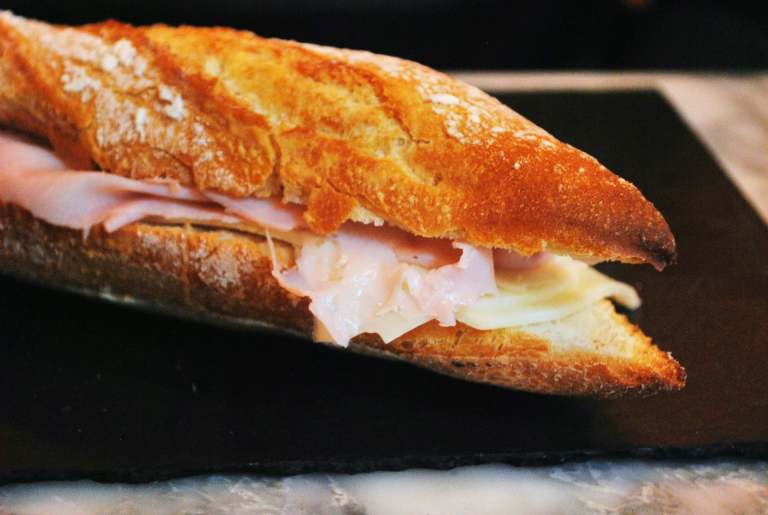
Every wildfire begins with a sandwich.
Not because a ham sandwich can physically ignite a forest, but because it represents the countless ordinary decisions that build the world in which forests burn.
The sandwich.
The cigarette.
The dairy ice cream we hand to our children without a second thought.
The Shein order arriving tomorrow.
The new backpack and notebooks bought every September even though last year’s are still perfectly usable.
Each decision appears harmless. Each is too small to matter. That is exactly how systems survive. It’s recreated every morning when we choose convenience over necessity, novelty over sufficiency, habit over reflection.
Every purchase is a vote. Not because one purchase changes the world overnight, but because billions of purchases, repeated every day, determine which industries grow, which disappear, and what kind of civilization we continue to finance.
One Amazon order won’t send a billionaire and his friends into space. One dairy ice cream won’t destroy a forest. One unnecessary notebook won’t fill a landfill.
But none of those things happens only once. They happen millions of times, every single day. Eventually those “insignificant” decisions become greenhouse gases, deforestation, polluted rivers, shrinking biodiversity, exhausted soils, expanding infrastructure and ecosystems pushed beyond their limits.
Then comes the heat. Then the drought. Then the spark.
And suddenly everyone becomes an environmentalist.
Hundreds of volunteers leave their homes to protect forests from the flames. They carry water, clear vegetation, do everything they can to stop the fire from reaching nearby villages. Most people see humanity at its finest.
I see humanity desperately trying to repair yesterday while continuing to finance it this morning.
The same people who volunteer their time and energy to protect the forest are then handed tables full of ham and butter sandwiches, soft drinks, sometimes cigarettes.
Volunteering is great. These people are giving their time to protect their homes, their communities, the forest around them. That matters. What bothers me is how easily we separate the emergency from everything that preceded it. We celebrate the person who runs toward the flames while treating the quieter forms of prevention as optional, eccentric, even ridiculous.
Those choices rarely earn applause because they happen long before the crisis, when there is no fire to fight and nobody watching. Yet they may matter far more than the dramatic moments that make the evening news.
We have confused loving the way nature makes us feel with caring about nature itself.
We hike through forests while eating products that contribute to the destruction of ecosystems. We photograph mountains while wrapped in disposable consumption. We defend a burning forest while continuing to finance the industries that place increasing pressure on forests around the world. We rush to fight the fire while throwing fuel onto it for the rest of the year. Economic fuel. Cultural fuel. Political fuel.
None of this means every choice weighs the same. A handful of industries and a handful of governments make decisions that outweigh what any individual could do in a lifetime, and no amount of reused notebooks cancels out a pipeline. But that asymmetry is not an excuse. It’s the reason our purchases are also our politics. Every dollar we hand to an industry is a small vote for its continued expansion, and the industries we’re describing don’t grow without millions of us feeding them first.
People often ask who is responsible for ecological collapse. The government? Corporations? Consumers? The uncomfortable answer is that there isn’t a single culprit. There is a chain, a chain in which every link seems too small to matter until the whole thing snaps.
That’s the butterfly effect.
A civilization is not destroyed by one catastrophic decision. It’ss destroyed by millions of ordinary ones.
Schools are closing or changing schedules. Trains are slowing down. Workers are being told to adapt. Older people are urged to stay indoors. Animals are dying in barns. Rivers are warming. Nuclear power stations are struggling to cool their reactors and being closed down. Farmers are watching the sky, hoping for rain that never comes. Cities are discovering, once again, that concrete, asphalt and glass are not neutral materials. They trap heat.
Every heatwave ends the same way.
“We need to adapt.”
Of course we do. Nobody serious argues otherwise. When temperatures reach 40°C, we need shade, cool public spaces, drinking fountains, schools that do not become ovens, hospitals that can keep functioning and cooling in strategic public buildings, especially for older people, children, sick people, outdoor workers and anyone trapped in poorly designed housing.
But adaptation cannot become the polite word for surrender.
The real question is not how we survive longer heatwaves.
The real question is why we continue to organize society in ways that make them worse.
Unfortunately, that’s the conversation many people would rather avoid.
The climate crisis is not a natural disaster in the way an earthquake is. Scientists warned us for decades. Communities raised the alarm. The solutions have been available for years. Yet, governments protected fossil fuel interests. Oil and gas companies expanded production. Executives collected billions. Politicians delayed, negotiated, softened regulations, greenwashed and lied.
This was not inevitable.
It was a political and economic choice.
Now, the same system that chose fire is trying to sell us fans, bottled water, air conditioners, climate insurance, private pools, green capitalism and survival kits.
The house is burning, and someone has opened a shop in the living room.
Heat Is Only the Symptom
The mistake is thinking this is only about high temperatures.
A heatwave is a stress test for almost everything that keeps society running.
It pushes the human body beyond its limits. It kills directly, especially when nights remain hot and people cannot recover. It damages sleep, concentration, heart health and kidney function. It turns classrooms into places where children struggle to learn and workplaces into places where people struggle to work.
It pushes infrastructure to its limits. Railway tracks expand. Roads soften. Electricity grids strain under rising demand. Hospitals become overloaded.
The irony is that ACs draw more power precisely when energy systems are already under pressure. Nuclear plants need cool water, yet rivers become warmer and shallower. The same heat that increases electricity demand can make electricity harder to produce.
It pushes agriculture as well. Cows produce less milk. Chickens die in industrial sheds. Crops dry out and/or suffer damage that only becomes visible weeks or months later. Soil loses moisture. Water restrictions arrive. Harvests shrink. Food prices rise.
Then everyone acts surprised that groceries become more expensive.
The damage does not end when the thermometer falls.
That’s why surviving the next heatwave is not enough.
The Food System Nobody Wants to Discuss
Climate conversations usually focus on transport.
And transport matters. Flying less matters. Driving less whenever possible matters. The World Cup spread across North America is a perfect example of climate absurdity, an event marketed as global unity while sending teams, fans, journalists and sponsors across an entire continent for entertainment.
But another major part of the crisis rarely receives the same attention because it sits on our plates.
Animal agriculture is one of the least efficient uses of land, water, energy and living ecosystems on Earth.
Livestock occupies roughly three quarters to more than four fifths of global agricultural land, depending on how it is measured, once grazing land and crops grown for animal feed are included. Yet, animal products provide only a minority of the world’s calories and protein. One widely cited Science study found that meat, dairy, eggs and aquaculture use about 83% of farmland while supplying just 18% of calories and 37% of protein.
Read that again.
Most of the farmland.
A fraction of the food.
That is not efficiency.
It is ideology disguised as agriculture.
The system produces far more than meat, milk and eggs. It produces methane, deforestation, polluted rivers, antibiotic resistance, dead zones in coastal waters and immense pressure on land and water.
It also produces immense suffering.
During heatwaves, pigs, chickens and cows cannot simply adapt because consumers expect cheap animal products. Ventilation systems fail. Cooling systems are inadequate or absent. Transport trucks become ovens. Poultry dies by the hundreds of thousands. Dairy cows suffer severe heat stress and milk production falls.
Then the industry presents itself as another victim of climate change while helping drive the crisis in the first place.
This is not about blaming someone trying to feed their family on a tight budget.
The ocean may be the most neglected part of the climate conversation.
We rightly describe forests as the lungs of the planet. They deserve that attention. But the ocean is far more essential to life on Earth. It has absorbed more than 90% of the excess heat trapped by greenhouse gases. It takes in a large share of the carbon dioxide we emit. It produces roughly half of the oxygen we breathe, largely through microscopic phytoplankton.
The ocean is not scenery.
It’s not a backdrop for holidays.
It is one of the reasons this planet is still habitable.
There is something profoundly irrational about destroying marine ecosystems while wondering why the planet keeps overheating.
Industrial fishing is not simply the act of catching fish. It tears apart ecosystems. It removes key species from food webs, kills countless non-target animals and drags heavy nets across the seabed, destroying habitats that took decades, centuries or even millennia to develop.
Yet this rarely appears in mainstream climate debates.
We are told to fly less, and rightly so.
We are told to drive less, and rightly so.
We are only beginning to hear serious discussion about livestock.
But fishing is still treated as though fish simply appear on supermarket shelves and the ocean can absorb endless extraction without consequence.
It cannot.
If the ocean regulates climate, absorbs carbon dioxide, produces oxygen and stores enormous amounts of heat, protecting marine ecosystems is climate policy.
Eating less fish, or choosing not to eat it at all, is not only an ethical position. It is a climate position.
For those who continue to eat seafood, there is at least an important distinction to make between small-scale fisheries and industrial fleets that empty entire ecosystems.
The ocean is one of Earth’s greatest cooling systems. Protect it at all costs.
Why Air Conditioning Can’t Be the Plan
Air conditioning has an important role.
During extreme heat, it saves lives. Hospitals, schools, care homes, public libraries, emergency shelters and social housing all need effective cooling strategies. No one should die inside an apartment built for a climate that no longer exists.
But air conditioning can’t become our primary response.
Every unit cools an indoor space by releasing heat outdoors. Across an entire city, that extra heat makes streets even hotter, particularly after sunset. Air conditioners also increase electricity demand during the hottest periods of the year. Where electricity still depends on fossil fuels, emissions rise. Even cleaner grids face greater strain as peak demand grows.
Singapore illustrates both the benefits and the limits of this approach.
The city has become highly dependent on cooling. Buildings require constant air conditioning. Those systems release heat into the streets. Outdoor spaces become less comfortable, encouraging people to remain indoors, which increases demand for cooling still further.
The cycle reinforces itself.
That’s not resilience, it’s technological dependence.
We don’t need cities filled with cooled rooms.
We need cities that stay cool in the first place.
We Forgot How to Build for Nature
The most effective cooling technology has existed for millions of years.
Trees.
Not decorative saplings planted in tiny squares of concrete, but mature urban forests and healthy green canopies.
Anyone who has walked barefoot from hot pavement onto shaded grass already understands this without reading a scientific paper.
So why, every time France approaches 40°C, do we talk about buying more air conditioners before planting more trees?
Why do we pave over soil, remove mature trees, expand shopping centres, build vast parking lots and approve developments that trap heat, only to claim that more machines are the answer?
They store water, protect biodiversity, stabilise soils, reduce erosion, create humidity and lower temperatures. They make landscapes more resilient long before a heatwave arrives.
Yet even forests are increasingly treated as another industrial resource.
Living ecosystems become timber reserves. Old-growth forests become biomass. Trees are cut down, burned for energy and labelled renewable, while complex ecosystems that took centuries to develop are reduced to units of production.
The same logic appears again and again.
If something can be extracted, it is.
If something can be sold, it is.
The living world is valued less for keeping us alive than for generating another stream of profit.
Water Is Becoming Political
Water is becoming one of the defining political issues of this century.
Yet we still manage it as though nothing has changed.
During droughts, ordinary people are told to take shorter showers. Farmers are asked to reduce irrigation. Small growers are criticised for watering their crops.
Meanwhile, luxury uses fight for exemptions.
Golf courses have become symbols of this contradiction because they expose the politics behind water allocation. While vegetables struggle and ecosystems dry out, perfectly green fairways are often defended. Leisure for the comfortable can receive more protection than food production or ecosystem survival.
Mega-basins reveal the same mindset.
On paper, the idea sounds simple. Capture water in winter and use it during summer.
Reality is more complicated.
Many of these reservoirs are open to the air, increasing evaporation as temperatures rise. They can concentrate control of water in the hands of a limited number of large farms. They often allow water-intensive agricultural models to continue instead of encouraging the transition toward crops and farming systems adapted to the climate that is already arriving.
The question is not whether storing water can ever make sense.
The question is who controls it, who benefits from it and whether it helps transform agriculture or merely postpones change.
A society preparing for the future would treat every drop of freshwater as precious.
Rainwater would be collected wherever possible.
Wastewater would be safely reused.
Leaking infrastructure would be repaired.
Soils would be restored so they can retain moisture.
Cities would remove unnecessary concrete and allow water to return to the ground.
Farmers would receive support to transition toward more resilient practices.
Luxury water use would never be treated as equivalent to drinking water, food production or healthy ecosystems.
The Logic Behind the Crisis
The deeper problem is that our economic system rarely asks what keeps life alive.
It asks what can be sold.
That’s why so many climate conversations end in absurdity.
We’re told to separate our recycling while billionaires fly private jets.
We’re reminded to save water while enormous data centres consume vast amounts of electricity and freshwater to cool servers powering artificial intelligence, advertising and endless digital consumption.
We debate plastic straws while militaries burn enormous quantities of fuel, flatten cities, destroy farms, poison soil and create another wave of emissions through reconstruction.
The priorities are impossible to ignore once you see them.
The Climate Cost of War
War remains one of the largest blind spots in climate politics.
The climate impact of the war on Gaza has been estimated in the tens of millions of tonnes of carbon dioxide equivalent once direct military activity and reconstruction are included.
The opening weeks of the US-Israel war on Iran were estimated to produce several million tonnes of emissions.
Lebanon has accused Israel of ecocide following the destruction of forests, farmland and ecosystems in the south.
Yet military emissions are still treated as though they exist outside the atmosphere.
As though bombs leave no carbon footprint.
As though fighter jets fly on moral complexity.
As though hospitals, schools, roads, farms and homes rebuild themselves without steel, cement, machinery and energy.
We can’t keep pretending these emissions don’t count simply because they’re politically inconvenient.
The pattern is difficult to ignore.
Capitalism drives extraction.
Extraction fuels empire.
Empire produces war.
War destroys societies.
Destruction demands reconstruction.
Reconstruction creates more emissions.
Then we’re told that buying a bamboo toothbrush is the meaningful response.
It is not.
Personal Responsibility Matters, but It Is Not Equal
None of this means personal choices are meaningless.
They matter because they reduce demand for destructive industries, help shift culture and make political demands more credible.
But responsibility is not shared equally.
A working family struggling to pay rent is not comparable to a billionaire with private aircraft, multiple homes, yachts and investments in fossil fuels.
Someone eating the foods they were encouraged to consume from childhood is not comparable to multinational agribusinesses lobbying to protect industrial livestock.
A commuter driving because public transport is inadequate is not comparable to governments that refuse to invest in reliable trains, cycling infrastructure and walkable cities.
The message can’t be that ordinary people are the problem.
The message is that we live inside a system designed to make destructive choices easy, profitable and normal while making better choices more expensive, less accessible or socially unusual.
Recognising that distinction is not about avoiding responsibility.
It is the first step toward directing responsibility where it belongs.
What We Can Do
None of this means waiting for someone else to act.
Some of the simplest changes are still among the most effective.
Eat less meat, or stop eating it.
Eat less fish, or stop eating it. If you choose to keep eating fish, understand the difference between small-scale fisheries and industrial fleets that empty entire ecosystems.
Buy fewer clothes. Buy second hand. Repair what you own. Stop treating fashion as a weekly identity update.
Do the same with appliances. Borrow, share, repair and buy used whenever possible.
Build a culture where tools, equipment, transport and household goods are shared instead of endlessly duplicated.
Fly less.
Drive less whenever practical.
Support political parties and movements that take climate change, biodiversity, animal welfare, water management, public services and peace seriously. Voting alone will not solve the crisis, but electing governments that deny climate science, protect fossil fuel interests and normalise war will accelerate it.
Above all, reject fake solutions.
A city with air conditioning but no trees is not prepared.
A country with mega-basins but dying soils is not prepared.
A food system built on industrial animal suffering is not prepared.
A sporting culture that flies millions of people across continents for profit is not prepared.
A digital economy that consumes ever more electricity and water in pursuit of endless growth is not prepared.
A world that treats war as ordinary is not prepared.
France is not ready for what’s coming, and that pains me.
Europe and America aren’t ready either.
The Crisis Behind the Crisis
The tragedy is that even by the narrow standards of economic growth, this system is failing.
Heat kills workers.
It reduces productivity.
It damages harvests.
It weakens infrastructure.
It raises healthcare costs.
It disrupts schools.
It destabilises insurance.
It pushes food prices higher.
It forces governments to spend billions (of our money) responding to disasters they chose not to prevent.
Even someone who cares nothing for animals, forests, rivers, oceans or social justice should recognise one simple reality.
This model is becoming too expensive to sustain itself.
The climate crisis is not only an ecological crisis.
It is a crisis of imagination.
We keep trying to preserve the lifestyle that created the emergency, then call that realism.
But there is nothing realistic about filling unliveable cities with more air conditioners while cutting down trees.
There is nothing realistic about building reservoirs while refusing to transform agriculture.
There is nothing realistic about defending industrial livestock, industrial fishing, fossil fuels, permanent war and luxury consumption while asking ordinary people to adapt.
Realism begins by accepting that an economy built on endless extraction can’t produce a liveable planet.
We don’t need a parasasol over the apocalypse.
We need accountability.
We need to recognise that climate is not a separate issue. It runs through everything.
Our cities.
Our countryside.
Our food.
Our transport.
Our water.
Our forests.
Our oceans.
Our economies.
Our wars.
Not because that sounds radical.
Because the moderate path has become the one driving the crisis.
The planet is not burning because we failed to understand what was happening.
It’s burning because those with the power to change course chose not to.
That choice can still be reversed.
But only if we stop confusing adaptation with acceptance and start confronting the system that keeps choosing fire.
I’ve always felt there was something strange about the way we talk about sleep.
We speak about it as if it should be clean, obedient and uninterrupted.
You go to bed.
You disappear for 8 hours.
You wake up.
You function.
Then you do it all over again the next night.
And when the body does anything else, we treat it like a problem.
Wake up at 2 AM?
Problem.
Lie there thinking?
Problem.
Feel awake for a while, then tired again?
Problem.
Everything becomes a disorder the moment it fails to fit the schedule.
But I’m no longer convinced the schedule is neutral.
I’m not even convinced it’s natural.
Because I’ve lived another kind of sleep.
Not every night. Not perfectly. Not as some routine I’m trying to sell.
But enough to know there is something real there.
I sleep for 4 or 5 hours.
Then I wake up.
Not violently. Not in panic. Not because an alarm ripped me out of my body.
I just wake up.
The world is silent.
Everyone else is asleep.
The air feels different.
My mind feels different.
I pray, then sit in that strange state between sleep and waking, between night and morning, between the body resting and the soul speaking.
And then something opens.
Ideas arrive.
Problems untangle.
Sentences appear.
Things I couldn’t solve during the day suddenly become obvious.
No noise. No demand. No performance. No one needing anything from me.
Just me, the night and whatever rises when the mind is finally left alone.
That’s when I write some of my best work.
The over-controlled mind of the day goes quiet. The part of me that’s always responding, planning, defending, explaining and calculating finally steps aside.
And something deeper speaks.
Then, after a while, my body gets tired again.
So I go back to sleep.
Another few hours.
And somehow, the whole thing feels natural.
Maybe ancient.
Not broken.
Not disordered.
Not like insomnia.
Just ancient.
As if my body remembers something the modern world has tried to erase.
Maybe sleep was never meant to be one single block for everyone.
Maybe the middle of the night wasn’t always an issue to be addressed.
Maybe waking after a few hours wasn’t always something to fear.
Maybe there was a time when the night had two doors: one for rest, one for reflection, then rest again.
Historians have written about segmented sleep, especially in preindustrial Europe. People spoke of a first sleep and a second sleep. Between the two, they might pray, think, talk, make love, tend to small things or simply exist in the dark without immediately diagnosing themselves.
That detail matters.
Because today, when someone wakes in the middle of the night, they don’t usually ask, “What is this moment giving me?”
They ask, “What’s wrong with me?”
That tells us something.
Not only about sleep.
About the society around sleep.
Because modern life doesn’t tolerate rhythms it can’t use.
It sees darkness and calls it wasted time, hence the horrendous daylight saving invention.
It sees silence and tries to fill it.
It sees the body refusing to behave like a machine and immediately asks which product, pill, app, supplement or routine can force it back into obedience.
This is where sleep becomes political.
Sleep itself is natural.
The modern sleep schedule isn’t.
It belongs to work.
To school.
To office hours.
To alarms.
To productivity culture.
To the economic need to make bodies predictable.
Capitalism colonized our sleep.
It took something ancient, intimate and mysterious, then forced it into a format that serves production.
One block.
One alarm.
One workday.
Repeat.
And because we live in a performance-driven society, even rest has to justify itself.
We don’t sleep because the body is sacred.
We sleep so we can function and be productive.
We don’t rest because life is more than work.
We rest so we can return to work less damaged.
Even sleep has been made useful.
Recovery.
Optimization.
Output.
Efficiency.
A better brain.
A better body.
That’s the real sickness.
Not simply lack of sleep.
Not simply insomnia.
A society that can only respect sleep when sleep serves production is very sick.
Nature doesn’t work like that.
Summer is not winter.
December is not June.
The year breathes.
Days stretch and shrink.
Nights lengthen and shorten.
Trees lose their leaves.
Animals slow down.
Light changes.
Energy changes.
Everything adapts except us.
We expect the same output in winter as in summer.
Same wake-up time.
Same productivity.
Same pressure.
Same artificial brightness.
As if the body should be indifferent to the sun.
As if a dark winter morning and a bright summer morning ask the same thing from us.
They don’t.
Winter asks for slowness.
Modern economic life asks for output.
Winter gives us longer nights.
We turn on the lights and carry on.
Then when people collapse, we call it fatigue, burnout, low motivation, seasonal depression or poor sleep hygiene.
Sometimes those words describe something real.
But they can also hide something.
Many people are not failing at rest.
They’re being forced to live against it.
Their rhythm isn’t broken by nature.
It’s broken by a dying society that still demands performance from exhausted bodies.
That’s why I don’t trust most conversations about sleep.
They talk about blue light, magnesium, melatonin, sleep trackers, cold rooms and perfect pillows.
Fine.
Some of that can help.
But they rarely talk about capitalism and all it entails.
Stress.
Work.
Poverty.
Grief.
Debt.
Noise.
Fear.
The nervous system living under constant pressure.
They rarely admit that many people are tired because their lives are built against the body.
Instead, they sell us solutions to problems the system created, the system being capitalism.
You’re stressed, so they sell you sleep content.
You’re overworked, so they sell you recovery hacks.
You’re anxious, so they sell you supplements.
You’re disconnected from nature, so they sell you artificial routines.
You’re exhausted by capitalism, so they sell you wellness.
And the simplest truth is ignored.
Maybe people need less stress.
More time.
More silence.
More prayer.
Work that doesn’t swallow their life.
Enough space to do things that make them happy before their body collapses at night.
Maybe people don’t need to become better machines.
Maybe they need to stop being treated like machines at all.
Science can tell us many useful things about sleep, but it becomes dangerous when it forgets that humans are not only organisms in a lab.
A sleep study can measure the brain.
It can’t fully measure what the night means to a person.
It can’t measure the feeling of waking naturally after 4 or 5 hours, praying in the dark, writing from a place you can’t access during the day, then returning to sleep as if you had visited some hidden room inside yourself.
That room matters.
That middle space matters.
The world has become so loud that we’ve forgotten what the mind does when it’s not being interrupted.
During the day, thought is constantly attacked.
Messages.
Screens.
Tasks.
People.
Plans.
Bills.
Responsibilities.
Even when we’re alone, we’re rarely alone.
But the middle of the night is different.
It gives the mind a privacy the day can’t offer.
Maybe that’s why creativity often lives near sleep, near dreams, near the strange border where the rational mind loosens and something deeper comes forward.
The edge of sleep is not empty.
It’s fertile.
Not always useful in the capitalist sense.
But sometimes revealing.
And that is not the same thing.
That’s why I refuse to see every night waking as a problem.
Sometimes it’s stress, illness or pain.
Sometimes it’s too much worry, too much light or too much life pressing on the chest.
But sometimes, it’s something else.
Sometimes the body wakes because it has entered the second chamber of the night.
The chamber where the ego is quieter.
Where ideas come without being chased.
Then sleep returns.
Not as defeat.
As completion.
First sleep.
A waking.
Second sleep.
A rhythm, a conversation between the body, the soul and the dark.
Maybe that’s what we’ve lost.
The true meaning of sleep.
We reduced it to recovery.
Made it serve productivity.
Turned it into another thing to optimize, track and monetize.
We forgot that sleep is also surrender.
Also mystery.
A borderland.
One of the last places where the body refuses complete control.
That might be why modern life is so obsessed with managing it.
Because sleep reminds us that we’re not machines and never will be.
No matter how many alarms we set.
No matter how many apps we download.
No matter how many experts explain our cycles.
At some point, the body asks to return to the dark.
And maybe, if we stop being afraid of every interruption, we might discover that the night wasn’t only made for unconsciousness.
Maybe part of it was made for meeting ourselves without the noise of the world.
The most human sleep was never a straight line.
It was a tide.
The middle of the night was never the enemy.
The enemy is a society that turned even rest into a performance.
I never thought it would become anything close to “home” either. Actually, I don’t even really know what home means.
Not in a fake deep way.
Not in the cliché traveler way where people say “home is wherever the heart is” and then post a picture of an airport window or whatever.
I mean it literally.
I’ve moved too much, traveled too much and lived in too many different places to tie that word neatly to one city, one country, one childhood street or one fixed point on a map.
Some people have that.
A place they come from.
A place that explains them.
A place they can point to and say, yeah, that’s home.
I don’t really have that.
So when I say Bordeaux became important to me, I don’t mean it became home in the normal sense.
I just mean it’s one of the rare places where staying made sense.
And for me, that’s already a lot.
What living in Bordeaux is actually like
I’ve lived in and around Bordeaux for years now, after living in places like New York, Barcelona, Lyon, Buenos Aires, Sydney, Addis Ababa, Penang and Hong Kong.
So this isn’t a tourist guide.
It’s not a “48 hours in Bordeaux” thing.
It’s not about where to take cute pictures, where to drink wine or which square looks best on Instagram.
This is a personal look at what living in Bordeaux is actually like. The beauty, the comfort, the cost, the rain, the summer heat, the transport, the vegan options, the access to nature and the strange feeling of a city that somehow made sense to me.
Somehow, over the years, Bordeaux ended up being the place I stayed the longest.
Funny how these things play out.
What’s also interesting is that it wasn’t because I woke up one day and thought, yes, this is the city where I’m going to build my life.
It just kept making sense to stay a little longer.
Then a little longer again.
I’ve been in France on and off for around 20 years now, which is actually mad when I write it down. At one point I studied in Lyon and listen, Lyon is beautiful. I’m not one of those people who pretends a city is ugly just because I didn’t connect with it.
Lyon has history, architecture, culture, food, all that heavy old French city stuff.
But I never felt that comfortable there.
In fact, when I left Lyon, I genuinely thought I was done with France entirely.
Then one day I drove through Bordeaux and that was kind of it.
Immediate click.
No long intellectual analysis.
No checklist.
No “let me compare quality of life, transport, rent and cultural infrastructure.”
Just a feeling.
Like, ok, I get this place.
That’s it.
And I don’t get many places like that.
The feeling of Bordeaux
Bordeaux is beautiful, but not in a loud way.
That’s probably one of the main reasons I like it.
It doesn’t scream at you.
It’s not trying to be Paris. It’s not trying to impress you with giant towers, endless glass buildings or some fake futuristic skyline.
There are no skyscrapers eating the sky.
No weird corporate city-centre energy making you feel like you accidentally walked into someone’s LinkedIn profile.
There’s light.
There’s air.
There are streets that don’t feel like they’re closing in on you.
If you’ve lived in big cities, you know how quickly you can lose the sky. Everything becomes concrete, traffic, glass, noise, pigeons, people walking too fast, cars everywhere, buildings blocking every bit of openness.
Bordeaux doesn’t feel like that.
At least not to me.
It feels softer.
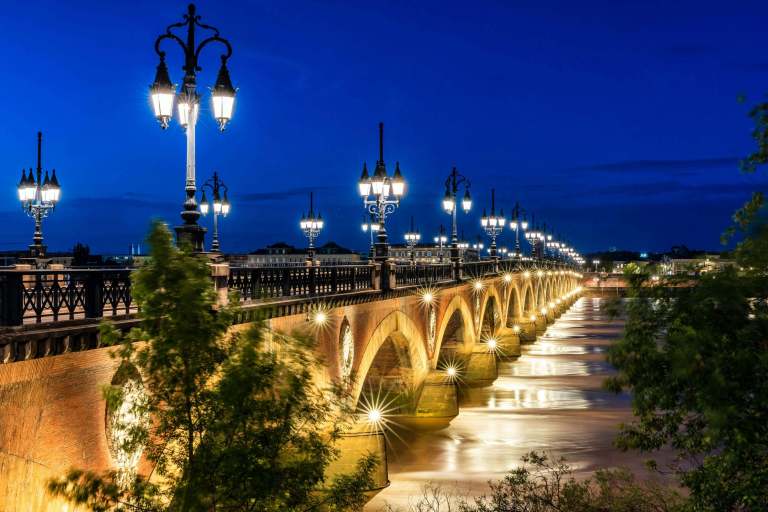
The town hall is genuinely beautiful. The old churches too. The bridges, the stone buildings, the river, the way the city catches light when the weather changes.
Walking around the centre feels visually calm in a way most cities don’t.
Not perfect.
Not magical.
Just soft.
And I like that.
The best things about living in Bordeaux
One of the best things about Bordeaux is that it feels small enough to understand, but not so small that it feels completely closed.
A lot of people in Bordeaux aren’t even really from Bordeaux. They come from nearby towns, the Arcachon Bay, Paris, other parts of France and sometimes somewhere else entirely, like me.
So the city has this mixed energy.
It feels medium-sized, but socially bigger than it looks on paper.
Not too provincial.
Not too massive.
Not too stuck in itself.
That works for me.
Culture is everywhere too, but again, not in a try-hard way.
Montaigne, Montesquieu, Mauriac, universities, opera, theatres. That whole old intellectual background is just there. And yeah, that sounds a bit like something from a tourist office brochure, but you do feel it.
Not every day.
Not every second.
But it sits in the background.
Also, random fact, Bordeaux was the capital of France three times.
Most people don’t know that.
I love facts like that.
Nature, ocean and weekend escapes
Honestly, one of the best things about living in Bordeaux is how easily you can leave it.
Which sounds like an insult, but it really isn’t.
The ocean is just over an hour away.
And not the kind of beach where you’ve got buildings stacked behind the sand, overpriced ice cream stands and people sitting on top of each other.
I’m talking long Atlantic coastlines, dunes, pine forests, surf towns, wind, space.
A completely different rhythm.
You leave the city and suddenly your body remembers that life doesn’t have to feel so tight all the time.
Further south you’ve got the Pyrenees. Sure, they’re about a 3-hour drive away, but still, close enough for a weekend getaway.
Mountains, lakes, hikes, waterfalls, caves, little villages.
A totally different landscape again.
And if you drive inland, say to the Dordogne, you find quiet villages, old mills, open plains and places where everything slows down without asking for permission.
Bordeaux is one of those cities where a short drive can completely change your environment.
That matters to me.
I need nature around me.
Not as an aesthetic.
Not as a weekend hobby.
I genuinely think I get tense without it.
Transport, walking and cycling
Travel is surprisingly easy for a city this size.
You’ve got flights to a lot of major European cities. Paris, London, Lisbon, Madrid, Barcelona, Rome, Istanbul and more.
North Africa is close too, especially Morocco.
Then the TGV gets you to Paris in about two hours, which still feels a bit unreal when you think about it.
From there, everything connects.
You’ve also got trains to Toulouse, Nantes, La Rochelle and other places, plus coaches if you want to travel more slowly into Spain or Portugal.
The city gives you options.
I like places that give you options.
Inside Bordeaux itself, public transport is decent.
Not perfect.
Rush hour can be annoying. The tramway gets packed. Buses can be a bit much sometimes.
But overall, it works.
And the city is walkable, which changes everything.
A city you can walk through is not the same as a city you only pass through.
Cycling is easy too. You can get almost anywhere by bike, which makes owning one feel less like a lifestyle choice and more like common sense.
Just lock it properly.
Actually, lock it very properly.
Bike theft is real.
Weather in Bordeaux
The weather has its own personality.
It rains a lot.
Like, a lot.
People complain about it, but I’ve never really hated Bordeaux rain. Most of the time it doesn’t feel violent or miserable. Not to me anyway.
It feels more like a reset.
Like the city needed to rinse itself off a little.
Summers though?
Yeah.
Summers can be rough.
Sometimes too hot.
I usually leave during peak heat when I can, because Bordeaux in a heatwave is not my favorite version of Bordeaux, that’s for sure.
That’s one thing people should know before moving here.
Bordeaux can look soft and elegant for most of the year, then suddenly become heavy, hot and uncomfortable in summer.
Still beautiful.
But sweaty.
Daily life in Bordeaux
The centre has character.
Small local shops, thrift stores, cafés, concept stores, cobblers, vinyl shops, second-hand electronics, markets.
There’s even a monthly vegan market, which is rare enough to matter in a city this size.
It’s relatively clean and relatively safe too.
People argue about safety a lot, especially online, because apparently everything has to become a dramatic debate now.
But in normal day-to-day life, compared to many urban places, Bordeaux still feels fairly balanced.
There’s greenery as well. Parks, trees, open little pockets of space.
Not enough trees in the very heart of the city in my opinion, and still too many cars, obviously.
But the base is solid.
It’s a city where you can have a normal day without feeling like the city is attacking your nervous system.
That might sound small.
It isn’t.
Cost of living and rent in Bordeaux
Now, let’s not romanticize it too much.
Bordeaux has problems.
Rent is ridiculous for what the city offers in terms of work.
That’s probably one of the biggest contradictions of living here.
The city became desirable, people came, prices went up and now you get this strange gap between the lifestyle Bordeaux sells and the economic reality many people actually live with.
It’s beautiful, yes.
It’s comfortable, yes.
But comfort is never neutral when people are priced out of it.
That’s the thing with cities like Bordeaux. They look soft from the outside, but they still carry all the usual pressures underneath.
Rent.
Work.
Class.
Tourism.
Gentrification.
The slow replacement of ordinary life by polished lifestyle.
It’s not Paris-level brutal, obviously.
But it’s there.
And if you’re thinking of moving to Bordeaux, you should know that the city can be expensive compared to the job opportunities available locally.
Beautiful cities always know how to charge for their beauty.
Vegan life in Bordeaux
Vegan life in Bordeaux is manageable, but limited.
That’s probably the most honest way to put it.
You can find options. You can eat out. You can shop. You can make it work.
But if you’re coming from bigger cities with stronger vegan scenes, Bordeaux will probably feel small.
Not impossible.
Just not abundant.
There’s a monthly vegan market, which I appreciate, and there are some good places around the city, but it’s not the kind of place where vegan food is everywhere without thinking.
You still have to look.
You still have to plan a little.
And sometimes you still end up eating fries and pretending that’s a meal.
It happens.
The downsides of living in Bordeaux
So no, Bordeaux isn’t perfect.
No city is.
Rent is too high.
Transport isn’t cheap.
Bike theft is very real.
Summers can be intense.
Vegan options are still limited compared to bigger cities.
There are still too many cars.
The centre needs more trees.
And there’s this strange seasonal emptiness where a lot of people leave during summer, especially since many residents aren’t originally from there.
The city kind of exhales and partially empties out.
Some people hate that.
I get it.
It can feel peaceful, but also a bit strange, like everyone quietly agreed to disappear at the same time.
Bordeaux can also feel a little too comfortable sometimes.
That might sound like a fake complaint, but I mean it.
Some cities push you. Some cities rough you up. Some cities force you into movement.
Bordeaux doesn’t always do that.
It can soften you.
Which is nice.
Until it isn’t.
So, is Bordeaux a good place to live?
Yes, if you want a beautiful, walkable, culturally rich French city with decent public transport, strong access to the ocean and nature, enough social life to not feel isolated and a softer rhythm than Paris.
No, or not easily, if you need cheap rent, strong local salaries, big-city vegan options, endless nightlife, reliable summer comfort or a city that feels fully alive all year.
For me, Bordeaux isn’t perfect.
But it’s one of the rare places where staying made sense.
And for someone like me, that’s not nothing.
Would I live in Bordeaux again?
Honestly, yes.
In fact, we’re just over an hour away.
I go back almost weekly to volunteer, see friends, run errands or just walk around for a few hours.
And every time, there’s still something.
Not home exactly.
But Bordeaux is one of the few places that ever made me understand why people use that word.
Maybe that’s enough.
If you want to read about another french city I lived in (Lyon), check this article out.
We belong here, but we carry somewhere else at the same time.
I didn’t grow up in one place, I grew up across countries, cultures, across versions of life that don’t always overlap. Nothing ever felt fully singular;
Not home Not language Not even memory
There’s always another layer running underneath.
A joke that only lands in one country A smell that brings you back somewhere no one around you knows A version of you that only exists in a different language
Sometimes it hits you mid-thought. You’re here, but part of you is somewhere else entirely.
Maybe you didn’t move as much, but if you grew up between cultures, you know this feeling.
Because we do learn the world around us We move through it like anyone else We understand its rules, its references, its rhythm.
But we also carry something quieter, a parallel world most people don’t see or know about.
It lives in memories that don’t translate In inside jokes that fall flat outside the circle In moments that shaped you, but have no place where you are.
And then there’s language.
Some of us speak our parents’ language, some don’t. Some are fluent, some are still finding their way.
Either way, it stays with you
Because language isn’t just words, it’s a way of thinking. You don’t just switch vocabulary, you shift perspective.
Sometimes you even feel it in yourself. Not like you’re becoming someone else, just.. a different version of the same person, expanded.
Every culture has its codes: What’s said, what’s not. What’s allowed, what’s felt but never expressed..
And if you understand more than one, you start to see the world differently.
Then comes the next layer, religion.
Growing up with beliefs and traditions that don’t match the world around you
Again, different rhythms, different priorities and a different way of making sense of life altogther.
You learn what everyone else knows, but you also carry what they don’t: Names, stories, references that exist outside the mainstream.
It’s not always visible, but it shapes how you move.
Living through all of this does something to you. It doesn’t just make you adaptable, it makes you more aware.
You understand what it means to be misunderstood To feel slightly out of place To not fully belong
Some embrace it, others struggle with it.
But when you’ve felt that, you don’t want others to feel it too.
Not everyone reflects on it, but those who do soften.
They listen more They notice more They hold space differently
Because they’ve lived the distance.
Immigrant kids blend it, and stand out.
We connect things that aren’t supposed to touch We carry perspectives that don’t usually meet.
We’re rarely the ones drawing lines because we know what it feels like to stand outside them.
Being an immigrant isn’t easy
It comes with friction With weight Sometimes with rejection
But it builds something solid
Depth Awareness Resilience
You learn to see more To feel more To understand more
You don’t just move between worlds
You connect them.
We don’t need to split ourselves to fit in, we don’t need to shrink parts of us to be understood.
We carry multiple worlds Multiple languages Multiple ways of being
And how unlikely engineers are fixing what we broke.
Somewhere between dams, drains and forgotten beaver ponds, we taught water to behave unnaturally.
For centuries, rivers weren’t linear channels cutting through land. They were living systems with multiple rhythms. They had (some still do) a normal bed, a medium bed and a larger floodplain. During certain periods, rivers would overflow into nearby fields and forests, depositing sediments, organic matter and nutrients. They would slow down, spread out, feed themselves and recharge the surrounding soils before returning to their usual course. Water lingered. Land absorbed it like a sponge. Life depended on that slowness.
Modern (human) engineering broke this balance. To protect infrastructure, agriculture and urban areas, rivers were straightened, dredged and confined between embankments. Their wider beds were erased. This caused for river channels to deepen because the straighter a river is, the faster it goes, and the faster it goes, the more it digs under itself, thus lowering its bed. This phenom’ had two immediate consequences. First, rivers stopped feeding themselves. Cut off from floodplains, they no longer collect organic matter, sediments and nutrients that once sustained aquatic ecosystems. Second, and more critically, they stopped feeding the land around them. The earth lost its role as a sponge.
When soils are regularly rehydrated by slow, spreading water, they remain loose, alive and porous. Microorganisms thrive. Roots penetrate deeply. Organic matter accumulates.
When this process is interrupted, soils dry out and compact. They become stiff and tight. Rain no longer infiltrates. It slides across the surface, picking up speed, eroding topsoil and rushing straight into rivers, then quickly into the ocean. Water is no longer stored in landscapes but evacuated as quickly as possible. What we call floods and droughts are often two sides of the same engineered mistake.
This acceleration of water is a massive stress on the planet. Freshwater ecosystems collapse. Groundwater reserves fail to recharge. Agricultural soils lose fertility. Coastal zones receive sudden, polluted surges of freshwater and sediments. The problem is not a lack of rain but a lack of time. Water is not allowed to stay.
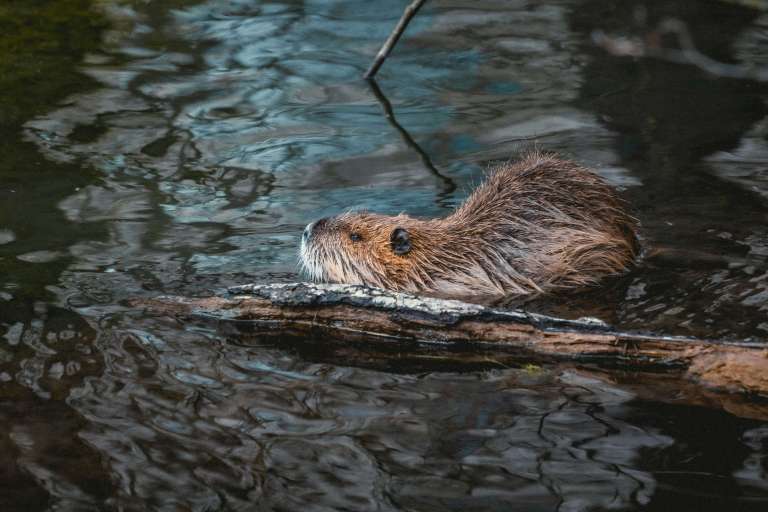
Nature, left to itself, mirrors its creator’s perfection. So naturally, solutions do exist, and one of the most powerful allies in restoring hydrological balance is none other than the beaver.
Often dismissed as a nuisance or a pest, the beaver is in fact a master engineer, working in harmony with natural laws rather than against them. By building “dams”, beavers slow water down. They raise river levels back toward their natural height. They reconnect streams with floodplains. They recreate the layered beds that humans spent centuries destroying, and still are.
Beaver dams create chains of small wetlands and ponds, true oases across landscapes. These wetlands filter water by trapping sediments and pollutants. They store water during wet periods and release it slowly during dry ones, reducing both floods and droughts. They soften the surrounding soils, allowing water to infiltrate deeply and recharge aquifers. Land regains its sponge-like function.
The ecological benefits are extraordinary. Beaver wetlands provide habitat for fish, amphibians, aquatic insects, birds and mammals. Frogs, salamanders, dragonflies, trout, ducks and herons all thrive in these environments. Biodiversity increases not despite the dams but because of them. Even forests benefit, as higher groundwater levels support healthier trees and reduce vulnerability to fires.
Beavers don’t build for profit, efficiency or short-term control. They build for stability. Their work reverses, piece by piece, the damage caused by rigid, fast and extractive water management systems, built by us.
Where humans forced rivers to behave like drains, beavers restore them as living systems.
Reintroducing and protecting beavers is not a romantic gesture or a return to some imagined past. It’s a practical, science-backed response to centuries of bad engineering. Beavers show that the solution to water crises is not always more concrete, deeper channels or faster flows. Sometimes, the solution is to slow down, raise water back into the land and let ecosystems do what they have always done best.
If we’re serious about restoring soils, securing water and easing the planetary stress we created, we should stop fighting nature’s intelligence and start learning from it.
But today I’m making an exception. Partly because I like my job, mostly because people don’t really get what I do, so I basically wrote this to send them back to when they ask. Ha!
My journey towards digital marketing
Back in 2011, I landed my very first internship at The Lad Bible, the UK media giant that built its brand on viral and shareable content before TikTok was a thing. It was my first experience with digital content at scale.
By 2014 I was working in PR at the African Union Commission in Addis Ababa. A year later, I moved to Buenos Aires and joined Mundo Lingo, helping with event marketing for their international language exchange meetups. Mundo Lingo was (is?) an event program that held gatherings for hundreds of strangers, usually in pubs or “boliches” and gave them sticker flags to stick to their shirts. The flags showed where the person is from, which languages they spoke and which languages they wanted to improve. My job was to help those events grow and thrive.
In 2016, I chose to focus on the digital side of marketing and complemented my MBA with a second Master’s in Digital Marketing and E-Business in Bordeaux. In 2017, that path took me to Barcelona, where I interned in event marketing and social media management.
By 2018, I was back in France, working as a digital marketer in a startup in Bordeaux, and later as a traffic manager in France’s biggest online retailer, Cdiscount. Each role taught me something new about how audiences behave, how campaigns succeed or fail, and how strategy ties everything together.
Finally, in 2019, I took the leap and created my own business. I started as a digital marketing consultant and social media manager, and eventually carved out a niche as a Meta Ads specialist. This endeavor allowed me the freedom to shape my work around both my skills and my life.
Realizing what marketing really is
Here is something I discovered along the way. Most people know marketing exists, but very few understand its power.
They don’t see how it influences their decisions every single day. Sometimes in an obvious manner, but most times in subtle ways.
That is what pulled me in. Marketing is not just about selling. Done right, it’s about understanding people and connecting with them in ways that feel real.
What I actually do
If I had to strip it down, my job has two main parts:
Marketing strategy, the why
Marketing plan, the how
It’s like building a house. The strategy is the blueprint. The plan is the hammer, nails and step by step work of putting it all together.
Most of my clients usually have their “why”, so they bring me in to put the “how” in place.
The hats I’ve worn so far
Digital marketing covers a lot of ground, so over the years I’ve worked in:
Social media marketing
SEO and copywriting
PPC advertising
Event marketing
Content marketing
PR
Direct marketing
Here is what that actually looks like.
Social Media Marketing: I create content calendars, mix promotional posts with user generated content (UGC) like reviews or photos, and keep things engaging across platforms.
Copywriting and SEO: I write blog posts, optimize websites and landing pages, run keyword research and help content get found by the right people.
PPC and Meta Ads: This is my specialty. I have managed campaigns in difficult industries like health, crypto and finance. The results have been high conversions, low costs and strong traffic. The trick is constant adaptation. Algorithms change all the time. What worked last month might be useless today.
Why I stick around
Do I love every single part of it? Not always. But here is why I stay.
I can work remotely. I have flexibility and rarely more than one meeting a week. I get to choose ethical clients and projects I believe in. I learn about new industries all the time. I have independence, creativity and variety.
I don’t know if I will do this forever. Change will come eventually. But right now it works, and sometimes that’s enough.
Lessons learned along the way
If you’re thinking about a career in marketing or copywriting, here are three lessons I’ve learned so far:
Experiment early and often. I would never have landed in copywriting if I had not first tried PR, events, social media, and ads. Each experience gave me skills I use today.
Adaptation beats perfection. Marketing changes constantly. Strategies that worked yesterday might be outdated tomorrow. Staying curious and flexible is far more valuable than chasing a perfect plan.
Choose work that aligns with your values. Learn how to say no, only the right clients and projects make this job fulfilling. Fulfillment gives you the energy to keep going long term.
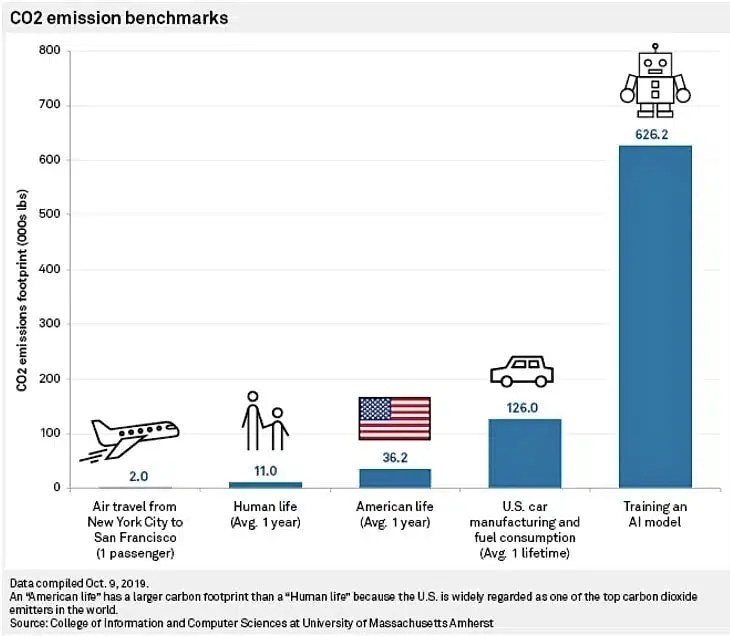
AI tools have made an already bad situation worse.
Every time you touch an AI tool, whether you’re making images or words, you’re feeding a machine that drinks real water and eats real power. Not in theory. Literally. There’s no harmless cloud floating above us. There are data centers on the ground, towers pulling heat out, plants burning fuel, all so content can come out faster while the bill gets paid somewhere else.
Think of it this way. One text request to a large AI model uses roughly the same amount of water as a few mouthfuls from a soda can. That sounds small until you remember these systems handle billions of requests a day! At that scale, we’re not talking about sips. We’re talking about entire truckloads of bottled drinks being poured straight down the drain, every single day, just to keep servers cool.
Generating a single AI image uses several times more energy than a text request. One article with five or six AI images might be using the equivalent electricity of leaving a laptop running for hours. Multiply that by thousands of articles, social posts, newsletters and ads, and suddenly it’s not trivial at all.
Zoom out a little more and the picture gets uglier. AI-related data centers are already using as much electricity as mid-sized cities. Estimates put global AI power demand on track to rival places like San Francisco or Boston within a few years. That’s millions of homes worth of electricity being burned so companies can automate writing, art and video at scale. AI doesn’t just steal jobs, it steals our resources.
Now stack dozens of these facilities across drought-prone states and you start to see why people are angry.
And they are angry.
Lately, I’ve seen organizers in Arizona, Pennsylvania and Georgia mobilize against new data center construction. Nobody wants these things in their communities. They strain power grids, drain water supplies and mostly benefit companies that don’t live there (don’t they always?). Luckily, these fights seem to be working. Projects are being delayed, while others are being stopped altogether. We can and will win against these tech oligarchs, but first, we need to be smart about our usage.
This is why it’s so frustrating to see articles about resistance, climate justice or helping nature paired with AI-written images. You can’t talk about fighting extraction while actively participating in it. You can’t warn about corporate overreach while relying on the most opaque, resource-hungry tech industry on the planet.
And it’s not just images. AI-written articles, AI-edited videos, AI voiceovers, all of it runs on the same infrastructure. Longer outputs mean more compute. Videos are especially brutal, far more than text or AI generated images. That one slick AI video you just posted (or liked) could represent the electricity use of a household for days. Yes, dayzz!
The worst part is how little transparency there is. AI companies won’t clearly say how much water or energy a specific model or request uses. Communities are asked to trust them, just like users are. Meanwhile the meters keep spinning.
Just to be clear, I’m not saying we need to go off-grid or stop using technology entirely, but we should start making conscious choices. Take your own photos. Use art made by real people. Scan a drawing, even a bad one. Use stock photos from photographers who actually went outside and did the work. Write things yourself or don’t write at all!
If you’re serious about resistance, about protecting nature, about fighting back against corporate power, your tools matter. Using AI by default, especially for images and media, actively undermines your message. People feel that contradiction, even if they don’t always have the numbers to explain it.
It’s funny how easily we take things for granted once we’ve lived them.
I hadn’t set foot in continental Europe until I was 17. I was never particularly fascinated by it, but I was curious, mainly because I’ve always been a football head (aka soccer). My understanding of Europe came almost entirely through football. It’s surprising how much you can learn about a place through the way it presents itself to the world.
For me, football was Europe’s Hollywood.
Sure, I’d read books by European thinkers like Rousseau, Voltaire, Dostoevsky, Adam Smith (dad’s an economist), Marx (capitalism’s greatest critic), Montesquieu and plenty of Greek philosophers, but most of them weren’t contemporary thinkers. They wrote about their own times, their realities. Football, on the other hand, made Europe feel present, dynamic, real. It gave me a window into the continent’s character.
For instance, I knew about the English and their pub culture way before I had set foot in England. I already knew they loved to drink before games, loved to sing in the stands and viewed the sport almost like a religion.
The Dutch, with their total football philosophy, played the game differently. Organized, intelligent, team-oriented, their football reflects a society that values structure and versatility.
The Germans famously love their beer. Bayern Munich holds a photoshoot every year to promote Oktoberfest, which I only knew about thanks to their events.
The Turks are loud and proud. Fireworks in the stands, packed stadiums on a weekday, and fans who treat football like life or death, it perfectly depicts their character.
The Spanish, on the other hand, are just as proud, but more divided. The Basques, Catalans and Andalusians all bring their own flair to the game. They also have their own holidays, like San Jordi (Catalan Valentine’s day), and you learn about those through football too.
The Italians are perhaps the only ones who proudly exposed the ugly face of their society through the beautiful game: their racism toward Black players, their theatrics and machismo are ever present on the pitch and off of it. Their passion is unmatched and unapologetic, but so is their cheating. Not great, thank God people outside of football are different.
Anyway, last but not least, the French. It was already striking to me how different people within the country were. France is so diverse, which I already knew then, but which became even clearer the second I set foot here.
I’ve been to more than 20 European countries since moving here, and visited over 100 cities in Europe. I’ve made lifelong friends who became family. I studied, partied and worked with them. Better yet, I ended falling in love with a European, who then became my wife and lifelong partner. Who would’ve thought?
And yet, I take it all for granted now.
I love living in Europe, and there is nowhere else I’d rather be, but traveling around Europe doesn’t excite me as much as it used to. It feels like I’ve seen it all, which, of course, isn’t true.
It’s strange how easy it is to feel indifferent to things you once dreamed of.
Gratitude, I’ve learned, isn’t just a feeling. It’s an action. A choice.
Our next trip in Europe will be to the Balkans, and Greece. Albania, Montenegro and Bosnia are on our list. I hear the culture there is very different to Western Europe, which is super exciting!
In most Western countries, fundamental commodities such as electricity, running water, well-maintained roads, and a wide range of goods and services are conveniently accessible. However, life is quite different in other parts of the world.
Travel with me
For instance, when my family and I relocated to Mozambique in 1996, basic provisions like sugar and cooking oil were exceptionally scarce. Similarly, when we moved to Ethiopia in 2004, dairy products and sugar were also in short supply.
Not only that, but during our time in Cape Town (South Africa), Maputo (Mozambique), Algiers (Algeria), Addis Ababa (Ethiopia), and (very briefly) Cairo (Egypt), water scarcity was a prevalent issue, particularly during the summer months.
In fact, we used to get up at 4 AM to fill up our water tanks and jugs.
Unfortunately, water shortages are still widely common, and some fierce battles for control over water have already begun.
Take the above-mentioned region of East/North Africa for instance. The Nile River is at the heart of an ongoing battle for water.
Indeed, Ethiopia, Egypt, and Burundi are all entangled in a high-stakes discussion that could reshape their destinies.
Long story short, Ethiopia’s audacious endeavor, the Grand Ethiopian Renaissance Dam (GERD), an engineering marvel rising on the mighty Blue Nile has cause a lot of discussion and anger in that region, rightfully so.
Such an endeavor endangers both Egypt and Burundi, who fear the ripple effects of such a grand project.
Now, in a perplexing paradox, frequent power outages were extremely common in Ethiopia, and I mean several-times-a-week common, even though Ethiopia possesses ample electricity to meet its population’s needs.
Surprisingly, this occurs because the local government chooses to export their energy to neighboring nations, leaving their own citizens in the dark.
I spent over four years (teenage years) in Ethiopia, over four years of persistent power cuts, so I learned a thing or two about adaptability and ingenious hacks to beat the system.
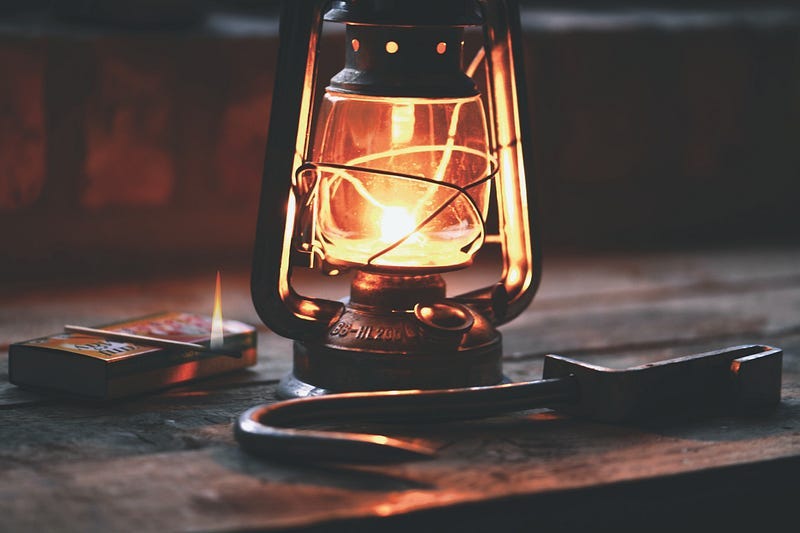
First of all, I hateartificial (street) lights. One of the things I miss the most about Africa is the tranquil stillness of the night. I always found the incessant intrusion of artificial lights aggressive. With that being said, I love candles and oil lamps with all my heart. They embody a charm that captivates me entirely. Indeed, candles and oil lamps are a gentle alternative to artificial light, as they gracefully replace it without imposing their presence. Their warm glow is synonymous with coziness, while their soft illumination remains pleasing and comforting to the eyes. Perfection!
Many of us rely on electric utensils and stoves for cooking, not in Africa (notback then at least). My family always opted for non-electric cooking methods like gas or an outdoor wood-burning stove. Dutch Ovens are also pretty awesome if you want to cook bread and pizzas. No power, no problem.
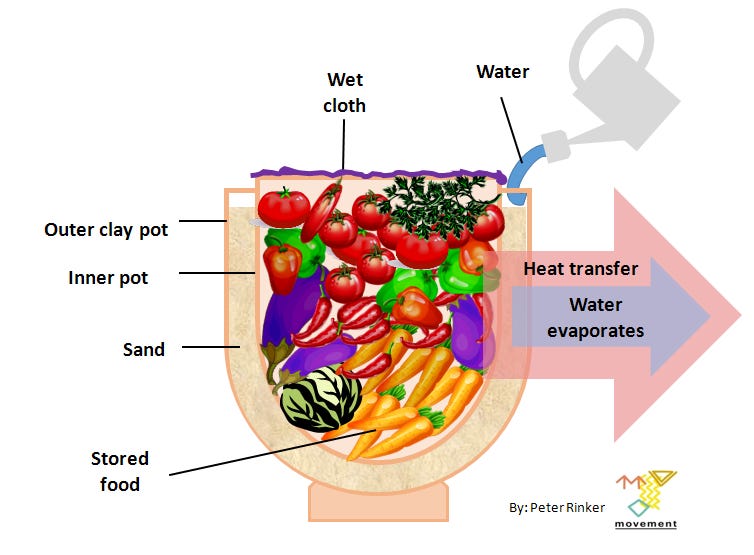
Food storage: This is a big one. “How did you survive without a fridge?”. First of all, we did have a fridge, it was just turned off most of the time. Since we never had an underground cellar storage (that would’ve saved us the hassle), we had to relearn about ancient cooling techniques, like pot-in-pot coolers (or clay pot coolers). Here’s how they work: First, you’ll need two terra-cotta pots. Place one (the smaller one) inside the other, allowing for an approximate 3 cm (1.2 in) to 4 cm (1.6 in) gap between them. Fill the gap with sand, then saturate it with water. Finally, place your fruits and veggies inside the small pot and cover everything with a wet towel. As the water slowly evaporates from the cooler, heat is taken from the clay pots, keeping the temperature of the food cool inside. But that’s not the only way to store food, you can also learn about preservation techniques like canning, pickling, and drying.
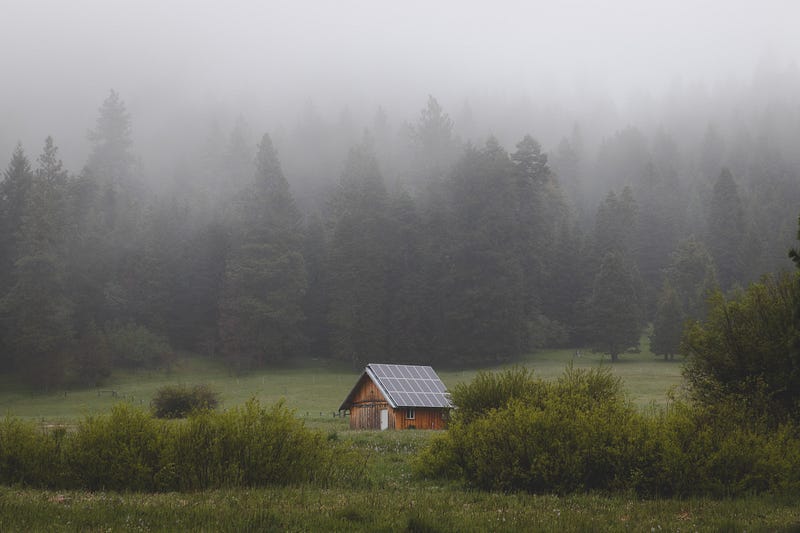
Heating and cooling: Africa isn’t as hot as they say in movies, it actually gets pretty chilly over there, depending on where you are. Fun fact: You can ski in Africa. In fact, there’s so much snow in Algeria, Morocco, and South Africa that they have their own ski resorts, with approximately 40 kilometers (25 miles) of ski slopes. Anyway, one of the most efficient techniques to regulate indoor temperatures is known as “passive solar design”. Passive solar homes use natural ventilation and insulation techniques to regulate the temperature indoors. However, in colder climates, wood-burning stoves and passive heating methods like thermal mass and efficient insulation are common. In hotter climates, shading and natural ventilation were our go-to, with evaporative techniques coming in handy (with battery-powered fans).
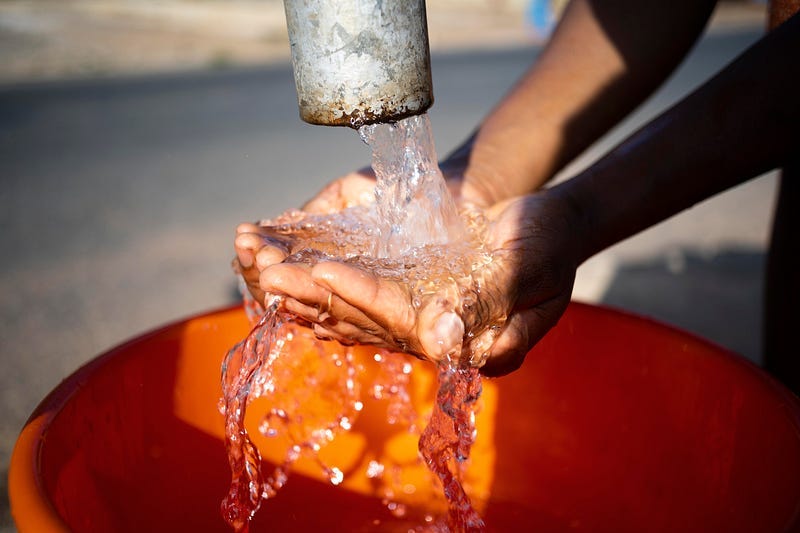
Water supply: As stated above, we had tankers (or water tanks) in all of our homes. Our water tanks were always placed above the house, allowing for gravity to do the rest. However, in total transparency, we still relied on an electric current (and water pump) to get the water up there. We used it once to twice a week. Other methods we used were conventional water wells, hand pumps, and rainwater collection systems. I used to LUHV elaborating and kidgineering rainwater collection systems around the house!
Communication: Well, most of what I’m telling you here went down between 96 and 2010, so iPhones were pretty much nonexistent (for the most part). However, I did have an MP3, then the first iPod, on which I watched hundreds of movies and my favorite bootlegged series. I used to charge my electronics at school or on our drive home. We also relied on our landline a lot back then.
Speaking of entertainment, the reason I spent so much time kidgineering and playing outside was that I had no other choice. Video games were a big no-no till I was 15 or 16, so reading, playing board games, puzzles, biking, and pursuing outdoor hobbies was all I did. I also read the newspapers. No, this wasn’t the ‘70s ^^
Hygiene: Have you ever washed your clothes by hand? And I mean ALL your clothes, not just a pair of socks? Well, I have, and most people still do. It’s no big deal, it’s pretty fun actually.
Human-powered appliances: My grandma (who obviously didn’t live with us) had the best appliance ever made: A hand-cranked coffee grinder. I loved that thing! I genuinely believe we need more of this stuff today. It makes life so much more fun. On a personal level, I’ll always favor an old-school kettle or manual food mill & grinder over new, electric ones. Also, I never owned a microwave.
Technology is convenient when used properly and I believe electricity is a blessing to humanity.
However, we ought to reduce our reliance on modern tech and learn how to live simply. As you can see, living without one of the most important inventions known to man, electricity, is doable, though it requires careful planning, resourcefulness, and adaptation to alternative methods. Assessing one’s specific needs and resources is paramount for such an endeavor, but it’s manageable and within everyone’s reach.


 Teekay Rezeau-Merah